REVIEW · ROME
Rome: Castel Sant’Angelo Skip the Line Private Tour
Book on GetYourGuide →Operated by Raphael Tours & Events · Bookable on GetYourGuide
Hadrian’s tomb tells a wild story. In a tight 2-hour private format, you get fast entry and a guided walk through the castle’s big shifts—from Emperor Hadrian’s burial to papal apartments, prison use, and public executions—ending with a top-terrace view over Rome. I really like the skip-the-line access and the way the guide connects the rooms to real events you can picture. One thing to plan for: you’ll climb a series of stairs to reach the panoramic terrace, so it’s not a great fit if mobility is limited.
I also appreciate the attention to detail from the guide—one standout was Mates, who reportedly answered questions and kept the focus on specific castle details the whole time. That matters here. Castel Sant’Angelo can feel like a lot of walls and corridors if you go solo, but with a guide you start seeing patterns: what got added, what changed, and what each era left behind.
In This Review
- Key highlights you’ll feel fast
- Castel Sant’Angelo’s story in plain terms (Hadrian, then popes)
- Enter fast: what skip-the-line really saves you
- The emperor’s tomb: Hadrian’s resting place inside the fortress
- Pope Paul III’s apartment and frescoes that make sense
- Treasury, fortified walls, statues, and the darker chapters
- The top terrace view: great photos, real stairs
- What a private group (2 hours) does to the quality
- Practical stuff you should know before you go
- Price and value: is $214.11 per person fair?
- Who should book this tour
- Should you book? My straight answer
- FAQ
- Where is the meeting point for the Castel Sant’Angelo tour?
- How long is the private tour?
- Does the tour include skip-the-line entry?
- Is the tour private or shared?
- What language is the guide?
- What should I bring and wear?
- What isn’t included in the price?
- Is it suitable for wheelchair users or limited mobility?
Key highlights you’ll feel fast
- Hadrian’s tomb inside a fortress built around one man’s afterlife plans
- Pope Paul III’s apartment and frescoes you can actually understand in context
- Treasury room and the castle’s practical power, not just its looks
- Ancient fortified walls, statues, and art that show different historical layers
- Top-terrace panoramic views for wide Rome photos (with stairs involved)
Castel Sant’Angelo’s story in plain terms (Hadrian, then popes)
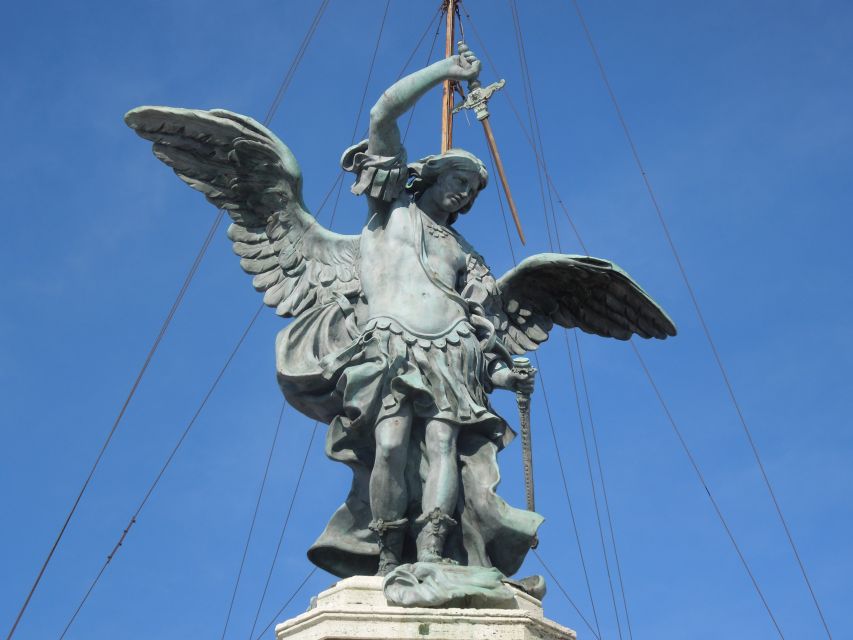
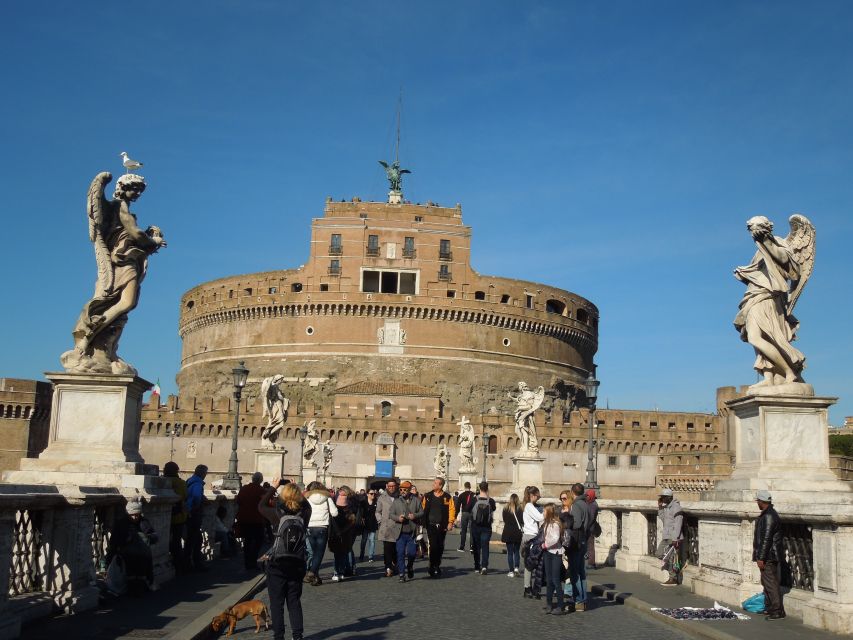
Castel Sant’Angelo isn’t just a “nice castle.” It’s more like a time machine with heavy stone walls. The structure began with Emperor Hadrian’s intention: it was built as his tomb. That alone makes the place feel different from Rome’s other monuments. You’re not starting with a temple or a palace. You’re starting with death—and then watching how later rulers treated the same site.
On this tour, you’ll move through the castle as it evolved. It later became a papal residence, then a place tied to the state treasury, and eventually a prison. At different points in its history, it was also connected to public executions. The result is a tour that explains why the building looks the way it does. It’s not random decoration. It’s function, power, fear, and art, stacked on top of each other.
And that’s why I like this experience: the guide doesn’t just list facts. You start to see cause-and-effect—how the castle’s role changed, and how that reshaped what people used inside its walls.
You can also read our reviews of more private tours in Rome

Enter fast: what skip-the-line really saves you
This tour includes skip-the-line entrance using a separate entrance. In Rome, that’s not a minor perk. Castel Sant’Angelo can have lines, and lines eat your energy. With the private setup and the separate entry, you lose less time waiting around and more time actually seeing the rooms.
It also helps you get your footing early. The meeting point is in a square at the end of the bridge, outside the main entrance. That’s handy because you’re already near the action. Once you meet your guide, you can focus on the walkthrough instead of spending your prime visit moments figuring out where the crowd starts and stops.
The emperor’s tomb: Hadrian’s resting place inside the fortress
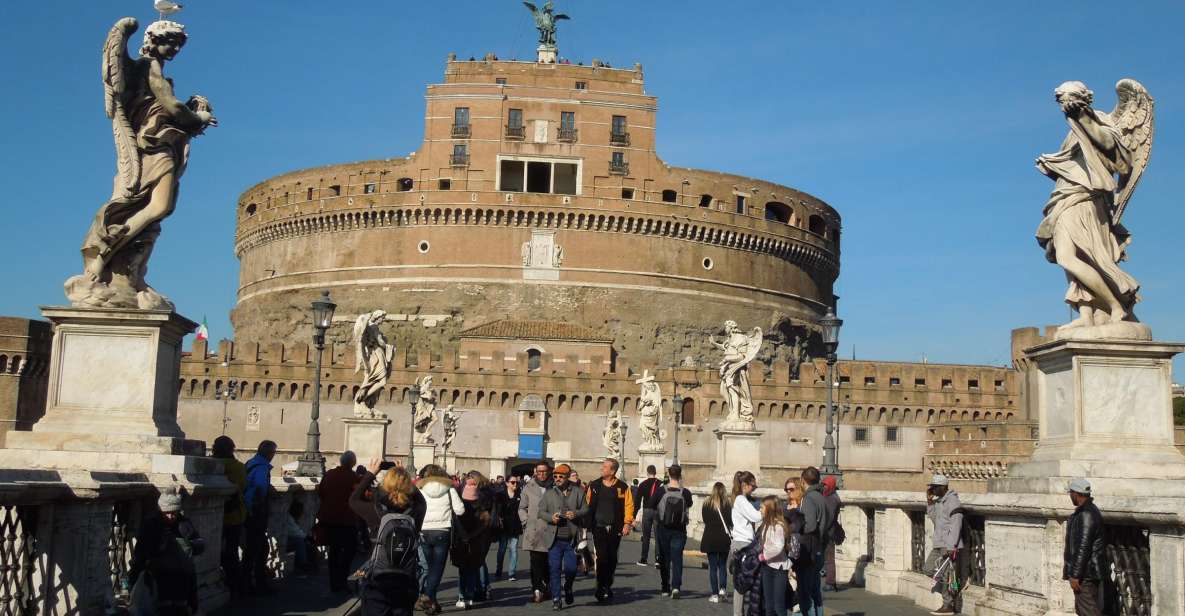
The highlight that anchors the whole tour is the tomb of Emperor Hadrian. You’ll get to go into the emperor’s burial space, which is the key reason this castle exists in the first place. Standing in a site built for an imperial legacy, you quickly understand the mood. It’s not a cheerful “see and go” stop. It’s heavy. It feels intentional.
What the guide does best is connect the tomb to the castle’s later lives. You’re not only hearing that popes and authorities used the building afterward. You’re learning how the original burial purpose set the tone for everything that followed. Even if you’re not a history fanatic, it’s a simple story with strong visuals—stone, corridors, and the feeling that the building was designed to impress.
If you like sites where the “why” matters more than the “what,” this part delivers.
Pope Paul III’s apartment and frescoes that make sense
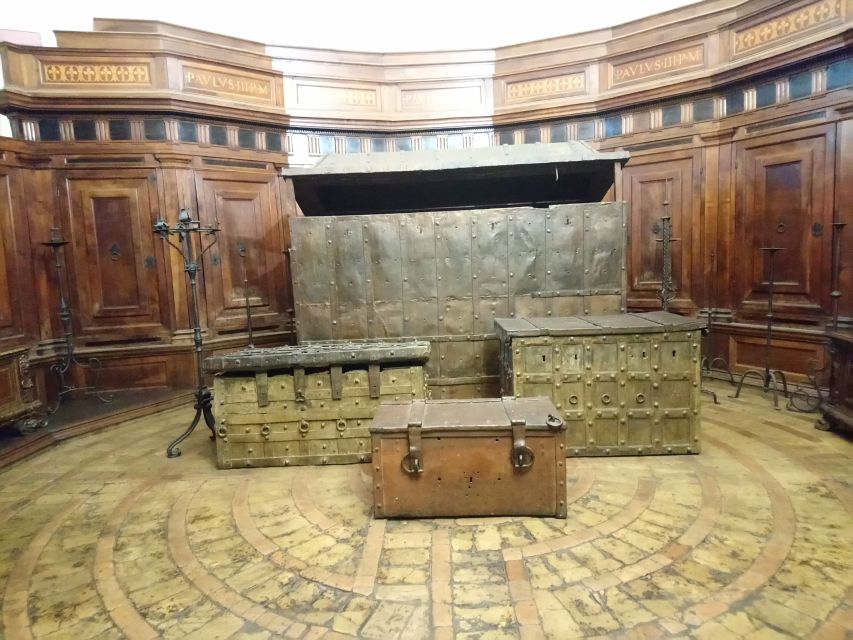
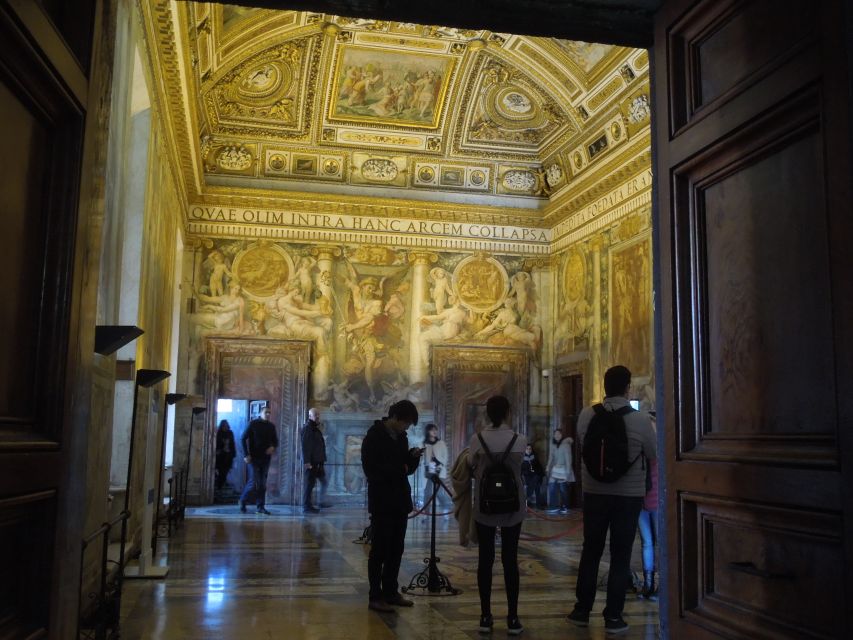
After Hadrian’s tomb, the mood shifts. One of the big stops is Pope Paul III’s apartment. This is where you’ll see frescos and appreciate the castle as a living space for the highest level of power in Rome.
The practical benefit here is that frescoes are easy to ignore if you don’t know what to look for. With a guide, you’re not just staring at paint. You’re learning what the art is doing—how it signals authority, taste, and the pope’s presence in a place that also had darker roles.
This stop is also a nice balance. You get art and beauty without losing the broader storyline. The apartment feels like proof that the same fortress could be used for luxury and control, depending on who held it.
Treasury, fortified walls, statues, and the darker chapters
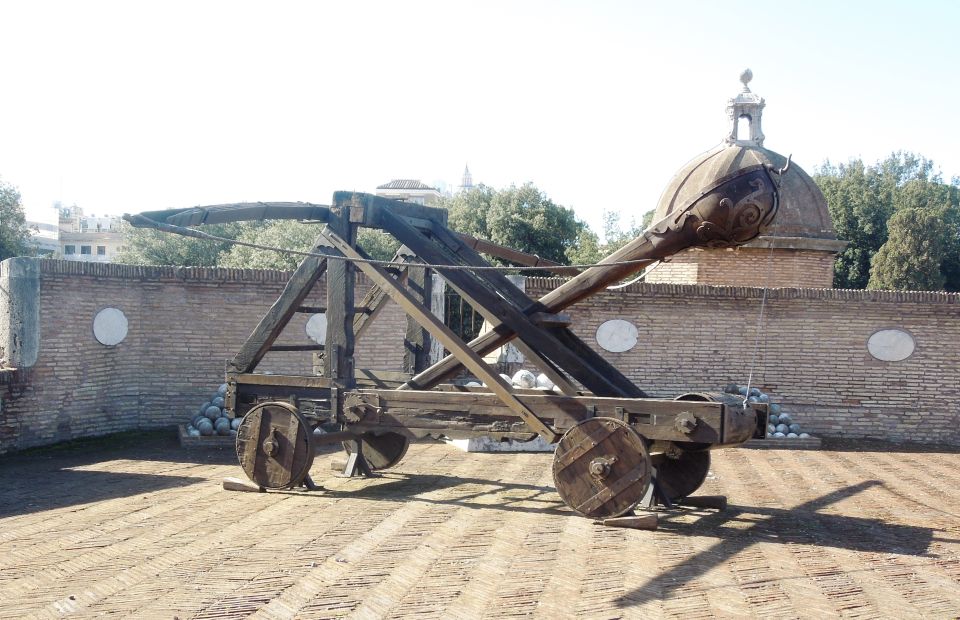
Castel Sant’Angelo isn’t only about grand art. You’ll also cover spaces tied to power and enforcement: the treasury room, ancient fortified walls, and areas where the castle served as a prison and a site connected to public executions.
This is one of those “don’t skip it” segments. On your own, it’s easy to focus only on the visually striking rooms. On a guided tour, you’ll connect details—why certain rooms mattered, how fortification shapes layout, and why statues and art show up where they do. You’ll start noticing how the castle tells its story through architecture, not just through signage.
I also like that the guide brings those details to life in a focused way. One review experience notes that Mates kept every minute on specifics and answered questions. That kind of attentiveness makes the darker parts feel thoughtful rather than just grim.
You can also read our reviews of more tours and experiences in Rome




The top terrace view: great photos, real stairs
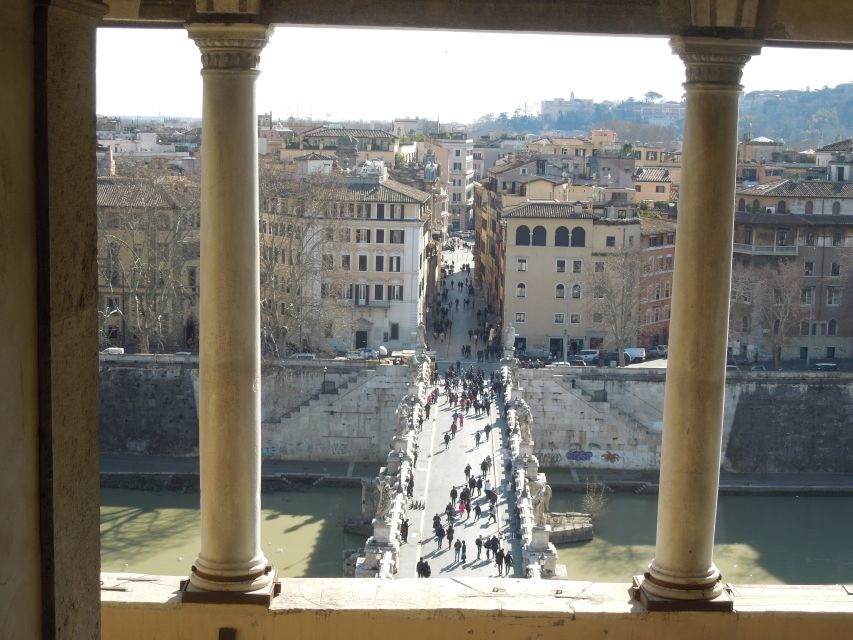
At the top, you’ll reach a panoramic terrace with some of the best views over Rome from inside the castle complex. This is where you’ll pause, take photos, and get your bearings fast.
But here’s the consideration: the tour notes that you’ll climb a series of stairs to reach the terrace. Plan for it. Wear comfortable shoes and take it steady. If stairs fatigue you, this is the one moment where the tour can feel like more effort than the rest.
If you’re good on your feet, though, it’s a payoff stop. You’re not just looking at Rome from a random street corner. You’re seeing it framed by the castle’s walls and position—another reason the whole place feels like one cohesive experience.
What a private group (2 hours) does to the quality
This is a private group tour with a live English guide. It’s only 2 hours, which is a smart length for a site like this. You get the main rooms—Hadrian’s tomb, Pope Paul III’s apartment, the treasury-related areas, and the terrace—without dragging it into a half-day commitment.
In a short time, the guide’s job becomes selective: hit the important beats and explain them clearly. That shows in the reviews you shared, where the guide’s expertise and constant focus were praised. You’re less likely to get the “walk, point, move on” vibe. You’re more likely to get answers and context as you go.
Also, private means you can move as a group of your choice. Just remember: the tour is not suitable for wheelchair users and not for people with mobility impairments based on what’s described.
Practical stuff you should know before you go
A few details matter more than they sound, especially in Rome where small rules can change your day.
- Bring: comfortable shoes. The day is mostly walking, plus stairs to the terrace.
- Don’t bring: luggage or large bags. If you travel light, you’ll breeze through. If you don’t, plan to store bags before meeting up.
- Don’t travel with: unaccompanied minors. The tour has an age supervision rule.
- Language: English.
- Meet-up: the guide meets you in the square at the end of the bridge, outside the main entrance, and the tour ends back at the meeting point.
If you’re the type who hates being rushed, the “private” part helps. You’re not weaving through a huge crowd. You’re also not trying to hear a guide over everyone else’s footsteps.
Price and value: is $214.11 per person fair?
At $214.11 per person for a 2-hour private guided tour, the price is not cheap. But it also isn’t random. You’re paying for four things that add up in Rome:
- Skip-the-line entry (separate entrance, less waiting)
- A live local guide who can explain the castle’s transitions: tomb → papal residence → treasury/prison → executions
- Entrance tickets included, so you avoid pay-at-the-door surprises
- The “value ingredient” you can’t buy alone: interpretation. Art and architecture here make more sense when someone connects them to real roles and eras.
If you love guided history but hate wasting time in lines, this price starts to look reasonable. If you prefer self-guided roaming with audio and zero structure, you might feel it’s steep—Castel Sant’Angelo still has plenty to see, but you’d be paying to understand the why.
In other words: I’d call it a good value if you want your time managed and your questions answered.
Who should book this tour
This tour is a strong fit if you:
- want the main highlights of Castel Sant’Angelo without turning it into a long day
- like guided explanation of art, rooms, and castle function
- want a private, focused experience rather than a big-group shuffle
It’s not the best choice if:
- you can’t handle stairs to the panoramic terrace
- you need wheelchair-friendly access (the tour is not suitable for wheelchair users, based on the info provided)
- you’re traveling with large luggage
Should you book? My straight answer
I’d book it if you want Castel Sant’Angelo to make sense fast. The combination of Hadrian’s tomb, Pope Paul III’s apartment, and a guided look at the castle’s power roles gives you a story you can actually hold in your head after you leave.
Skip this tour only if you know you won’t manage the stair climb well or you’d rather wander at your own pace without a guide. Otherwise, this is one of those Rome experiences where the guide’s focus really matters—because the castle’s layers can be confusing when you’re on your own.
If your plan is short, your feet are fine, and you want the best parts packed into 2 hours, this one earns its place.
FAQ
Where is the meeting point for the Castel Sant’Angelo tour?
The guide meets you in the square at the end of the bridge, outside the main entrance. The tour ends back at the same meeting point.
How long is the private tour?
The duration is 2 hours. Starting times depend on availability.
Does the tour include skip-the-line entry?
Yes. You get skip-the-line access through a separate entrance.
Is the tour private or shared?
It’s a private group tour.
What language is the guide?
The live tour guide is available in English.
What should I bring and wear?
Wear comfortable shoes. The tour includes walking and you will need to climb stairs to reach the panoramic terrace.
What isn’t included in the price?
Hotel pick-up and drop-off, plus food and drinks, are not included.
Is it suitable for wheelchair users or limited mobility?
No. The tour is not suitable for wheelchair users or people with mobility impairments, due to stairs and access conditions.