REVIEW · ROME
Rome: Catacombs Express ENGLISH Guided Tour – SKIP THE LINE
Book on GetYourGuide →Operated by Rome With Mike · Bookable on GetYourGuide
Early Christians weren’t buried like you expect.
On this skip-the-line express walk at San Domitilla, you’ll follow a real underground timeline from pagan Rome toward early Catholic practice, and you’ll get to see some of the oldest Christian art tied to the names Peter and Paul. The payoff is the guided storytelling in tight spaces, but the main consideration is practical: the tunnels are uneven and cool, and the tour isn’t a good fit for claustrophobia or mobility limits.
Meet your guide in the garden near Via delle Sette Chiese, then head underground with an English-speaking pro who keeps the pace lively. In the most glowing feedback, guides like Mike, Heather, John, Pete, and Petar are praised for humor, clear explanations, and even quick check-ins that help facts stick.
In This Review
- Quick take: what makes this catacomb stop worth your time
- San Domitilla Catacombs: an express route that still tells a full story
- Where you’ll start: the garden meeting point near the Appia Antica
- The garden briefing: pagan-to-Christian Rome in plain language
- Heading underground: what the San Domitilla tunnels are really like
- Frescoes of Peter and Paul: why the oldest Christian art matters
- Basilica and tombs of San Nereo and San Achilleo: the surface chapter
- Photos, clothing, and comfort tips that actually help
- Price and value: is $37 worth an hour in the dark?
- Who should book this, and who should choose something else?
- If you want the best experience, plan your expectations
- Should you book the Rome: Catacombs Express English Guided Tour?
- FAQ
- How long is the Catacombs Express tour?
- Where do I meet the guide?
- Is the ticket line actually skipped?
- What is included in the tour besides the catacombs?
- Can I take photos inside the catacombs?
- What should I wear or bring?
Quick take: what makes this catacomb stop worth your time
- Skip-the-line access that saves you waiting and gets you into the catacombs faster
- Oldest fresco themes tied to Saint Peter and Saint Paul, plus scenes like the Last Supper
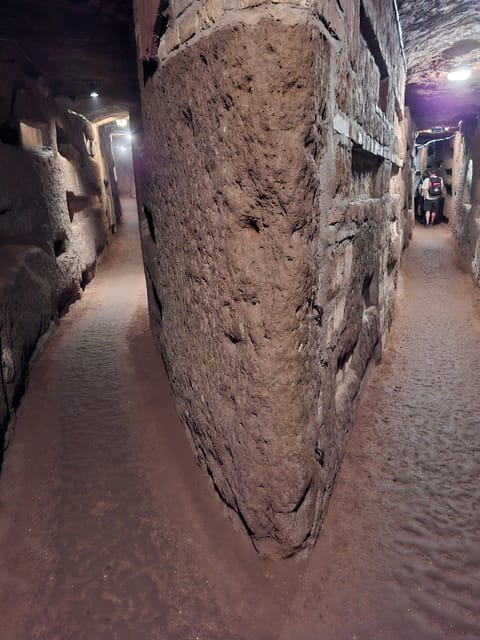
- A focused route through the best-preserved areas spread over 17 kilometers on multiple levels
- The Basilica connection to martyrs Nereus and Achilleo, built at the end of the 4th century AD
- Small-group feel that keeps questions from getting lost in the dark
- No flash photography and no expectation of exposed skeletons on this route
San Domitilla Catacombs: an express route that still tells a full story
Rome has catacombs everywhere, but San Domitilla is a strong pick if you want meaning, not just mood lighting. This tour is designed as an express format: you don’t spend hours wandering at random, and you don’t leave with only a vague sense that underground equals spooky.
What I like is how the experience is framed as a cultural shift. You’re not just looking at tombs; you’re tracing the moment when imperial-era Christians found a space for burial and remembrance, then watched Rome’s religious identity change over the centuries. That gives the scenes on the walls—especially the frescoes tied to Peter and Paul—more weight than you’d get from a quick, unguided visit.
The other big plus is the guide style. A number of past bookings singled out guides from Rome With Mike who mix clear explanations with jokes, comic spins, and light quizzes. That matters because catacomb history can feel abstract fast. When your guide’s tone stays fun and the details stay organized, it’s easier to remember what you’re seeing.
You can also read our reviews of more guided tours in Rome

Where you’ll start: the garden meeting point near the Appia Antica
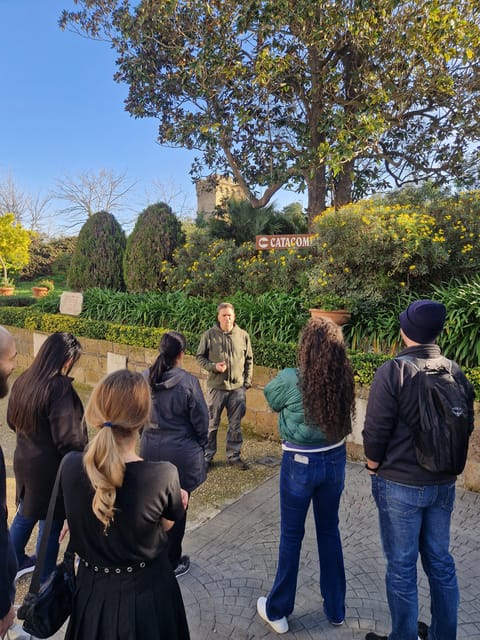
The tour starts in a straightforward place: Via delle Sette Chiese, 282. When you arrive to the parking lot, you walk through the gate into the garden, and your English mother-tongue guide meets you at the picnic tables under the gazebo.
This is practical for a few reasons. First, it keeps the experience simple: no hotel pickup required. Second, the garden meeting area helps you get oriented before the stairs and tunnels start. You’re not trying to figure out logistics while you’re already getting that cool underground air.
If you’re pairing this with other Appia Antica area plans, plan a little buffer afterward. The experience ends where it begins, so you can continue exploring at your own pace, but the walking adds up quickly once you’re in the underground paths.
The garden briefing: pagan-to-Christian Rome in plain language
Before you go underground, there’s a seated historical briefing in the garden. Expect a guided story that connects the burial world you’re about to enter to the broader shift in Rome—from pagan imperial culture toward early Christian communities and then later Catholic development (between the 2nd and 9th centuries).
This part is more than trivia. It helps you read the catacombs like a map with a theme. Without that setup, the tunnels can feel like rows of closed doors and repeating carvings. With it, you start noticing patterns: how burial spaces were organized, what early communities likely valued, and why certain images mattered enough to paint.
One useful real-world note from a past booking: the 1-hour express option is often split with around half the time spent in the garden briefing and half underground. So if you’re chasing the visuals only, the express format is still balanced, but you’ll want to keep expectations aligned: you’re getting context plus a walk, not a long, slow photo safari.
Heading underground: what the San Domitilla tunnels are really like
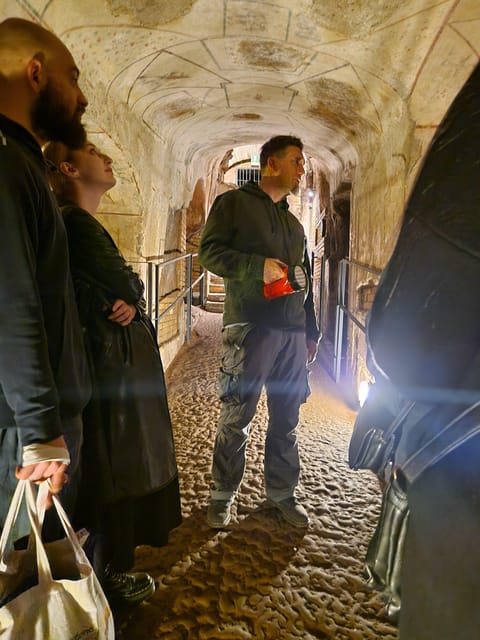
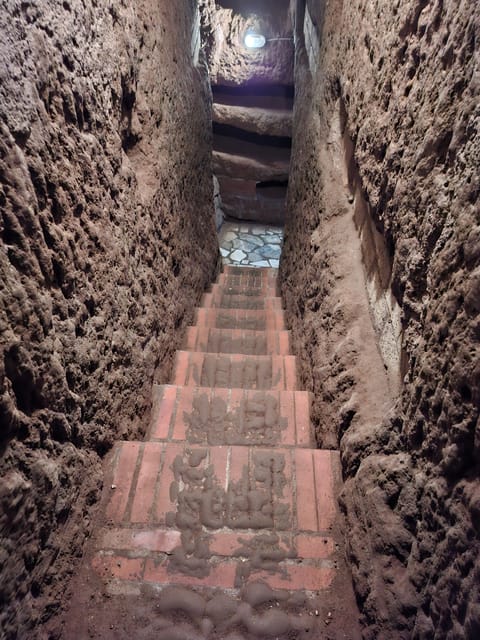
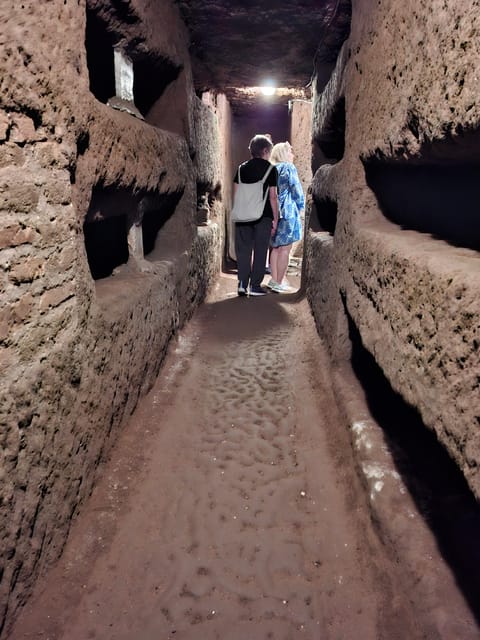
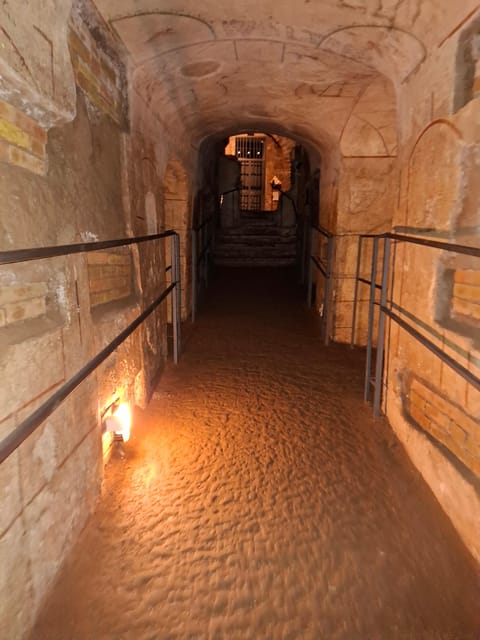
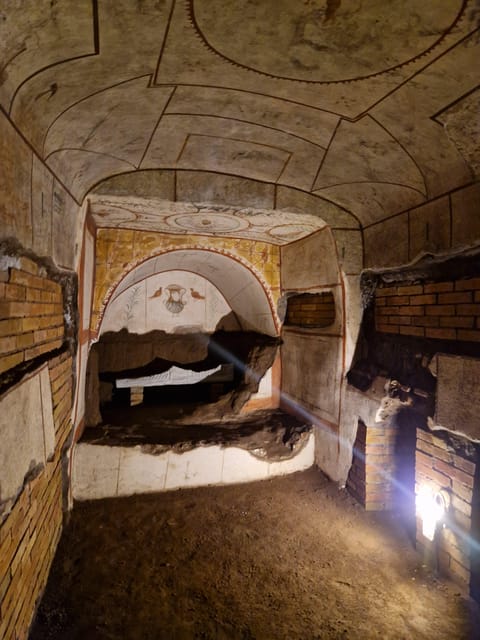
Once you go below ground, the tour moves through the Best Preserved Catacombs of Rome, a network spread over 17 kilometers and arranged on four levels. You won’t see every corner—this is an express tour—but you will see enough of the structure to understand how the site works.
The catacombs are described as endless tunnels and tombs, and that’s accurate in feel. The paths can be tight, and you’re moving between spaces where the walls and passageways carry the story. The guide’s job here is crucial: they point out details in the tombs and explain the burial rites and rituals that went along with this underground world.
A key practical reality: this is a walking tour with uneven surfaces. You’ll be fine if you’re comfortable stepping carefully, but you shouldn’t treat it like a museum floor stroll. If you’re short on mobility or stability, the cave-like layout and uneven ground will likely be more challenging than you want.
Frescoes of Peter and Paul: why the oldest Christian art matters
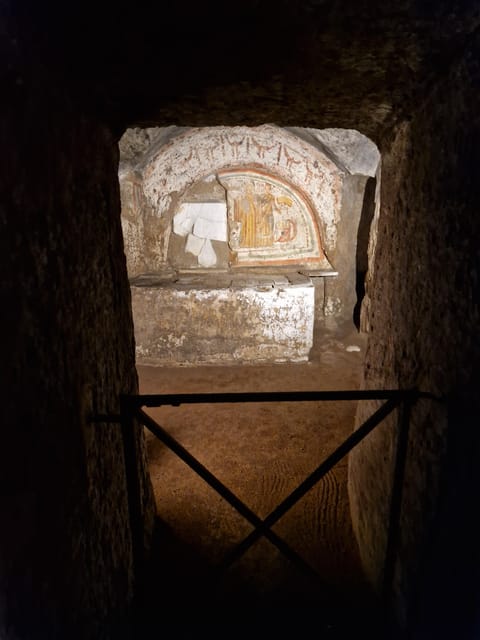
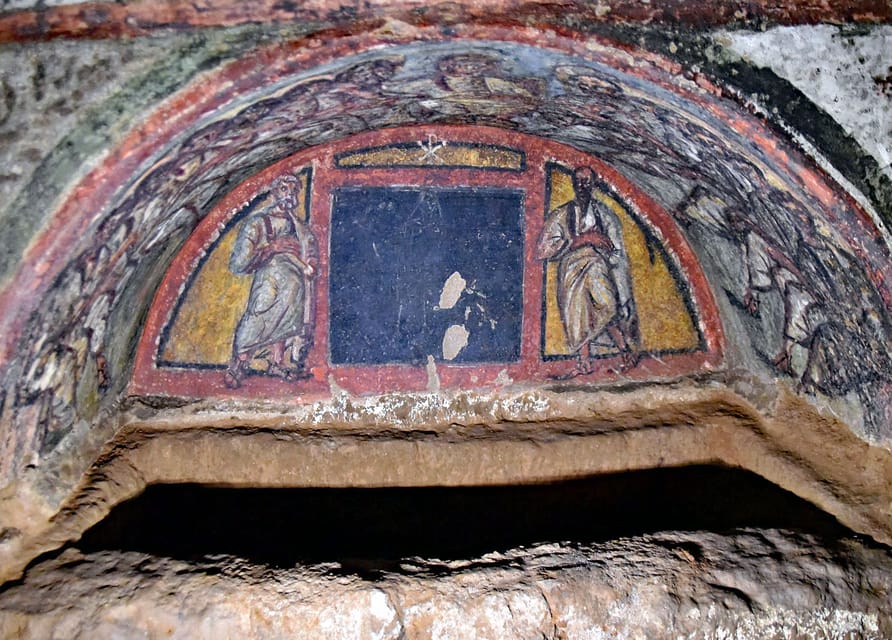
One of the signature reasons to choose this tour is the chance to see some of the oldest frescoes tied to major Christian figures. You’ll look for the frescoes depicting Saint Peter and Saint Paul, and the tour also highlights scenes such as the Last Supper.
Here’s why that’s more than a bucket-list checkbox. In a place built for burial and remembrance, painted images aren’t decorative filler. They’re signals—about identity, belief, and community memory. When you pair the frescoes with the guide’s explanation of early Christian life in imperial Rome, the images start to feel less like relics and more like communication.
Also, keep your attention on the context your guide provides. The biggest value isn’t just seeing the paintings; it’s learning what they represent inside the burial setting. Past bookings specifically praised guides for pointing out intricate details and making the scenes easier to understand through humor and clear associations.
You can also read our reviews of more tours and experiences in Rome






Basilica and tombs of San Nereo and San Achilleo: the surface chapter
After time underground, you’ll visit the Basilica of Nereus and Achilleu, built at the end of the 4th century AD above the tombs of the two martyrs: San Nereo and San Achilleo.
This stop gives you a sharp contrast. Underground, you’re in a world designed for the dead. Above ground, you’re in architecture that grows from the burial site itself—Rome’s religious story written in stone. Seeing the tombs’ legacy through the basilica helps you connect the underground spaces to later Christian Rome without needing extra interpretation from books.
One more practical note: this is a good rhythm for an express day. You don’t just pop below ground and then wander away. You get a structured arc—underground burial spaces, then a visible, historical landmark that anchors the whole experience.
Photos, clothing, and comfort tips that actually help
There are a few rules and comfort realities to plan around:
- No flash photography inside the catacombs. Keep your phone/camera ready, but don’t expect pictures indoors.
- Wear comfortable shoes. The terrain is uneven.
- Bring warm clothing or a light jacket. The catacombs are cooler than surface temperatures.
- Modest clothing is recommended due to the sacred nature of the site.
If you’re the type who gets cold easily, don’t underestimate how fast that underground chill can build. I’d rather you over-pack a layer than feel stuck trying to warm up in a space designed for stillness.
Price and value: is $37 worth an hour in the dark?
At about $37 per person for an English skip-the-line guided experience lasting around an hour, you’re paying for two things: access and interpretation.
Access is a big deal at catacomb sites. Skip-the-line isn’t just convenience; it’s time you can spend understanding what you’re seeing, rather than waiting outside while your day plan shrinks.
Interpretation is the second value driver. The strongest feedback tied to this tour is how guides keep the information lively—often with jokes, comic twists, and humor that doesn’t drown out the facts. For something as visually repetitive as underground tombs, that guide-led structure can turn a short visit into a meaningful one.
So think of it like this: if you want the catacombs as a quick history stop with context, the price feels reasonable. If you’re expecting long unstructured exploration or heavy photo time, you may feel the time limit.
Who should book this, and who should choose something else?
This tour fits best if you:
- Want an English guided catacomb experience with a clear narrative arc
- Like historical context tied directly to what you see (not just a list of sights)
- Prefer a structured visit over DIY wandering in underground spaces
You should consider skipping or choosing another format if you:
- Have claustrophobia
- Need mobility accommodations (the tour isn’t suitable for wheelchair users and people with mobility impairments)
- Are traveling with children under 6
- Expect to roam slowly and take lots of interior photos (flash is not allowed, and time is limited)
If you want the best experience, plan your expectations
For me, the secret to enjoying an express catacomb tour is expectation management. This isn’t a full-length archaeology project. You’re getting the best-preserved portions and the key interpretive points: burial rites and rituals, the cultural shift in Rome, and major fresco themes like Peter and Paul.
One detail worth knowing: a past booking pointed out that you won’t find skeletons or skulls on this tour. Instead, you’ll focus on tomb spaces, passageways, and the site’s artwork and structure. If your mental image is bones-on-display, you’ll likely feel let down. If your mental image is a guided walk through early Christian burial life, you’ll probably enjoy it a lot.
Should you book the Rome: Catacombs Express English Guided Tour?
Book it if you want a short, well-led catacomb experience with skip-the-line convenience, guided interpretation, and the chance to see frescoes connected to Saint Peter and Saint Paul—plus the Basilica story tied to martyrs Nereus and Achilleo.
Skip it if you need long photo time, full accessibility, or you’re very uncomfortable in tight underground spaces. Also, if you’re mainly chasing visuals and hate historical context, an express format may feel like half your time is spent in the garden briefing.
If you do book, go in dressed for cool tunnels, bring comfortable shoes, and plan to listen. This tour works best when you let the guide turn stone corridors into a readable story.
FAQ
How long is the Catacombs Express tour?
The experience is listed as a 1-hour English guided tour (with availability varying by starting times).
Where do I meet the guide?
Meet your guide at the garden of the San Domitilla Catacombs. Your instructions are to enter through the gate into the garden, then find the guide at the picnic tables under the gazebo (Via delle Sette Chiese, 282).
Is the ticket line actually skipped?
Yes. The tour includes Skip-The-Line access.
What is included in the tour besides the catacombs?
You also visit the Basilica and Tombs of the Martyrs San Nereo and San Achilleo, and you enter the Best Preserved Catacombs of Rome.
Can I take photos inside the catacombs?
Photography is not allowed inside the catacombs. Flash photography is also not permitted.
What should I wear or bring?
Wear comfortable shoes and bring warm clothing (the catacombs are cooler than the surface). Modest clothing is recommended due to the sacred nature of the site.