REVIEW · ROME
Rome: Castel Sant’Angelo Skip-the-Line Entry Ticket
Book on GetYourGuide →Operated by Crown Tours · Bookable on GetYourGuide
Castel Sant’Angelo is worth the shortcut. With express security and quick access, you spend less time waiting and more time enjoying the rooftop terrace views over Rome. I like that the ticket keeps things flexible so you can move at your pace through a place that has done everything from imperial ceremonies to papal power moves.
One thing to plan for: this is mostly a self-guided visit. If you add the audio guide, you’ll need your phone set up with headphones and internet access (or a pre-download), and you must arrive on time for the timed entry.
In This Review
- Key highlights you should know
- Fast entry to Castel Sant’Angelo’s front door
- What the skip-the-line actually covers (and why it’s valuable)
- Your 2-hour plan inside: pace, ramp, and exhibits
- A quick note on self-guided touring
- Walking the layers of Castel Sant’Angelo’s past
- The spiral ramp: part climb, part viewpoint training
- Rooftop terrace views: why people care (and what you’ll see)
- If the top is limited on the day
- Audio guide setup: get it right before you arrive
- Timing and ID rules: small details that prevent big stress
- Before you go: what’s allowed, and what slows you down
- Food breaks up top: a small comfort during a long climb
- Price and value: is $17 per person worth it?
- Who this skip-the-line ticket suits best
- Should you book this Castel Sant’Angelo skip-the-line ticket?
Key highlights you should know

- Fast entry via express security so you can start without getting stuck in long queues
- Rooftop terrace views featuring big-name sights across the city
- Spiral ramp approach that makes the climb feel part of the experience
- Self-paced exploring with staff assistance at the entrance
- Optional smartphone audio guide in multiple languages
- Timed, nominative tickets that require your ID and full participant names
Fast entry to Castel Sant’Angelo’s front door
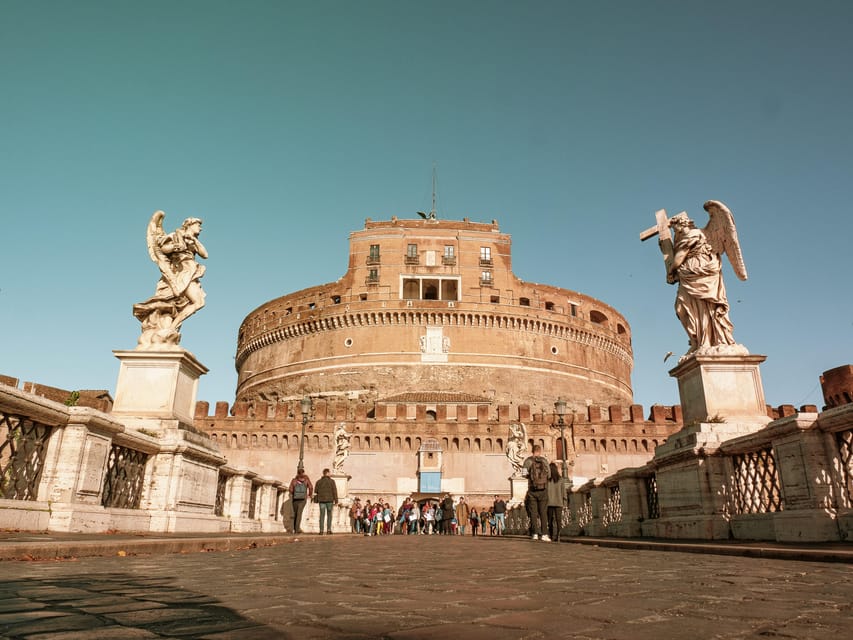
Castel Sant’Angelo sits like a stone punctuation mark along the Tiber, and the area around it can get crowded. This skip-the-line ticket is built for one main win: it gets you past the worst of the friction so you can get into the castle without burning half your morning on security lines.
A staff greeter meets you at a meeting point that can vary by the option you booked. You’ll get staff assistance at the entrance, and that matters because Castel Sant’Angelo isn’t just one simple room. The ticket is timed, and walking in with the right steps matters more than you might expect.
From there, you move on your own. That’s not a downside if you like to control your pace. It does mean you should be ready to read signs, follow the flow, and decide how long to linger—especially once the views start pulling you upward.
You can also read our reviews of more tours and experiences in Rome



What the skip-the-line actually covers (and why it’s valuable)
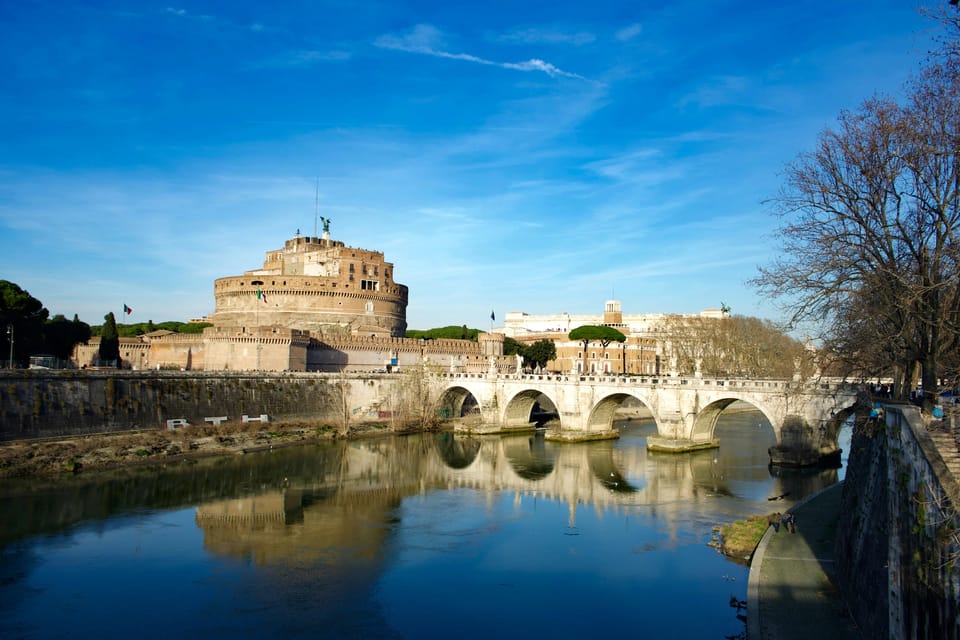
The “skip-the-line” part here isn’t a magical pass that skips everything. It’s specifically tied to getting through an express security check and entering with the right timing.
In real Rome terms, that can mean a smoother experience on days when lines outside the castle look long and slow. If your schedule is tight, this kind of time-saving ticket isn’t just about convenience. It’s about avoiding the classic problem of your day turning into a wait.
This ticket also includes ticket handling support so you’re not stuck figuring out how to use your entry pass at the gate. If you’re traveling with someone else, it’s handy that the ticket is organized around your names and IDs.
Your 2-hour plan inside: pace, ramp, and exhibits

The duration is listed as 2 hours. For most people, that’s a comfortable amount of time to enjoy the main castle rooms and still get up to the terrace without rushing.
Once you’re inside, the experience has a clear rhythm. You follow the route through the castle areas, then you climb using a signature spiral ramp—a classic example of Roman engineering that makes the ascent feel intentional rather than like a chore.
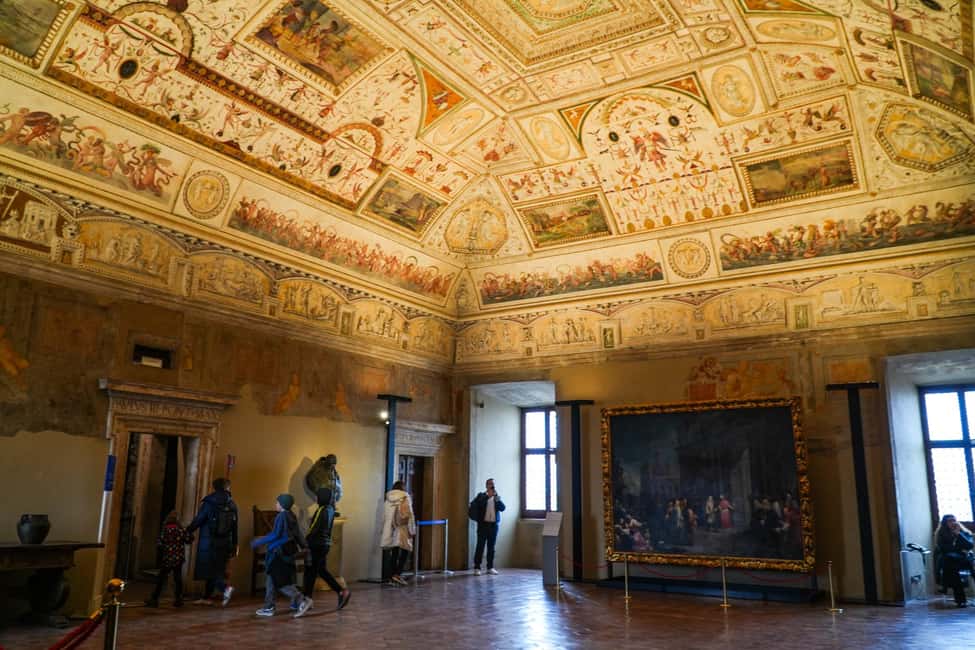
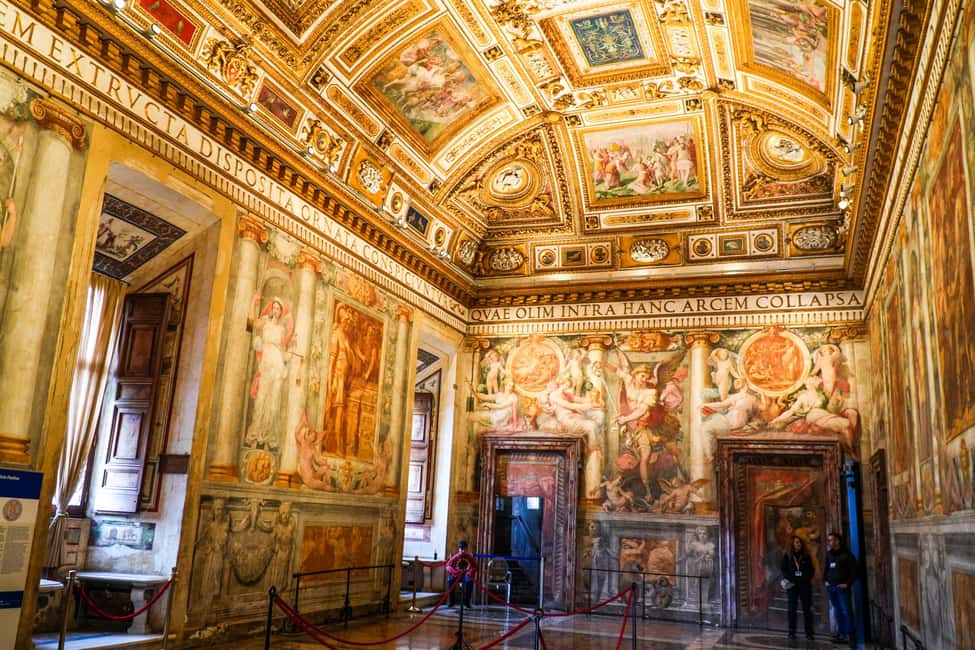
The castle’s story is also part of the pacing. Castel Sant’Angelo has shifted roles over time: it began as Emperor Hadrian’s grand mausoleum, then later became a fortress, and eventually a papal residence. You’ll see how those changes affect the space you walk through—how the castle can feel ceremonial in one area and defensive in another.
A quick note on self-guided touring
Because there’s no guided tour included, you decide how much you want to read and how much you want to simply wander. If you like structure, the optional audio guide becomes your substitute for a live storyteller.
Walking the layers of Castel Sant’Angelo’s past
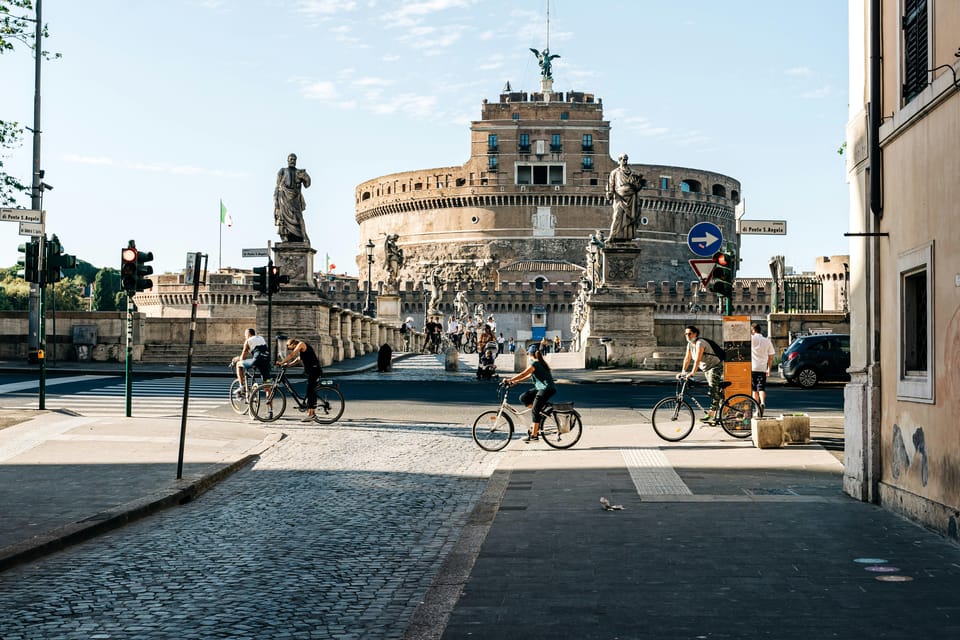
What makes Castel Sant’Angelo more than a viewpoint is that it’s a multi-purpose building with eras piled on top of each other. You’re not just looking at stone; you’re moving through a structure that has been used for very different kinds of power and meaning.
Here’s the backbone of what you’ll encounter:
- Origins as Hadrian’s mausoleum: a monumental starting point that signals why this place mattered
- Transformation into a fortress: changes that reflect defense and control
- Papal residence and authority: spaces that connect the castle to church power and history
- Prison solitude: darker chapters tied to confinement and imprisonment
You can take your time with each section. The ticket is designed for an unhurried walk, without crowd pressure forcing you forward every few minutes.
And if you’re the type who likes to connect architecture to history, the castle layout helps. The way you climb and move around makes it easier to understand the building as a system—rather than a random set of rooms.
You can also read our reviews of more tours and experiences in Rome




The spiral ramp: part climb, part viewpoint training
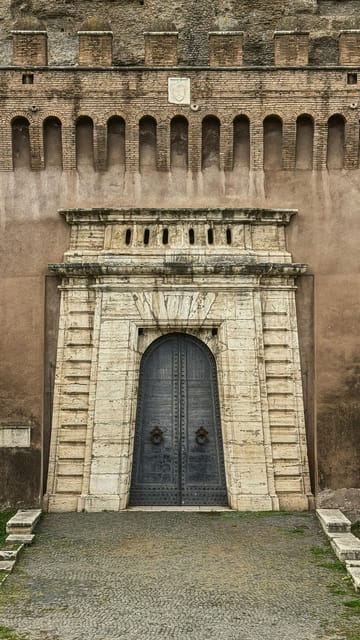
The spiral ramp is one of those Rome details that makes the castle feel engineered for human movement. You don’t just walk through the site. You ascend in a controlled way, and it sets you up mentally for what’s coming at the top.
The ramp also gives you a natural decision point: do you slow down and soak in views as they appear, or do you keep going to reach the rooftop terrace faster?
If you’re traveling with someone who wants different speeds, this is a good spot to regroup. You can pause briefly for photos and then continue at your chosen pace.
Rooftop terrace views: why people care (and what you’ll see)

The rooftop terrace is the headline. It’s where Castel Sant’Angelo earns its postcard reputation—and where the skip-the-line ticket starts paying off.
From up top, you get panoramic views across the city. The provided info specifically highlights recognizable landmarks you may spot, including St. Peter’s Basilica and the Colosseum, plus the broad sense of Rome stretching out around you.
There’s also a practical reason to include the rooftop: it gives you a mental reset. After walking through rooms full of stories, the skyline helps you place everything in a real geography sense.
If the top is limited on the day
Sometimes, upper areas can be affected by closures or events. The key point for you: even if something is restricted, the castle still offers major viewing opportunities and strong historical context. But if rooftop access is your top priority, aim for a calm morning and go with a bit of flexibility.
Audio guide setup: get it right before you arrive

The optional audio guide is one of the best value add-ons here—if you plan your tech. It’s available in six languages: Italian, English, Spanish, French, German, and Chinese.
Important requirements:
- You need a fully charged smartphone
- You’ll need headphones
- You need internet access to download the audio guide content
- Alternatively, you can pre-download using the link in your Crown Tours voucher
This part sounds minor, but in practice it’s where many self-guided visits succeed or fail. If your phone battery runs low, your “walk with a story” turns into “walk with silence.”
My advice: charge overnight, bring wired or Bluetooth headphones you know work, and download ahead of time if your connection is shaky in Rome.
Timing and ID rules: small details that prevent big stress
This is a timed ticket, so your arrival time matters. You should plan to arrive 15 minutes before the activity starting time, because participation isn’t guaranteed if you’re late.
Also, tickets are nominative. That means you need to bring your passport or ID card and provide the full names of all participants. This is one of those rules that feels bureaucratic until the moment you’re at the gate.
If you’re traveling with a group, double-check names now rather than hoping you can fix it later.
Before you go: what’s allowed, and what slows you down
Castel Sant’Angelo has clear restrictions inside, and they’re worth respecting because security checks can take longer if you’re carrying the wrong items.
Don’t bring:
- Baby strollers
- Luggage or large bags
- Alcohol and drugs
- And for security reasons, weapons, glass, sharp objects, alcoholic drinks and food aren’t allowed inside the castle
You can think of this as a “small bag only” experience. Pack light. If you’re used to rolling your way through museums, this one requires a slightly leaner approach.
Food breaks up top: a small comfort during a long climb
One perk that shows up in people’s experiences is that there’s a cafe/bar near or at the top of the castle area. On a sunny day, that’s a great way to turn your rooftop visit into a longer break instead of a quick stop-and-go.
On cooler or rainy days, it can also serve as a practical reset. You’re already spending time in a vertical space; having a chance to warm up or grab a drink makes the day feel less rushed.
Price and value: is $17 per person worth it?
At about $17 per person, this ticket isn’t an ultra-luxury add-on, but it also isn’t a throwaway impulse purchase. The value comes from two places.
First: the skip-the-line express security piece. Rome sites can have long lines that eat your schedule. If you’re timing your visit around other must-dos, buying time is often the smartest way to spend.
Second: you get the flexibility of a self-guided visit with staff assistance at the entrance and an optional audio guide. That combo is great if you don’t want to pay for a full guided tour but still want support getting in and a story you can access when you want it.
If you’re the kind of traveler who enjoys a slow walk, the rooftop views alone can justify the price. If you’re short on time, the main benefit becomes the saved wait.
Who this skip-the-line ticket suits best
This experience fits best if you:
- want fast entry and a calmer start
- like self-paced exploring rather than following a group
- care about getting to the rooftop terrace for city views
- can handle a smartphone-based audio guide setup (charged phone, headphones, and internet)
It’s listed as not suitable for people with mobility impairments and not suitable for wheelchair users. Castel Sant’Angelo involves walking and access that won’t work for everyone, even with assistance.
If you’re traveling with kids who need constant attention, you might still enjoy it, but the self-guided nature means you’ll likely manage the pacing and engagement yourself.
Should you book this Castel Sant’Angelo skip-the-line ticket?
If Castel Sant’Angelo is on your Rome “must” list, I’d book this ticket style—especially if you want rooftop time and you’re trying to protect your schedule. The $17 price point makes sense because the biggest cost is usually your time, not the ticket itself.
Skip this and consider an alternative only if:
- you strongly prefer a live guided tour (since this one includes staff help, not a guide walking you through)
- you don’t want to rely on a smartphone audio guide setup
- you’re traveling with accessibility needs that can’t be supported here
Otherwise, it’s a smart way to get in, climb at your pace, and end with Rome spread out below you from the terrace.