REVIEW · ROME
Rome: Borghese Gallery Guided Tour with Skip-the-Line Entry
Book on GetYourGuide →Operated by Doooing · Bookable on GetYourGuide
Baroque at the Borghese Gallery feels like live theater. This skip-the-line, small-group visit is built around a guided walkthrough of the villa’s most famous masterpieces, with Apollo and Daphne front and center and stories that make the art click fast.
Two things I really like: you get a guided explanation of the sculpture and painting highlights (not just labels), and you move through the collection at a pace that helps you actually look. One consideration: depending on current conditions, some rooms may be closed and your route can shift, so you might not see every corner.
Meet your guide near the entrance (sign in the agency logo), then slip past the ticket line with live English commentary and optional headsets if the group needs them. If you’re short on time but want the most important Borghese works to land in your brain, this is the kind of plan that works.
In This Review
- Quick hits
- Entering the Borghese Gallery the smart way
- Skip-the-line logistics: less waiting, more seeing
- The guide’s job: turning masterpieces into something you can actually notice
- A walkthrough across about 20 rooms
- Bernini in Rome: marble that looks like it’s breathing
- Caravaggio: the paintings where light does the talking
- Canova and Raphael: balancing the mood after the drama
- The Apollo and Daphne factor: why this tour is worth it
- Timing and pace: 1.5 to 2 hours, not a half-day plan
- Rules that affect your visit (and what to wear)
- Price and value: is $83 a fair deal?
- Who should book this Borghese Gallery tour
- Should you book this skip-the-line Borghese tour?
- FAQ
- How long is the Borghese Gallery guided tour?
- Where do we meet for the tour?
- Does the tour include skip-the-ticket line entry?
- What items are not allowed during the tour?
- Is the tour suitable for wheelchair users?
- Can I get a refund if I cancel?
Quick hits
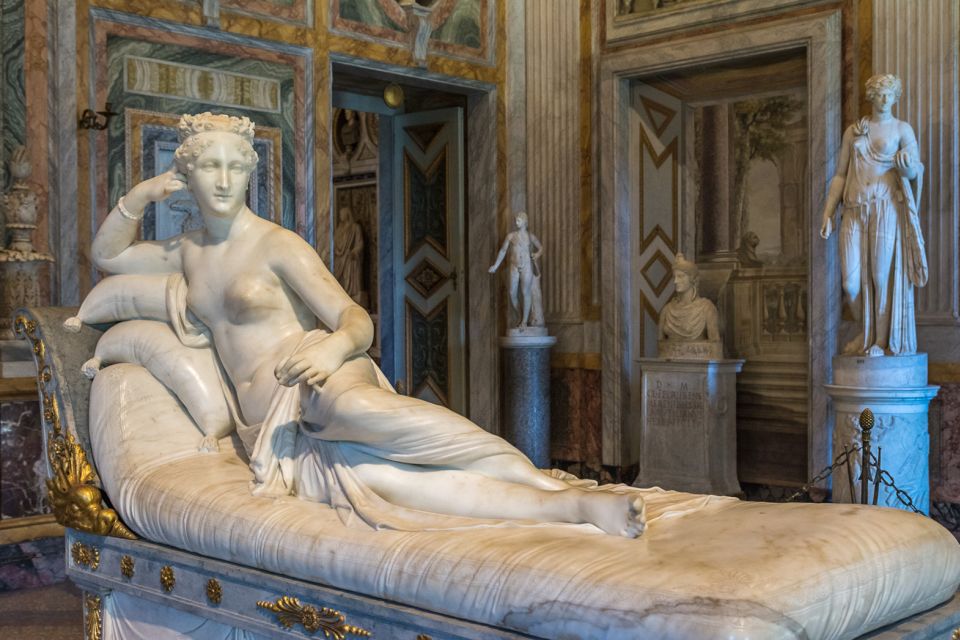
- Skip-the-ticket line so you spend more time inside the gallery’s showpieces
- Small-group pace that makes it easier to ask questions and keep attention on key details
- Apollo and Daphne storytelling that helps you understand the myth and the craft
- Caravaggio and Bernini focus, including standout works like Young Sick Bacchus
- A structured tour through about 20 rooms, so you don’t wander aimlessly
- Rules you should respect: no backpacks or large bags, and no food or drinks
Entering the Borghese Gallery the smart way
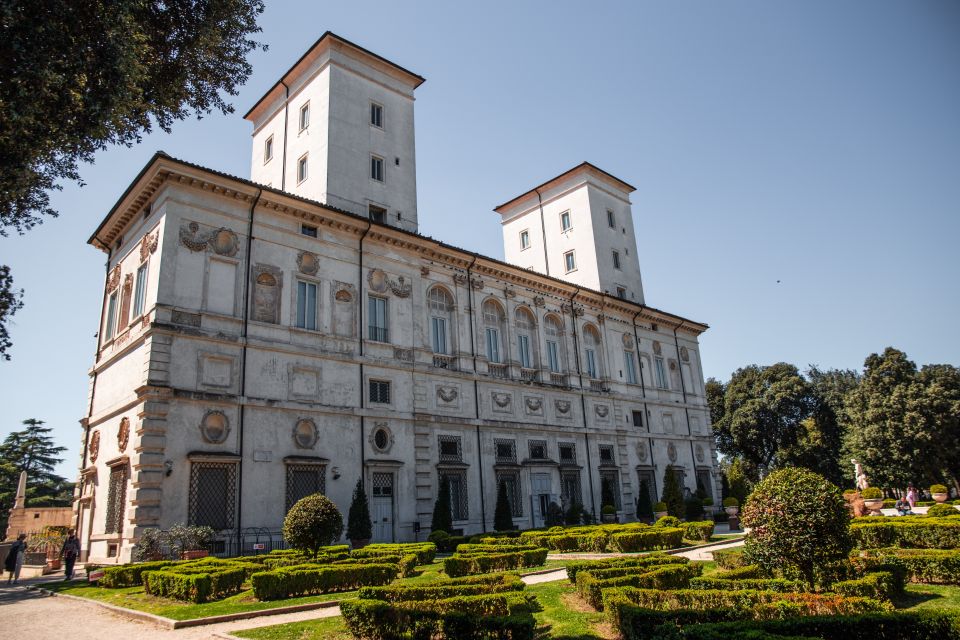
The Borghese Gallery isn’t just a museum you pass through. It’s a villa collection where sculptures and paintings sit in rooms designed to be looked at, and the whole place has a feeling of curated intimacy. With this tour, you get into the core experience without losing half your energy to queues.
You’ll meet your guide at the Borghese Gallery entrance area, with the guide holding a sign showing the agency name Doooing Experience. The start point is listed as Piazzale del Museo Borghese, so I suggest planning to arrive a bit early and give yourself time to find the sign and the group.
One small practical note: the tour doesn’t wait for late arrivals. Plan to be there at least 15 minutes before the scheduled start, or you risk missing the departure with no refund.
You can also read our reviews of more guided tours in Rome

Skip-the-line logistics: less waiting, more seeing
Skip-the-line entry is a big deal at Borghese. The museum has strict entry flows and limited time slots, so showing up with the right ticket plan matters more than at many other Roman museums. Here, the tour includes skip-the-ticket-line entry, which usually means you can get moving quickly once your group is assembled.
Also, you won’t be packed into a giant group. The tour is described as small group, which tends to make the guide’s pacing feel human. If you’re the type who likes to stop and study one sculpture for a full minute, this format is far more forgiving than “see everything, run out, repeat.”
Your comfort matters too. Wear comfortable shoes. Inside, you’ll spend the time walking between rooms, then leaning in for details—this is not a gallery where flip-flops help.
The guide’s job: turning masterpieces into something you can actually notice
This tour is built as a guided viewing experience, not a lecture you survive. You’ll get live English commentary, and if needed, headsets help you hear clearly without craning your neck through crowded moments.
What makes the tour valuable is the way the guide helps you look. Instead of you staring at a face on a painting and hoping you’ll decode it, you get cues on what to notice—composition, emotion, myth details, and the sculptor’s trick of turning marble into something that looks almost moveable.
Many guides for this collection are praised for mixing art history with storytelling. Names that show up in the experience include Alessandra, Sabrina, Martina, and Monica. Even if you don’t recognize the guide in advance, the common theme is the same: they explain what you’re seeing and why it mattered to the people who commissioned and collected it.
A walkthrough across about 20 rooms
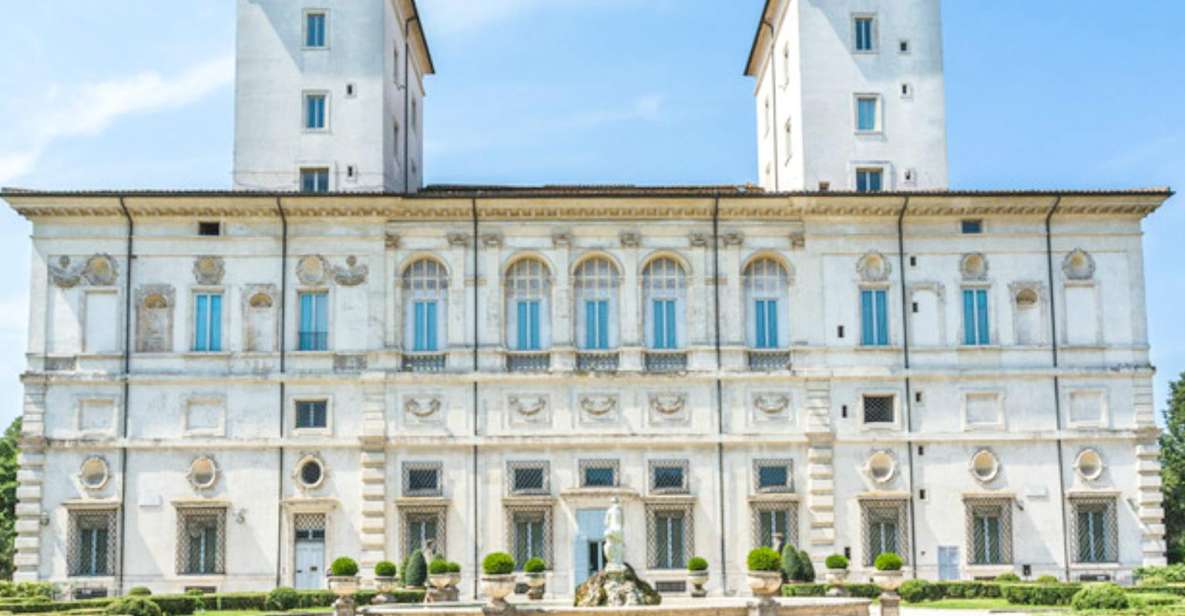
The collection experience is described as moving through twenty rooms, which is a helpful number to keep in mind. You’re not being rushed out in minutes, but you also aren’t promised a free-form all-day drift.
That’s a good fit for most visitors. The Borghese is famous, and it can be tempting to try to see everything on your own. A guided route helps you avoid the common trap of spending 30 minutes trying to decide where to go next.
Expect a rhythm like this: arrive, hear the context for a cluster of works, then spend time on the objects themselves. The guide’s job is to connect the dots so the collection feels like one story rather than random famous items.
Bernini in Rome: marble that looks like it’s breathing
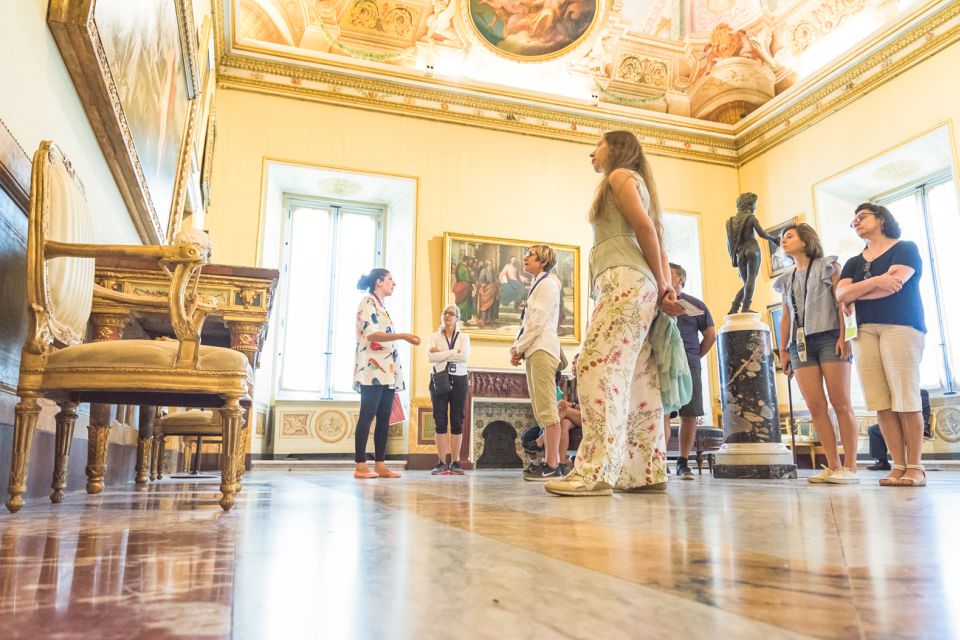
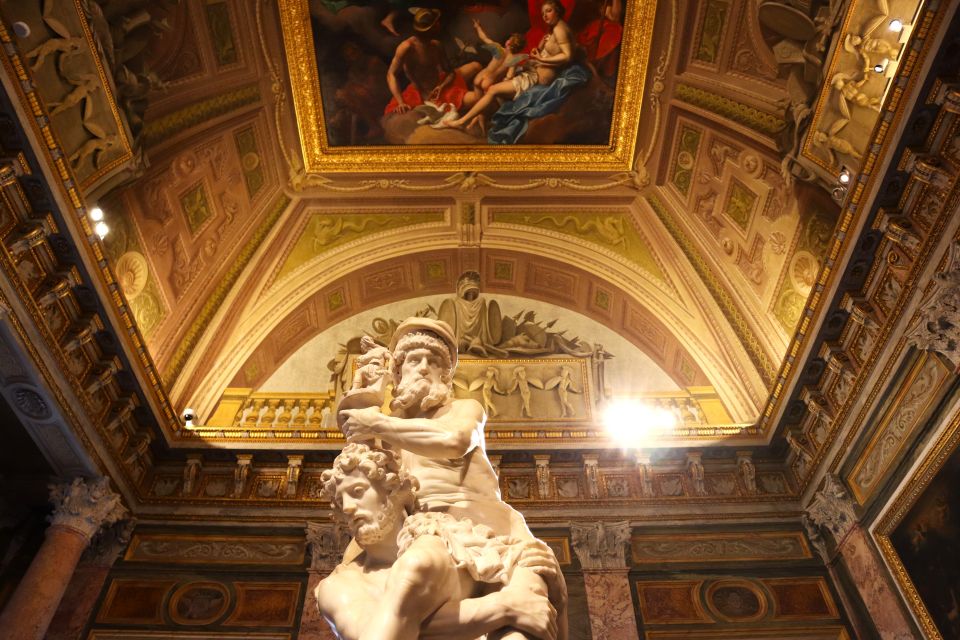
Bernini is the heart of the Borghese Gallery for a lot of people, and this tour puts him where he belongs. You’ll see major works associated with Bernini’s secular sculpture output, and the guide helps you place those works in context—so the sculptures don’t feel like isolated trophies.
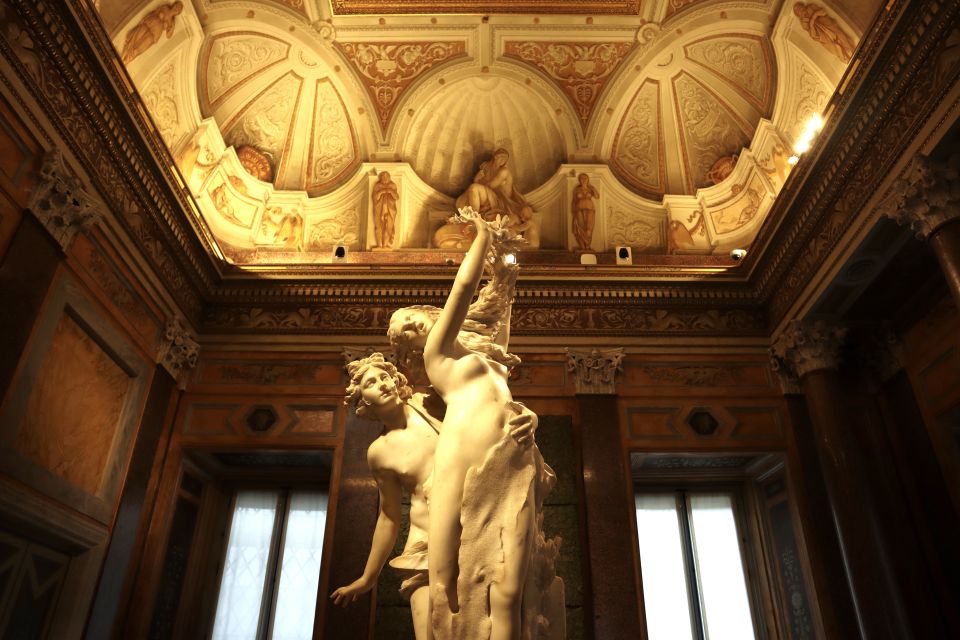
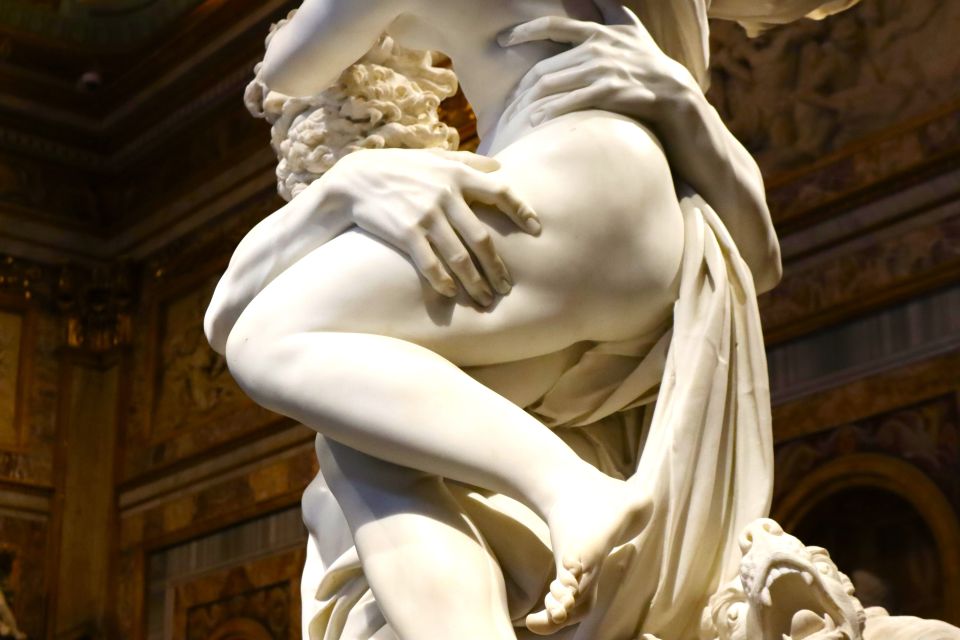
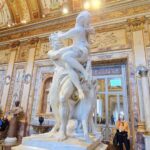
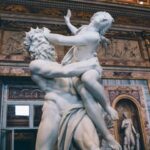
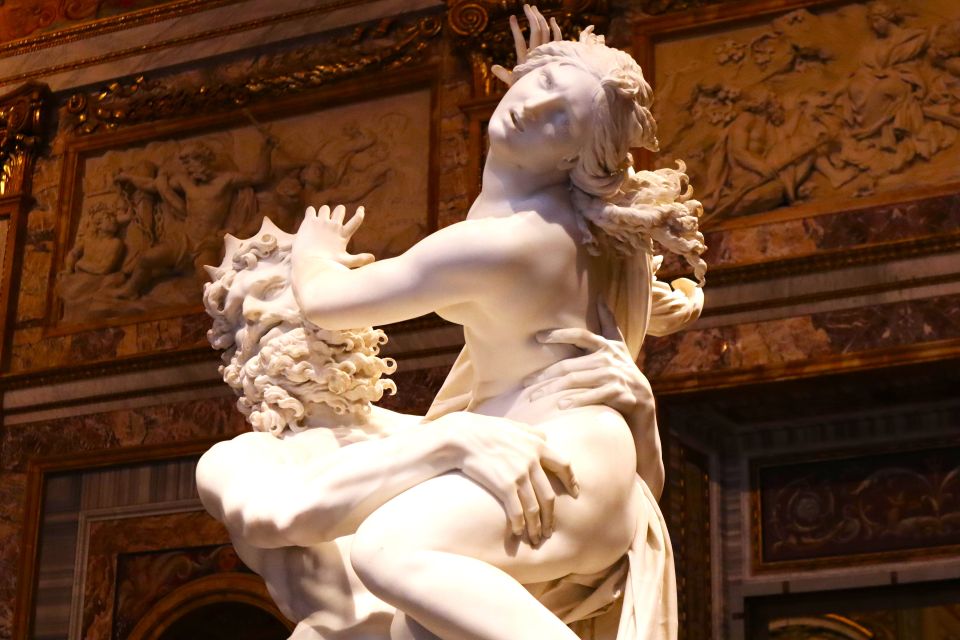
You’ll likely cover early myth subjects like Goat Amalthea with Infant Jupiter and Faun, then move into the dramatic power of later works such as Rape of Proserpine. And of course, Apollo and Daphne gets serious attention. The point isn’t only that it’s famous. It’s that it’s famous for very specific reasons: the energy in the pose, the tension in the bodies, and the way you feel the moment is caught mid-action.
When the guide explains the story behind Apollo and Daphne, you stop seeing it as just two figures. You start seeing the myth mechanics—pursuit, transformation, and the sculptural choices that communicate emotion without any paint to help.
You can also read our reviews of more museum experiences in Rome


Caravaggio: the paintings where light does the talking
Caravaggio at Borghese is not background material. His paintings are full of attitude—people often describe them as startling because they feel immediate.
This tour highlights key Caravaggio works such as Young Sick Bacchus and Boy with a Basket of Fruit. The guide helps you appreciate what’s happening in the scene: the human drama, the realism, and the emotional tone that comes from how the light shapes faces and bodies.
One reason I like a guided approach here is simple. Caravaggio can be misunderstood if you treat him like a “pretty picture” artist. With the right framing, you notice the contrast between flesh-and-blood realism and the myth or symbolism behind the scene.
Canova and Raphael: balancing the mood after the drama
Not every room is Bernini and Caravaggio, and that’s a good thing. The tour also points you toward Canova works and references Raphael among the important paintings you’ll encounter.
Canova’s sculptures are different in feel. Where Bernini often pushes emotion and movement to the edge, Canova brings a different kind of clarity and finish. When you see Canova right after Caravaggio and Bernini, the shift in style helps you understand why the Borghese collection feels like a conversation across different tastes and time periods.
Raphael’s presence adds another layer. Even if you already know the name, a guided highlight helps you connect the work to the broader Renaissance influence that still mattered in Rome’s collector culture.
The Apollo and Daphne factor: why this tour is worth it
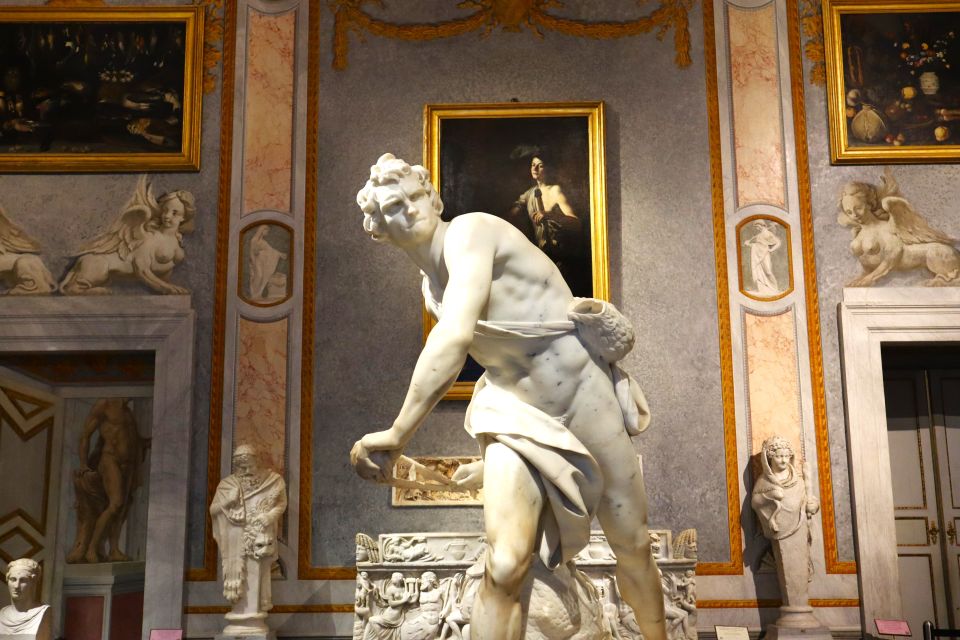
Plenty of Borghese visits let you “see” Apollo and Daphne. Fewer visits help you understand why it hits so hard.
Here, you get the story behind the sculpture and the guide’s focus on what you’re actually looking at. That storytelling matters because Apollo and Daphne is about more than romance or mythology trivia. It’s about conflict and transformation—and Bernini’s ability to sculpt motion and tension out of stone.
If you’re the kind of visitor who likes to understand context after you see the image, this is a strong format. You’ll leave with a mental picture that’s easier to recall next to other baroque works you might see later in Rome.
Timing and pace: 1.5 to 2 hours, not a half-day plan
The tour runs 1.5 to 2 hours, which is short enough to feel efficient and long enough to get real value. I like this timing for two reasons.
First, it keeps the Borghese from becoming a blur. Second, you can still do other Rome highlights without committing your entire morning to one museum. Borghese can be the main art event of your day, or a centerpiece before you go explore Rome’s neighborhoods.
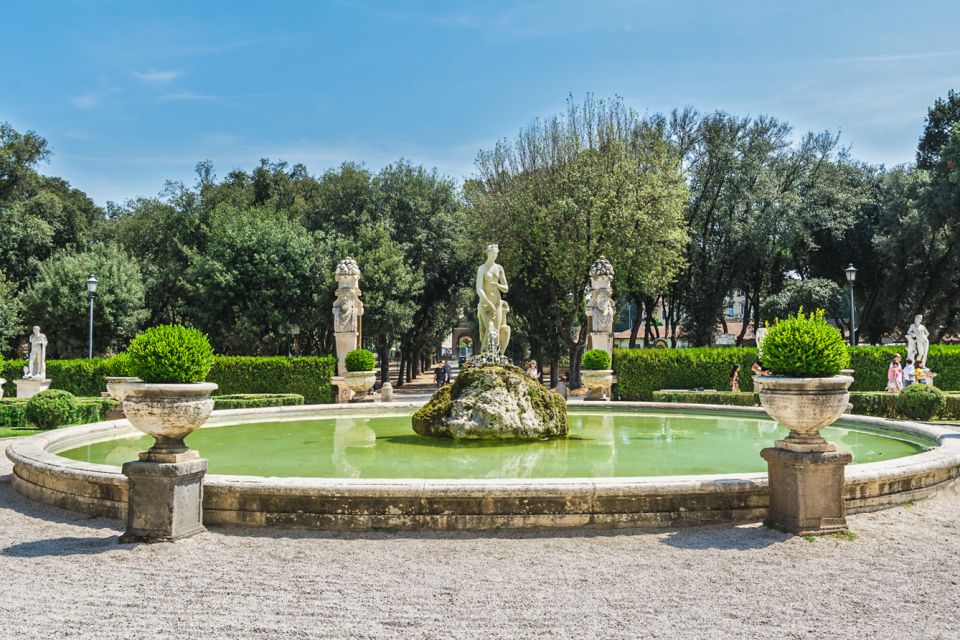
If you want more, the villa grounds are right there. Many visitors end up taking a slow walk afterward, especially when the weather is kind. Think of the guided part as your art engine, then the outdoor time as your reset.
Rules that affect your visit (and what to wear)
This is a museum-with-rules experience, and ignoring them is how plans get messy. You can’t bring food and drinks, and luggage isn’t allowed. That includes luggage or large bags, and it also lists backpacks and bags as not permitted.
So travel light. Wear layers if it’s warm outside, and wear shoes with grip. You’re doing museum walking plus standing and leaning in for details.
Another practical factor: due to the Jubilee, some access routes may change and some monuments may be under restoration. The tour data also notes that some gallery rooms might be closed due to refurbishment. In other words, don’t build your day around the assumption that every room will be exactly as you imagine.
Price and value: is $83 a fair deal?
At $83 per person for a 1.5 to 2 hour, guided, skip-the-line Borghese visit, you’re paying for three things at once: entry, guidance, and time saved. If you’ve ever spent a morning waiting at a famous site, you already know that saved time is part of the value.
You’re also paying for a specific kind of experience: guided attention to the collection’s big hitters. The tour highlights Caravaggio, Bernini, Canova, and key works like Apollo and Daphne, Young Sick Bacchus, and Boy with a Basket of Fruit. If you’re the kind of traveler who learns faster with explanations and wants to focus on the strongest pieces, the price can feel fair quickly.
If you don’t care about art context and you’d rather wander freely for longer, you might decide to go unguided and spend extra time. But for most first-time Borghese visitors, the guide plus skip-the-line is exactly what you’re paying for.
Who should book this Borghese Gallery tour
This tour is best for you if:
- You want the “greatest hits” without guessing where to start
- You like learning stories behind art, especially myth and baroque drama
- You’re short on time and want a structured path through about 20 rooms
- You prefer a small-group format over crowded museum chaos
You might skip it if:
- You want a longer, unstructured visit with lots of personal wandering time
- You’re expecting full access to every room every day, regardless of closures
- You need wheelchair access, since it’s listed as not suitable for wheelchair users
If you’re unsure, a good mindset is this: book the guided tour to get the art into focus, then build your own time around it afterward.
Should you book this skip-the-line Borghese tour?
Yes—if your goal is to understand the masterpieces and leave with more than just photos. This is the kind of visit where the guide’s storytelling can change your whole experience, especially for works like Apollo and Daphne and the Caravaggio paintings.
Book it if you value skip-the-line entry, a small-group feel, and a clear route through the collection’s highlights. If you’re traveling with limited museum time, it’s also one of the better ways to make Borghese feel coherent rather than overwhelming.
Just be realistic about two things: rooms can be closed and routes can shift due to current conditions, and the tour is only 1.5 to 2 hours. Plan accordingly, and you’ll get a lot more out of your visit than you’d get by wandering without a plan.
FAQ
How long is the Borghese Gallery guided tour?
The tour lasts about 1.5 to 2 hours.
Where do we meet for the tour?
You meet in front the entrance of the Borghese Gallery, with your guide holding a sign that includes the agency logo Doooing Experience.
Does the tour include skip-the-ticket line entry?
Yes. The tour includes skip-the-ticket-line entry.
What items are not allowed during the tour?
Food and drinks are not allowed, and luggage/large bags, backpacks, and bags are not allowed.
Is the tour suitable for wheelchair users?
No. It is not suitable for wheelchair users.
Can I get a refund if I cancel?
Yes. You can cancel up to 24 hours in advance for a full refund.