REVIEW · ROME
Rome: Catacombs of Domitilla Entry Ticket & Guided Tour
Book on GetYourGuide →Operated by OPERA ROMANA PELLEGRINAGGI · Bookable on GetYourGuide
Going underground makes Rome feel real. The Catacombs of Domitilla are one of the largest underground cemeteries here, and the guided format helps you make sense of what you’re seeing in a hurry. I love how the cold, stone corridors turn Roman religion and art into something physical, not just a chapter in a book.
The second thing I really like is the mix of pagan and Christian frescoes in the same spaces, which makes the site feel like a living timeline instead of a single-era museum. You’ll also be in a small group (up to 10) with live guidance, and I saw praise for guides like Andrea, who got people engaged and answering questions. One drawback to plan around: no photography inside, so leave your phone in your pocket.
In This Review
- Key things to know before you go
- Catacombs of Domitilla: one site, two worlds, one cool descent
- Via delle Sette Chiese and your ticket-office timing
- Flavia Domitilla’s family and why this catacomb begins with exile
- Two main levels: from the Hypogeum of the Flavians to later Christian use
- The Hypogeum of the Flavians
- Later transformations and sacred reuse
- Frescoes: where pagan and Christian art share the same underground walls
- Martyrs, sanctity, and why burial grounds mattered
- What actually happens during the 30-minute guided tour
- One practical rule that shapes your visit
- Small group with a live guide: why up to 10 people matters
- Price and value: is $16 for 30 minutes worth it?
- Comfort and planning: what to wear underground
- Who should book this Domitilla catacomb tour?
- Should you book the Catacombs of Domitilla guided entry?
- FAQ
- How long is the Catacombs of Domitilla tour?
- Where is the meeting point?
- What time should I arrive before the tour starts?
- What languages are offered?
- How big is the group?
- What does the ticket include?
- Is photography allowed inside the catacombs?
- What should I wear or bring?
- Is this tour suitable for wheelchair users or people with mobility impairments?
- Can I cancel for a refund?
- What access or timing options do I have for starting times?
Key things to know before you go
- Short and focused: A 30-minute guided visit that prioritizes the best parts of the catacombs
- Small group format: Limited to 10 participants, which keeps the guide’s explanations clear
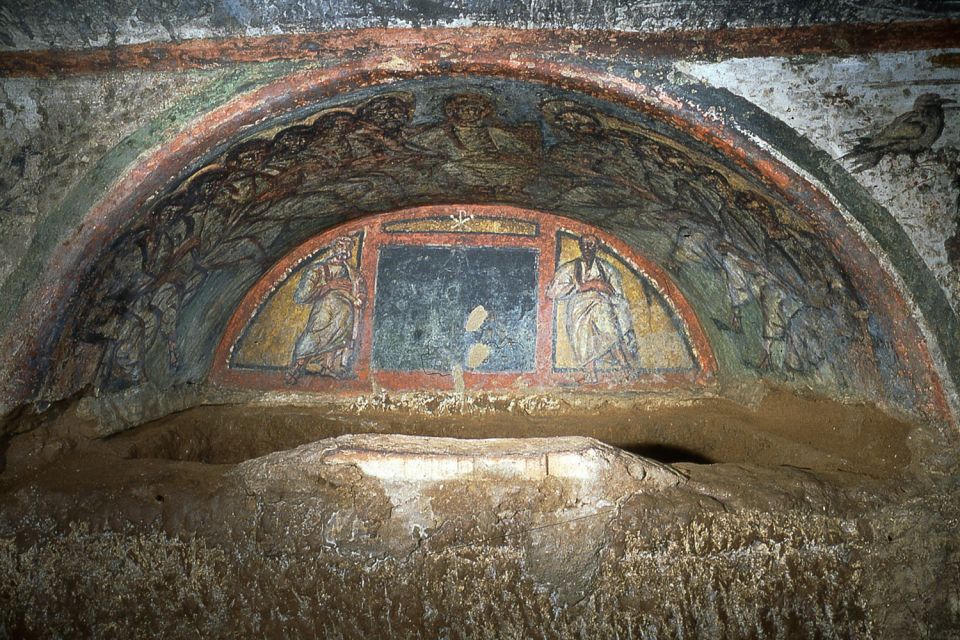
- Pagan-to-Christian story: You’ll see how spaces shifted as beliefs changed over time
- Frescoes you can actually interpret: The guide helps you read what’s on the walls, not just look at it
- Martyrs’ context: The tour explains burial sanctity tied to Christian martyrs
- Rules are strict underground: No photography inside, so bring your attention instead
Catacombs of Domitilla: one site, two worlds, one cool descent
The Catacombs of Domitilla sit at via delle Sette Chiese, and this tour takes you down into the underground cemetery spaces that helped Rome handle burial for generations. You’re going far below street level—down as much as 16 km according to the tour details—so even if you’ve seen other subterranean sites, this one has a strong “you are no longer above-ground” feeling.
A guided visit matters here. Catacombs can turn into a blur of signs and shadowy corridors if you don’t know what you’re looking for. With a live guide, you get the thread: how the site started, how it changed, and why certain places became sacred.
And yes, it’s cold. That’s not a marketing line—it’s part of the experience. The stone walls, the stillness, and the sense of distance from modern life do a lot of the storytelling for you.
You can also read our reviews of more tours and experiences in Rome



Via delle Sette Chiese and your ticket-office timing
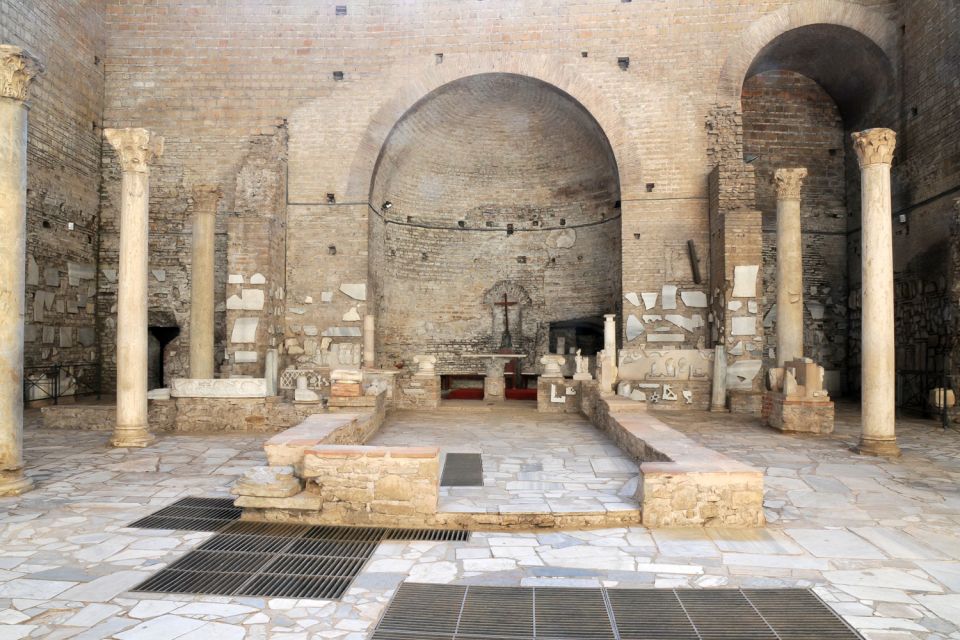
This is one of those Rome activities where punctuality affects your whole start. The meeting instruction is simple: go directly to the ticket office of the catacomb and show your reservation at least 10 minutes before your scheduled tour.
Why you should care: underground tours work like a chain. If you arrive late, you don’t just miss a few minutes—you can miss the group flow. A tour this short is 30 minutes, so arriving on time keeps you from losing the best explanations.
Also, plan for the practical side of finding the place and getting there with some buffer. Rome traffic and walking time can be unpredictable, even when you’re doing everything “right.”
Flavia Domitilla’s family and why this catacomb begins with exile
One reason the Domitilla catacombs feel more meaningful than generic “old tombs” is the backstory attached to the land and the family connected to it.
The site connects to Flavia Domitilla, associated with burial grounds on land that belonged to her, later donated to her freedmen. In the same framework, she’s linked to Flavio Clemente, consul in 95 AD, and she was related to the imperial family. That’s the kind of detail that makes the catacombs feel tied to real people, not just anonymous history.
Then comes the dramatic turning point: Flavia Domitilla, being Christian, was exiled by Domitian to the island of Ponza, where she died. The site’s early story is tangled with power, punishment, and faith—so when later Christian burials appear, it lands with more weight.
For you, the value is clarity: the guide doesn’t treat the catacombs as a random stop. It’s presented as a place shaped by family connections and shifting religious realities.
Two main levels: from the Hypogeum of the Flavians to later Christian use
Domitilla catacombs are described as having two main levels, and that structure is a big part of why a guide helps.
The Hypogeum of the Flavians
One key area is the Hypogeum of the Flavians. Early interpretation linked it—according to Giovanni Battista de Rossi—to Christian members of the Flavia family. But the site also includes a pagan hypogeum dating from the late 2nd century to early 3rd century, and later it became Christian and was enlarged in the mid 3rd century.
So you’re not just walking through “old Christian rooms.” You’re seeing a space that evolved. That evolution is exactly where the tour’s explanations pay off.
You can also read our reviews of more guided tours in Rome



Later transformations and sacred reuse
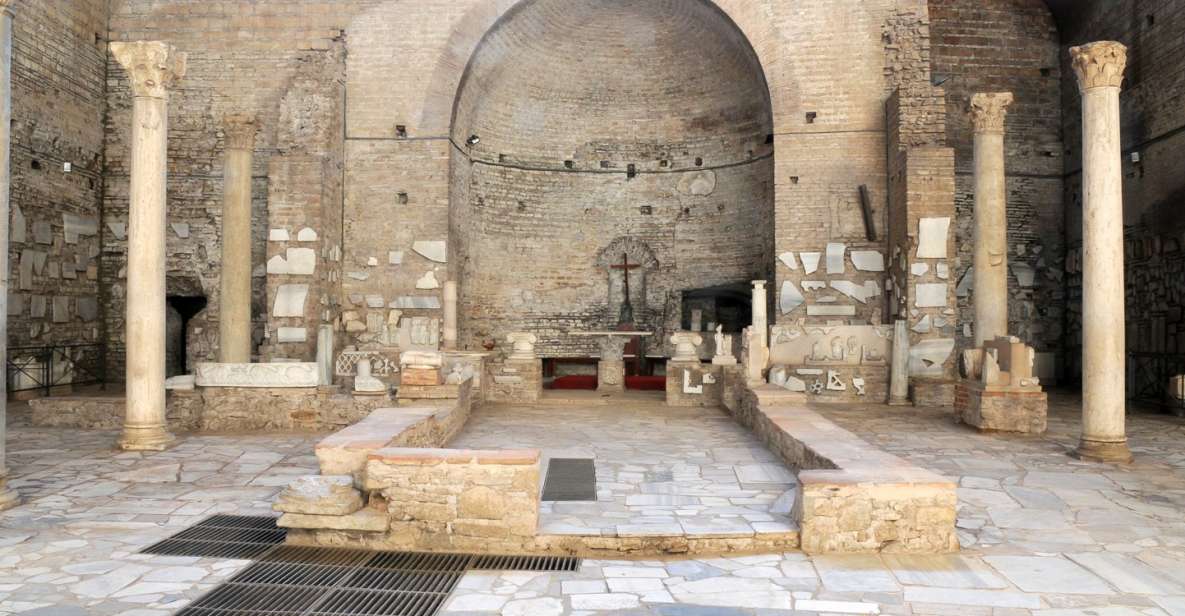
By the end of the third century, the bodies of martyrs Nereus and Achilleus were placed in a crypt on the second floor. That crypt was later transformed into a small basilica by Pope Damasus (366–384), then enlarged by Pope Siricius (between 390 and 395) until it reached its current size.
If that feels like a lot of names and dates, don’t worry. The guide’s job is to connect them to what you can see underground now: how a burial space gained sanctity and architectural importance over time.
Frescoes: where pagan and Christian art share the same underground walls
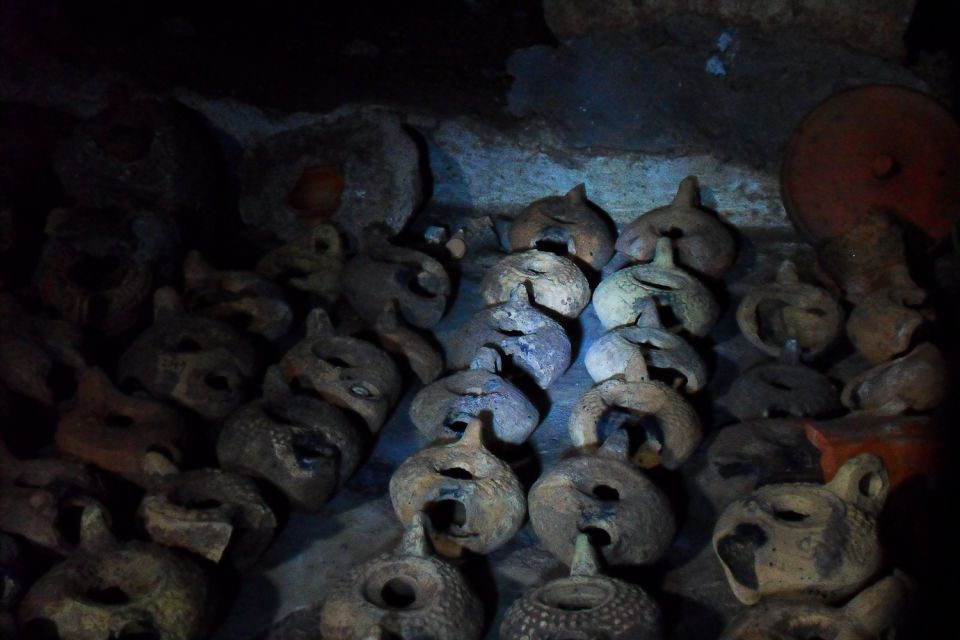
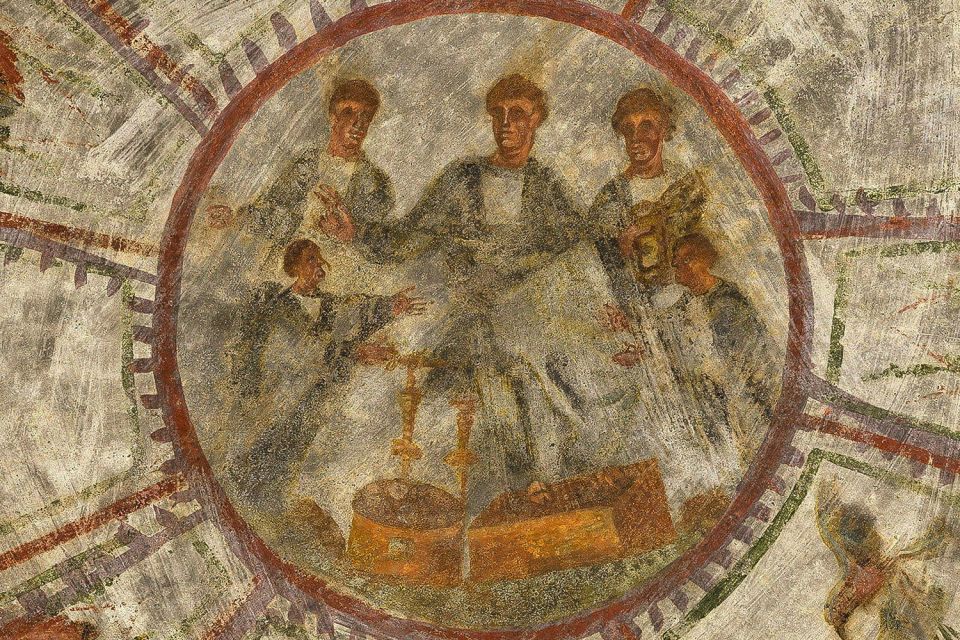
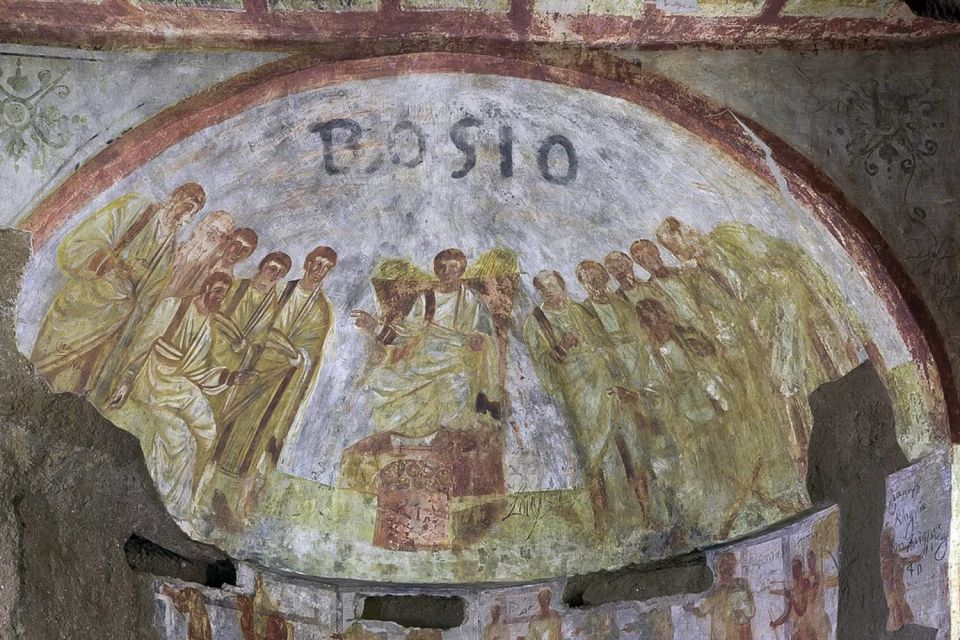
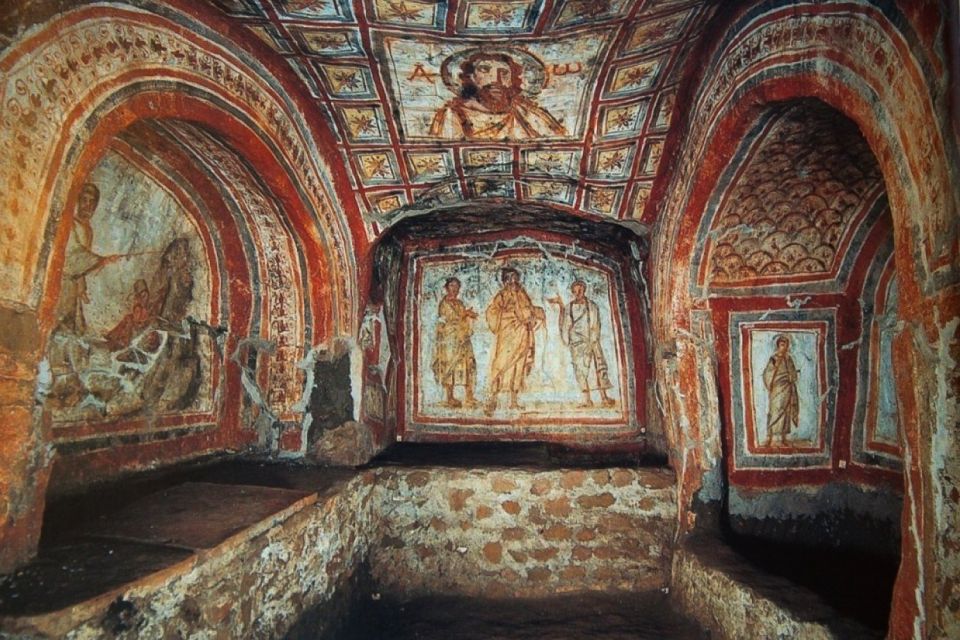
One of the standout things about Domitilla is the mixture of pagan and Christian frescoes. You’re not just looking at religious imagery in isolation. You’re seeing art that reflects changing beliefs in the same underground environment.
Here’s what makes this practical for you: frescoes can be hard to read when you don’t know the symbols. With a live guide in Italian or English, you can actually learn what the images are doing—how they fit into the story of burial, commemoration, and faith.
And because you’re underground, the fresco surfaces feel more intimate than they would in a bright museum. The walls hold onto the past in a way that feels quieter and more personal.
Martyrs, sanctity, and why burial grounds mattered
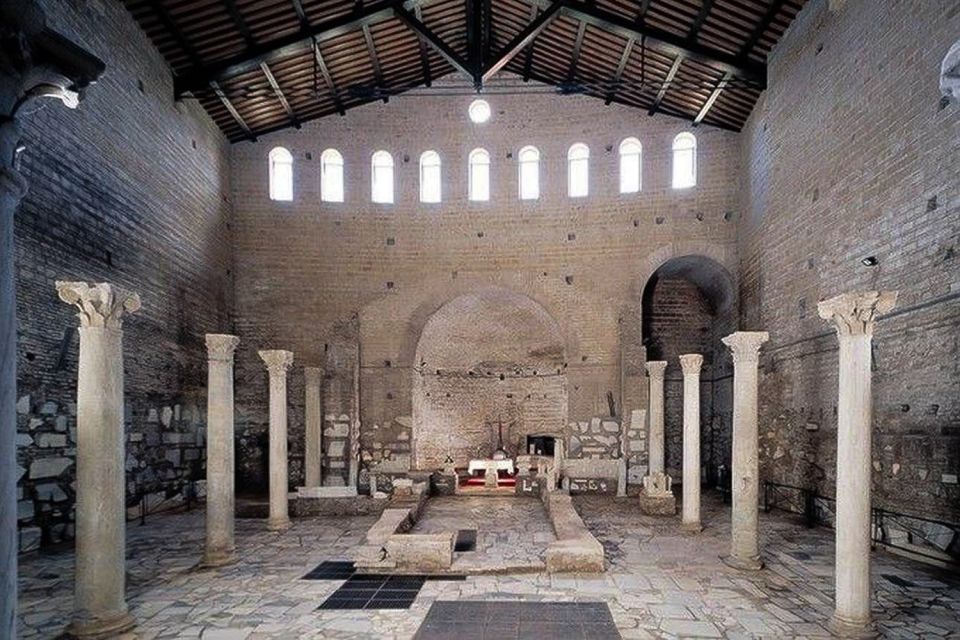
This tour isn’t only about aesthetics. It centers on what burial meant—especially in Christian communities tied to martyrs.
The tour highlights the sanctity of the burial grounds for Christian martyrs, specifically referring to the crypt connected to Nereus and Achilleus. When those bodies were placed there, the site gained a different layer of meaning, and later popes reinforced that shift by transforming and enlarging the basilica space.
For your understanding, think of it like this: a catacomb isn’t only a storage room for the dead. It becomes a landmark of memory and identity. The guide’s explanations help you see why certain places became more central than others, even while the broader network remained underground.
What actually happens during the 30-minute guided tour
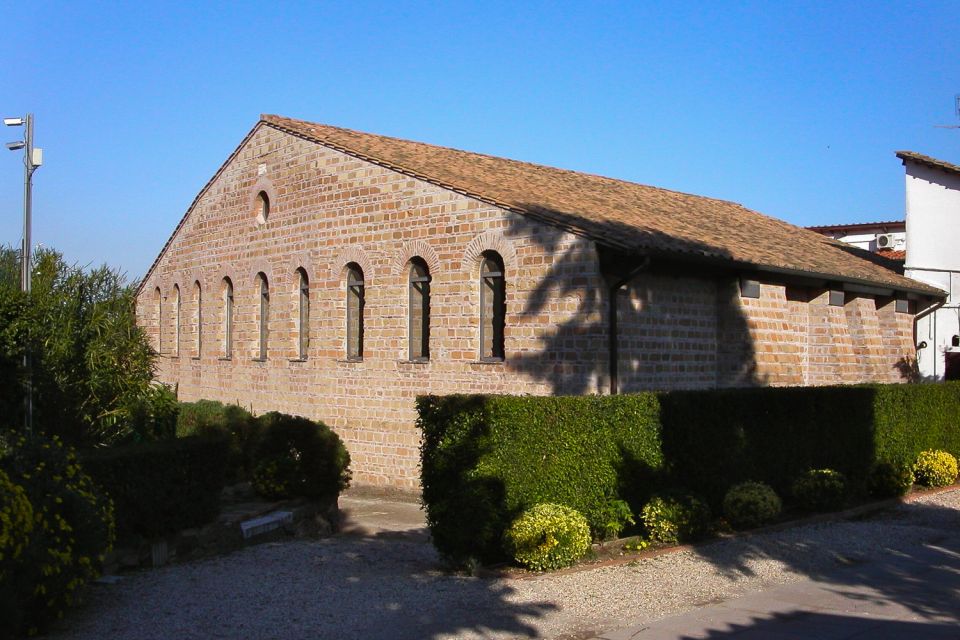
This is a short experience, so there’s a good chance you’ll feel it move quickly—but it’s designed to stay focused. You’ll be guided through the most important underground areas, with explanations timed to what’s visible.
You can expect the guide to cover:
- The basic origin of the site connected to Flavia Domitilla and her freedmen
- The split between the Flavians’ spaces and later Christian adaptations
- The shift from pagan use to Christian use over the centuries
- How the martyrs’ crypt area became associated with later basilica development
- The restoration care behind the scenes and why certain surfaces require protection
That last point—restoration—is worth paying attention to. Underground environments are harsh. Guides often explain restoration as a delicate balancing act: allowing visitors to learn while protecting fragile surfaces and preserving what time hasn’t already worn away.
One practical rule that shapes your visit
Photography is not allowed inside. That affects how you experience the catacombs. You’ll rely on observation and the guide’s descriptions rather than building a photo album. If you’re the type who takes lots of pictures on tours, this might feel limiting. If you’re fine with “I’ll remember this,” it makes the visit quieter and more respectful.
Small group with a live guide: why up to 10 people matters
The tour limits group size to 10 participants. In catacombs, small groups are more than comfort—they change how well the guide can keep your attention.
You tend to get:
- Better pacing (less stopping and re-starting)
- More chances to ask questions
- Clearer explanations, since the guide isn’t trying to talk over a crowd in narrow corridors
The reviews attached to this experience specifically praised guides for being friendly, professional, and passionate about history and art. One English-language reviewer singled out Andrea as amazing and very professional, and that kind of feedback usually points to a guide who knows how to keep things clear in a short time.
If you enjoy asking questions—what certain images mean, or why spaces changed—you’ll get more out of this format than a big-group entry.
Price and value: is $16 for 30 minutes worth it?
At $16 per person for a 30-minute guided visit, the price is low enough that it feels like a “don’t overthink it” Rome add-on—if you match the tour to what you want.
Here’s the value logic I’d use:
- You’re paying for two things: the entrance fees and a live guide.
- A short, guided catacomb visit can save you time and confusion. Without guidance, you might see impressive spaces but miss the key story: pagan-to-Christian transformation, the Flavians’ role, and the later basilica connected to the martyrs.
The price looks even better if you compare it to other “ticket + tour” combinations in Rome where the ticket alone costs more and the guide time is limited.
The only reason you’d feel it’s not worth it is if you wanted a long self-paced exploration. This tour is built for the highlights in half an hour, not a slow wander.
Comfort and planning: what to wear underground
You don’t need special gear, but you should plan around being underground and moving through stone corridors.
Bring:
- Comfortable clothes
Also, think about how you’ll handle a no-photo rule. If your plan is to use your phone constantly, you’ll lose some motivation. Instead, plan to listen closely and look carefully.
One more planning note: the tour is not suitable for people with mobility impairments and wheelchair users. If that applies, it’s better to skip this specific catacomb entry and look for a different Rome experience with better access.
Who should book this Domitilla catacomb tour?
Book it if you want:
- A short guided experience that still explains the major story points
- Strong emphasis on the art and belief changes (pagan to Christian)
- A small group atmosphere with a live guide in Italian or English
- A memorable “underground Rome” stop without needing hours underground
You might skip it if:
- You need wheelchair-accessible routing
- You strongly prefer a self-guided visit with lots of time to linger
- You rely on photos as your main way to remember places
Should you book the Catacombs of Domitilla guided entry?
I’d book this if you’re doing a Rome history-and-art day and want a meaningful underground stop that stays focused. The price is friendly, the group size is small, and the guide’s job is clear: connect what you see to the evolution of the site, from Flavia Domitilla’s family context to later Christian sanctity tied to Nereus and Achilleus and popes like Damasus and Siricius.
If you hate strict rules like no photography, or if mobility access is a concern, then choose another option.
FAQ
How long is the Catacombs of Domitilla tour?
The tour duration is 30 minutes.
Where is the meeting point?
Please go directly to the ticket office of the catacomb and show your reservation.
What time should I arrive before the tour starts?
Show your reservation at least 10 minutes before the scheduled tour time.
What languages are offered?
The live tour guide is available in Italian and English.
How big is the group?
The group is small, limited to 10 participants.
What does the ticket include?
It includes an entrance fee and a tour guide.
Is photography allowed inside the catacombs?
No, photography is not allowed inside.
What should I wear or bring?
Wear comfortable clothes.
Is this tour suitable for wheelchair users or people with mobility impairments?
No, it is not suitable for people with mobility impairments or wheelchair users.
Can I cancel for a refund?
Yes. You can cancel up to 24 hours in advance for a full refund.
What access or timing options do I have for starting times?
You can check availability to see starting times, and the duration is fixed at 30 minutes.