REVIEW · ROME
Rome: Colosseum, Roman Forum & Palatine Hill Tour
Book on GetYourGuide →Operated by Tours And Tours · Bookable on GetYourGuide
Three ancient stops, one nonstop wow. In this 2.5-hour Colosseum, Roman Forum, and Palatine Hill tour, a live guide turns the big-name ruins into stories you can actually follow, and the included headsets make it easy to hear even when crowds swell. I like that the pace is designed for first-timers who want real context fast, not just random photos.
I especially like the way the route links the sites together. You’ll walk the Via Sacra area, on cobblestones tied to major names like Julius Caesar, Mark Antony, and Cleopatra, then climb up to Palatine Hill for that view-back-over-the-Forums feeling. It’s the kind of sightseeing that helps you understand why Rome kept building on the same “center.”
One consideration: this is a workout. It involves lots of walking and climbing, and it is not suitable for people with mobility impairments or wheelchair users. Add in airport-style security and crush-level crowds at peak times, and you should expect the day to be busy and sometimes slower than the headline duration.
In This Review
- Key things that make this tour worth it
- Where you meet and how the start works at Via delle Terme di Tito
- Entering the Colosseum without the ticket chaos
- Roman Forum: walking the Via Sacra and seeing the power center
- Palatine Hill climb: emperors built here, and you can see why
- Triumphal arches of Septimius Severus, plus Titus and Constantine
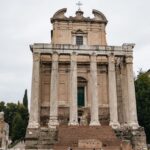
- Caesar’s cremation spot: a small place with a big story
- Timing and crowd pressure: what to expect on the ground
- Price and value: is $41 worth it?
- What’s included, what isn’t, and how to prepare
- Languages and guide style: why it can make or break your experience
- Who this tour suits best (and who should rethink it)
- Should you book this tour? My bottom-line call
- FAQ
- How long is the Colosseum, Roman Forum & Palatine Hill tour?
- What sites are included in this experience?
- What does the price include?
- Where do I meet the group?
- Which languages are available for the live guide?
- Is this tour wheelchair or mobility accessible?
Key things that make this tour worth it
- Skip-the-line tickets, plus headsets: you get guided time where it matters, and you can actually hear the guide.
- Via Sacra walking with major Roman names: the route connects the street-level feeling of Rome to the big events.
- Colosseum plus the Imperial Fora: you don’t stop at the famous building; you see the political center that powered it.
- Palatine Hill viewpoints: the climb pays off with emperor-palace scale and views over the Forums.
- Triumphal arches and Caesar’s cremation spot: you get specific landmarks, not just general “ruins talk.”
Where you meet and how the start works at Via delle Terme di Tito
You meet at Via delle Terme di Tito 93. If you’re arriving by Metro, go to Colosseo metro station, then head to the terrace above the station. From there, walk on Via Nicola Salvi for about 100 meters, then turn left.
This matters because the Colosseum area is a maze when you’re late. So I’d rather you arrive a bit early, scan for your group, and take a moment to orient yourself before security and crowds kick in.
Also note the tour includes airport-style security for all visitors. It’s not optional, and it’s part of the “real Rome” experience you can’t dodge with guided sightseeing.
You can also read our reviews of more tours and experiences in Rome.

Entering the Colosseum without the ticket chaos
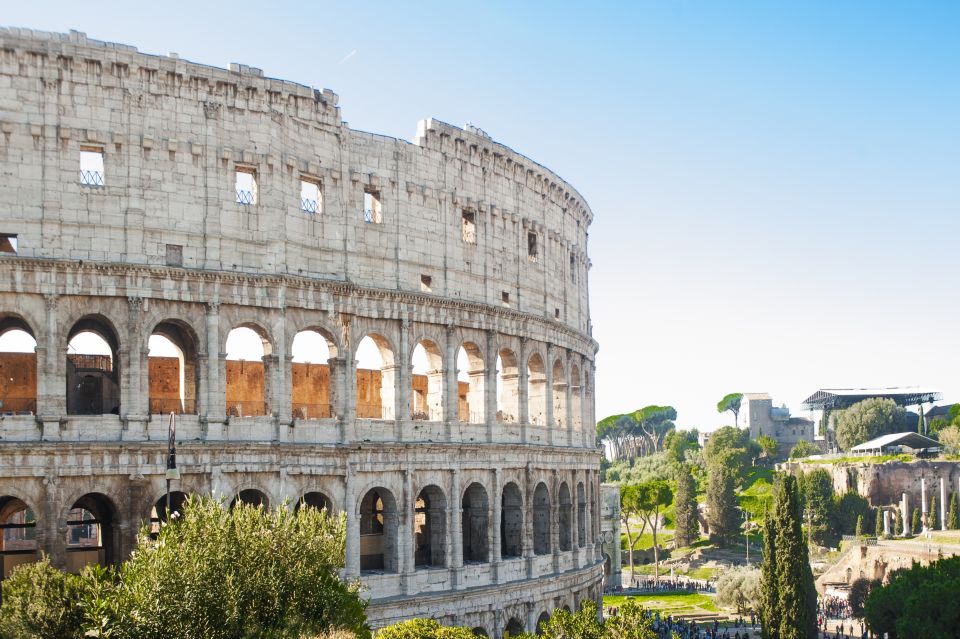
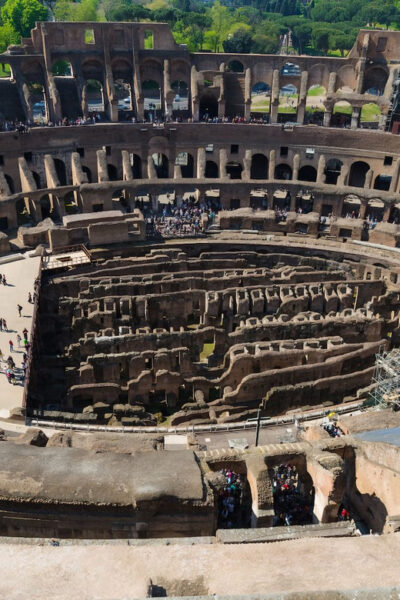
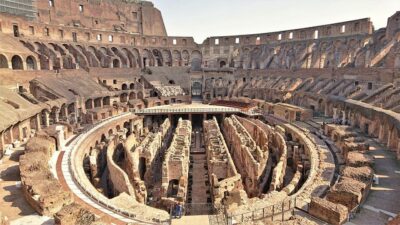
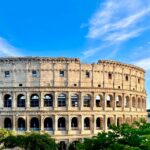
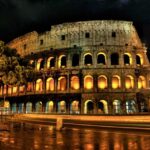
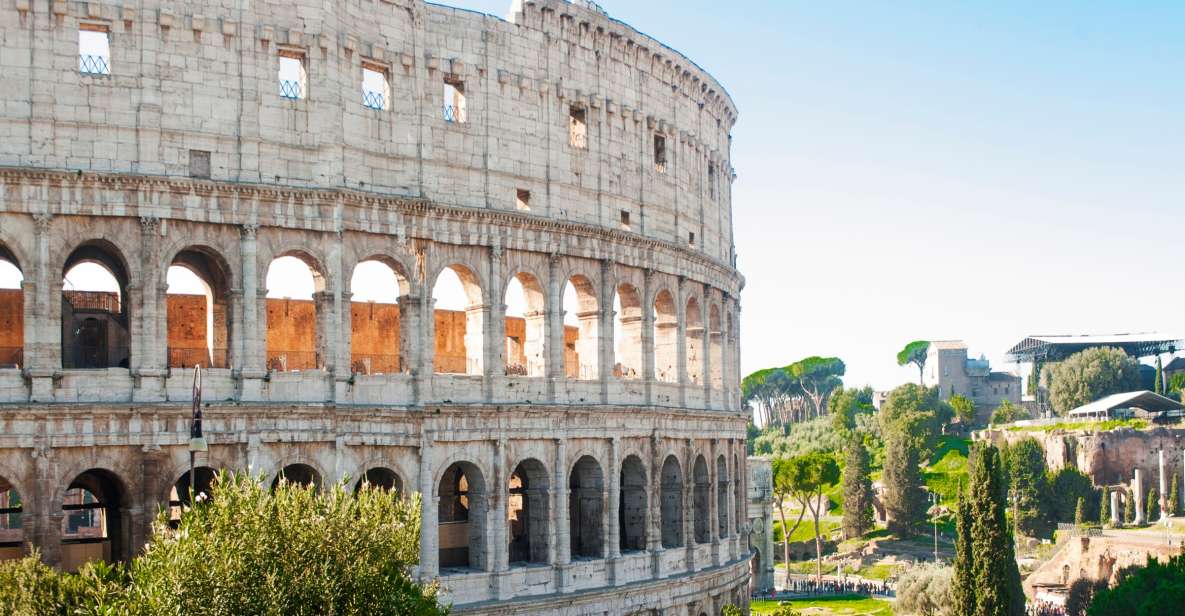
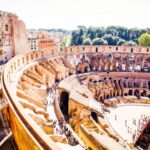
The tour gives you a guided visit inside the Colosseum area, focused on what the arena meant in Roman life. The guide’s job is to connect the structure to the people: gladiators, their training, and their living conditions—plus how spectacle turned athletes into public stars.
You’ll also get the “visual logic” that’s hard to piece together on your own. The Colosseum looks like a mass of stone until someone points out what you’re actually looking at: where movement happened, where crowds watched, and how the show worked.
A fair heads-up from real-world experience: even with skip-the-line, you can still run into big queues at other steps. Think security and crowd flow, not only tickets. The perk is still meaningful, just don’t expect a totally empty route.
Roman Forum: walking the Via Sacra and seeing the power center
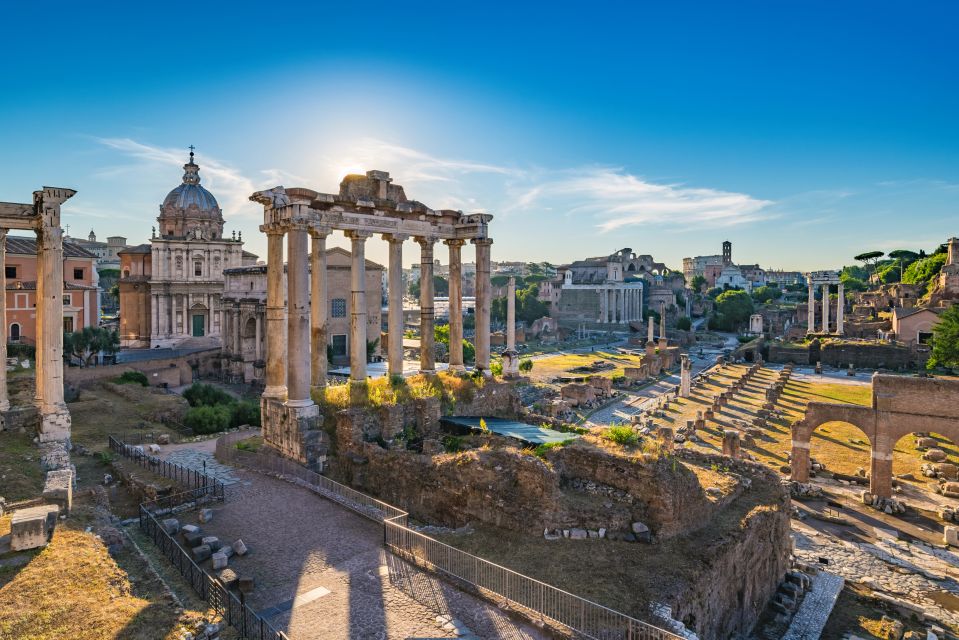
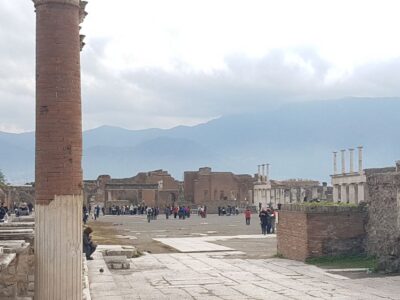
After the Colosseum, the tour shifts to the Imperial Roman Forums. This is the downtown center of the ancient world, and that idea only clicks when you stand in the right place and hear what happened there.
You’ll walk on cobblestones associated with major figures—people like Julius Caesar, Mark Antony, and Cleopatra—and the point isn’t the names alone. It’s that Via Sacra is the physical spine of Rome’s political and ceremonial life. You feel that “procession” vibe when you move along the Forum spaces.
The guide helps you read what’s in front of you. When you know the Forum’s role, the arches, bases, and open areas stop looking random. They become pieces in a system: power, propaganda, ceremony, and control.
Palatine Hill climb: emperors built here, and you can see why
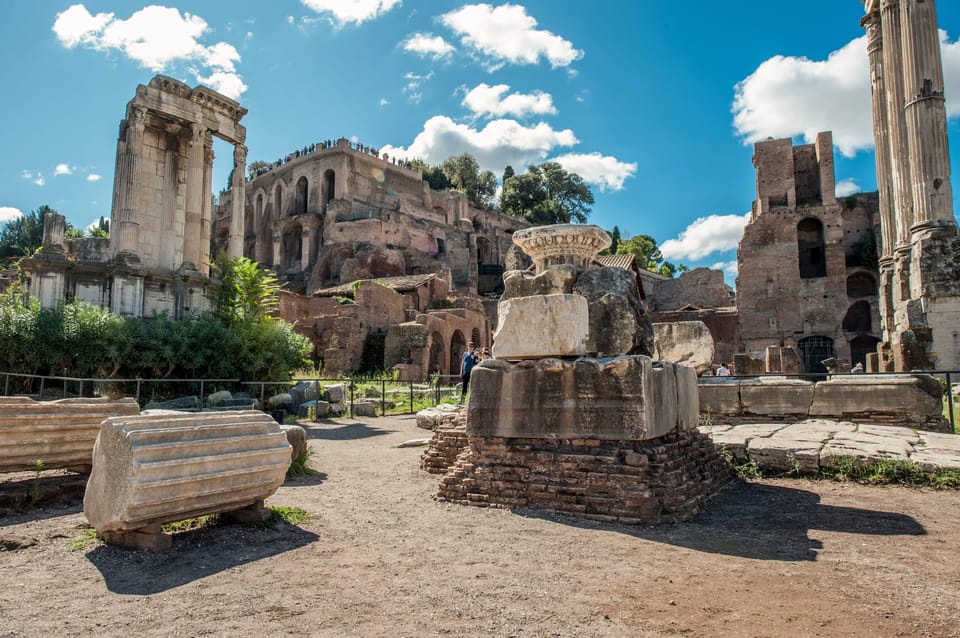
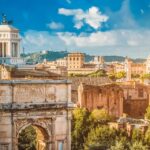
Palatine Hill is where this tour turns from impressive ruins into a sense of scale. You climb up to the area linked with emperors’ palaces, and you get views that let you understand how the Forums below functioned as the stage.
This is one of my favorite parts of the overall experience because the hill does what museums struggle with: it shows you the relationship between private power and public life. Rome wasn’t built for comfort; it was built to govern. Standing up on Palatine Hill gives you that “why here?” perspective.
Practical reality: this section can feel hot and tiring. Your guide may try to manage it—keeping time under shade when possible and allowing brief comfort moments—but you should still plan your body for walking and climbing.
Triumphal arches of Septimius Severus, plus Titus and Constantine
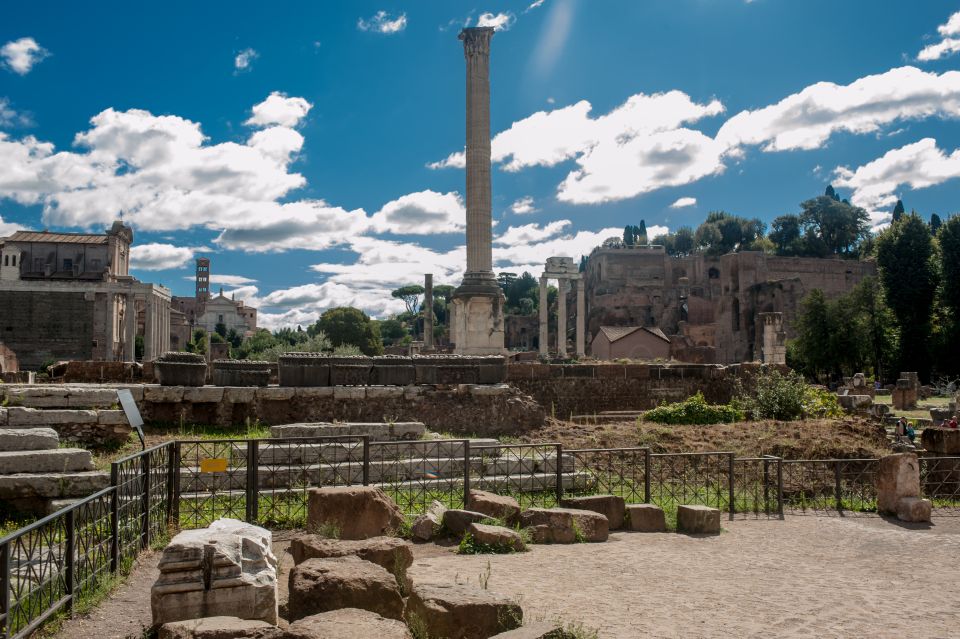
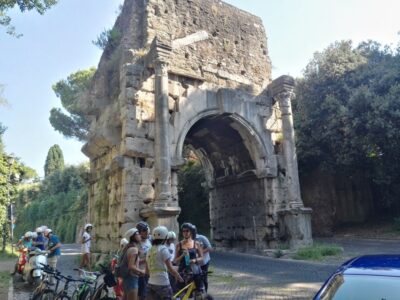
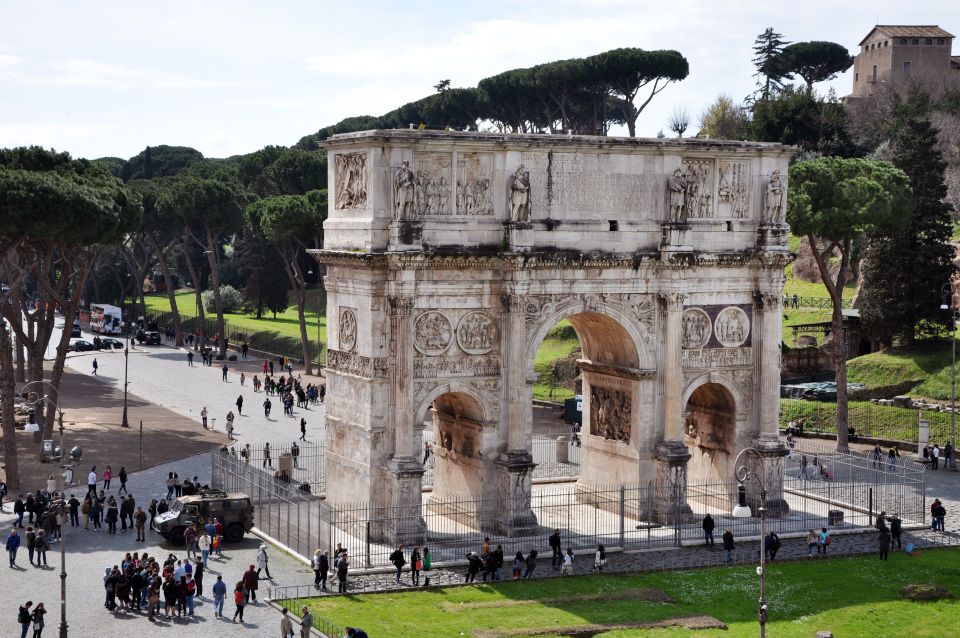
A standout feature here is the focus on specific triumphal arches. You’ll walk around the Triumphal Arches of Septimius Severus, and you’ll also see the ancient Titus and Constantine Arches.
These arches aren’t just decorative. In Roman Rome, they were public messages. They celebrated victories, broadcast the legitimacy of rulers, and turned military success into street-level storytelling you could walk past every day.
If you’re the type who likes when a tour points out exact landmarks instead of vague “cool ruins,” this part is a big win. You’ll finish this stretch with a clearer sense of how Rome’s propaganda worked in stone.


Caesar’s cremation spot: a small place with a big story
The tour also includes the spot associated with Julius Caesar’s cremation. Even if the actual footprint is subtle compared with the Colosseum, this stop gives you a sharper timeline for what you’re seeing.
Why it’s valuable: when you connect Caesar’s story to the later imperial buildings and ceremonial spaces, the city’s evolution starts to make sense. Rome changes hands, but it keeps reusing the same ground. This is one of the reasons Rome feels layered instead of just old.
Timing and crowd pressure: what to expect on the ground
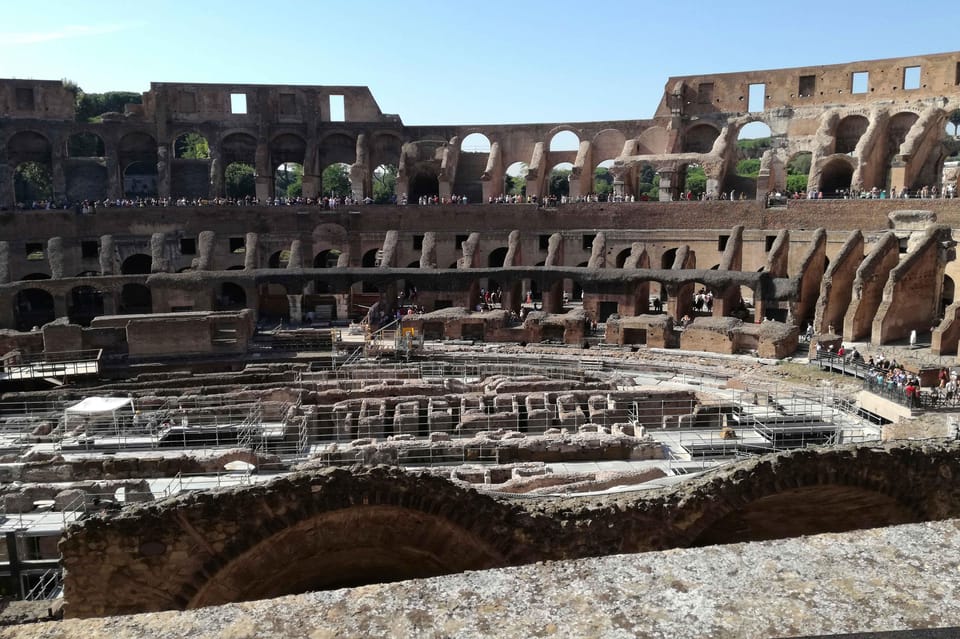
The tour is advertised at 2.5 hours, and it’s guided at the Colosseum, the Roman Forum, and Palatine Hill. In real life, timing can stretch—especially in peak season—because crowds are not shy and the security steps add time.
You should also expect the start area to be busy when multiple tours are launching around the same time. There can be a bit of chaos as groups sign in and get organized, so don’t treat the meeting point like a quiet check-in desk.
If your goal is to maximize time in Rome, this is usually still a good move. But if you’re the type who needs a perfectly controlled schedule, plan buffer time for delays and the heat. This is a lot of walking in one session.
Price and value: is $41 worth it?
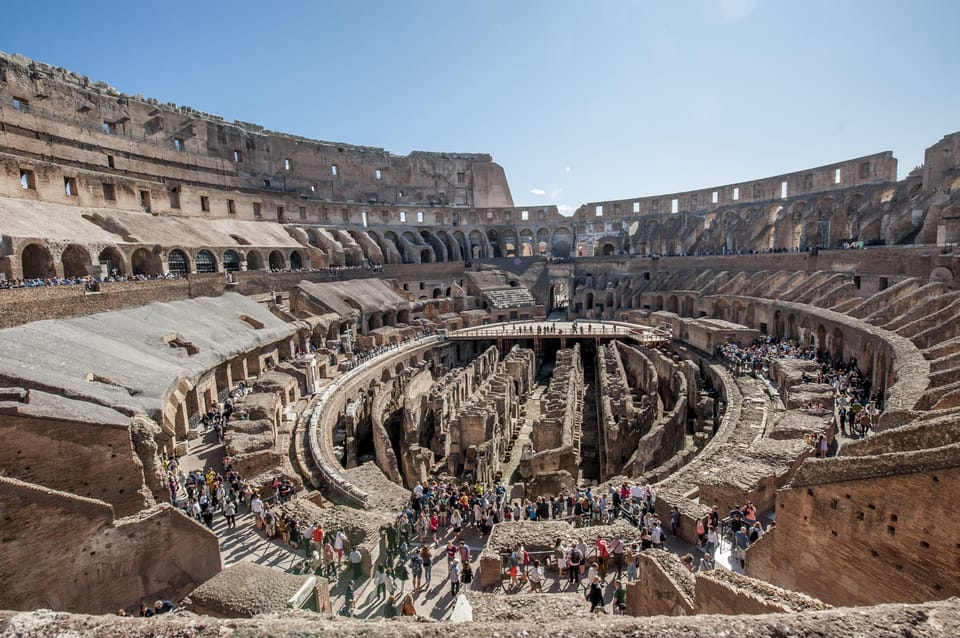
At about $41 per person for a guided run through the Colosseum, Roman Forum, and Palatine Hill, the value mostly comes from three things:
- Your time: You’re covering the “big three” without needing to puzzle together a route.
- Included tickets: entrance access is part of the deal, and skip-the-line helps with the most obvious ticket stress.
- Headsets: it’s included, and that’s huge in Rome where sound carries poorly and groups compete in crowded spaces.
If you were thinking of trying to DIY this, the trade-off is simple. DIY can be cheaper, but you’ll spend more time figuring out what you’re looking at. With a guide, you get meaning on the spot—gladiator life at the Colosseum, Forum politics below, and emperor power on Palatine Hill.
Is it “cheap”? No. But for first-timers, it often feels like a fair price for what you get: structure, context, and less wasted time.
What’s included, what isn’t, and how to prepare
Included:
- Professional guide
- Entrance tickets
- Headsets
Not included:
- Hotel pickup and drop-off
- Food and drinks
That means you should plan to eat before or after, not during. The tour is short enough that buying snacks on the run can turn into a time sink.
What to bring:
- Passport or ID card (including for children)
What to leave behind:
- Pets
- Weapons or sharp objects
- Alcohol and drugs
- Glass objects
And yes, bring practical walking gear. Comfortable shoes matter. Add sunscreen and a hat, because this route can be hot and exposed even when the guide tries to keep things manageable.
Languages and guide style: why it can make or break your experience
Guides are offered in Spanish, French, German, English, and Italian. With headsets included, language support matters less than usual, since you’re not constantly leaning in to hear over other groups.
You’ll get the best experience if you go in with a mindset of questions. This kind of tour works when you’re curious about how Rome functioned, not only how it looked. If your guide’s pacing clicks with you, you’ll feel like the monuments have a logic.
And from what’s been shared by past groups, guides often bring real enthusiasm. People have even mentioned guides by name such as Andrei, Mahmood, Ricardo, Nancy, and Ian—so you may benefit from that kind of storytelling energy, depending on your departure.
Who this tour suits best (and who should rethink it)
This tour is a strong fit if you:
- Want a guided Colosseum + Roman Forum + Palatine Hill overview in one go
- Prefer hearing explanations while you walk instead of reading at each stop
- Like the major landmarks and want them connected through one storyline
It’s not a fit if you:
- Need wheelchair access or have mobility limitations. The tour states it is not suitable for people with mobility impairments or wheelchair users.
- Want a slow, stroller-friendly day. This is built around walking and climbing.
If you’re traveling with kids, it can work, but make sure you’re ready for security checks and lots of time on your feet. Bring the required ID for children.
Should you book this tour? My bottom-line call
Book it if you want the fastest path to understanding what you’re seeing. The mix of Colosseum, Imperial Forums, and Palatine Hill is exactly what most first-time Rome visitors need. The headsets and included tickets make it smoother than trying to assemble it yourself.
Skip it (or consider a lighter plan) if you’re sensitive to crowds, heat, or long walks. Also think twice if you’re the type who gets stressed by security and schedule drift. Even with skip-the-line, the area is crowded, and the day can run a bit longer than you expect.
For most people: this is a good value way to get oriented and actually “read” Rome instead of just look at it.
FAQ
How long is the Colosseum, Roman Forum & Palatine Hill tour?
The tour duration is 2.5 hours. The actual timing can vary based on on-the-ground conditions like crowds.
What sites are included in this experience?
It includes a guided visit to the Colosseum, the Imperial Roman Forums, and Palatine Hill, plus time around major triumphal arches and a stop connected to Julius Caesar’s cremation.
What does the price include?
The price includes a professional guide, entrance tickets, and headsets.
Where do I meet the group?
Meet at Via delle Terme di Tito 93. From Colosseo metro station, go to the terrace above the station, walk about 100m on Via Nicola Salvi, then turn left.
Which languages are available for the live guide?
The live tour guide is offered in Spanish, French, German, English, and Italian.
Is this tour wheelchair or mobility accessible?
No. It is listed as not suitable for people with mobility impairments and not suitable for wheelchair users.