REVIEW · ROME
Rome: Houses of Augustus and Livia Private Tour
Book on GetYourGuide →Operated by Through Eternity Tours · Bookable on GetYourGuide
Rome’s power lived on Palatine Hill. In this private, skip-the-line tour, you visit the House of Augustus and House of Livia plus major Palatine and Roman Forum sights, with an English-speaking guide who puts the buildings into real political and everyday context.
I love how the tour focuses on what you can actually see: surviving wall paintings, marble floors, and palace spaces that still feel like lived-in rooms. I also like the pacing and context—guides with strong academic training (including Brian Green and Patrick in prior feedback) tend to explain both the big power plays and the small details without turning it into a lecture.
One thing to consider: the House of Livia is temporarily closed and this may affect what you’re able to visit, so it’s smart to confirm arrangements ahead of time.
In This Review
- Key highlights worth your time
- Meeting at Angelino ai Fori: getting oriented fast
- Roman Forum: where politics mixed with daily life
- Palatine Hill legends and the emperors’ neighborhood
- House of Augustus: rooms that still speak in paint
- House of Livia: myth frescoes, marbles, and a closure reality check
- Santa Maria in Antiqua: imperial palace leftovers turned into a church
- Skip-the-line and private guiding: what you actually gain
- Price at $149.54 per person: is it worth it?
- Timing, Jubilee restorations, and other practical notes
- Who should book this tour (and who should skip)
- Should you book Rome’s Houses of Augustus and Livia Private Tour?
- FAQ
- How long is the Rome: Houses of Augustus and Livia Private Tour?
- Where do I meet my guide?
- Where does the tour end?
- Does the tour include skip-the-line access?
- What sites are included in the tour?
- Is the House of Livia open?
- What language is the guide?
- Is this a private tour?
- Are headsets provided?
- What should I bring, and is the tour wheelchair accessible?
Key highlights worth your time
- Skip-the-line access through a separate entrance to keep your 3 hours from getting eaten up
- Two major house visits: Augustus first, then Livia (if open), both on Palatine Hill
- Palatine views from the emperors’ high ground, with legend-and-power history tied together
- Forum context for how Rome worked day to day, not just how it looked
- Santa Maria in Antiqua visited from the remains of Imperial palaces
- Private-guide attention, plus headsets for groups of 6+ for better clarity
Meeting at Angelino ai Fori: getting oriented fast
You meet your guide near Largo Corrado Ricci at the Cafe/Restaurant Angelino ai Fori (Largo Corrado Ricci, 43a), looking for a Through Eternity sign or flag. This matters because the area around the Palatine and Forum can feel like a maze of lanes and stairs. A clear meeting point helps you get your bearings quickly.
From there, the tour moves on foot and stays tightly focused. Expect short walks between areas—about 10 minutes at a time—so you don’t spend the whole 3 hours shuffling around Rome trying to find the next entrance. Comfortable shoes are a must; Palatine and the Forum are not the kind of surfaces where you want to wear anything delicate.
A private format also changes how the walk feels. You’re not crammed into a long line of strangers. Instead, you can ask for clarity right when a detail matters—like why a certain space is significant or how the story of an emperor connects to a room’s decoration.
You can also read our reviews of more private tours in Rome


Roman Forum: where politics mixed with daily life
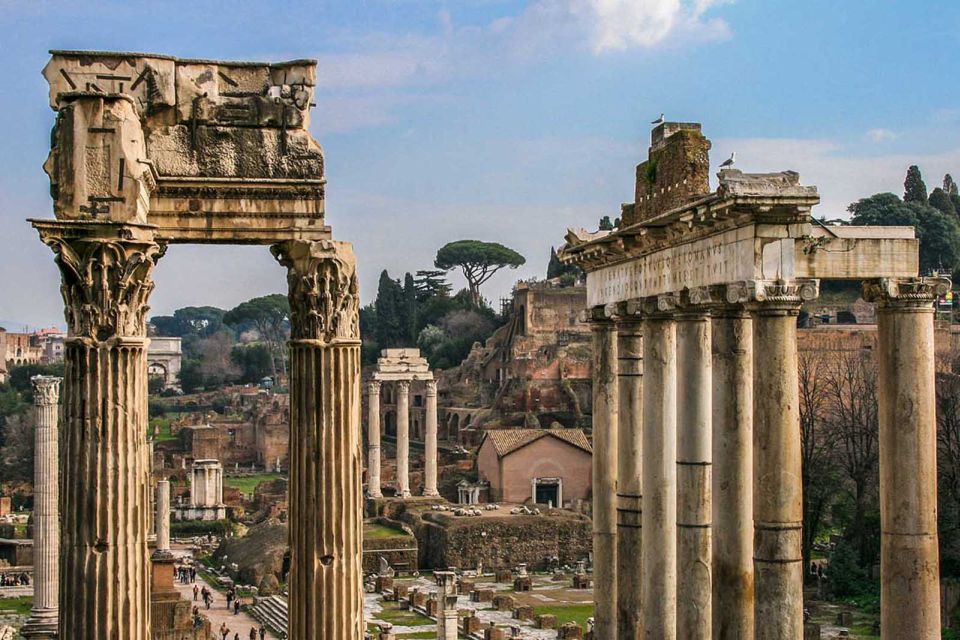
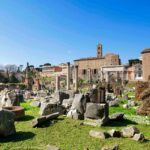
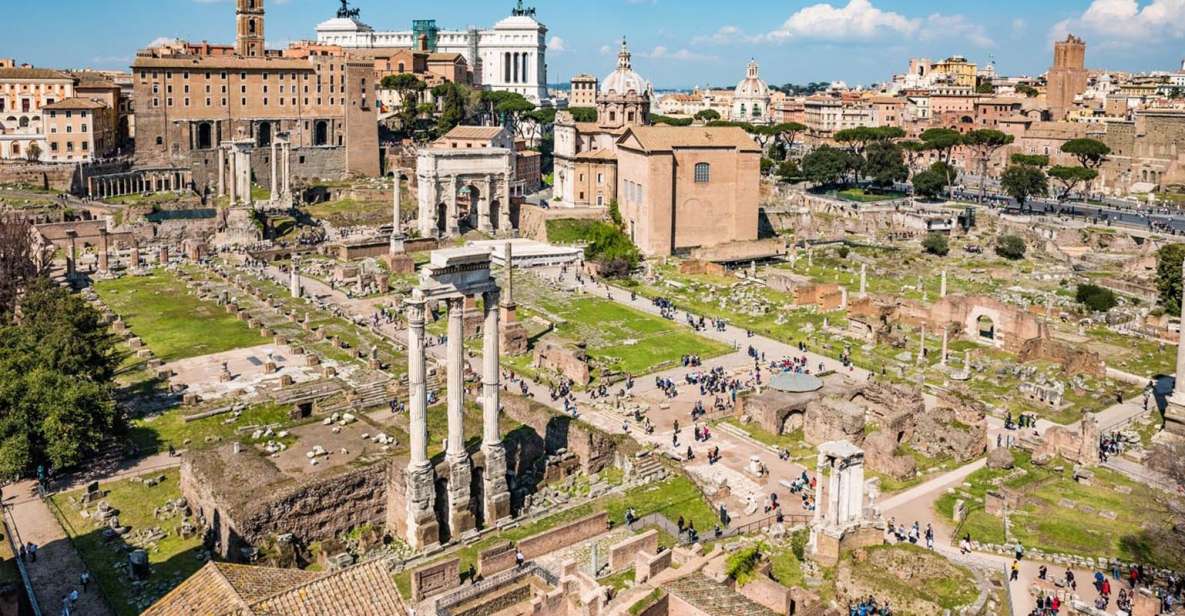
The tour begins with the Roman Forum guided portion, roughly 35 minutes. This is the part many people remember as a dramatic “ruins” site, but a good guide helps you see it as a working center—streets, crowds, routines, and government all happening in the same place.
You’ll get a sense of how daily life and power overlapped, and you’ll follow the footsteps of major figures mentioned in the tour description, from Julius Caesar to Cicero. Even if your Roman history is rusty, the best way to learn here is to connect names to real spaces. That’s the Forum’s strength: you can point at a location and ask, What would this have meant in real life?
There’s also a specific connection between Palatine and the Forum that the tour builds toward. The tour includes the opportunity to climb the monumental ramp that led emperors from the Palatine down into the Forum. That climb is more than a photo moment. It’s a physical reminder of hierarchy—power literally moving downward into public space.
Practical note: the Forum can feel uneven and busy depending on the day. A guided visit helps you avoid time-wasting detours and keeps the experience smooth.
Palatine Hill legends and the emperors’ neighborhood
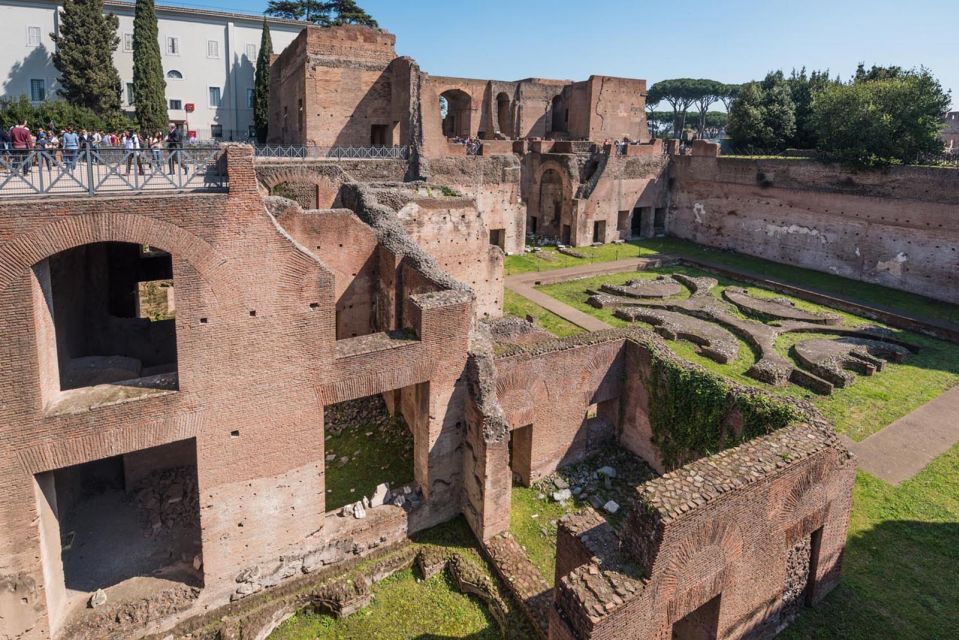
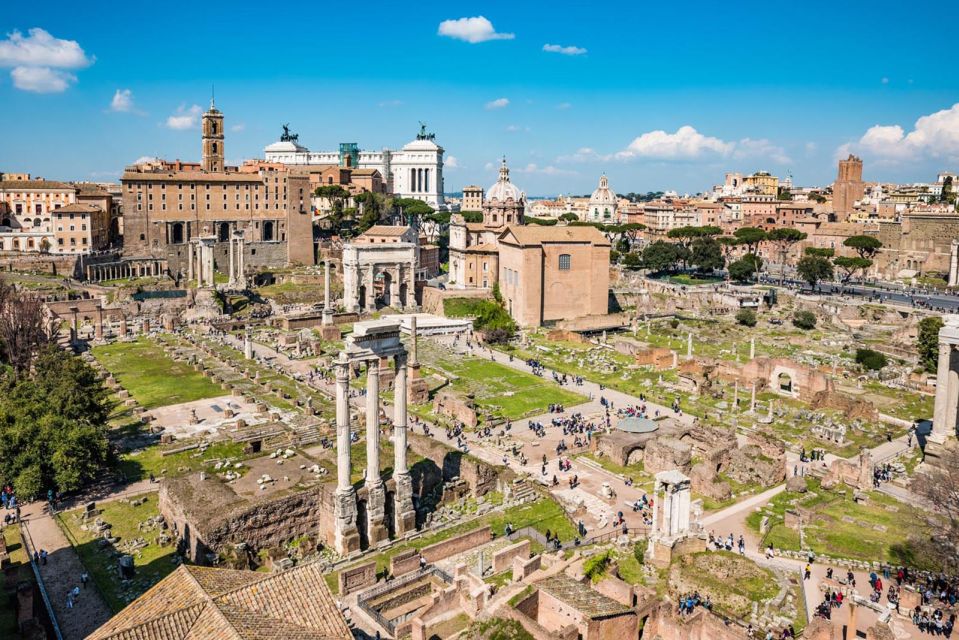
After the Forum, you head up to Palatine Hill for another guided stretch, about 35 minutes. Palatine is where Rome’s story starts in legend—Romulus and Remus—and it’s where political leaders chose to place themselves when they wanted to be seen as the city’s next chapter.
Here’s what I like about the way the tour frames Palatine: it doesn’t treat the hill as a museum backdrop. It’s presented as an imperial neighborhood—leafy slopes and major residences—so your house visits land with more meaning. When you understand Palatine as both mythology and residence, the houses stop being random “rooms with frescoes” and start feeling like statements of power and identity.
This section also gives you views. You get the sense of scale that’s hard to absorb from ground level. Even without a long hike, Palatine’s position helps you imagine how rulers wanted to look out over Rome—how they wanted the city to look back at them.
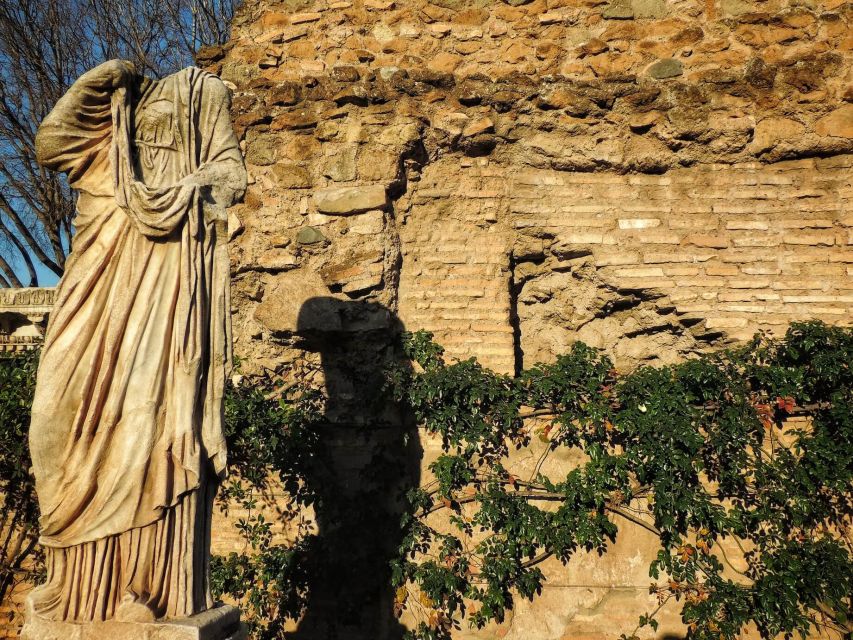
And yes, you also get the chance to see or learn about additional imperial sites on the hill described in the tour overview, including ruins connected to Domitian’s luxurious palace and the location where Caligula was assassinated. Even when ruins are fragmentary, the guide’s job is to connect the dots so you’re not just staring at stone.
House of Augustus: rooms that still speak in paint
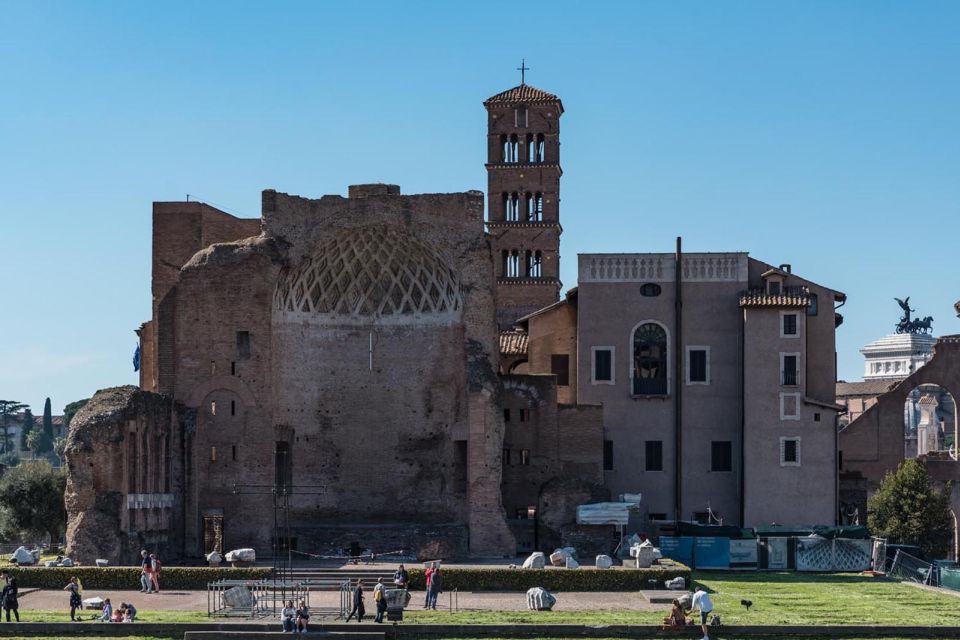
The House of Augustus visit is the longest single interior stop, about 45 minutes. This is where the tour earns its keep. The House of Augustus isn’t famous just because it’s old—it’s famous because parts of it survive in a way that lets you see how Augustus wanted his world understood.
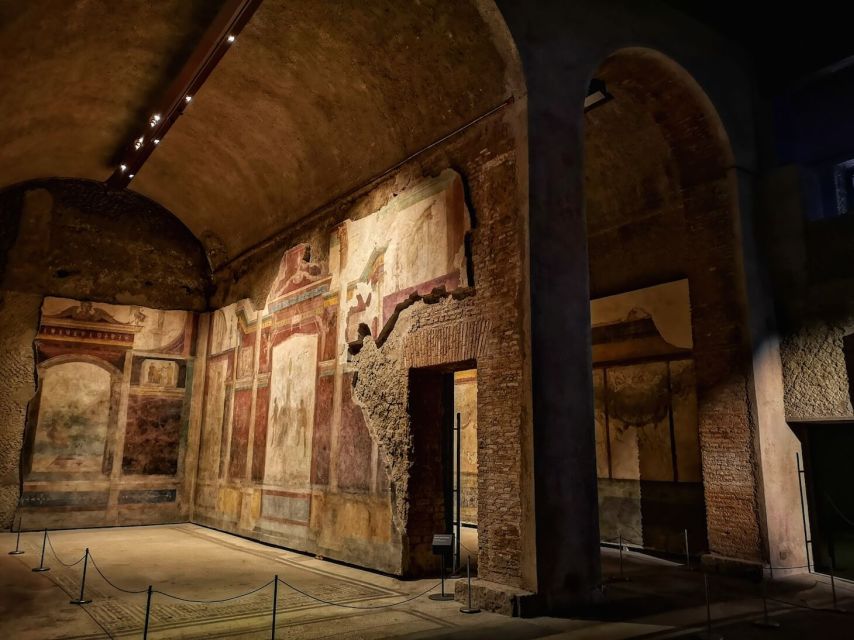
What you’ll focus on are the house’s refined halls and the standout survivals of ancient Roman painting. The tour description highlights the best surviving examples of ancient Roman painting still in place. In plain terms: this is the closest you’ll get on this route to experiencing a Roman interior as an interior, with decoration doing real work—setting mood, signaling culture, and reinforcing status.
I like the way the guide can connect a room to a personality. The tour highlights Augustus’ study, decorated with frescoes of plants and fantastical creatures. That theme matters because it’s not random decoration. Roman elite spaces often used imagery to imply taste, learning, and the right sort of worldview. When a guide points out those details, you’ll start seeing the house as communication.
One drawback to plan for: interiors like this can be visually intense. It’s easy to lose track of what you’re looking at if you don’t have an explanation. That’s why the private guide matters so much here. You get help reading the walls instead of just snapping pictures.
House of Livia: myth frescoes, marbles, and a closure reality check
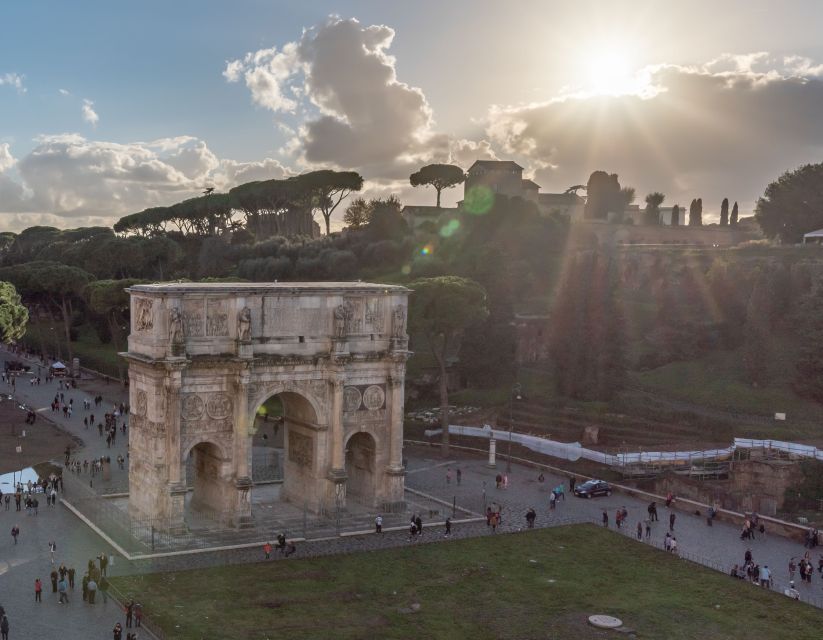
Next is the House of Livia on Palatine Hill, listed as a guided 35-minute stop. This is described as the jewel of Palatine Hill in terms of preservation and decoration, identified as Livia’s dwelling thanks to an inscription discovered on a lead pipe in the 19th century.
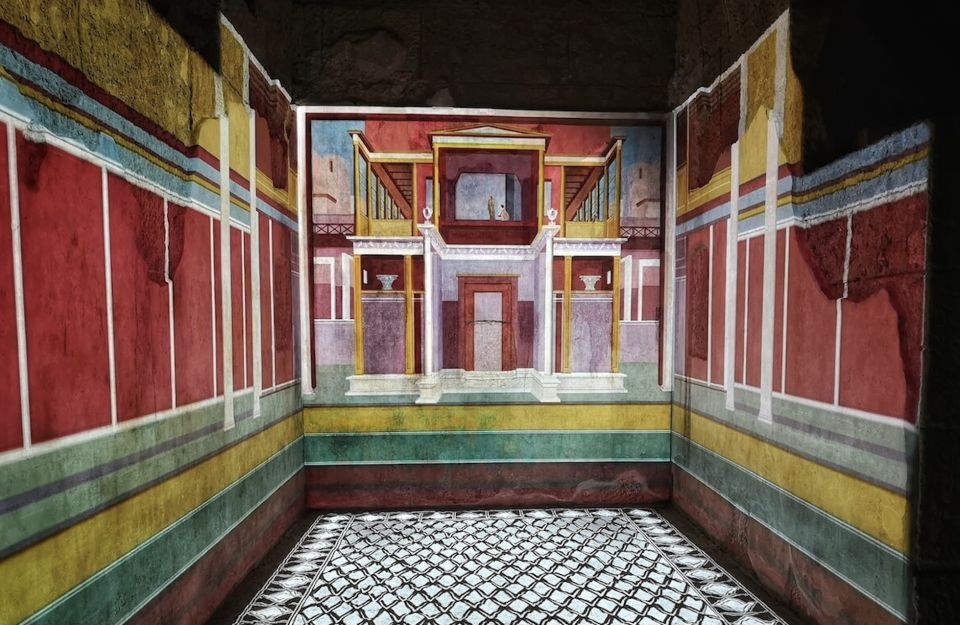
The details you’re likely to hear and see (when the site is open) are exactly the kinds that make this stop feel different from other ruins: mythological frescoes and original marbles underfoot, with the frescoes described as exceptionally well preserved. The tour also notes these frescoes were protected underground for thousands of years, which is the reason they can still feel vivid instead of faded into mystery.
Now for the reality check. The tour clearly states the House of Livia is temporarily closed, subject to change. That means you shouldn’t assume you’ll walk into the house as part of every departure. If it’s closed on your date, the operator says they’ll do their best to arrange your tour—so the move is to confirm the plan before you show up.
If you do get in, you’ll probably appreciate the sensory side. Frescoes are not just “information.” Seeing them in the space they were made for makes the stories feel more immediate—like a Roman household had its own visual language.
Also, this stop is listed as not suitable for wheelchair users. If mobility is a concern, you’ll want to treat the route as firm-footing required and discuss options with the operator ahead of time.




Santa Maria in Antiqua: imperial palace leftovers turned into a church
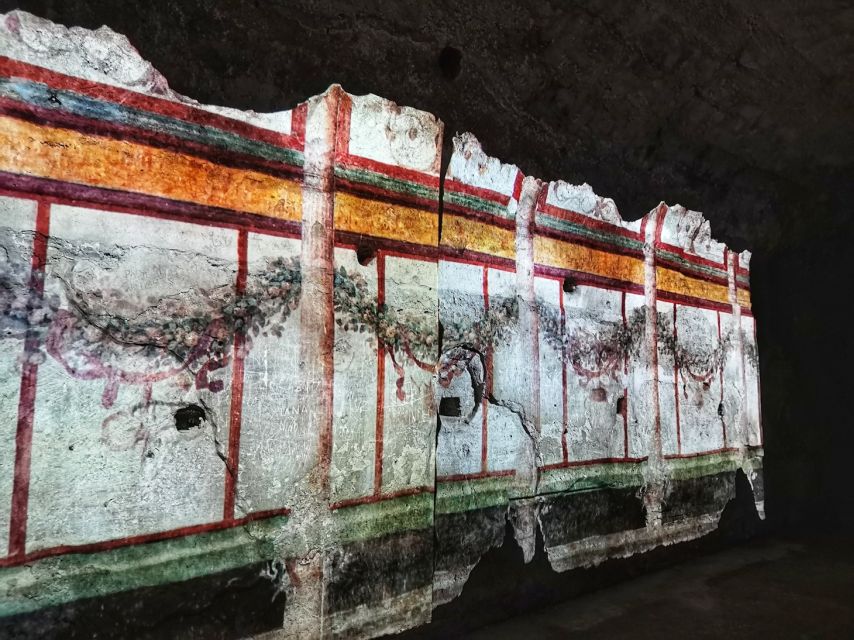
The tour description includes a stop at Santa Maria in Antiqua, described as an ancient church made from the remains of Imperial palaces. That setup is what makes the church worth a mention: it’s not a standalone “church stop.” It’s part of the same story you’re following across Palatine and the Forum—Rome reusing, rebuilding, and layering power over time.
You might find this especially appealing if you enjoy seeing how cultures repurpose spaces. You’re standing where Roman imperial structures once stood, then watching how a later religious site grew out of that foundation. It adds a time-travel feel without needing a big leap in imagination.
Because this portion is folded into the wider Forum-area experience, you’ll likely move through it quickly rather than spending a full long sit-down. That’s not necessarily bad. It keeps your time focused on the big themes the tour is selling: power, identity, and how Rome kept changing its mind while staying in the same physical footprint.
Skip-the-line and private guiding: what you actually gain
This tour includes skip-the-line access via a separate entrance. In Rome, that can make a noticeable difference because timed crowds can slow everything down. When your time budget is just about 3 hours, saving even 20 minutes can mean the difference between rushing and actually absorbing the houses.
A private group also changes how the content lands. One of the strongest points from prior feedback was how guides handle mixed knowledge levels—people in the group can start at different points, and the guide can still keep everyone oriented. That balance is hard to fake. You need a guide who can explain the fundamentals without talking down, and also go deeper when someone wants more.
Headsets are included for groups of 6 or more. If you’re hearing-impaired or you just don’t want to strain your ears while standing in stone corridors, this is a helpful inclusion rather than a nice-to-have.
The guides are listed as English and Italian. In practice, that matters for clarity and comfort. You’ll get smoother explanations, and you can ask follow-up questions without forcing everything through a translation bottleneck.
Price at $149.54 per person: is it worth it?
At $149.54 per person, you’re paying for a focused, private-led route that strings together multiple premium stops: Palatine Hill, the Roman Forum, and especially the Houses of Augustus and Livia (when open), plus skip-the-line access and guided time inside major sites.
Here’s how I judge value for something like this in Rome:
- You’re not just buying entry tickets. You’re buying an expert guide who can interpret surviving frescoes, architectural layouts, and historical connections.
- You’re covering several high-demand areas in one short window, and the skip-the-line benefit is meant to protect your schedule.
- You’re also getting a private format, which usually means less waiting and more room for questions.
What you aren’t paying for is also clear: transportation to and from the meeting and end points, and food and beverages are not included. That’s normal for city tours, but it does affect your total day planning. You’ll want to plan a snack or meal around the tour start time and location.
So is it a bargain? It depends on your style. If you like independent exploring, a self-guided ticket plan might cost less. If you want the houses explained well and you value time saved, the price can feel fair for what you’re getting.
Timing, Jubilee restorations, and other practical notes
Rome is active. The tour notes that due to the Jubilee, some monuments may be under restoration, and you should watch for messages about potential changes. That’s important because the “best preserved” sites can sometimes still be affected by scaffolding or temporary access adjustments.
If you’re the type who hates last-minute surprises, do two things:
1) Confirm your tour details the day before.
2) Keep a bit of flexibility in your schedule so a reroute doesn’t ruin your day.
The tour also provides a simple packing list: comfortable shoes. That’s it. You don’t need to bring special gear beyond what you’d normally bring for uneven historical surfaces.
Finally, the tour isn’t suitable for wheelchair users, so plan on stairs and uneven terrain.
Who should book this tour (and who should skip)
This is a great fit if you want:
- A private guide who can explain why the houses mattered, not just how old they are
- A concentrated, 3-hour visit that connects Palatine to the Forum
- Interior-focused sightseeing, especially if you care about Roman wall painting and surviving decoration
It might be less ideal if:
- You need fully step-free access, since it’s listed as not suitable for wheelchair users
- Your heart is set on seeing the House of Livia no matter what, given the temporary closure note
If you’re comfortable with a short walk-and-climb day and you enjoy learning while you look, this route fits your interests well.
Should you book Rome’s Houses of Augustus and Livia Private Tour?
I’d book it if you want the rare combination of skip-the-line access, a strong guide, and two major house interiors—especially the House of Augustus. Palatine and the Forum can feel big and overwhelming alone, so having a private guide tie legend, politics, art, and daily life together is the real payoff.
I’d hesitate only if your dates are fixed and the House of Livia is a deal-breaker for you. Since it’s temporarily closed (subject to change), you’ll want to check ahead so expectations match reality.
If you can be flexible and you value excellent explanation in front of the actual rooms, this is an efficient way to get inside the Roman Empire’s most important “living spaces.”
FAQ
How long is the Rome: Houses of Augustus and Livia Private Tour?
The tour lasts 3 hours.
Where do I meet my guide?
Meet your guide in front of the Cafe/Restaurant Angelino ai Fori at Largo Corrado Ricci, 43a. The guide will have a Through Eternity sign or flag.
Where does the tour end?
The activity ends back at the meeting point (on the Palatine Hill area).
Does the tour include skip-the-line access?
Yes. It includes skip-the-line access through a separate entrance.
What sites are included in the tour?
You’ll visit the Roman Forum and Palatine Hill, including the House of Augustus and the House of Livia (if open). The tour description also mentions Imperial palace ruins on Palatine, the monumental ramp between Palatine and the Forum, and Santa Maria in Antiqua.
Is the House of Livia open?
The House of Livia is temporarily closed, subject to change. The provider says they will do their best to arrange your tour, so it’s smart to confirm for your specific date.
What language is the guide?
The tour is guided in English and Italian.
Is this a private tour?
Yes. It’s a private group tour.
Are headsets provided?
Headsets are included for groups of 6 or more.
What should I bring, and is the tour wheelchair accessible?
Wear comfortable shoes. The tour is not suitable for wheelchair users.