REVIEW · ROME
Castel Sant’Angelo Skip-the-Line ticket
Book on GetYourGuide →Operated by Explore Rome Tours · Bookable on GetYourGuide
Rome’s river fortress gives you knockout views fast. With a skip-the-line ticket, you get into Castel Sant’Angelo quickly and spend your time where it counts. I especially like the terrace views from above the Tiber and the way the story shifts—from imperial mausoleum to papal refuge to prison. One heads-up: this visit is not suitable for wheelchair users or people with mobility impairments, so plan your route accordingly.
The best part is that this site sits right next to major Vatican stops, so you can fold it into a day that already includes St. Peter’s Basilica and the Vatican Museums. The visit window is short (about 1 to 1.5 hours), which keeps it realistic even when Rome crowds are doing their thing. One small drawback to consider is that there has been at least one report of a reservation cancellation about 12 hours before the event.
What you’re really buying is a quick, atmospheric look at a building that never stops changing roles. Castel Sant’Angelo is also called the Mausoleum of Hadrian, then it becomes a papal fortress; popes even used it as refuge. You’ll also hear the Passetto di Borgo escape story, the legend of the archangel Michael ending a plague, and the darker prison side from the mid-14th century—cells like Sammalò or San Marocco—plus the fact it became a museum in 1925.
In This Review
- Key things to know before you go
- Entering Castel Sant’Angelo fast with skip-the-line near the Vatican
- Inside the Mausoleum of Hadrian: from imperial tomb to papal fortress
- Passetto di Borgo: the escape route story that changes your perspective
- Terrace views and Sant’Angelo Bridge photos over the Tiber
- Prison cells and the archangel Michael legend: two moods in one visit
- Audio guide pacing and getting your 1–1.5 hour route right
- Price, small-group feel, and whether $17 is good value
- Should you book the Castel Sant’Angelo skip-the-line ticket?
- FAQ
- How long does the Castel Sant’Angelo skip-the-line visit take?
- Where do I receive my ticket?
- Does the skip-the-line ticket let me bypass the entrance line?
- Is an audio guide included?
- Is a guide tour included with this activity?
- Is this activity suitable for wheelchair users or mobility impairments?
- Are pets or large bags allowed?
- What ID do I need to bring?
- Are children free?
Key things to know before you go
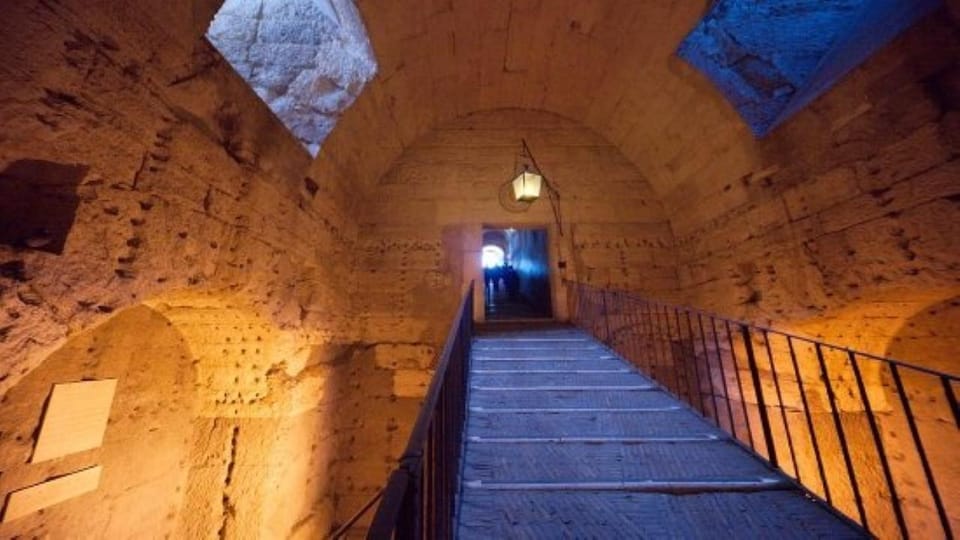
- Skip-the-line entrance means you go straight to the castle instead of waiting at the ticket point.
- Hadrian to popes to prison: you’re walking through layers of Roman and papal power.
- Passetto di Borgo escape story gives context to the castle’s design and purpose.
- Terrace time is built into the experience, including photo opportunities of Sant’Angelo Bridge.
- Optional audio guide (if selected) supports a self-paced visit without needing a live guide.
- Small group option helps keep the experience calmer than big-bus chaos.
Entering Castel Sant’Angelo fast with skip-the-line near the Vatican
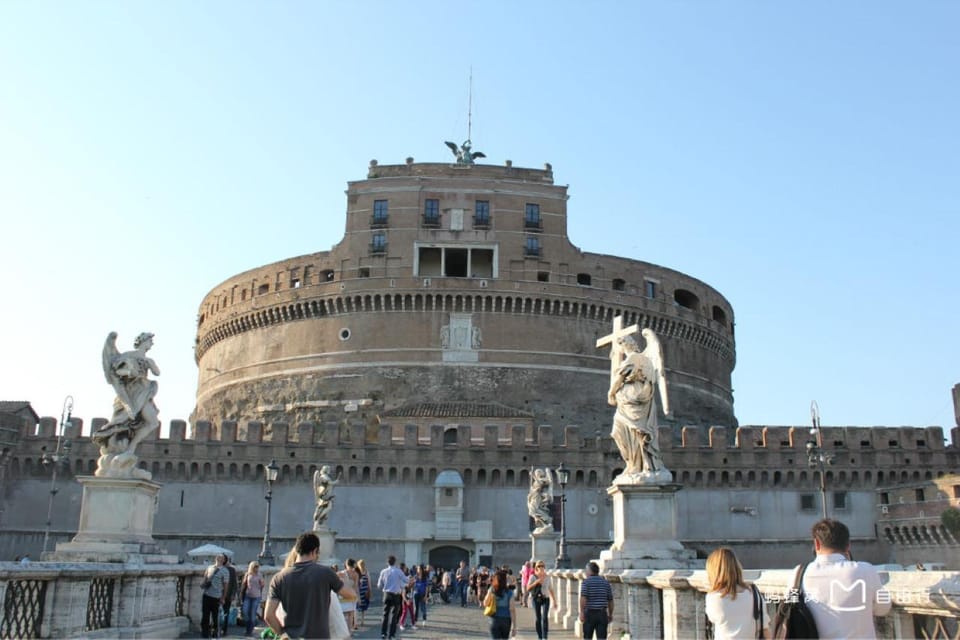
Castel Sant’Angelo is an easy add-on to a Vatican day because it’s so close to St. Peter’s Basilica and the Vatican Museums. The skip-the-line ticket matters here. When you’re standing in that area, every minute counts, and cutting the worst of the waiting time gives you more time for photos and wandering at your own pace.
Logistics are refreshingly simple. Your ticket is sent directly to your email and/or WhatsApp the day before your activity, and it’s meant to be used immediately—you can go straight to the entrance with it. If the PDF download fails, you contact the provider for help rather than getting stuck on-site trying to sort it out.
This is also a “show up and go inside” type of experience. A guide tour is not included, so you’re relying on the audio guide if you selected it, plus the signs and your own curiosity while you move through the monument. If you like having a live person explain details, you might prefer a different format.
And timing is flexible within the ticket rules. The duration is typically 1 to 1.5 hours, and starting times depend on what’s available when you book. That short window makes it a good pick when you don’t want a half-day commitment.
You can also read our reviews of more tours and experiences in Rome



Inside the Mausoleum of Hadrian: from imperial tomb to papal fortress
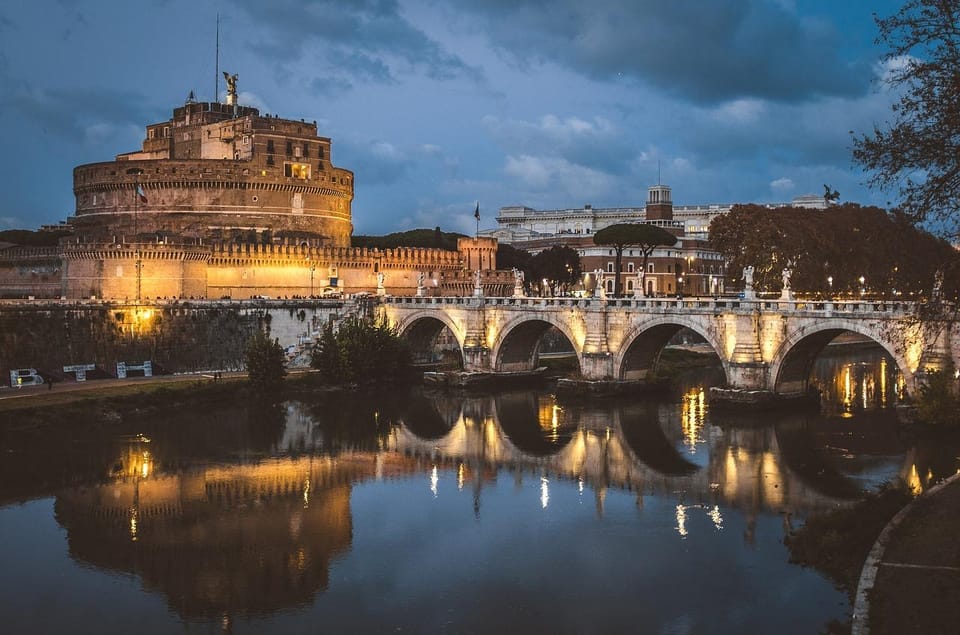
Castel Sant’Angelo’s main draw is that you’re not looking at just one era. You’re watching the same big structure get reinvented over centuries.
It starts as the Mausoleum of Hadrian on the banks of the Tiber. Then the role flips: it becomes a papal fortress, used by popes as refuge. That transformation is the key to understanding the place. The building feels built to withstand trouble, not to impress you with open-air gardens. Even without a guided lecture, you can read the “fortress thinking” in the way the monument is organized and how the spaces are used.
Another important shift is that the site eventually becomes a museum. In 1925, the ancient Mausoleum of Hadrian was transformed into a museum. That matters because it helps explain why you can visit now as a visitor experience rather than just seeing an old stone shell. You’re walking through rooms meant to be seen and understood, not simply toured from the outside.
As you move through, you’ll also come across the darker side of its past. Castel Sant’Angelo wasn’t only a dramatic refuge; from the mid-fourteenth century it was also used as a prison. You may see frightening cells tied to stories you’ll hear about on-site, including the ones called Sammalò or San Marocco. It’s the kind of historical contrast that makes the castle feel alive, not like a single-photo monument.
Passetto di Borgo: the escape route story that changes your perspective
One of the most interesting parts of Castel Sant’Angelo is the Passetto di Borgo, the connection that helps explain why this place mattered so much to the Vatican world.
The big idea is simple: the Passetto di Borgo facilitated escape from the Vatican to the castle during an invasion of Rome. That single fact changes how you view the site. This isn’t just a tomb sitting by the river. It’s part of an emergency system—an engineered route meant for a crisis.
When you take in the castle’s fortress character, the Passetto story gives the building a purpose beyond legend. It turns the monument into a survival machine—an alternate plan for leaders when danger came to the area. Even if you don’t catch every detail of a long narrative while you’re inside, you’ll likely leave with a clearer mental picture of why popes would want a refuge they could reach quickly.
Terrace views and Sant’Angelo Bridge photos over the Tiber
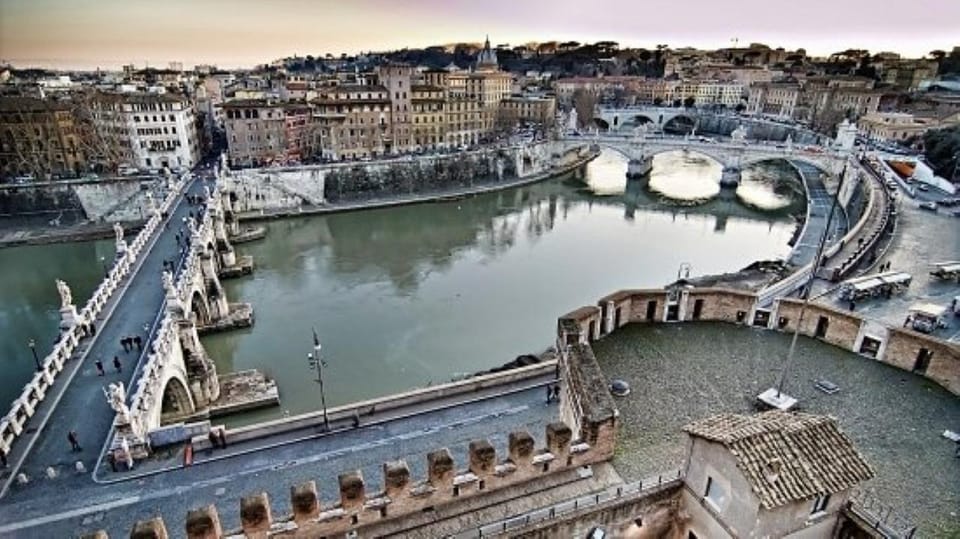
If there’s one part that people consistently aim for, it’s the view. Castel Sant’Angelo has a terrace viewpoint that gives you one of the most evocative looks at Rome in this area.
Plan this like a mini photo stop: give yourself a few minutes to pause, look around, and find the angle you like best. The experience specifically includes the terrace and time to take pictures of Sant’Angelo Bridge. That’s a great pairing because the bridge and the castle together help you understand the river geography. From up there, you can better picture where you are in the city grid and how the river organizes movement.
Also, because the visit is only around 1 to 1.5 hours, you don’t want to spend all your time rushing through rooms and then realize you didn’t allot time for the view. I like to treat terrace time as non-negotiable. Even if you’re not a “take 50 photos” person, a couple of deliberate shots beat rushing and hoping you catch the view later.
And since this location sits near the Vatican, the sightline feeling is different from what you get elsewhere in Rome. It’s not just postcard Rome—it’s Rome seen from the edge of power, architecture, and river routes.
Prison cells and the archangel Michael legend: two moods in one visit
Castel Sant’Angelo has a split personality. On one side you have imperial and papal grandeur. On the other you have the stuff that makes your imagination do extra work.
The prison chapter starts in the mid-fourteenth century. That’s when the castle was used as a prison, and the experience includes mention of frightening cells such as Sammalò or San Marocco. You don’t need to “fear the history” to get something out of this. It simply gives the place weight. It’s harder to treat it like just another viewpoint when you know people were kept there.
Then comes the legend of the archangel Michael. The story goes that Michael saved Rome from the plague at the end of the sixth century. That detail adds a spiritual layer to the experience. It turns the site from purely political into something connected to protection, crisis, and faith.
The way these stories sit together is what I find most compelling. You get the physical reality of a fortress built for danger, then the idea of a divine protector in response to plague, and then the human reality of imprisonment. That mix can make the visit feel more like stepping into a living story than reading facts off a plaque.
You can also read our reviews of more tours and experiences in Rome




Audio guide pacing and getting your 1–1.5 hour route right
Your time here is short on purpose: about 1 to 1.5 hours. That can be a blessing. You can see a lot without dragging the day out. But it also means your choices matter.
Here’s how I’d pace it if you’re using the audio guide option (included only if you selected it). First, focus on the storyline beats: Hadrian as mausoleum, the shift into papal fortress use, the Passetto di Borgo escape concept, and the prison + legend sections. If you bounce randomly, the monument’s changes in purpose can blur together.
Second, save your energy for the terrace. The terrace is part of the experience for a reason, and you’ll want to stand, look, and take photos. That takes more time than you think—especially if you’re trying to match lighting or avoid crowds.
Third, remember this is not suitable for wheelchair users and not recommended for people with mobility impairments. Even if you think you can “handle stairs,” it’s the overall walking and navigating that can be a problem. Keep that in mind before you commit.
Finally, the ticket format is straightforward but strict about ID. Bring a passport or ID card. Tickets are tied to participant names, and the provider collects full names in English. Plan for that ahead of time so you’re not scrambling the day of.
Price, small-group feel, and whether $17 is good value
The price is listed at about $17 per person. For a visit that includes skip-the-line entrance and typically a short time on-site with terrace viewpoints, that can be strong value—especially if you’re already paying for Vatican-area logistics and want to avoid wasting time.
What you should understand is what you are not getting. A guide tour isn’t included. So if you want a person talking directly to you as you walk, you may feel like something is missing. On the other hand, audio guide support (if you selected that option) can still work well if you like setting your own pace.
The small group option can also affect value. Smaller groups usually mean less pressure to keep moving, and you’re more able to stop for a photo or read a bit longer. The experience provider is Explore Rome Tours, and the activity is rated 4.1 based on 7 ratings, which suggests most people are fairly satisfied.
There is a reality check worth mentioning. At least one report states a reservation was cancelled by the company about 12 hours before the event. That doesn’t mean every booking will go sideways, but if your plans are tight, it’s smart to keep flexibility in your schedule.
Should you book the Castel Sant’Angelo skip-the-line ticket?
Book it if you want a fast, atmospheric Roman stop that blends palace power, escape routes, and darker history—all with a terrace view and bridge photos—and you’re fine doing it mostly with audio and self-direction.
Skip it (or look for another format) if you need wheelchair-friendly access or you strongly prefer a live guide for the story. Also, if your schedule is so tight that a last-minute cancellation would break your day, consider building in buffer time.
For most people doing a Vatican-area day, this is a good use of 1 to 1.5 hours. You get to cut waiting time, see the castle’s main narrative threads, and end with views that make the whole trip feel earned.
FAQ
How long does the Castel Sant’Angelo skip-the-line visit take?
The duration is typically 1 to 1.5 hours. Starting times depend on what’s available when you book.
Where do I receive my ticket?
Your ticket is sent directly to your email and/or WhatsApp the day before your activity. With those tickets, you can go straight to the entrance.
Does the skip-the-line ticket let me bypass the entrance line?
Yes. The ticket is specifically described as a skip-the-line entrance ticket, so you can go directly to the entrance with your ticket.
Is an audio guide included?
An audio guide ticket is included only if you selected that option. If you didn’t select it, you should expect self-guided entry.
Is a guide tour included with this activity?
No. A guide tour is listed as not included.
Is this activity suitable for wheelchair users or mobility impairments?
No. It is listed as not suitable for people with mobility impairments and not suitable for wheelchair users.
Are pets or large bags allowed?
No. Pets are not allowed, and luggage or large bags are also not allowed.
What ID do I need to bring?
You should bring a passport or ID card. Children also need a passport or ID card.
Are children free?
The under 18 ticket is free. You only pay the service fee.