REVIEW · ROME
Dark Heart of Rome: Facts, Legends, and Mystery Tour
Book on GetYourGuide →Operated by City Wonders Ltd. · Bookable on GetYourGuide
Night in Rome has teeth. This 90-minute dark legends walk turns familiar streets into something stranger and more memorable. You’ll see major monuments after dark, but the real draw is how the stories stitch facts, executions, and ghostly folklore into one easy route.
What I like most is the focus on places you usually skip, paired with strong evening storytelling. Guides I’ve heard named across departures, like Elisabetta and Serena, are known for clear English and keeping the group moving at a friendly pace.
One thing to consider: the tour is very story-forward and can feel a bit brisk if you like slower, museum-style sightseeing rather than constant walking and tales.
In This Review
- Key points worth your attention
- A night-time walk that changes what you think you know about Rome
- Price and logistics: what you’re really paying for
- Where to meet on Corso Vittorio Emanuele II
- Campo de’ Fiori after dark: the square beneath the legends
- Piazza Farnese and its fountains of stone basins
- Via Giulia: Renaissance planning you can still walk through
- Via del Governo Vecchio: a photo stop with old-Rome mood
- Castel Sant’Angelo: Hadrian’s Mausoleum under nighttime lights
- The guides: storytelling craft, clear English, and pace that works
- How to make the most of a 1.5-hour dark Rome route
- Who should book Dark Heart of Rome, and who should skip it
- Should you book this tour?
- FAQ
- How long is the Dark Heart of Rome tour?
- Where do I meet the guide?
- What does the tour include?
- Is it wheelchair accessible or suitable for mobility impairments?
- Is there hotel pick-up or drop-off?
- Can I cancel and get a refund?
Key points worth your attention
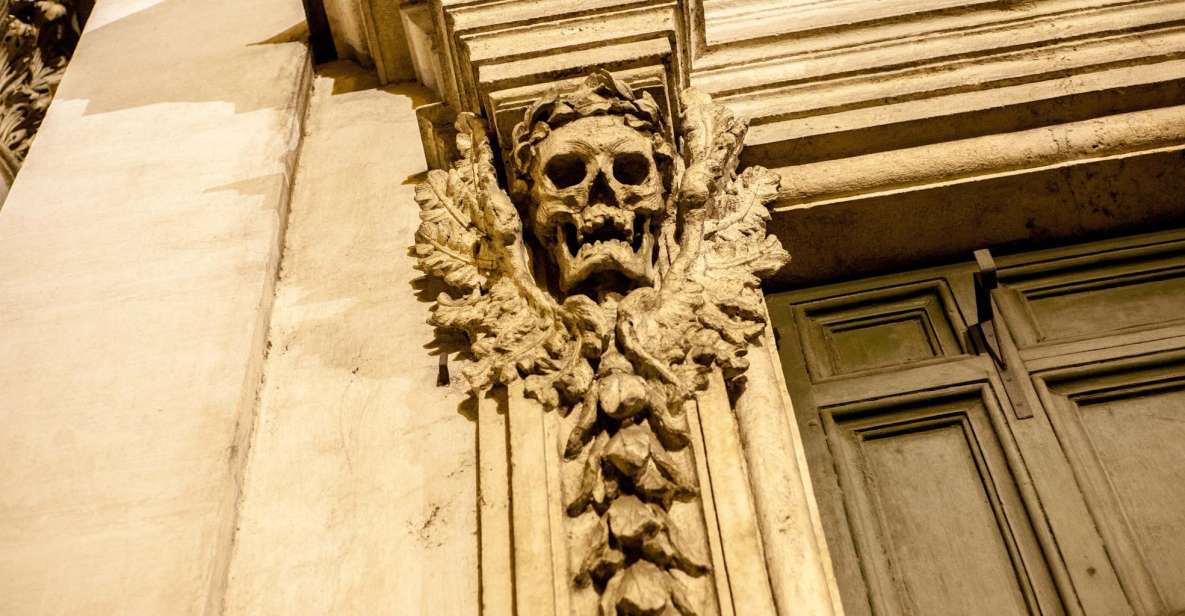
- Nighttime route through Campo de’ Fiori, Piazza Farnese, Via Giulia, and Castel Sant’Angelo
- Legends plus facts: public executions, mausoleum history, and Renaissance planning
- Photo stops built in, including Via del Governo Vecchio and Castel Sant’Angelo viewpoints
- Small, walking-friendly format that prioritizes atmosphere over long stops
- English-speaking guide who narrates clearly and keeps the pace workable
- $14 price point for a guided, landmark-to-landmark evening walk
A night-time walk that changes what you think you know about Rome
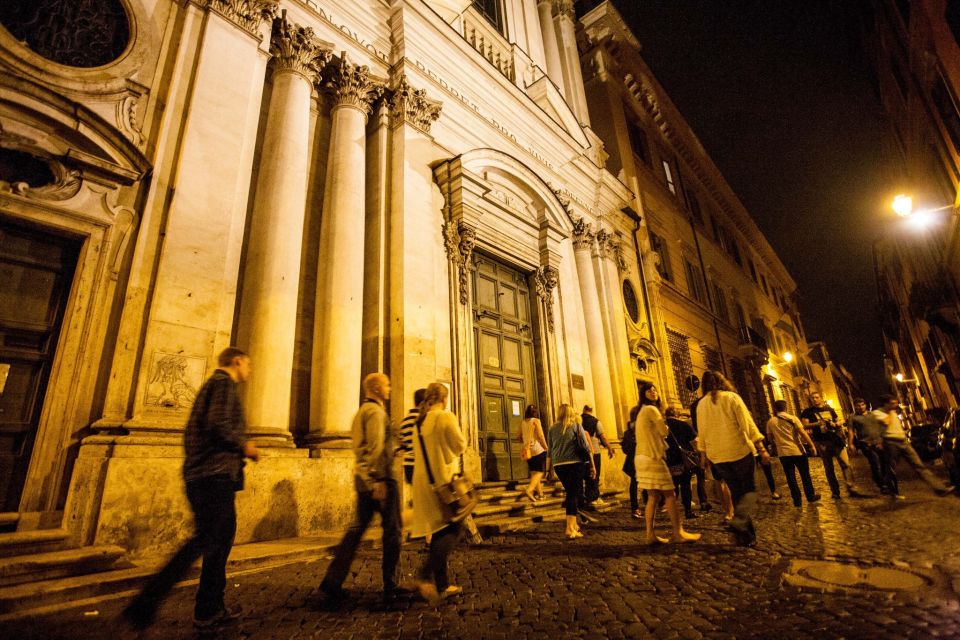
Rome at night is quieter, cooler, and easier to read. The big reason this tour works is that you experience the city in evening light, when shadows help the stories land and the streets feel less like a postcard and more like a lived-in maze.
You also get a different angle on the city center. Instead of the usual hits, you’re sent into lanes and viewpoints that don’t get much time on standard sightseeing days. That matters because Rome becomes more interesting when you stop trying to “cover everything” and start noticing patterns: where power sat, where crowds gathered, where ceremonies took place, and where people disappeared into legend.
The $14 cost is another part of the value story. For that price, you’re paying for a live guide, not a bus, not a museum ticket, not a complicated schedule. In 1.5 hours, it’s a very doable way to add meaning to an evening in Rome without burning your whole night.
You can also read our reviews of more tours and experiences in Rome.


Price and logistics: what you’re really paying for
This tour is listed at $14 per person and runs about 1.5 hours. That timing is perfect if you want atmosphere and context but you don’t want a long commitment after dinner.
There’s no hotel pick-up or drop-off. You’ll meet the group in the historic core and walk from there, ending near the Tiber. If your lodging is outside central Rome, plan on getting yourself to the meeting point by local transport or on foot (depending on where you stay).
Comfort matters here. The tour requires comfortable shoes, and the route is on foot with winding lanes. This is not a “stand and look” experience; it’s a guided walk where you’re constantly switching focus—street corner to square, then monument to river views.
Where to meet on Corso Vittorio Emanuele II
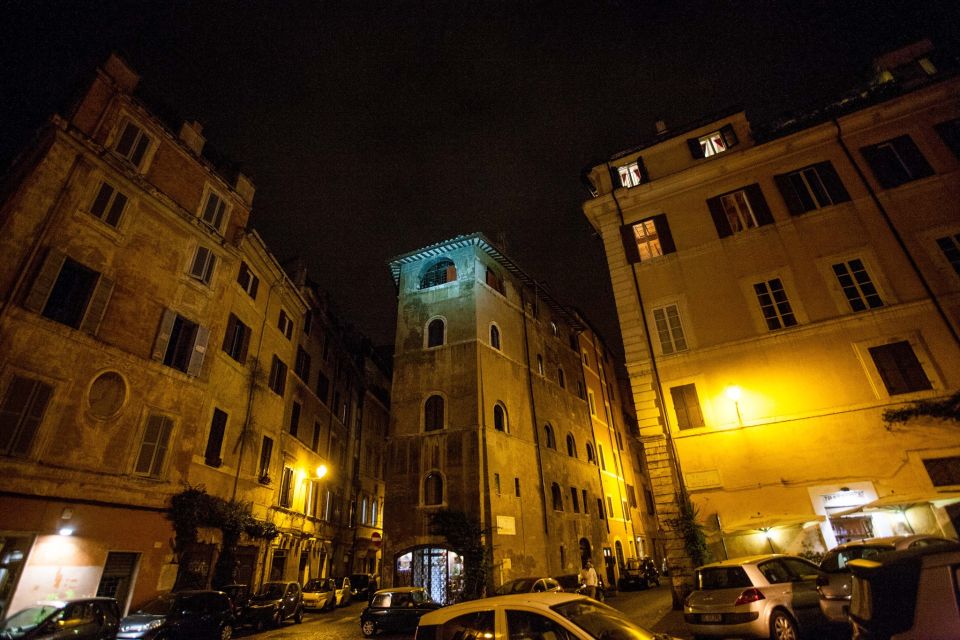
You meet at the steps of San Andrea della Valle Church, on Corso Vittorio Emanuele II. It’s about 150 meters from Largo di Torre Argentina, on the left-hand side if you’re heading toward the Tiber River.
The church is next to Piazza Vidoni and Piazza Sant’Andrea della Valle. Your guide will be wearing blue clothing. Showing up a few minutes early pays off. In this area, street signs are close together and it’s easy to get turned around if you arrive right on time.
The route also starts at Piazza Vidoni (listed as 1491). That’s a useful detail: even if you’ve only mapped the church, you can cross-check you’re in the right pocket of the center.
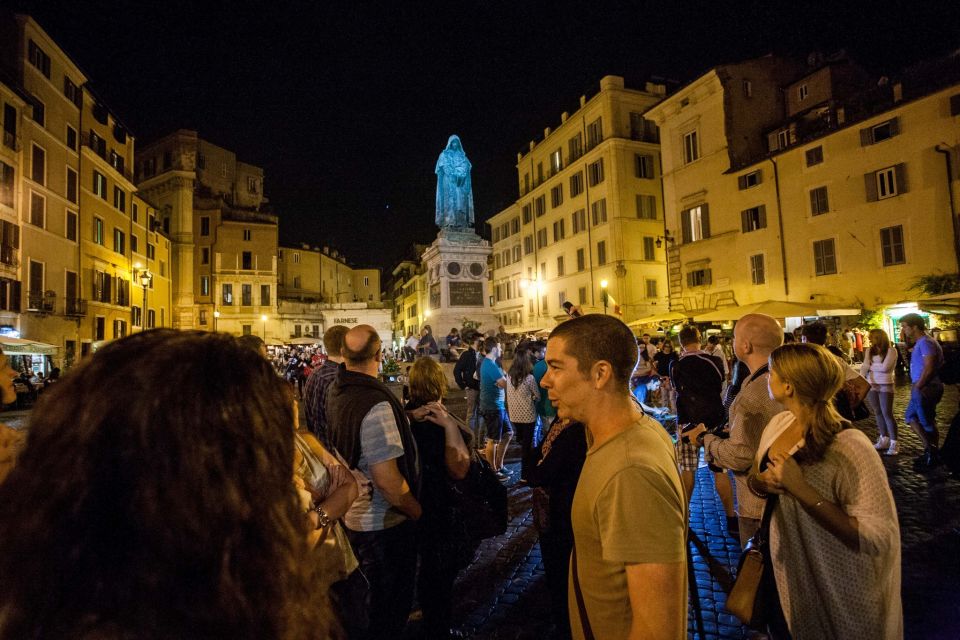
Campo de’ Fiori after dark: the square beneath the legends
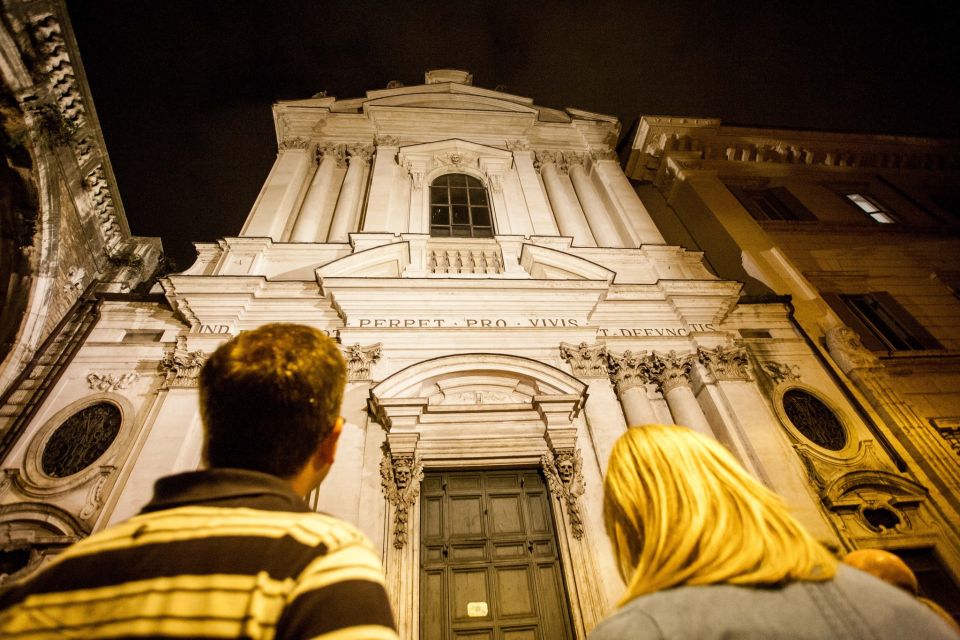
Campo de’ Fiori is one of Rome’s liveliest names in daylight. At night, it becomes something else—an open space with a stage-like feeling, where the stories gain weight.
This is where the tour leans into Rome’s darker past. You’ll hear about the kinds of public events that once took place here, including public executions. Even if you’ve read about Rome before, the nighttime setting helps the scene feel less like a fact you saw online and more like a place that held real fear, crowds, and consequence.
What makes this stop worth your time is the way it reframes the square. You’re not just looking at architecture; you’re learning how a public space can become a symbol. That’s a theme you’ll keep seeing as the tour moves on.
Piazza Farnese and its fountains of stone basins
From Campo de’ Fiori, you’ll drift toward Piazza Farnese, dominated by fountains built from granite stone basins. This stop is short but visually effective, because the plaza’s scale gives you room to orient yourself.
Piazza Farnese is also a good place to pause and listen. The stories here connect to the broader idea of how Rome planned, displayed power, and managed public life through space. If you’ve only seen Rome’s monuments in daylight, nighttime gives you a different mood: edges look sharper, textures stand out more, and conversations with your guide feel more like street-level history than textbook history.
If you’re the type who likes to take photos while a guide explains what you’re seeing, Piazza Farnese is one of your best bets on the route.


Via Giulia: Renaissance planning you can still walk through
Next you’ll head along Via Giulia, known as one of the first planning projects of Renaissance Rome. This is where the tour becomes practical, even for people who don’t usually care about “city planning.”
You’ll experience planning as something you can feel in your body: the straightness, the way the street organizes movement, and how that design shapes what you notice as you walk. It’s one of those Rome moments where the past isn’t only in buildings; it’s in how the city is laid out.
For me, this is the kind of stop that makes a short tour feel substantial. You’re not only collecting facts about one monument; you’re getting a lens you can use later while wandering on your own.
Via del Governo Vecchio: a photo stop with old-Rome mood
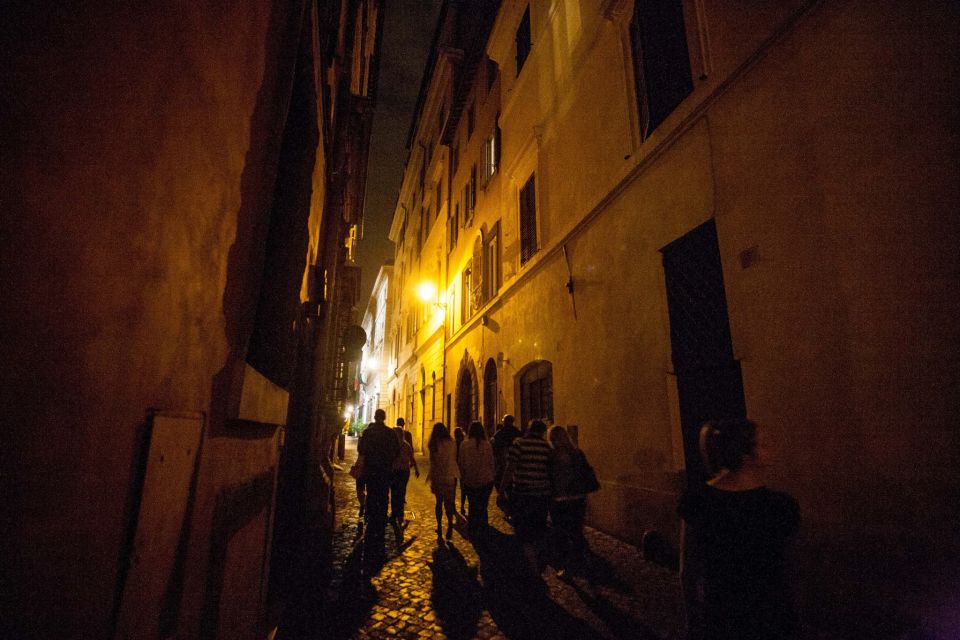
Between the bigger landmarks, you’ll make time for Via del Governo Vecchio, including a photo stop and a guided walk through the street feel.
This is the kind of street that rewards slow attention. Narrow lanes, uneven sightlines, and the closeness of buildings make it easier to imagine the city before mass tourism and before every street became a “view.” If you’re into atmosphere, this stretch is a satisfying mid-tour reset.
It also gives you a chance to regroup if your feet are warming up. The tour stays moving, but this is one of the moments where you can catch your breath while still feeling like you’re part of the story.
Castel Sant’Angelo: Hadrian’s Mausoleum under nighttime lights
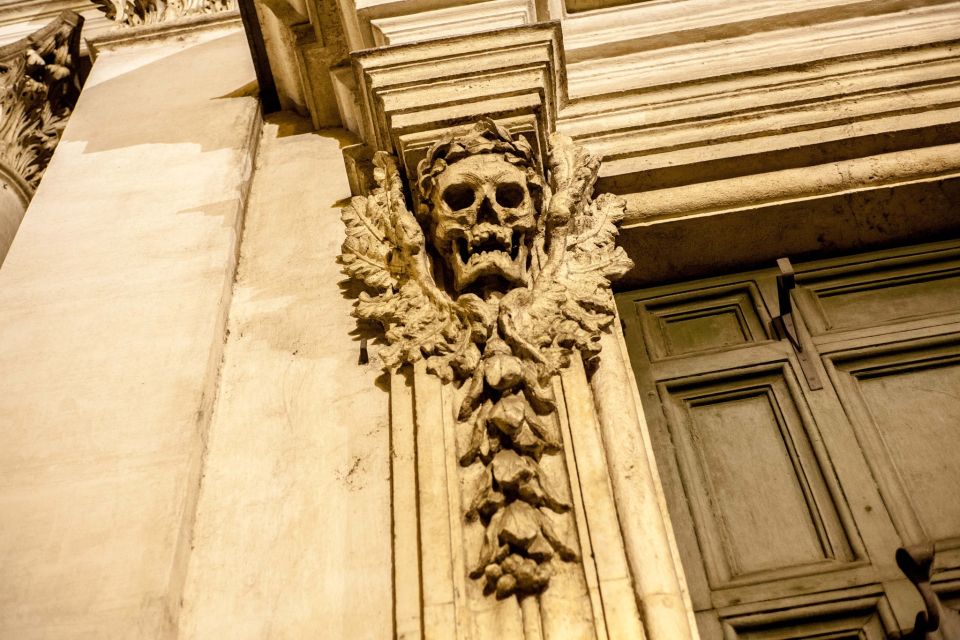
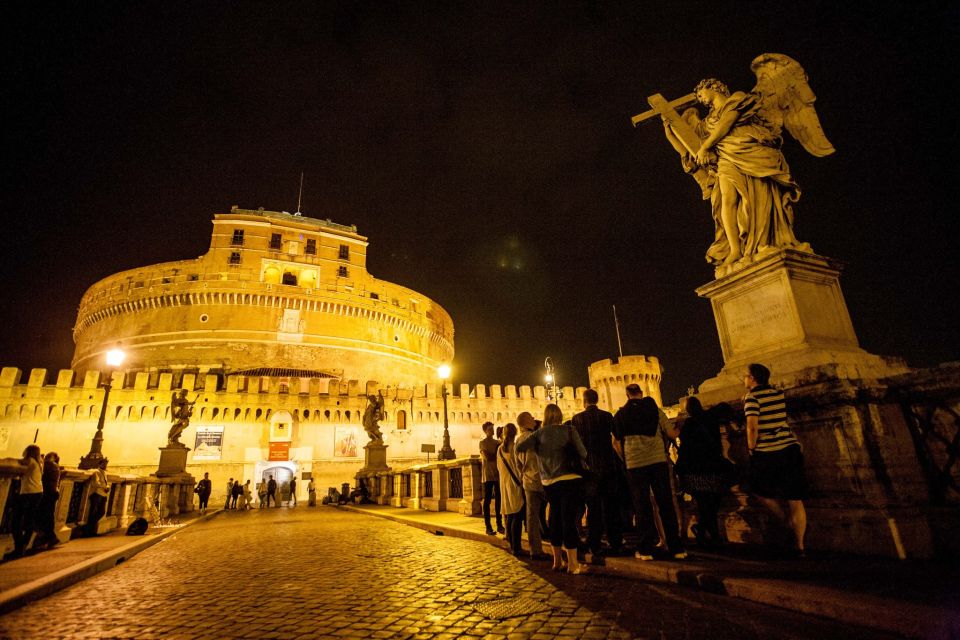
No dark-leaning Rome walk is complete without Castel Sant’Angelo. Here, you’ll learn that this site is tied to Hadrian’s Mausoleum, and you’ll get photo opportunities as you approach.
Even without going inside (your tour description focuses on walking and sight views), the exterior hits differently at night. The structure looks more severe and more fortress-like, and your guide’s narrative helps you connect the monument to why it mattered in its time.
This is also a memorable ending point because it sits close to the Tiber river area. The tour finishes at Lungotevere Castello, 50. If you want to continue the evening, this location makes it easier to connect your walk to a river stroll or a nearby dinner plan.
The guides: storytelling craft, clear English, and pace that works
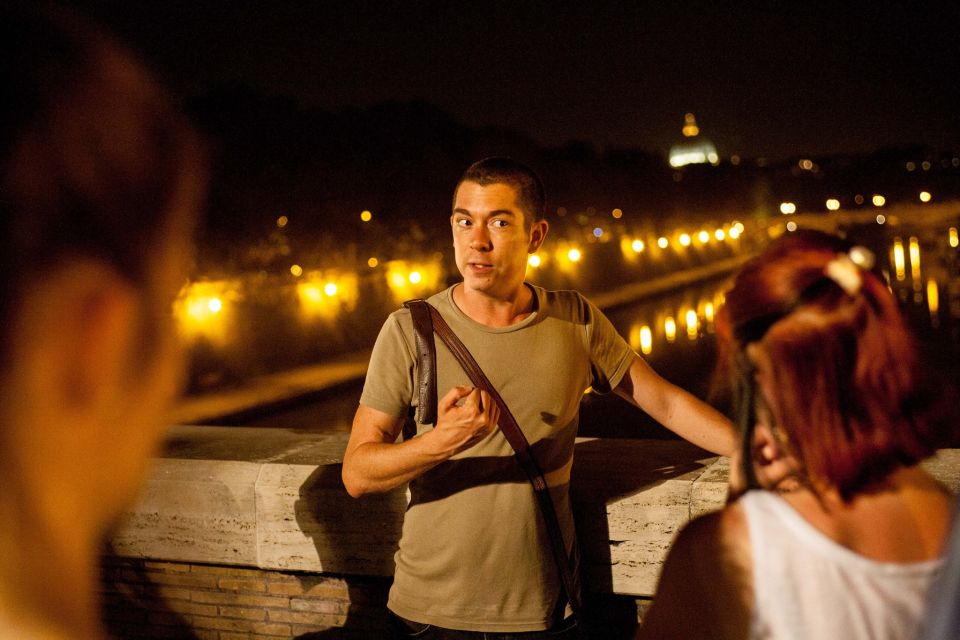
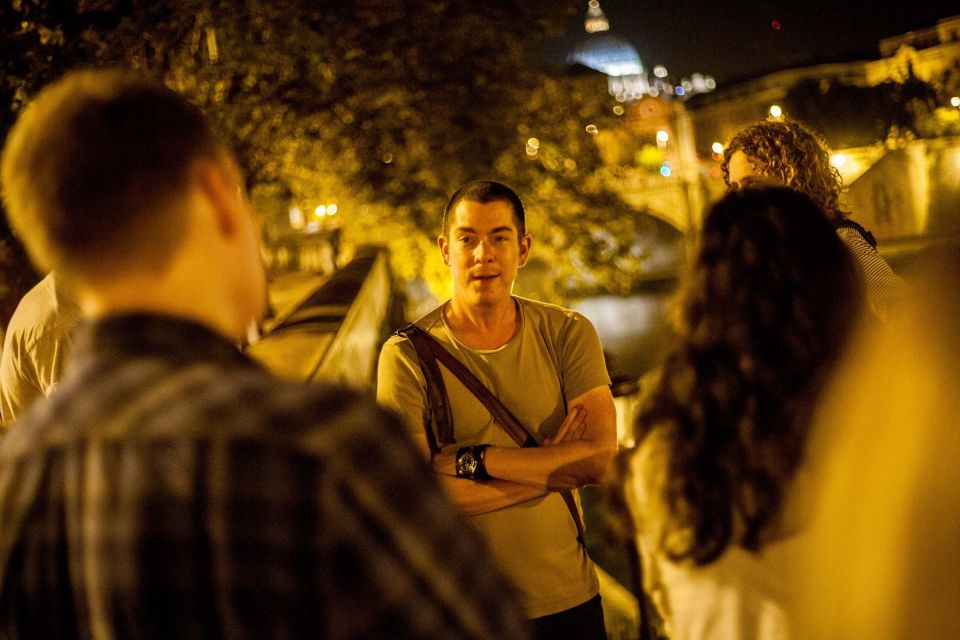
A big part of the success here is the guide’s delivery. Across guides named on different departures, like Elisabetta, Elizabeta, Rob, Max, Amanda, and Pete, a consistent theme shows up: they tell stories with personality and they speak in a way that the whole group can follow.
Some guides are described as theatrical or comical, which makes sense for a tour built around legends. The best guides also keep the content moving and answer questions without turning the evening into a lecture.
You should also know there are different styles within the same overall concept. A few people have noted the tour can feel a bit rehearsed or fast, and that the blend of story vs. strict historical depth can vary by guide. If you prefer step-by-step chronology, you might want to pair this with one longer daytime museum stop the next day.
Still, for most visitors, the combination of clear English and a walking pace that doesn’t leave people behind is exactly why this format works.
How to make the most of a 1.5-hour dark Rome route
This isn’t a “see everything in Rome” tour. It’s a focused experience. Your best strategy is to go in with the right mindset: treat it like guided street theater with real historical anchors.
A few practical tips:
- Wear grippy shoes. The route is on foot and involves winding historic streets.
- Bring a phone camera ready. You’ll have photo moments, including Via del Governo Vecchio and Castel Sant’Angelo.
- Listen for the links. The guide usually ties each place to a larger theme: power, public spectacle, and the way legends grow around real events.
- Save extra wandering for afterward. Once you’ve learned the route logic, the streets feel easier to navigate on your own.
If you’re visiting during warmer months, the night timing is a real advantage. Rome’s heat can be a deal-breaker for daytime walking plans, while an evening walk is often far more comfortable.
Who should book Dark Heart of Rome, and who should skip it
This tour is a great fit if you want:
- A short guided evening plan at a fair price
- Stories alongside landmarks, especially if you enjoy true-crime-style vibes in an educational way
- A route that includes darker themes like executions and mysterious lore, but still grounded in real locations
It may not fit you if:
- You need accessibility accommodations. The tour isn’t suitable for wheelchair users or guests with mobility impairments.
- You’re traveling with a stroller. Pushchairs or baby strollers aren’t accommodated on these walks.
- You dislike fast-paced walking and constant narration. This is built around movement and storytelling, not slow museum pacing.
If you’re coming with teens, this format can be an easy win. People have specifically recommended it for adults and teens, likely because it’s engaging without requiring deep prior knowledge.
Should you book this tour?
Book it if you want a low-cost, high-atmosphere evening that gives Rome a second personality. For $14, you’re buying a guided walk that hits Campo de’ Fiori, Piazza Farnese, Via Giulia, and ends with Castel Sant’Angelo, with legends that make the city feel more human and a bit unsettling in the best way.
Skip it if you need hands-on accessibility options, if you’re traveling with a stroller, or if you prefer your Rome sightseeing to be strictly academic with long stops. Also consider pairing this with a daytime activity the next morning if you crave more time at a single monument.
If your goal is a memorable night walk that changes how you look at the historic center, this is the kind of plan that makes a trip feel more complete.
FAQ
How long is the Dark Heart of Rome tour?
It lasts about 1.5 hours.
Where do I meet the guide?
Meet on the steps of San Andrea della Valle Church on Corso Vittorio Emanuele II, about 150 meters from Largo di Torre Argentina, on the left-hand side heading toward the Tiber River. The guide wears blue.
What does the tour include?
You get an English-speaking live guide and the tour experience as described.
Is it wheelchair accessible or suitable for mobility impairments?
No. The tour is not suitable for wheelchair users or guests with mobility impairments.
Is there hotel pick-up or drop-off?
No, hotel pick-up and drop-off are not included.
Can I cancel and get a refund?
Yes. There is free cancellation up to 24 hours in advance for a full refund.