REVIEW · ROME
Rome: Ostia Antica Private Walking Tour with Skip-the-Line
Book on GetYourGuide →Operated by Askos Tours · Bookable on GetYourGuide
Neptune’s mosaics make Ostia Antica feel alive. I like the skip-the-line start that keeps your time focused on the ruins, and I really enjoy how the guide ties buildings to stories you can picture. The Thermal Baths scenes of Neptune and Amphitrite are a standout. The main catch: the walk is listed as medium and the site is made of old stone, so plan for uneven ground and steady pacing.
This is a private walking tour (not a big group shuffle), based at Parco Archeologico di Ostia Antica, with a guide who brings the place to life through clear, step-by-step context. You’ll cover the older urban bones of Ostia in about 2 hours, including the theatre area, forum spaces, and several household and everyday-life points around the city. If you end up with a guide like Paolo Gardelli, expect big enthusiasm and lots of plain explanation—exactly the kind that helps you look at ruins and know what you’re seeing.
You meet the guide at the ticket office, and they’ll hold a sign with your name. No hotel pickup, and food and drink aren’t included, so you’ll want to show up ready to walk and ask questions.
In This Review
- Quick hits from this Ostia Antica private walk
- Ostia Antica in 2 hours: what the private pace really buys you
- Starting at the Parco Archeologico: the skip-the-line advantage
- The big story your guide will connect: from 4th century B.C. control to a port that fed Rome
- Neptune’s Thermal Baths mosaics: why this stop is such a win
- Teatro di Ostia: a theatre visit that helps you picture civic life
- Forum and civic stops: House of Diana, Thermopolium, and Forica
- Domus of Amor and Psyche excavations: old Ostia and the feel of private space
- How to make your 2-hour walk feel worth it
- Languages, group size, and why private matters here
- Price and value at $314.37 per person
- Who should book this Ostia Antica private tour
- Should you book this Ostia Antica skip-the-line tour?
- FAQ
- How long is the Ostia Antica private walking tour with skip-the-line?
- Where does the tour start and where does it end?
- What is included in the price?
- Is food or drink included?
- What sites will we visit during the tour?
- What languages are offered?
- Is the tour wheelchair accessible?
Quick hits from this Ostia Antica private walk
- Skip-the-line tickets so you spend less time waiting and more time walking the ruins.
- Neptune’s Thermal Baths mosaics featuring Neptune and Amphitrite.
- A guided circuit of key city zones: the theatre, forum, House of Diana, Thermopolium, and Forica.
- A dedicated stop at the Domus of Amor and Psyche excavations of old Ostia.
- Private group format means you can move at a comfortable speed and get direct answers.
- Tour languages include Spanish, English, French, German, and Italian.
Ostia Antica in 2 hours: what the private pace really buys you
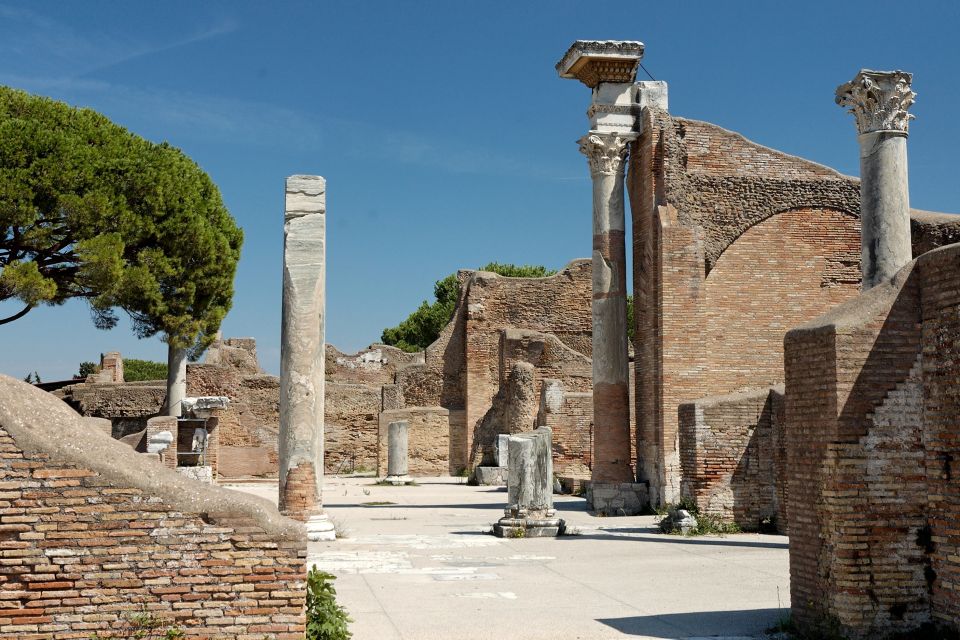
Ostia Antica can feel like a lot at once. Whole streets, half-walls, fragments everywhere. The private format helps because you’re not forced to keep up with the loudest pace in the group. Instead, you get a guided walk where each turn has a reason.
This tour runs for about 2 hours, which is long enough to get real context without burning half the day. The walking level is listed as medium, so you should expect some time on uneven paths and steps. If you like your ruins with names, layouts, and purpose, this pacing is a good match.
Also, private doesn’t just mean quieter. It often means you can stop longer where you care most, like mosaics or the theatre area, rather than marching past everything in a rush.
You can also read our reviews of more walking tours in Rome



Starting at the Parco Archeologico: the skip-the-line advantage
You begin at Parco Archeologico di Ostia Antica, right at the ticket office. Your guide holds a sign with your name, which is a small thing but a real relief when you’re trying to meet on time in a busy site area.
The biggest practical perk is that skip-the-line tickets are included. That matters here because Ostia Antica is one of those places where waiting around can eat into the only thing you actually came for: walking the ruins with a plan. With skip-the-line access, you can start learning almost immediately instead of killing time.
One more logistics point: there’s no hotel pickup and drop-off, so you’ll need to get yourself to the site. That’s not a dealbreaker, it just means you should plan your local transportation like you would for any self-directed day at Ostia Antica.
The big story your guide will connect: from 4th century B.C. control to a port that fed Rome
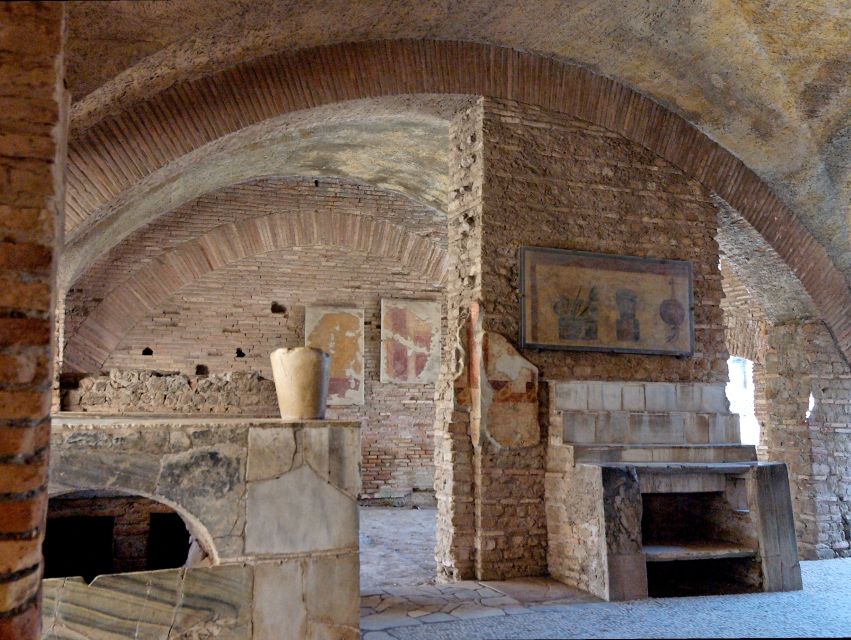
What I like most about this kind of guided Ostia Antica visit is that the place stops being just pretty ruins. Your guide frames it as a settlement whose roots go back to the start of the 4th century B.C.—a time when this area mattered for controlling the Tiber.
You’ll hear how Ostia functioned as a military outpost to control access not only to the river but also its lower course and nearby areas, helping defend Rome. Then the story shifts. Ostia gains a more commercial identity as a river port, taking on a supply role for Rome—especially with foodstuffs like wheat—even if the strategic military/naval function was still important.
The tour also covers how the city later became ringed by a new circle of walls, enclosing an urban area of around 50 hectares and divided into five regions/neighborhoods. That sounds abstract, but with a guide walking you through the ruins, it helps you understand why the site is organized the way it is and why some zones feel more civic while others feel more daily.
If your brain likes cause-and-effect, this is exactly the right kind of explanation: it turns location into meaning.
Neptune’s Thermal Baths mosaics: why this stop is such a win
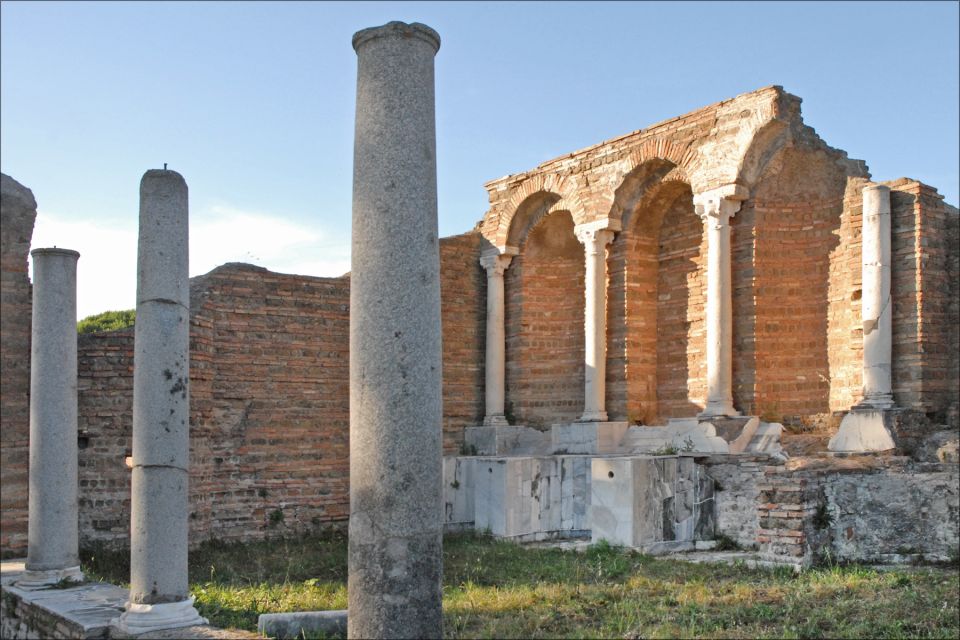
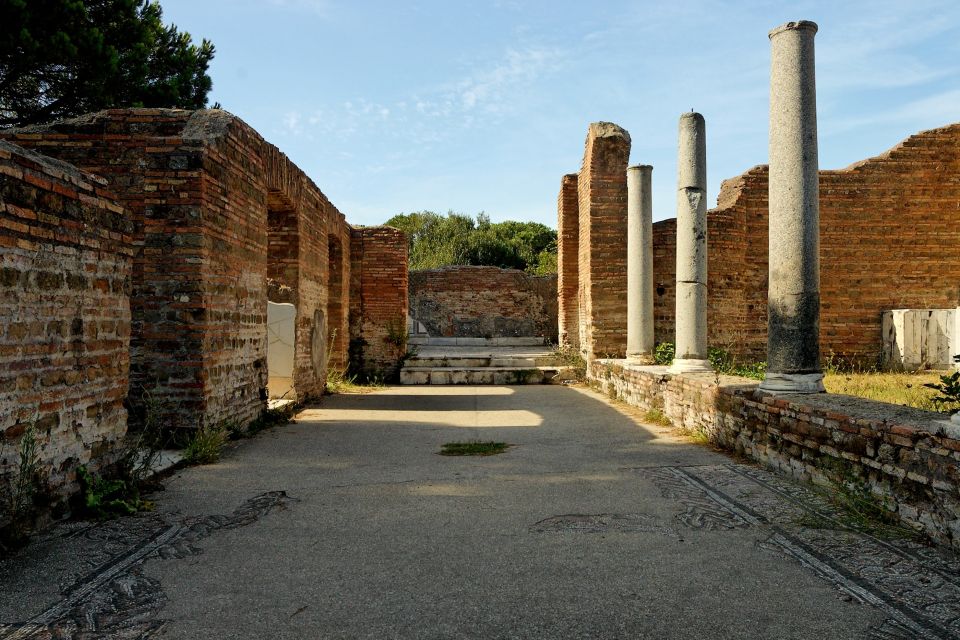
Neptune’s Thermal Baths are one of those places where Ostia Antica rewards close looking. This tour spotlights mosaics depicting Neptune and Amphitrite, which gives you an immediate visual hook. You’re not trying to guess where you are in the city based on a few stones—you can anchor yourself to an identifiable theme.
The practical value here is huge. When you see a mosaic subject tied to a specific named space, you start recognizing the ruins as designed, not random. That also makes the surrounding areas easier to read during the rest of the walk, because your eyes start working with the guide instead of on your own.
One more plus: thermal baths are a social setting in Roman life, so the story your guide builds around the baths helps you connect architecture to human routine. If you like the cultural side of archaeology, this is the kind of moment you’ll remember later when other ruins start blending together.
Teatro di Ostia: a theatre visit that helps you picture civic life
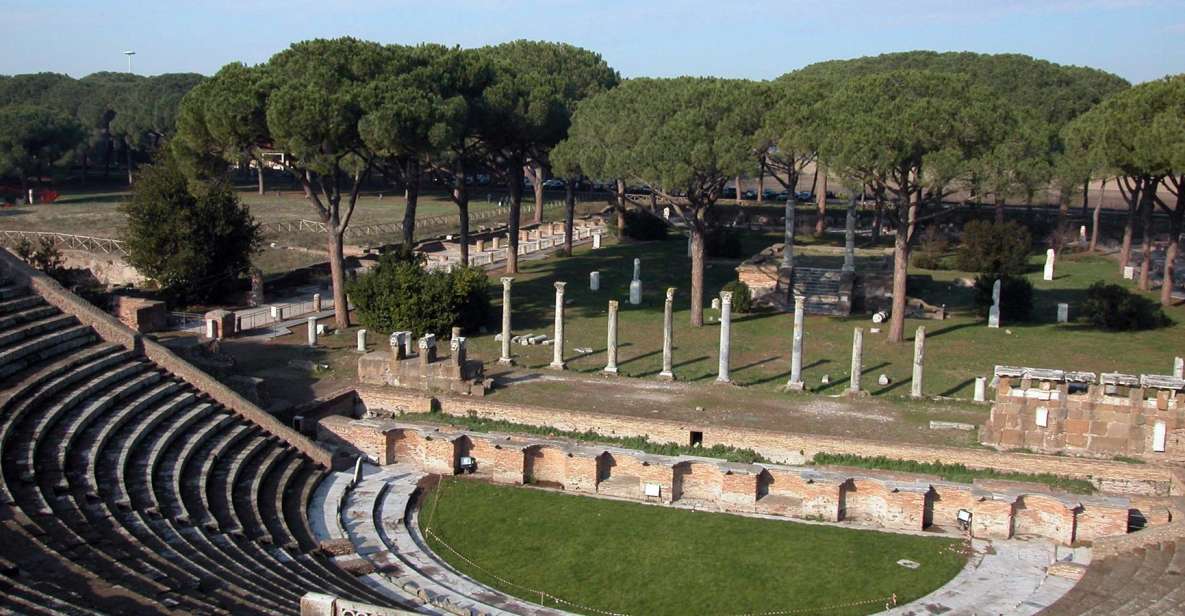
After the main Ostia Antica guided portion, you’ll spend focused time at the Teatro di Ostia, with the itinerary setting about 30 minutes for that stop. A theatre can be hard to appreciate when you’re standing in the open without context. With a guide, you learn what to look for and how the space fit into civic Rome.
This is also one of the stops that tends to click for first-timers. You can often see the dramatic shape of the theatre area right away, and then the guide’s explanation makes it feel less like a ruin and more like a purpose-built stage.
The benefit of adding theatre time inside a broader city tour is that you don’t treat it like a standalone postcard. You see it as part of the larger urban plan—closer to the forum and public rhythm than to the quieter edges.
If you’re the type who wants to know not just what something is, but what it was used for, give the theatre your attention and ask how it relates to the rest of what you saw.
You can also read our reviews of more private tours in Rome




Forum and civic stops: House of Diana, Thermopolium, and Forica
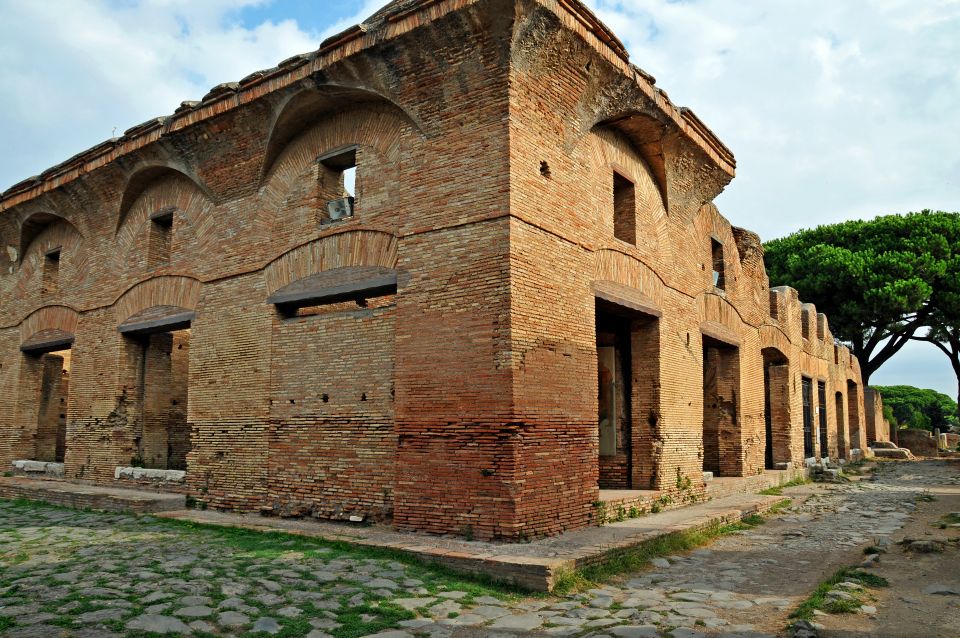
One of the best ways to understand Ostia Antica is to bounce between public and everyday spaces. This tour includes a sweep that goes past the forum, plus the House of Diana, Thermopolium, and Forica.
Here’s what you can take from these stops, even without a museum-style lecture: their names mark different functions in the city. The forum points you toward civic activity. The house stop brings you into domestic architecture and the feel of a residential zone. The Thermopolium and Forica names highlight that daily life had built-in spaces tied to routine needs.
The guide’s job is to connect those dots while you walk, so you understand why you’re moving when you move. That prevents the classic mistake of just taking photos and calling it history.
Tips for getting more out of this part:
- Slow down when the guide names a place, then look for the physical clues they point out.
- Use your questions here. This is where the site starts to feel like a living city rather than a cemetery of stone.
Domus of Amor and Psyche excavations: old Ostia and the feel of private space
The tour includes a stop at the Domus of Amor and Psyche excavations, labeled as Excavations of Old Ostia, with about 20 minutes set aside. “Domus” signals a house, and that shift matters: it changes your perspective from the public city to more private space.
This is often where a guided visit shines. Archaeology can look more confusing when you’re in a domestic area—rooms and walls can feel fragmented. A guide helps you make sense of what you’re seeing and why the excavation itself matters for understanding how people lived in older layers of Ostia.
Because this stop is carved out as its own mini-experience inside the tour, you’re less likely to rush through it. Take advantage of the time. Look at the layout cues, and let the guide translate what the excavations reveal about Old Ostia.
How to make your 2-hour walk feel worth it
When you’re paying for a private experience, you want your money to show up in what you learn and how you move. Here are a few practical ways to get that value:
- Arrive with questions. Even two questions—What made Ostia grow? Which part of the city is most like real daily life?—help your guide tailor explanations.
- Wear grippy shoes. The tour is medium walking, so plan for worn stone surfaces and uneven ground.
- Use the mosaic stop as your “anchor.” If you can remember Neptune and Amphitrite, the rest of the ruins become easier to place.
- Listen for transitions. The tour’s strongest moments are when the guide shifts from military outpost to port economy to city neighborhoods and then points out what you’re seeing.
The guides credited for strong results—like Paolo Gardelli and Alessandro—are praised for making the story clear and interesting. You’ll get more out of that if you treat the tour like a conversation, not a soundtrack.
Languages, group size, and why private matters here
This tour is designed as a private group and your guide can work in Spanish, English, French, German, and Italian. Private here is practical, not just fancy. You can ask follow-ups without feeling like you’re interrupting a parade.
Also, the tour stays focused. A lot of Rome-area guided tours try to cram in too much. This one commits to Ostia Antica and keeps the walk tight enough to cover major named highlights without drifting into generalities.
The result is a more satisfying “I get it now” feeling—the kind you want when the ruins are spread out and you’re trying to build a mental map fast.
Price and value at $314.37 per person
At $314.37 per person, this isn’t a budget afternoon. You’re paying for three specific things bundled together:
- A private guide
- Skip-the-line tickets
- A curated, history-forward walk across multiple named sites
So the value depends on how you travel. If you prefer slow pacing, direct answers, and not hunting for meaning in scattered ruins, this price can feel reasonable because it buys attention and clarity.
If you’re comfortable touring on your own with a guidebook and you don’t mind lines, you might decide you don’t need the private component. But if you want your time to translate into real understanding, you’ll likely feel the money go into the guide’s storytelling and pacing rather than logistics.
Also remember: food and drink aren’t included, so think of this as a paid guided tour for the ruins, not a full-day experience package.
Who should book this Ostia Antica private tour
This is a strong fit if you:
- Want a guided explanation that makes the ruins easier to read
- Enjoy history that connects policy and daily life, from military control to the port supply chain
- Like to spend time on standout sites like Neptune’s Thermal Baths mosaics
- Prefer a private group pace over a crowded group tour
It may be less suitable if you have mobility limitations. The activity level is listed as medium walking, and the description includes notes that it’s not suitable for people with mobility impairments, plus a conflicting line about wheelchair suitability. If that’s relevant for you, I’d verify directly with the provider before booking.
Should you book this Ostia Antica skip-the-line tour?
I’d book it if you want Ostia Antica to feel structured—like a place you can understand while you walk it, not just a scenic place you pass through. The combination of skip-the-line access, a private guide, and a route that hits both public and everyday zones makes it a solid choice.
You’ll get the most out of it if you’re the type who pays attention to details and asks questions. The stop choices—Thermal Baths mosaics, theatre time, forum and household sites, and the Domus of Amor and Psyche excavations—give you variety without losing focus.
If you’re mainly chasing photos and you’re comfortable figuring things out yourself, a cheaper self-guided visit might do the job. But for many people, the real payoff is that your guide turns ruins into a story you can follow from start to finish.
FAQ
How long is the Ostia Antica private walking tour with skip-the-line?
The tour duration is 2 hours.
Where does the tour start and where does it end?
You meet the guide at the ticket office at Parco Archeologico di Ostia Antica. The tour ends back at the same meeting point.
What is included in the price?
The included items are a private guide and skip-the-line tickets.
Is food or drink included?
No. Food and drink are not included.
What sites will we visit during the tour?
You’ll visit Ostia Antica with a guided tour, the Teatro di Ostia, and the Domus of Amor and Psyche excavations. Highlights also include Neptune’s Thermal Baths, the theatre, the forum, the House of Diana, the Thermopolium, and the Forica.
What languages are offered?
The guide can conduct the tour in Spanish, English, French, German, and Italian.
Is the tour wheelchair accessible?
The information provided lists it as wheelchair accessible, but it also states it is not suitable for wheelchair users. If accessibility is a concern, confirm details with the provider before booking.