REVIEW · ROME
For Females Travelers: Authentic Roman moped tour
Book on GetYourGuide →Bookable on GetYourGuide
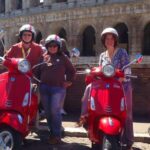
Rome looks different when you ride it. This authentic Roman moped tour gives you a fast, friendly way to cover major sights without feeling chained to slow walking routes. You start at Piazza del Popolo, hop into the rhythm of Rome from the back of a moped, and make quick stops that actually help you understand what you’re seeing.
I love two things most: the chance to hit headline landmarks like the Colosseum and the Pantheon without burning your whole day on your feet, and the fact you’re guided by a real local who shares context as you go. One thing to consider: this is not a sit-and-watch tour, so you’ll want to be comfortable riding on a scooter and wearing secure shoes for stops.
In This Review
- Key things to know before you go
- The Rome view you usually miss from the sidewalk
- Starting at Piazza del Popolo: where the tour sets its rhythm
- Sant’Eustachio coffee break: a pause in the middle of momentum
- Piazza Navona from a scooter: the square that makes you look up
- Pantheon photo stop and visit: the quick moment that still feels big
- Church of Sant’Ignazio di Loyola: small stop, strong visual payoff
- The ride segments: how you get speed without losing context
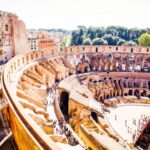
- Colosseum time: photo first, then a real look
- The quick photo stop moment: where you slow down for 5 minutes
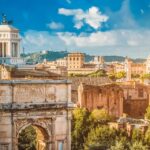
- Arch of Constantine: a stop that helps you “read” the city
- Castel Sant’Angelo: arriving with the right sense of scale
- Vatican City photo stop and visit: the final big “wow” without the long wait
- How safe and comfortable is a moped tour in Rome?
- Price and value: why $106 can make sense here
- Who this tour fits best (and who should skip it)
- Should you book the Authentic Roman moped tour?
- FAQ
- What is the duration of the moped tour?
- Where do I meet the guide?
- Is coffee included?
- Are helmets provided?
- What’s included in the tour price besides transportation?
- Are entrance fees included for attractions?
- Which sights are included on the route?
- What language will the guide speak?
- Is it private?
- Are there any limits on who can join?
Key things to know before you go
- Moped viewpoint: You get skyline, street geometry, and angles you don’t get from sidewalks.
- Two big stops, plus many quick hits: Pantheon, Colosseum, and Vatican-area views, mixed with shorter photo/ride moments.
- Sant’Eustachio coffee break: A mid-tour pause at one of Rome’s famous coffee stops.
- Photo stops are part of the plan: The guide helps you capture shots at each location.
- Private group feel: It’s not a cattle-car vibe; it’s designed to move together with a local guide.
The Rome view you usually miss from the sidewalk
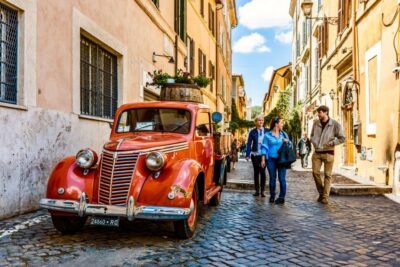
Rome is made of layers. From foot-level, you see the fronts of buildings and the next corner. From a moped, you start seeing how the city connects: streets that funnel you forward, rooftops that frame landmarks, and sudden sightlines that pop up when you crest a small rise or turn into a wider avenue. That change in perspective is the whole point here.
You’ll also get a more realistic sense of time and pace. Rome isn’t quiet and orderly; it’s active, and streets feel lived-in. The guide’s job is to help you keep up with what you’re seeing, so you come away with impressions, not just photos.
And the “female traveler” angle matters in a practical way: the tour is built around connecting with a local while you move as a group. You’re not wandering alone trying to piece together routes.
You can also read our reviews of more tours and experiences in Rome


Starting at Piazza del Popolo: where the tour sets its rhythm
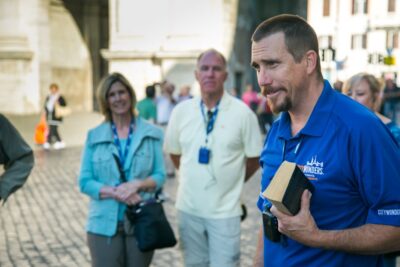
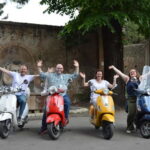
You meet outside Bar Rosati at Piazza del Popolo (Piazza del Popolo, 5). This matters because it puts you in a central, classic Rome spot where the city opens up in multiple directions. It’s also the kind of meeting point that feels straightforward if you’re already using landmarks as your mental map.
From here, you’ll transition into riding mode quickly. You’re given a helmet, and the tour expects you to be ready to move. Bring comfortable shoes that stay put and comfortable clothes that won’t limit your movement during short walks and photo stops.
Practical tip: if you’re someone who likes to observe first, then act, this is good. Piazza del Popolo is a natural “reset” moment before you speed into the rest of the route.
Sant’Eustachio coffee break: a pause in the middle of momentum
At the middle part of the tour, you stop for coffee at Sant’Eustachio for about 10 minutes. This is not just a food break. It’s a timing tool.
After you’ve already seen a few big scenes from the scooter, the coffee stop lets you slow your head down and look at details: how people order, how locals treat the place, and how the city keeps moving around you. It’s the kind of break that makes the second half of the tour feel sharper instead of rushed.
Also, coffee in Rome is a culture move. Having it built into the plan means you don’t have to gamble on finding something good in between monuments. The tour includes the coffee, so you’re not scrambling for a budget-friendly stop that’s actually worth your time.
Piazza Navona from a scooter: the square that makes you look up
Next up is Piazza Navona. You’ll get a scooter ride segment (about 20 minutes) that helps you feel the scale of the square area without spending all your energy walking. Piazza Navona is famous for its open space and built-up surroundings, so you’ll want your eyes up—look at the geometry around you, not just the street level.
What works about seeing it from a moped is that it reframes the square. Instead of treating it like a single destination, it becomes a hub you can visualize as part of the bigger city pattern.
If you’re the type who likes to sketch in your mind while you travel, this stop helps you build your mental map fast.
Pantheon photo stop and visit: the quick moment that still feels big
Then you reach the Pantheon. You’ll have a photo stop and visit for about 20 minutes. This is one of those landmarks where you can’t really control what you notice first. You might get pulled toward the scale, the dome, or how the building sits in its neighborhood.
The value here is timing. Because you’ve been riding, you arrive with fresh energy. You’re not tired from hours of walking. You can actually stand still and absorb what makes the Pantheon feel different from modern buildings.
A quick heads-up: entrance fees are not included, so if you want to go in for any paid areas, you’ll need to plan for that. The tour includes time for you to visit, but it doesn’t cover entry costs.


Church of Sant’Ignazio di Loyola: small stop, strong visual payoff
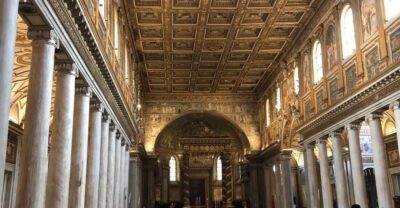
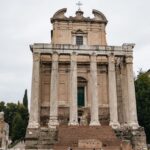
After Pantheon, you head to the Church of Sant’Ignazio di Loyola. You’ll have a photo stop and visit for roughly 10 minutes. This is a shorter stop, but it’s chosen for a reason: it helps balance the tour between the big, obvious headline sights and places that reward attention.
Even when you only have a few minutes, a church stop like this can shift how you read the city. Rome is not only monuments; it’s religious art, architecture, and layers of devotion. A short visit is often enough to make the rest of your tour make more sense.
Try this: don’t rush to the loudest details. Pick one area and really look. That’s how you get more out of limited time.
The ride segments: how you get speed without losing context
Between the major sights, there are scooter ride portions—segments built in so you can travel efficiently while still having the guide talk you through what’s ahead. One ride segment is about 15 minutes, and later you’ll have another longer ride segment (around 20 minutes) heading toward the Vatican area.
These ride blocks are where you often learn the most practical stuff: what you’re looking at from a different angle, why a landmark sits where it does, and how neighborhoods relate to each other.
If you’re used to walking tours where you stop every 10 minutes, you might like this pattern: ride, stop, absorb, then ride again. It feels like moving with the city instead of constantly being paused by it.
Colosseum time: photo first, then a real look
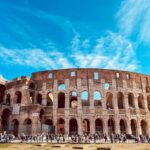
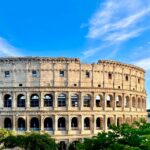
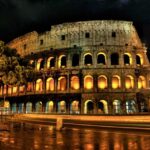
You’ll hit the Colosseum with a photo stop and visit around 15 minutes. This is shorter than some people expect if they’re imagining a long, quiet visit. But it still works because you’re not coming in from a long hike. You’re arriving by moped, so you can stand and look without feeling drained.
Also, the guide can point out what you might miss when you’re staring at the biggest lines and arches. You get a sense of how the Colosseum fits into Rome’s modern streets and the way crowds tend to swirl around the landmark.
Worth knowing: entrance fees are not included, so if you plan to go into paid areas, budget for that separately.
The quick photo stop moment: where you slow down for 5 minutes
There’s also a brief photo stop of about 5 minutes between sights. Short stops can feel like filler if you treat them as mandatory. But on this kind of tour, they’re often the moments that help you keep your bearings.
If you want maximum value, use those 5 minutes to do one thing: capture your photo, then look up and around before you move on. You’ll learn more from the surrounding street layout than from another close-up shot.
Arch of Constantine: a stop that helps you “read” the city
Next is the Arch of Constantine with a photo stop of around 5 minutes. It’s fast, but it’s a smart choice because this arch is a transition landmark. It teaches you to spot how Rome uses built structures as markers—signals that tell you where you are within a larger story.
From a scooter perspective, you often get a cleaner view of how arches frame streets. You’re not stuck staring straight-on from the same angle as everyone walking in.
If you’re the type who likes monuments that connect rather than only impress, you’ll probably appreciate this stop.
Castel Sant’Angelo: arriving with the right sense of scale
Then you head toward Castel Sant’Angelo with a scooter ride segment of about 20 minutes, plus a photo stop and visit time. Castel Sant’Angelo works well at this stage because you’ve already seen major anchors like the Colosseum and Pantheon. You’re ready to notice how each landmark changes the city’s silhouette and how river-adjacent areas feel different.
Also, moving by moped helps you see the area as more than one building. You can understand how the route flows and how you might connect this view to other places you’ll want to return to later.
Vatican City photo stop and visit: the final big “wow” without the long wait
Finally, you reach the Vatican City area with a photo stop and visit around 20 minutes. You’ll have enough time to take in the space and get a feel for the area without turning this tour into an all-day Vatican plan.
This is one of those moments where your timing matters. Ending with a big, iconic area keeps your energy up. You’re not exhausted by the time you arrive, because the tour spreads walking time across multiple short stops instead of dumping it all at the end.
As with other attractions, entrance fees are not included, so if you plan to pay for any entry, plan for it.
How safe and comfortable is a moped tour in Rome?
Based on the overall vibe of the experience, the tour is designed around safety and comfort basics. You get a helmet, and the tour includes a mix of riding and walking. People often think “moped tour” means pure riding, but the stops mean you’ll get off and take photos and do short visits too.
The key is preparation. Wear secure, comfortable shoes and comfortable clothes. If you’re sensitive to motion, choose travel clothing that doesn’t restrict movement during those quick moments when you’re getting in and out for photos.
And if you’re traveling for solo time, this helps: you’re not negotiating Rome alone. You have a guide, a route, and planned stops.
Price and value: why $106 can make sense here
At $106 per person for about 2 hours (and the real experience may run closer to 2.5 hours), you’re paying for three things: local guidance, transportation via moped, and structured time at major landmarks.
Here’s the value logic that works for many people:
- You’re compressing a lot of Rome into one guided loop, which can save you from piecing together multiple transit rides plus separate walking tours.
- You’re getting the Sant’Eustachio coffee included, which is a nice built-in break.
- You’re spending your energy on seeing, not managing routes.
The tour doesn’t include entrance fees, though, so factor that in if you plan to pay to enter any sites beyond viewing from outside. Also, you’re in a private group, which can be a big part of why the experience feels personalized rather than generic.
If you want the “Rome highlights” in a way that still feels human, the price can feel fair.
Who this tour fits best (and who should skip it)
This is a strong match for:
- Solo female travelers who want local connection without going it alone.
- People who want major monuments plus context, without spending the whole day on foot.
- Visitors who like photography and appreciate photo stops that are actually built into the timeline.
It may not be a great match if you:
- Are pregnant.
- Use a wheelchair.
- Have children under 18 in the group.
- Weigh over 209 lbs (95 kg), since the tour specifies this limit.
Also, it’s not built for people who want long, slow museum-style time. This is a “see the city, then decide what to return for” format.
Should you book the Authentic Roman moped tour?
If you’re short on time in Rome and you want big sights plus a local voice, I’d lean yes. The moped format changes what you notice, the coffee stop breaks up the pace, and the short visits keep the tour moving without feeling like a checklist.
Book it if you want:
- Fast, structured Rome highlights
- A local guide who can help you understand what you’re looking at
- Less walking, more seeing
Skip it if you:
- Want long indoor visits where you can linger
- Don’t feel comfortable riding a moped for a guided route
- Need full accessibility accommodations beyond what the tour supports
FAQ
What is the duration of the moped tour?
The tour is listed as 2 hours, and you should also expect it to last around 2.5 hours in practice.
Where do I meet the guide?
Meet the guide outside BAR ROSATI at Piazza del Popolo.
Is coffee included?
Yes. You get a coffee stop at Sant’Eustachio during the tour.
Are helmets provided?
Yes. A helmet is included.
What’s included in the tour price besides transportation?
The tour includes helmet, the Sant’Eustachio coffee stop, and photo stops at each location.
Are entrance fees included for attractions?
No. Entrance fees are not included.
Which sights are included on the route?
The tour includes stops that include Piazza del Popolo, Castel Sant’Angelo, Saint Peter’s Square, Piazza Navona, the Pantheon, the Church of Saint Ignatius of Loyola, Vittoriano/Piazza Venezia, the Colosseum, the Arch of Constantine, the Imperial Forums area, and a Vatican City photo stop/visit.
What language will the guide speak?
The guide provides live commentary in Italian and English.
Is it private?
Yes. It’s a private group tour.
Are there any limits on who can join?
It’s not suitable for pregnant women, wheelchair users, children under 18, and people over 209 lbs (95 kg).