REVIEW · ROME
Pompeii and Naples Day Trip from Rome
Book on GetYourGuide →Operated by Romaetravel · Bookable on GetYourGuide
Pompeii and Naples in one long day. I love the mix of an official guide at Pompeii (so the ruins actually make sense) and the chance to connect the Roman world to Naples streets with stops like Via San Gregorio Armeno and Piazza del Gesù. The main drawback to plan for is the 10-hour schedule: you’ll be on the move, and the Naples sightseeing time can feel tight if traffic or timing runs late.
Expect a day that starts with Roman Empire storytelling, then shifts into Naples sights you can walk right through. You’ll ride south along the Mediterranean with Amalfi Coast views, then hit Pompeii’s key public spaces like the food market and thermal baths, plus the homes of wealthy residents.
In This Review
- Key Points Worth Knowing Before You Go
- Why This Pompeii and Naples Day Trip Works (Even at 10 Hours)
- Rome Pickup, The Amalfi Coast Drive, and Why Early Timing Matters
- Entering Pompeii the Right Way: Official Guide, Skip the Line
- Pompeii Stops That Actually Teach You Roman Life
- The food market: how the day got fueled
- Thermal baths: a social engine
- Wealthy residences: everyday luxury
- Naples After Pompeii: Squares, Churches, and Street Energy
- Via San Gregorio Armeno
- Piazza San Domenico and Piazza del Gesù
- Church of Gesù Nuovo and Basilica di Santa Chiara
- Piazza Plebiscito and the Bourbon Crown in Naples
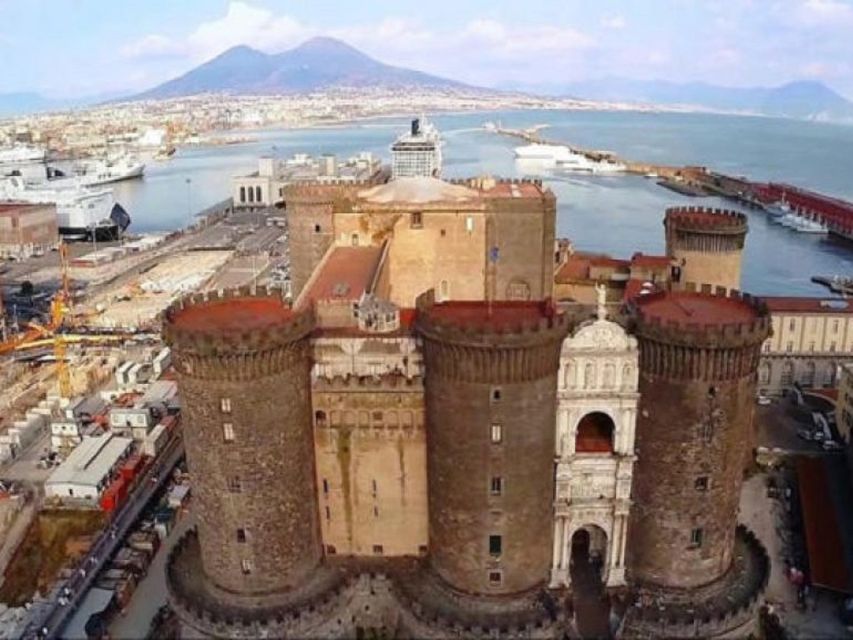
- Galleria Umberto I, Via Toledo, Piazza Municipio, and Castel Nuovo
- The Sfogliatella Stop: A Real Food Break in the Middle of History
- Price and Value: Is $292.28 Fair for Pompeii and Naples?
- Small Group Size: The Real Benefit You Feel in Pompeii
- Logistics Reality Check: What to Plan So You Don’t Feel Rushed
- Who This Tour Suits Best (And Who Might Prefer Something Else)
- Should You Book This Pompeii and Naples Day Trip?
- FAQ
- How long is the Pompeii and Naples day trip?
- What’s included in the price?
- Is lunch included?
- Will I have an expert guide in Naples?
- Do I need to buy a ticket to enter Pompeii?
- Where does hotel pickup happen?
- What languages are the tours offered in?
- How big is the group?
- Is the tour wheelchair accessible?
- What if I need to cancel?
Key Points Worth Knowing Before You Go
- Small group (up to 7) keeps Pompeii from feeling like a cattle stampede.
- Official Pompeii guide means you get context for everyday life, not just brick piles.
- Amalfi Coast viewpoint time turns the road trip into part of the experience.
- Naples is mostly on foot, so comfortable shoes matter more than you think.
- Sfogliatella stop gives you a local food break before the return to Rome.
- Not wheelchair accessible, and the walking in Naples is real city walking.
Why This Pompeii and Naples Day Trip Works (Even at 10 Hours)
A Pompeii trip from Rome is rarely short, but this one is built around efficiency. You get hotel pickup (for hotels within the Aurelian Walls), transportation included, Pompeii skip-the-ticket-line access, and an entrance fee covered. That matters because the biggest enemy on a day like this is wasting time on logistics before you ever see the ruins.
I like that the day isn’t only Pompeii. After the archaeological site, you keep going into Naples to see major monuments in a logical walk: Piazza San Domenico, Piazza del Gesù and Church of Gesù Nuovo, Basilica di Santa Chiara, then Piazza Plebiscito and Castel Nuovo area. It’s a classic pairing for a reason. Pompeii shows you what life looked like inside the Roman world; Naples shows you how that world echoes into today’s streets, churches, and squares.
The one caution: a long day can mean hurried moments. If your hotel is outside the pickup zone, or if the return timing slips, you may end up walking longer than you’d hope. Even with drop-off included, I’d treat this as a trip where you plan for being on your feet a lot.
You can also read our reviews of more tours and experiences in Rome



Rome Pickup, The Amalfi Coast Drive, and Why Early Timing Matters
The day begins with pickup from your Rome hotel if it’s within the Aurelian Walls. That’s a helpful boundary because it usually keeps the departure efficient and prevents you from meeting a bus in some faraway corner of the city.
Once you’re rolling, the route heads along the Mediterranean. You’ll get magnificent views of the Amalfi Coast en route to Pompeii. Those roadside viewpoints aren’t just sightseeing fluff. They set the emotional tone of the day: you’re traveling from modern Rome toward a coastline that has shaped trade, culture, and power for centuries. Even if you don’t plan to “do Amalfi,” the coastline glimpse gives you something visual to connect to what you’ll learn about southern Italy’s history.
Practical tip: pack your day like a road trip. Bring something to sip and a snack you actually like, since lunch isn’t included. Comfortable shoes also help you enjoy the ride-to-walk transition, because once you stop, you won’t be sitting much.
Entering Pompeii the Right Way: Official Guide, Skip the Line

Pompeii is the star here, and the format is built to help you get it. Transportation takes you from Rome to the site, and you have skip-the-ticket-line access. That can save a chunk of time that you’d rather spend understanding what you’re looking at.
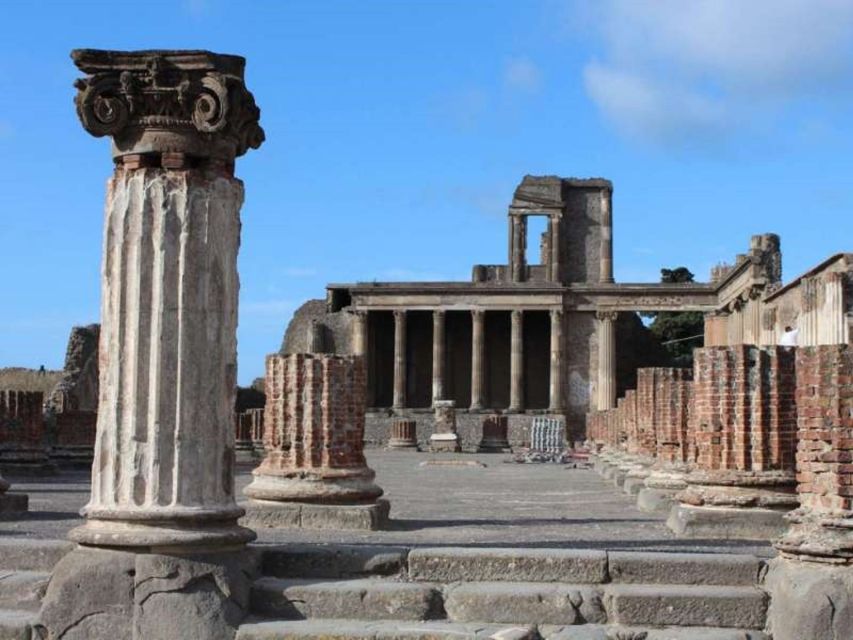
The heart of the experience is the official guide at Pompeii. This isn’t a generic lecture. The guide is there to bring everyday life back into focus—how people ate, bathed, shopped, worked, and lived. You’re not just walking around; you’re learning how the city functioned.
As you explore, you’ll see major remains such as:
- The food market area, where you can imagine daily shopping and trade
- Thermal baths, which highlight Roman ideas about hygiene, leisure, and social life
- Residences of wealthy citizens, where the layout and decoration tell you a lot about status
What I like about an official guide in Pompeii is that it keeps you from treating the site like a scrapbook. You’ll start noticing patterns: where activity clustered, how public and private spaces differed, and why certain buildings were designed the way they were. That’s the difference between seeing ruins and understanding a city.
Pompeii Stops That Actually Teach You Roman Life
Pompeii can overwhelm you if you go in cold. So the best way to enjoy it is to let the guide lead you through human-scale moments—what people did every day.
The food market: how the day got fueled
When you look at the food market remains, you’re seeing more than stalls and walls. You’re looking at a system. Markets were where news traveled, where money changed hands, and where routine became habit. Even if the buildings are quiet now, you can read the city’s pulse through where people likely gathered.





Thermal baths: a social engine
Thermal baths are one of the best places to understand Rome as a lifestyle. These weren’t only about cleanliness. They were about meeting people, passing time, and spending leisure the Roman way. You’ll get a sense for how much energy the city put into shared public spaces.
Wealthy residences: everyday luxury
In the residences of wealthy citizens, the layout can feel like a visual lesson on class. You’ll likely notice the difference between rooms meant for daily use and spaces designed for display or gatherings. It’s not about judging people long gone—it’s about seeing how architecture carried power and identity.
A word on pacing: Pompeii is uneven walking, and you’ll be outdoors. Wear shoes you trust. If you’re sensitive to heat, plan to move steadily and take short rests rather than long breaks.
Naples After Pompeii: Squares, Churches, and Street Energy
After Pompeii, you transition to Naples. And the tone changes fast. Pompeii is sharp and historical; Naples is active, noisy, and layered. This is where you’ll see multiple major monuments over a walk-and-stop route.
One reason I like this Naples plan is that it clusters highlights geographically. You don’t bounce around the city in tiny segments. You move along a route that includes Via San Gregorio Armeno, Piazza San Domenico, and Piazza del Gesù.
Via San Gregorio Armeno
This street is known for its atmosphere and the way it connects everyday life to local tradition. It’s the kind of place where you see how history isn’t separate from the present—it’s part of it.
Piazza San Domenico and Piazza del Gesù
These squares work as orientation points. Sitting in a square helps you get your bearings fast, even when you only have part of a day. From there, you’ll be in position to appreciate what you’re seeing next.
Church of Gesù Nuovo and Basilica di Santa Chiara
The Church of Gesù Nuovo and Basilica di Santa Chiara bring you straight into the visual language of Naples: stonework, domes, and the dramatic impact of churches that have shaped city identity for generations. Don’t rush your photos here. Look closely and you’ll feel the design choices more than the camera ever will.
A note you’ll thank yourself for: bring a little patience. Naples can move slowly when you’re walking, then suddenly speeds up around you. Keep your group together and follow your guide’s cues.
Piazza Plebiscito and the Bourbon Crown in Naples
Next comes Piazza Plebiscito, one of Naples’ grandest gathering spaces. This is where the city’s power stories become visible. You’ll be able to admire the Royal Palace and the Church of San Francesco di Paola on the piazza.
I enjoy this part because it’s a change in scale. Pompeii teaches you Roman daily life. Piazza Plebiscito shows you later political and religious ambition—different era, same theme: buildings used to project authority.
This area also works for short breaks. Even if you don’t want a long sit-down, being in a major piazza gives you a place to regroup, check your energy, and reset before the final walking leg.
Galleria Umberto I, Via Toledo, Piazza Municipio, and Castel Nuovo
As you continue, you’ll move through key spots around:
- Galleria Umberto I on Via Toledo
- Piazza Municipio
- Castel Nuovo
Galleria Umberto I is worth a pause because it’s one of those Naples spaces that feels like a bridge between street life and an older idea of elegance. Via Toledo keeps you oriented toward the city’s main movement patterns, so you’ll feel where you are even if it’s your first time in Naples.
Then Piazza Municipio and Castel Nuovo give you the medieval anchor. Castel Nuovo is the kind of stop where you can stand back and appreciate the defensive vibe. It’s not just a photo stop; it helps you understand how Naples shifted and defended itself over time.
If you’re thinking about time management: this stretch is best enjoyed in short bursts. Let your guide move you through, then take a minute or two to slow down once you’re in position.
The Sfogliatella Stop: A Real Food Break in the Middle of History
Before you head back to Rome, you’ll taste an authentic sfogliatella at a local bakery. This is one of the most valuable moments of the day, not because it’s dessert, but because it breaks up the nonstop museum mode.
Sfogliatella is a pastry with a strong identity. One bite is enough to shift you out of ruins-and-monuments thinking and into Naples as a living place. If you’re picky about pastries, this is still a good stop because it’s specifically part of the experience, not an afterthought tacked on by timing.
Pairing food with the day’s theme is smart, too. Pompeii teaches daily routines; the pastry connects those routines to what survives today.
Price and Value: Is $292.28 Fair for Pompeii and Naples?
At $292.28 per person, you’re paying for a lot of “handled-for-you” parts. The price includes:
- Hotel pickup and drop-off (within the Aurelian Walls for pickup)
- Transportation
- Entrance fee to Pompeii
- Official guide at Pompeii
- Small group size up to 7
- Skip the ticket line
Naples is lighter on guide power: there’s no expert guide in Naples, so you’re seeing monuments with what your day’s plan provides. That doesn’t automatically make it bad—it just changes what you’re buying. You’re mainly paying for a guided Pompeii experience plus organized Naples sightseeing.
So is it good value? For me, it leans yes if you care most about Pompeii and want the day run smoothly. If you’re the kind of traveler who expects a full expert-led Naples walking tour, you might want to supplement with your own reading or choose a different format.
Also: the 10-hour day means you’re effectively purchasing time savings as much as guidance. Skip-the-line entry and a controlled group size matter.
Small Group Size: The Real Benefit You Feel in Pompeii
This is limited to 7 participants. That number matters more than you’d think. In Pompeii, where walking paths and viewpoints can bottleneck, a smaller group keeps the guide’s attention more useful. You can actually ask questions and follow along without constantly waiting for the last person to catch up.
A small group also helps with timing. When you have a tight schedule—Pompeii first, Naples second—compact groups reduce delays and make it easier to keep the day coherent.
Logistics Reality Check: What to Plan So You Don’t Feel Rushed
You should go in knowing this is not a relaxed day. It’s built around structured stops: Pompeii guided time, then Naples monuments, then sfogliatella, then the return to Rome.
The practical concerns to take seriously:
- You’ll be walking on city streets in Naples and uneven ground in Pompeii
- You’ll likely be in sun and heat at some points
- Lunch isn’t included, so bring snacks or plan to buy food when timing allows
One more thing: pickup is possible only within the Aurelian Walls, and you’ll be dropped off at the end. Still, because the day can run late in real life, I’d confirm how your return drop-off works for your specific hotel location. You don’t want to discover too late that you’ll need extra walking at the end of a long day.
Who This Tour Suits Best (And Who Might Prefer Something Else)
This trip fits best if you:
- Want Pompeii with real interpretation from an official guide
- Like a structured day with transport handled
- Want to see major Naples monuments without planning your own route
- Prefer small group travel over big bus chaos
It might not fit as well if you:
- Need lots of free time in Naples to wander independently
- Don’t handle long road days well
- Require wheelchair access (it’s not wheelchair accessible)
If you’re traveling as a couple or small group, this size is especially comfortable. It also requires a minimum of 2 people per booking, so check that you’re not booking solo.
Should You Book This Pompeii and Naples Day Trip?
I’d book this if Pompeii is your top priority and you want the day guided where it counts. The combination of official guide in Pompeii, skip-the-ticket-line access, and a focused Naples route makes it a solid value for a first-time visitor who doesn’t want to manage bus transfers and entry logistics.
Skip it or compare alternatives if you want Naples to be fully expert-led and unhurried. Because the plan includes multiple major sights, it tends to prioritize coverage over deep wandering.
My final advice: if you book, pack snacks, wear strong shoes, and keep expectations realistic. You’re buying a carefully guided highlight run through two of Campania’s most important places—Roman ruins in the morning, Naples monuments by afternoon, and sfogliatella before the ride back.
FAQ
How long is the Pompeii and Naples day trip?
The duration is 10 hours. Starting times depend on availability.
What’s included in the price?
Included are hotel pickup and drop-off, transportation, the entrance fee to Pompeii, and an official guide at Pompeii.
Is lunch included?
No, lunch is not included.
Will I have an expert guide in Naples?
No, the itinerary does not include an expert guide in Naples.
Do I need to buy a ticket to enter Pompeii?
You’ll have the entrance fee included, and skip-the-ticket-line is part of the experience.
Where does hotel pickup happen?
Pickup is possible from your hotel in Rome if it’s located within the Aurelian Walls.
What languages are the tours offered in?
The live tour guide is available in English and Italian.
How big is the group?
This is a small group limited to 7 participants.
Is the tour wheelchair accessible?
No, it is not wheelchair accessible.
What if I need to cancel?
Free cancellation is available up to 24 hours in advance for a full refund. Reserve now & pay later is also available.