REVIEW · ROME
Rome: Caravaggio Guided Walking Tour
Book on GetYourGuide →Operated by The Voyager · Bookable on GetYourGuide
Caravaggio’s shadows are still on these streets. I really like the three-church route that shows his paintings exactly where they belong, and I like how guides like Patricia connect technique to real-life choices. The one drawback to plan for is practical: places of worship enforce a strict dress code, and there’s a moderate walk.
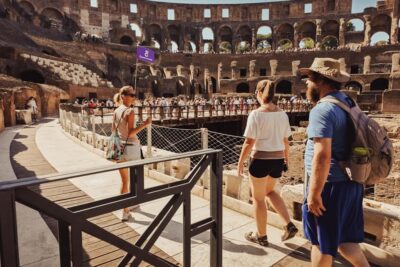
You start at Piazza del Popolo, and you’ll find your guide by the flag with the The Voyager logo. Headsets help you catch every detail without craning your neck in loud piazzas and narrow lanes.
In This Review
- Key things that make this tour work
- Why Caravaggio’s Rome fits best on foot
- Meeting at Piazza del Popolo and finding The Voyager guide
- Santa Maria del Popolo: St. Peter and St. Paul in the place they were meant
- Passing through the neighborhoods tied to Caravaggio’s life
- Church of St. Augustine: The Madonna of the Pilgrims
- Contarelli Chapel: The Life of St. Matthew and Caravaggio’s storytelling
- What the guide experience actually feels like
- Price and value: what $71 gets you in real terms
- Walking, clothing rules, and church etiquette (this is the part that matters)
- Who should book this Caravaggio walk
- Should you book this tour?
- FAQ
- FAQ
- How long is the Rome Caravaggio guided walking tour?
- Where does the tour start?
- What sites and paintings are included?
- Is there a live guide and do I get help hearing them?
- What languages are available?
- Is there audio included as well?
- How much walking is involved, and is it accessible?
- What should I wear to enter the churches?
- What do I need to bring?
- Is free cancellation available?
Key things that make this tour work
- Three masterpieces, three church settings: you see major works in the exact spaces tied to them.
- A story-first guide approach: the focus is on art plus the way Caravaggio worked and lived.
- Headsets for clarity: you keep up even when the group is moving through side streets.
- You pass meaningful Rome locations: residences on the route help you picture where his daily life happened.
- You end with Caravaggio’s most dramatic storytelling: The Life of St. Matthew in the Contarelli Chapel.
- Practical church rules are real: shoulders and knees covered, and you’ll want comfortable shoes.
Why Caravaggio’s Rome fits best on foot
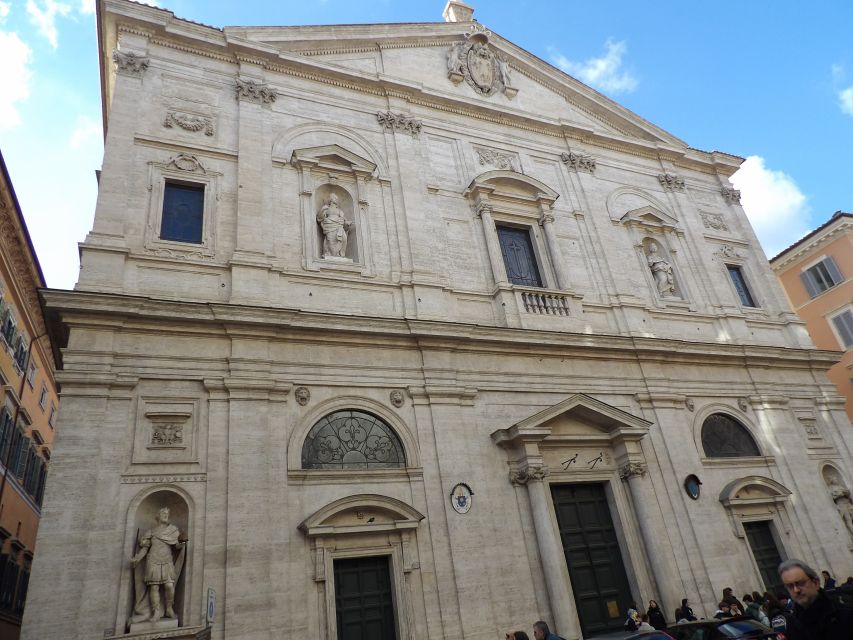
Caravaggio didn’t paint in a vacuum. He worked in a tight web of churches, patrons, and neighborhoods, and this tour is built to keep that link close to the places you’re standing in. Instead of treating the works like museum trophies, you walk between settings and start to see how his subjects and style met the world around him.
I also appreciate the “hands-on” feel of the route. You’re not only looking; you’re getting a guided sense of how he achieved what you’re seeing—light, realism, and the emotional punch that makes his figures feel immediate.
You can also read our reviews of more walking tours in Rome
Meeting at Piazza del Popolo and finding The Voyager guide
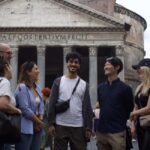
This tour begins in Piazza del Popolo. The meeting point is easy to miss in busy Rome, so do yourself a favor: arrive a little early, stand where you can see the crowd flow, and look for a guide holding a flag with the The Voyager logo.
You’ll want comfortable shoes right away, since you’re moving through the center on foot for about 2.5 hours. The tour includes headsets, which is a big quality-of-life upgrade—your guide’s voice stays clear while you’re weaving through alleys.
One practical tip: keep an eye on the group’s rhythm. There’s a known risk with walking tours—if you’re late or unsure where to look, you can lose the group quickly in church lines and narrow streets. So once you spot the flag, stick with that person.
Santa Maria del Popolo: St. Peter and St. Paul in the place they were meant
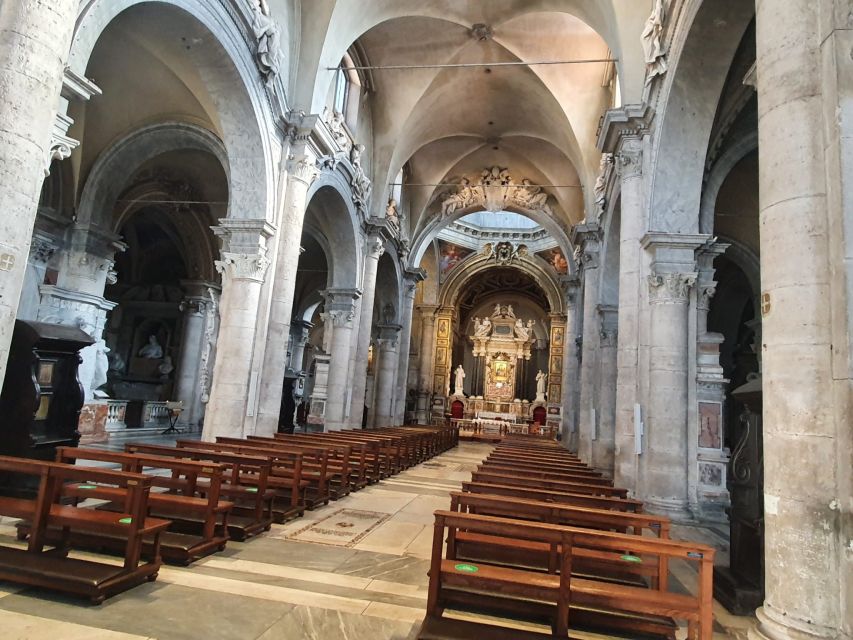
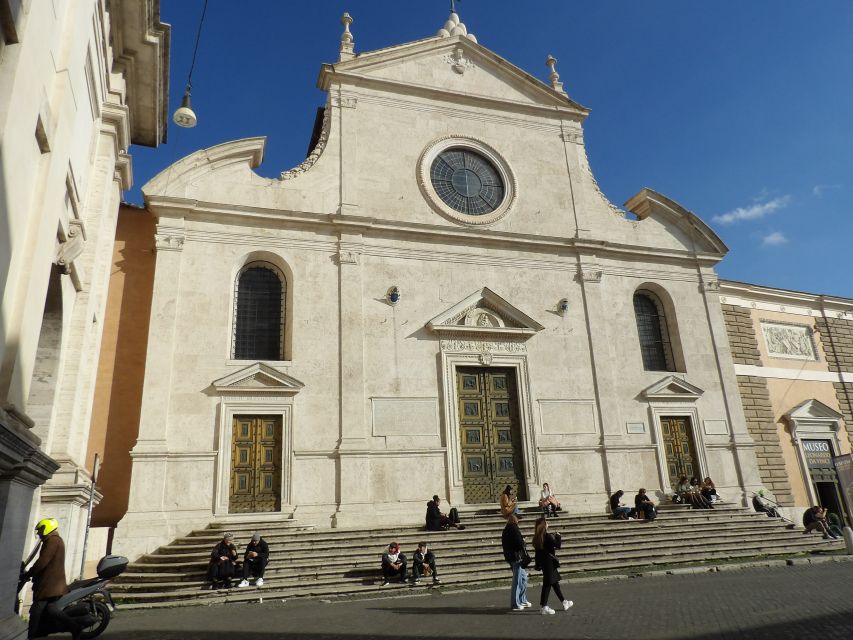
Your first major stop is Basilica of Santa Maria del Popolo. Here, you’ll see two standout works: The Crucifixion of St. Peter and The Conversion of St. Paul.
What I like about this start is the immediate narrative flow. These aren’t random “famous paintings” listed on a map. They connect to powerful Christian themes—faith, change, and consequence—and the guide can point out how Caravaggio’s approach makes the scenes feel like real events rather than distant religious figures.
Also, this is a smart timing choice. Getting one church milestone early helps you settle into the tour’s pace. It sets the tone for the rest of the walk: look closely, listen for the technique, then relate what you’re learning to the next church.
Passing through the neighborhoods tied to Caravaggio’s life
Between churches, the tour doesn’t just shuffle you from one door to another. You’ll pass by Palazzo Madama and Giustiniani Palace, which are connected to Caravaggio’s residences. That detail matters more than it sounds.
When you’re walking in the same general spaces where an artist lived and worked, his work stops feeling like a sealed-off “art world” story. You start thinking in practical terms: who he would have encountered, how commissions might have come through nearby circles, and why certain subjects show up when they do.
Rome’s center can feel endless, but this part gives you a route you can mentally save. You’re not just sightseeing; you’re building a map in your head.
Church of St. Augustine: The Madonna of the Pilgrims
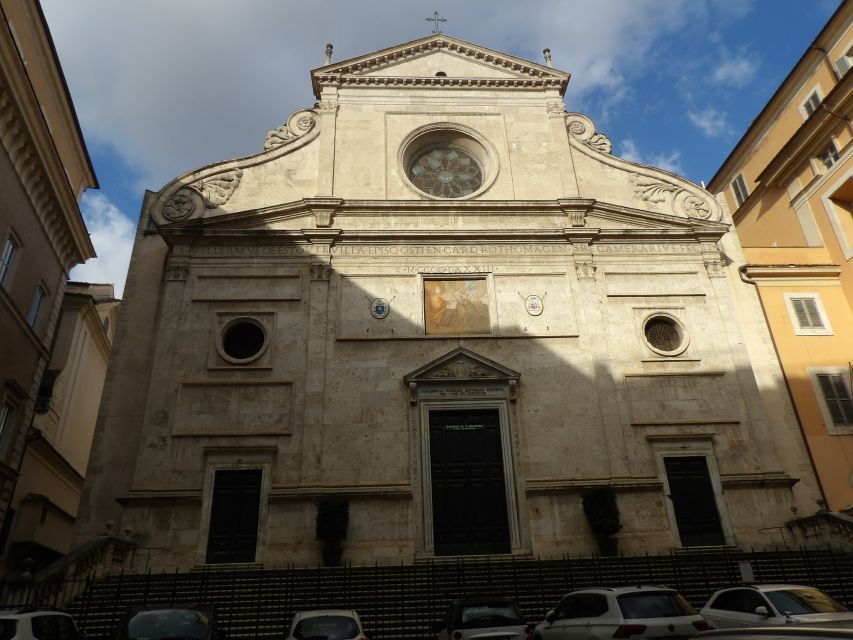
Next up is Church St. Augustine, where you’ll see The Madonna of the Pilgrims. This stop is where the tour often becomes more personal—Caravaggio’s images don’t sit politely on the wall. They pull you toward the emotional weight of the scene.
The key value here is the guide’s ability to connect what you’re seeing to Caravaggio’s working style and the kind of realism that helped his paintings land with viewers. With headsets on, you can step into the details without losing the thread of the explanation.
One note: churches can get crowded. You’ll likely need to shift positions to see the painting clearly. Go with the attitude that you’re learning as much from the viewing angle as from the final “best view,” and you’ll enjoy it more.
You can also read our reviews of more guided tours in Rome

Contarelli Chapel: The Life of St. Matthew and Caravaggio’s storytelling
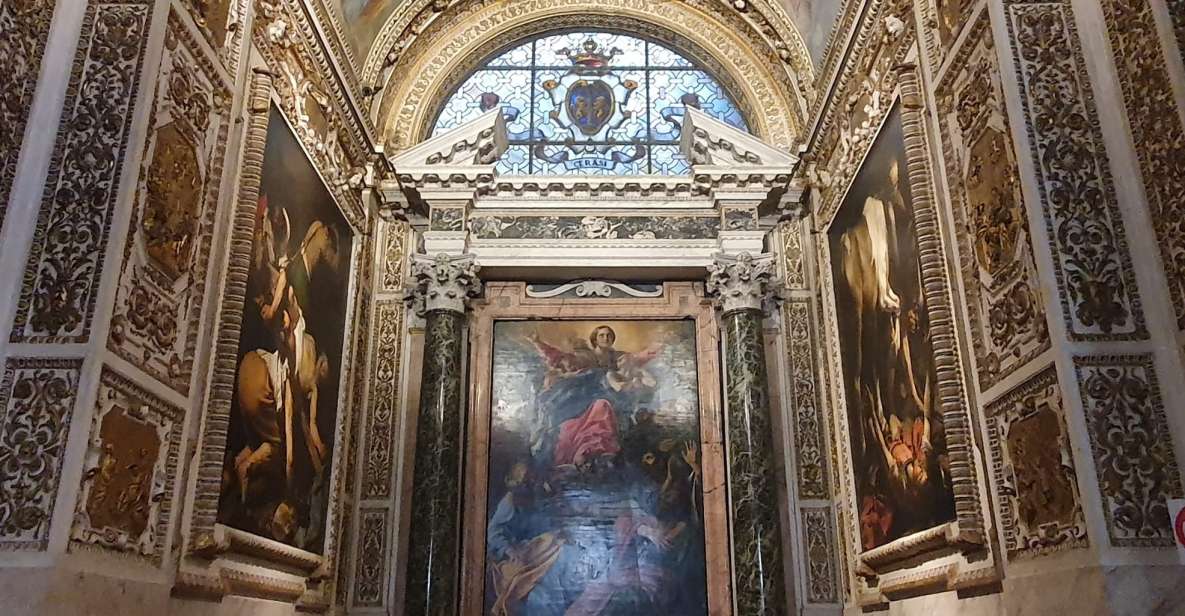
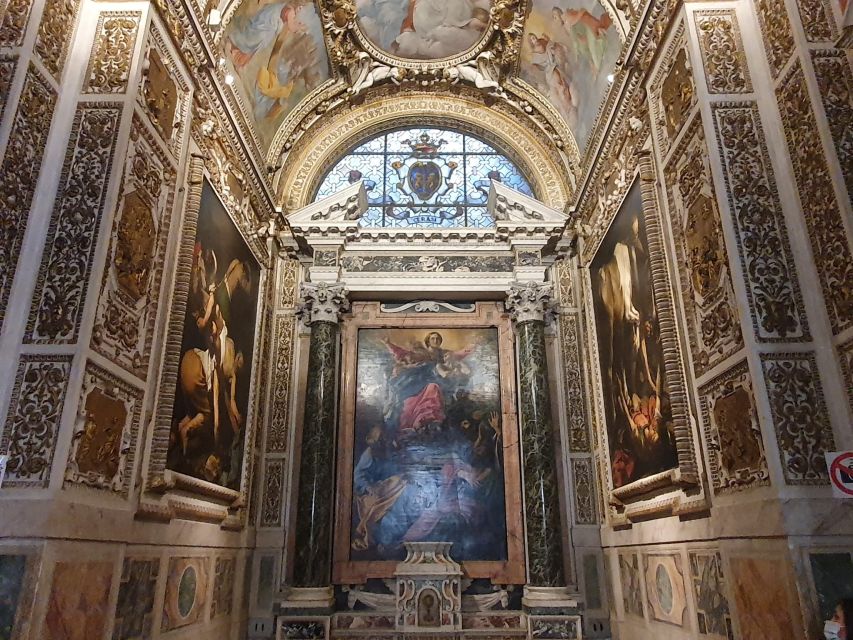
Your last masterpiece stop is the Contarelli Chapel in St. Louis of France, where you’ll see The Life of St. Matthew. Ending with this work gives the tour a strong finish, because Caravaggio’s ability to stage emotion and movement is often most intense in narrative scenes.
This is where you can really notice his technique as something you can “read.” The figures feel posed but not frozen, and the drama in the scene helps you understand why his paintings became so influential. A good guide will walk you through what to look for—how light guides your eye, how expressions pull you through the story, and why the composition feels so direct.
The best approach: don’t race the last church stop. Slow down, let your eyes adjust, and listen for the guide’s pointing. In these small chapel spaces, a minute of attention can turn the whole experience from “I saw a painting” into “I understand what the painting is doing.”
What the guide experience actually feels like
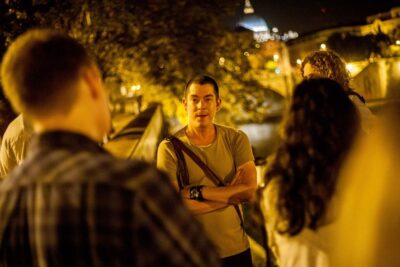
A big strength of this tour is the live guide storytelling. The reviews for this experience highlight guides who don’t just recite facts. They bring Caravaggio’s world to life by connecting the artwork to the artist as a working human.
For example, multiple comments specifically praised Patricia for being passionate and for knowing lots of details about Caravaggio’s life and paintings. One review also said it doesn’t feel like an academic lecture—it’s more like walking with someone who truly enjoys the art and can explain it in a way that stays lively.
So what should you expect from the guide? You can expect:
- explanations tied to each church stop
- context that connects daily life and working conditions to the paintings
- practical direction on what to look for while you’re standing in front of the work
That combination is the difference between a quick photo stop and a tour you remember when you’re back home.
Price and value: what $71 gets you in real terms
At $71 per person for 2.5 hours, this tour sits in a reasonable spot for central Rome experiences—especially because you’re getting more than just entry-level viewing. You’re paying for a live guide, a focused route tied to specific works, and headsets that improve how much you actually absorb.
It’s also good value if you’re the type of person who likes learning while you walk. If you’re mostly after a relaxing stroll and don’t want interpretation, you might find the price harder to justify. But if you want to stand in front of The Crucifixion of St. Peter, The Conversion of St. Paul, The Madonna of the Pilgrims, and The Life of St. Matthew and understand what you’re seeing, this format earns its cost.
Think of it as paying for time with a specialist guide plus a route that saves you guesswork.
Walking, clothing rules, and church etiquette (this is the part that matters)
This is a moderate walking tour. You’ll be moving through Rome’s historic center and navigating church interiors.
More important than the walking is the dress code. For entering places of worship, you’ll need shoulders and knees covered. That means no shorts, no short skirts, and no sleeveless shirts. Comfort matters here because you’ll be in and out of churches, and you’ll want to keep your body moving without adjusting your clothing every few minutes.
You also shouldn’t bring luggage or large bags. If you’re traveling light already, great; if not, plan your day so you aren’t carrying bulky items through narrow streets and church lines.
Finally, this tour is not suitable for people with mobility impairments. Uneven surfaces and indoor access can make the route difficult.
Who should book this Caravaggio walk
This is a great fit if:
- you’re a Caravaggio fan or curious about why his paintings look the way they do
- you want interpretation that connects art to place, not just a list of works
- you like practical, story-driven explanations while you walk
- you’re comfortable with a moderate amount of walking and a church dress code
It may be less ideal if you:
- don’t want to follow strict church clothing rules
- need step-free access or find walking routes difficult
- prefer a silent, self-paced tour with no guide context
Should you book this tour?
I think this is a strong booking for the right mindset. If you want Caravaggio in context—three major churches, his work in the spaces that shaped it, and a guide who explains the art in a human way—this tour delivers that focus within a short 2.5-hour window.
Book it if you can dress for church, walk comfortably, and enjoy guided interpretation more than free-form wandering. Skip it if dress code and mobility limits are deal-breakers for your day, or if you’d rather spend your time on your own checklist of Rome sights.
FAQ
FAQ
How long is the Rome Caravaggio guided walking tour?
The tour lasts 2.5 hours.
Where does the tour start?
You start at Piazza del Popolo. The guide will hold a flag with the The Voyager logo.
What sites and paintings are included?
You’ll visit Basilica of Santa Maria del Popolo (with The Crucifixion of St. Peter and The Conversion of St. Paul), Church St. Augustine (with The Madonna of the Pilgrims), and St. Louis of France’s Contarelli Chapel (with The Life of St. Matthew). You’ll also pass by Palazzo Madama and Giustiniani Palace.
Is there a live guide and do I get help hearing them?
Yes. The tour includes a live guide and headsets.
What languages are available?
The live tour guide is available in English and Italian.
Is there audio included as well?
Yes. An audio guide is included in English and Italian.
How much walking is involved, and is it accessible?
The tour involves a moderate amount of walking. It is not suitable for people with mobility impairments.
What should I wear to enter the churches?
You’ll need shoulders and knees covered. That means no shorts or sleeveless shirts, and avoid short skirts.
What do I need to bring?
Bring a passport or ID card and wear comfortable shoes and clothes.
Is free cancellation available?
Yes, you can cancel up to 24 hours in advance for a full refund.