REVIEW · ROME
Rome: City Walking Tour in English or Spanish
Book on GetYourGuide →Operated by Carpe Diem Tours · Bookable on GetYourGuide
Rome clicks into place when you walk it. This city-center guided tour threads classic monuments and lesser-known spots into one clear storyline, moving from the Roman Empire’s glory days to the Rome you see today. I like the efficient 2–2.5 hour length, so you get a real overview without burning your whole day, and I like that the guide experience (you might get storytellers like Domenica, Dan, or Vlad) keeps the history readable and question-friendly. One drawback: it’s a steady walk on uneven streets, so comfortable shoes aren’t optional if you want to enjoy every stop.
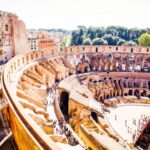
You’ll start at Piazza d’Aracoeli or Piazza di Pasquino, then work through major landmarks like Piazza Venezia, Trajan’s Column, Trevi Fountain, and the Pantheon area. The tour ends in Piazza Navona (with options that may also include a Colosseum finish), and your guide will point you toward places to eat and what to see next.
In This Review
- Key reasons this Rome walking tour is worth your time
- Why this 2–2.5 hour Rome walk is a smart start
- Meeting at Piazza d’Aracoeli or Piazza di Pasquino: choose based on your route
- Piazza Venezia and Trajan’s Column: when “big Rome” turns into a street story
- Trevi Fountain for 30 minutes: how to enjoy it without rushing
- Galleria Sciarra and Sant’Ignazio di Loyola: the quieter Rome breaks
- Pantheon pass-by: what you should do in 20 minutes
- Piazza Navona as the finish line: where the guide’s tips matter
- Price and value: what $28 buys you in real terms
- The guide experience: storytelling, pace, and being able to ask questions
- What to bring and how to dress for a comfortable walking day
- Who this tour suits best (and who should consider a different option)
- Should you book this Rome city walking tour?
- FAQ
- How long is the Rome city walking tour?
- How much does the tour cost?
- Where does the tour start?
- Where does the tour end?
- Which languages are available?
- Is food included?
- What should I bring?
- Is hotel pickup included?
- Can I cancel for a refund?
Key reasons this Rome walking tour is worth your time
- Two languages on offer: English or Spanish, with a live guide.
- A tight “best-of-center” route: Piazza Venezia, Trajan’s Column, Trevi Fountain, and more.
- Storytelling history, not just dates: the guide ties monuments to how Rome evolved.
- Time for photo-and-pause moments: Trevi Fountain gets about 30 minutes, and other stops are built in with guided time.
- Lesser-known stops included: you’ll pass through spots like Galleria Sciarra and Sant’Ignazio di Loyola.
- A helpful finish at Piazza Navona: you get practical food and sights recommendations right where the action is.
Why this 2–2.5 hour Rome walk is a smart start
If Rome is your first stop on a trip, your biggest risk is doing too much on your own and still missing what matters. This tour helps you get your bearings fast by using a guided route through the densest cluster of iconic sights. And because it runs about 2 to 2.5 hours, it fits neatly into day-one plans, even if jet lag hits.
I also like that the pace is built around guided segments at each stop. You’re not just marching from one picture to the next. Instead, the tour gives you a rhythm: a guided introduction, a planned time at a monument, then a walk to the next chapter.
The practical win: you finish with local guidance in a place that’s naturally easy to continue from. Piazza Navona is your handoff point, and the guide’s recommendations for nearby eateries and rooftop terraces can save you a lot of guesswork.
You can also read our reviews of more walking tours in Rome


Meeting at Piazza d’Aracoeli or Piazza di Pasquino: choose based on your route
This tour gives you two starting options: Piazza d’Aracoeli or Piazza di Pasquino. That matters because Rome is a set of pockets connected by hills, stairs, and winding streets. If you’re already staying on the “right side” of town that day, picking the start that’s closer can cut down stress.
The tour details also note that the end point depends on the drop-off option (Piazza Navona or Colosseum show up as options). So when you book, treat the start and end points as part of your day plan, not as fine print.
Tip I’d use: once you decide which start you want, look at your next activity (or dinner) and work backward. If you want dinner near Piazza Navona, starting where your route feeds into that finish is usually the smoothest move.
Piazza Venezia and Trajan’s Column: when “big Rome” turns into a street story
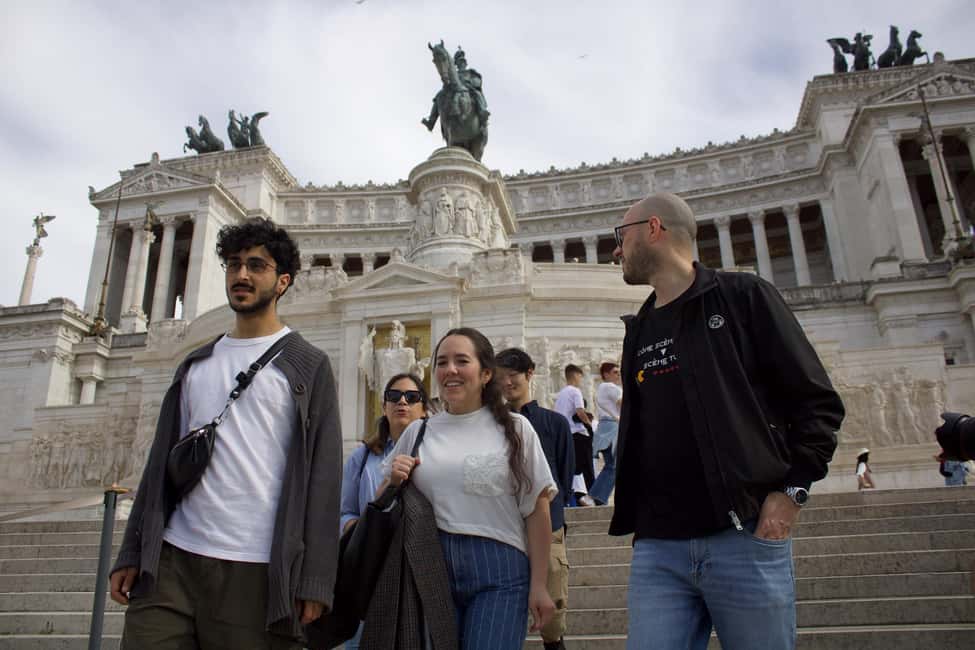
The walk kicks off with a guided segment at Piazza Venezia (about 20 minutes). Even if you’ve seen photos of these places, a guide’s job here is to help you understand why this area mattered, and how Rome’s power shaped what you see in front of you.
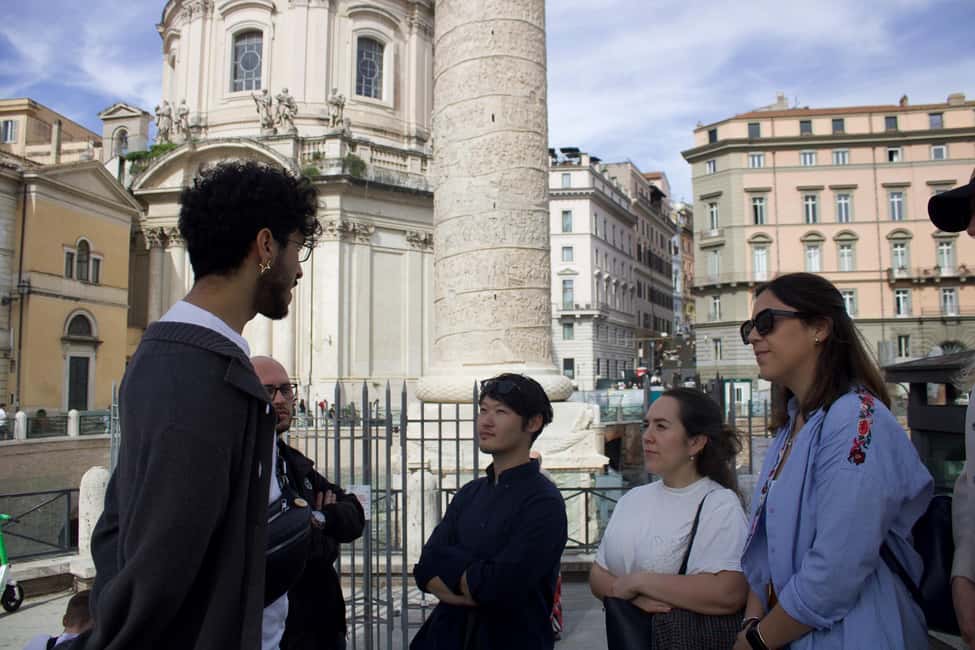
Then you’ll move to Trajan’s Column for another 20 minutes of guided time. This is one of those stops where it’s easy to glance and move on—unless someone gives you a framework to notice what you’re looking at. That’s where this tour aims to help: not with a laundry list of facts, but with gripping stories that make the monument feel like part of a bigger timeline.
Here’s what I’d watch for at these two stops:
- Your guide should connect the dots between what the empire built and how the city operates now.
- You’ll want to ask quick questions while you’re still in the same area, because you can usually get better context on the spot.
From a “value” perspective, the tour spends guided time on these stops rather than turning them into a drive-by. That’s exactly what you want when you’re paying a set price to save time in the city center.
Trevi Fountain for 30 minutes: how to enjoy it without rushing
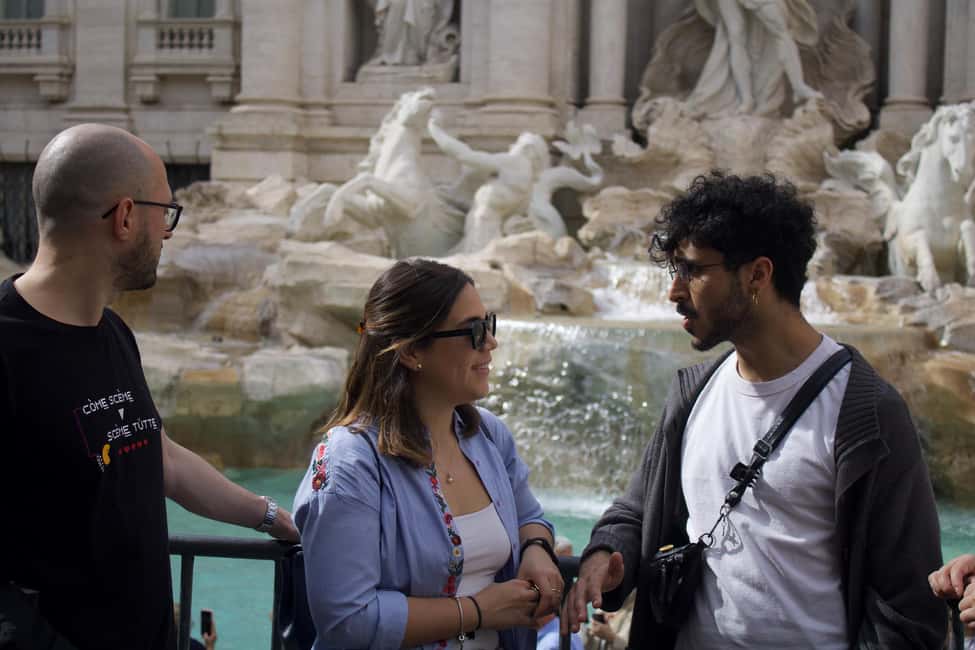
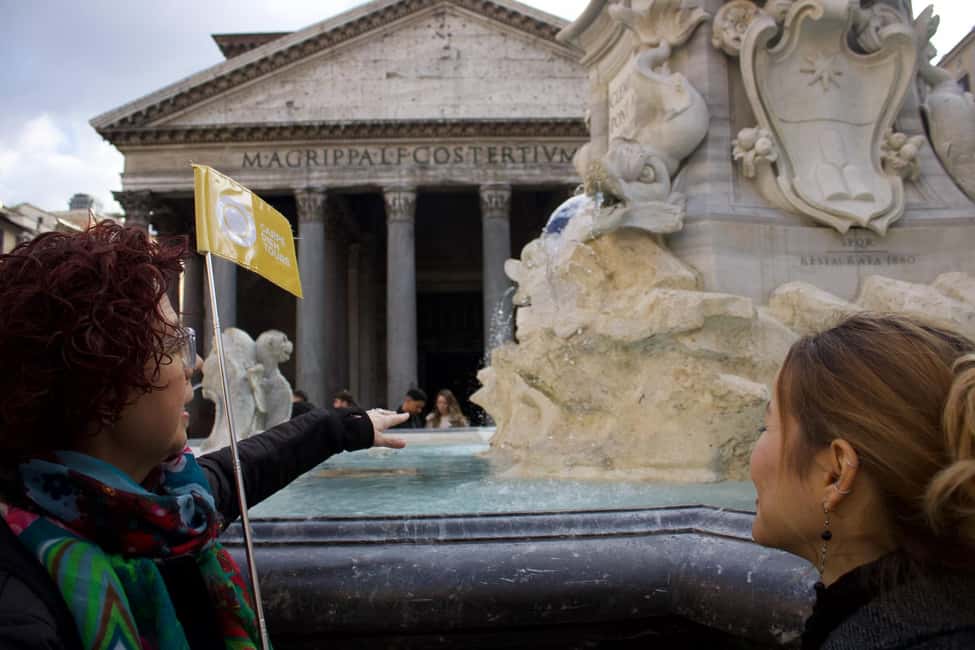
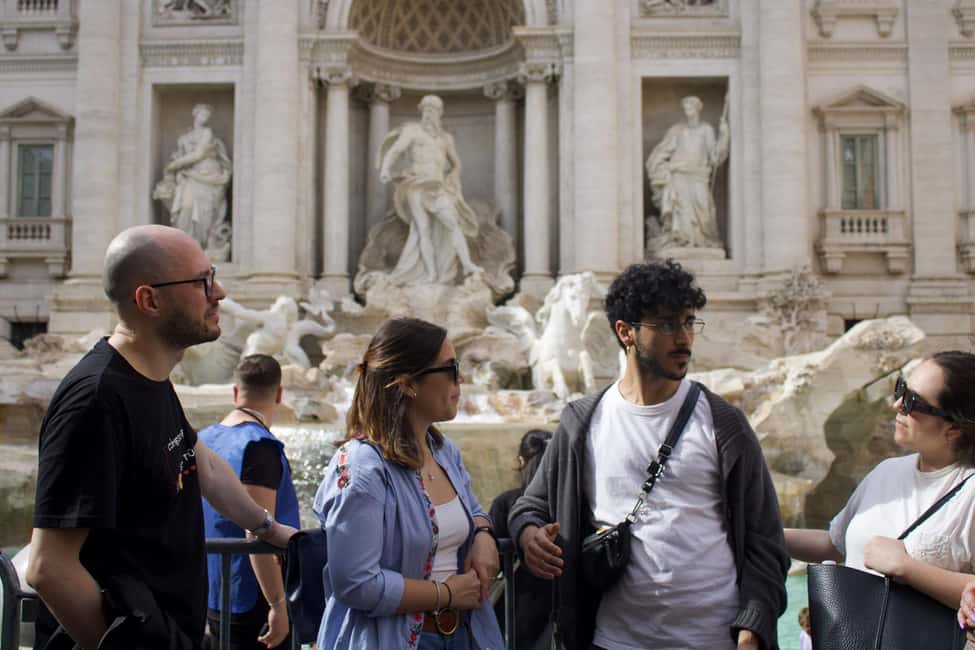
Next up is Trevi Fountain, scheduled for about 30 minutes of guided time. That longer window is a big deal. Trevi is the kind of sight where a rushed stop can leave you annoyed, because you need a moment to absorb the scale and pick a good angle for photos.
A practical note: even with a guide, you’ll still be standing in a crowd, so your best plan is mindset. Treat this as time to see Trevi, not time to “complete” Trevi. If you’re traveling with family or friends, this is also where you can regroup and confirm who wants what (photos, a quiet look, or a quick lap for better viewpoints).
Your guide’s role here is to keep you oriented and informed while the group handles the flow. And since the tour is only 2 to 2.5 hours total, those 30 minutes are a real portion of your experience, not a quick checkbox.
Galleria Sciarra and Sant’Ignazio di Loyola: the quieter Rome breaks
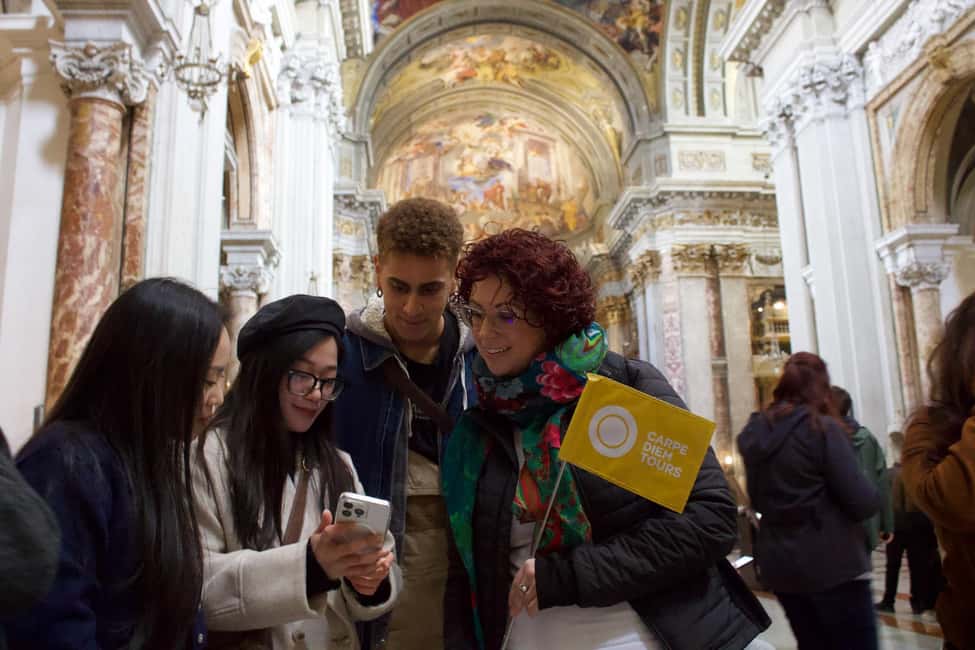
Between the headline monuments, the route takes you to spots that are easier to walk past on your own. Two of the most interesting scheduled stops are Galleria Sciarra (about 20 minutes) and the Church of Sant’Ignazio di Loyola (about 20 minutes).
These are the stops that help the tour feel more like a story of the city, not just a greatest-hits playlist. A guide can explain why these places fit into Rome’s layers—how the city evolved, what people valued, and what changed as power and culture shifted.
What makes these stops especially useful for you:
- You’ll see a different side of central Rome than the postcard crowd.
- You get guided time, which means you’re less likely to miss what makes these locations distinctive.
Also, if you like architecture, religious art, or simply enjoying calm moments in a loud city, these are often the breaks you didn’t know you needed.
You can also read our reviews of more city tours in Rome



Pantheon pass-by: what you should do in 20 minutes
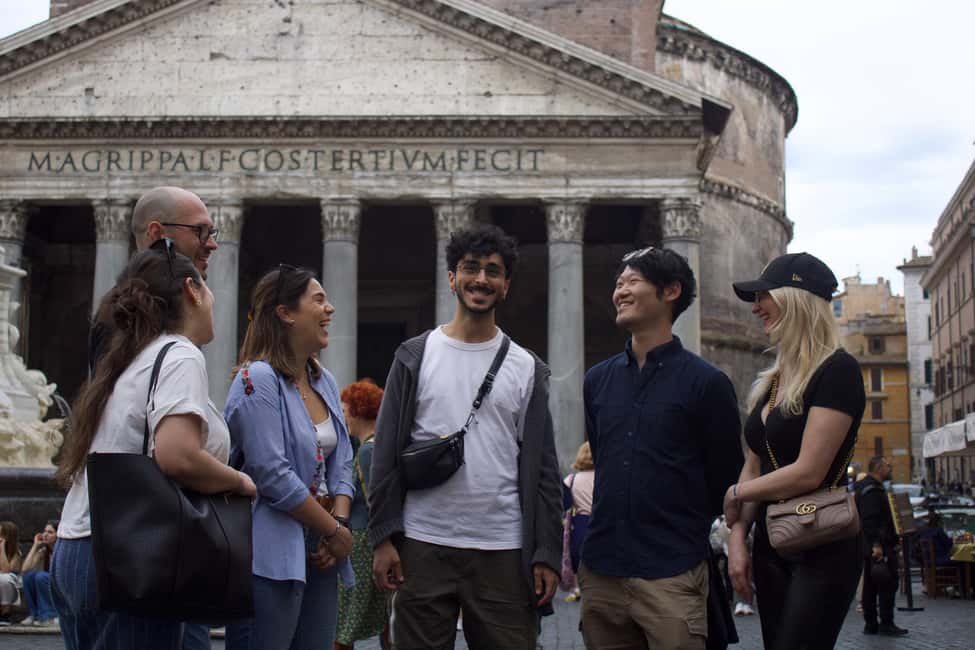
The tour then includes a pass-by of the Pantheon area for about 20 minutes. A pass-by is not the same as a full visit, so the win here is to use the time well: look up, orient yourself, and let the guide frame what you’re seeing.
Since the Pantheon is famous, you may feel tempted to move fast. Don’t. In a short stop like this, the goal is to leave with a mental picture you can connect to later. If you plan to return for a more detailed visit, a pass-by like this is a great way to decide whether you want to spend more time there.
If you want a souvenir-level takeaway, ask your guide one focused question at this point, like how this site represents Rome’s evolution. Then you’ll remember it as part of the tour’s storyline.
Piazza Navona as the finish line: where the guide’s tips matter
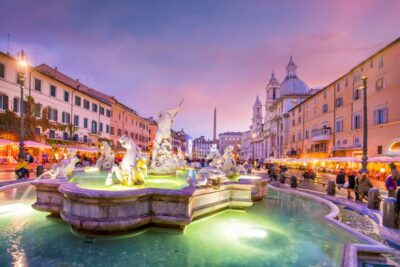
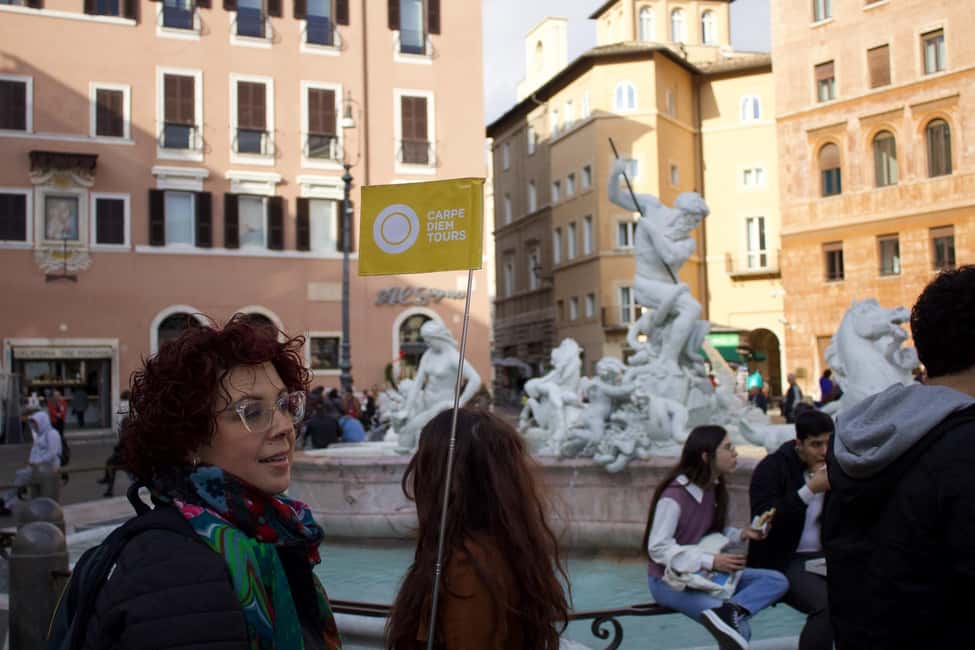
The tour wraps around Piazza Navona—and this is where the experience shifts from “sights” to “what now.” Piazza Navona is described as a place with excellent eateries, bars, and rooftop terraces, and you’ll end here so you can keep going right away.
This is also where your guide can be genuinely useful. The tour includes recommendations, and your best move is to ask for practical picks based on your group. For example: where to grab something quick, where to linger for an evening view, and what sights you should prioritize next if you have only one more day.
If you’re the type who likes to plan dinner before you’re hungry, ask before you reach the square. When you get there, you’ll already have a direction, rather than standing in the middle of the options trying to decide.
One more plus: because the finish is in the center, it’s easier to connect to other parts of your day without a long transfer.
Price and value: what $28 buys you in real terms
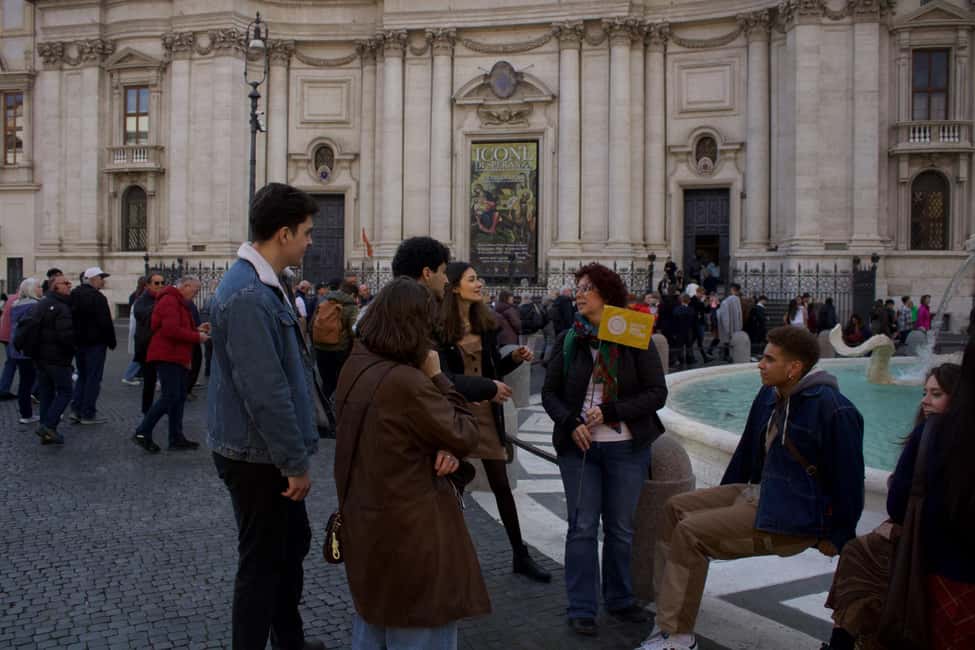
At $28 per person (for a tour lasting about 2 to 2.5 hours), you’re paying for three things at once:
1) a route through major monuments and central streets,
2) a live guide to connect the dots and answer questions,
3) extra stops that you’d likely skip if you were only doing self-guided “must-sees.”
That’s why this price can feel fair. Rome can easily eat time and energy when you’re navigating alone, and the difference between spending an hour guessing and spending an hour learning is huge—especially if it’s your first trip.
It also helps that the tour includes recommendations at the end. Food and evening plans in the center can be pricey and unpredictable if you’re guessing, so the guide’s suggestions can stretch the value of the tour beyond the walking time.
What you should know about the trade-off: food and drinks aren’t included, and there’s no hotel pickup/drop-off. So you’ll need to get yourself to the meeting point and cover meals separately. For me, that’s fine as long as you treat this as an orientation and storytelling experience, not a combined sightseeing-and-dining package.
The guide experience: storytelling, pace, and being able to ask questions
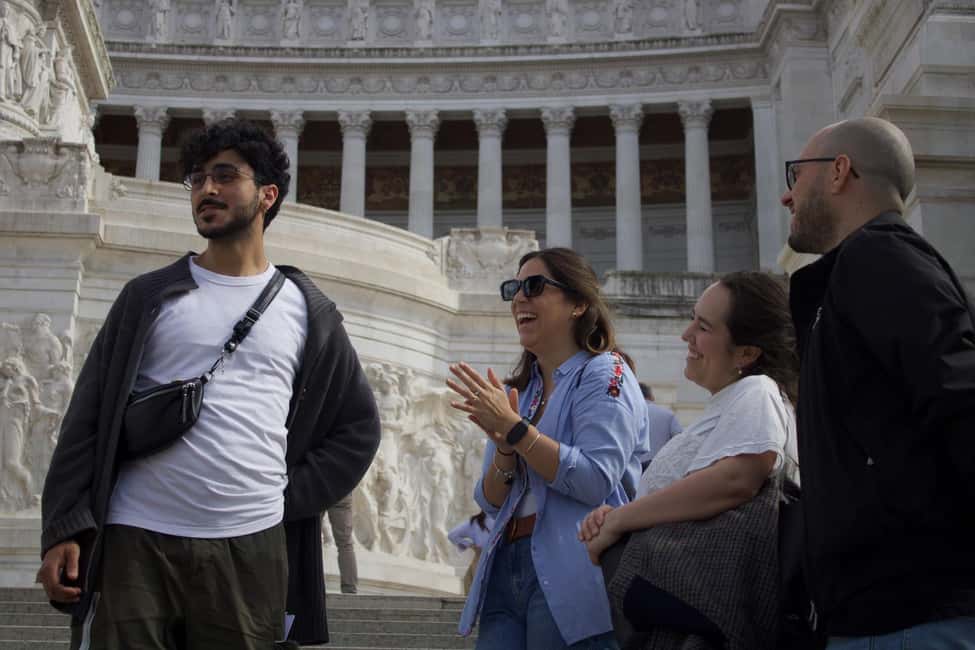
One reason this tour keeps scoring well is the way the guides deliver the material. Names like Domenica, Dan, Romani, Alina, Dinara, Vlad, Polina, and Paulina appear in feedback as examples of guides who keep things approachable and answer questions clearly.
That matters because history in Rome can turn into a blur if the guide’s delivery isn’t organized. The best version of this tour is when the guide’s story creates mental hooks, and the group can ask follow-up questions without derailing the walk.
You might also get extra audio support. One guide experience mentions using headphones, which can help you hear the guide more clearly in a noisy street. It’s not guaranteed from the basic tour info, but it’s a good sign when it’s available.
If you’re traveling with kids or you’re not trying to read every sign in Rome, this is where the tour can shine. A guide can explain what you’re seeing at the right moment, instead of leaving you to figure it out later.
What to bring and how to dress for a comfortable walking day
This one comes down to basics:
- Wear comfortable shoes
- Wear comfortable clothes
That’s the whole packing list, and it’s the best advice you’ll get for a Roman walking tour. Streets in the center can be uneven, and you’ll be on your feet across multiple stops. If you show up in footwear you only use for short errands, you’ll feel it by the time Trevi Fountain rolls around.
If you’re sensitive to sun or weather, dress smart for the conditions you’ll actually face that day. Even when you’re moving between stops, there’s still a lot of time outdoors.
Also, bring a charged phone. You may not be able to roam freely the way you would alone during a guided schedule, but you’ll want photos for later and to compare the route you walked with maps afterward.
Who this tour suits best (and who should consider a different option)
This tour is ideal if you want:
- a first-day overview of central Rome
- a guided route that hits major landmarks like Trevi Fountain and the Pantheon area
- a story-focused experience in English or Spanish
- a finish at Piazza Navona with food and next-sight recommendations
It’s also a good option for solo travelers who want structure and for groups who want one plan that covers multiple interests.
If you’re the type who prefers a self-paced visit with longer time at each site (especially indoors), you might want to pair this with a separate, longer stop later. In this tour’s format, some places are guided or pass-by, so it’s not designed to replace deep-dive visits.
Should you book this Rome city walking tour?
Book it if you want a clean orientation to Rome’s center in about 2 to 2.5 hours, with a live guide in English or Spanish and a finish at Piazza Navona where your evening can pick up immediately. At $28, the value usually holds up when you factor in the guided time at multiple monuments plus the recommendations you get at the end.
I’d especially book it for your first time in Rome, or for any day when you don’t want to spend hours figuring out what to see. The route is structured, the pacing is manageable, and the experience is built around stories that help the monuments connect into one idea of Rome.
If you’re hoping for a mostly inside, unhurried museum day, this isn’t the format. But for walking, learning, and getting your bearings quickly, it’s a strong choice.
FAQ
How long is the Rome city walking tour?
It lasts about 2 to 2.5 hours, depending on the starting time you select.
How much does the tour cost?
The price is $28 per person.
Where does the tour start?
You can start at either Piazza d’Aracoeli or Piazza di Pasquino, depending on the option booked.
Where does the tour end?
The tour ends in Piazza Navona, with drop-off options that may include Colosseum as well. The activity details also note it ends back at the meeting point, so check your specific confirmation.
Which languages are available?
The live tour guide is available in English and Spanish.
Is food included?
No. The tour includes recommendations, but food and drinks are not included.
What should I bring?
Bring comfortable shoes and comfortable clothes for walking.
Is hotel pickup included?
No. Hotel pickup and drop-off are not included.
Can I cancel for a refund?
Yes. The tour offers free cancellation up to 24 hours in advance for a full refund.