REVIEW · ROME
Rome: Imperial City Tour by Golf Cart with Optional Transfer
Book on GetYourGuide →Operated by Freeway-car · Bookable on GetYourGuide
Rome feels huge until you ride a golf cart. This 3-hour golf cart tour strings together ancient icons like the Roman Forum and Colosseum with Baroque highlights such as Trevi Fountain, and it does it without wearing you out. I really love the easy sightseeing pace (shorter walks, quicker hops between areas), and I love that the guides go beyond facts and turn the stops into stories, like when David and Sa set the tone right away.
One possible drawback: because you pack in major areas in a tight window, you’ll spend more time seeing and photographing the highlights than lingering for slow, deep visits inside.
In This Review
- Key things I’d circle before you go
- Rome on wheels: why this golf cart style works
- Meeting point and pickup: getting started without stress
- The pacing of a 3-hour Rome loop
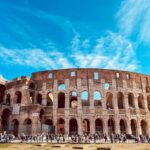
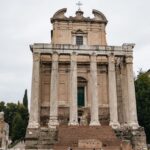
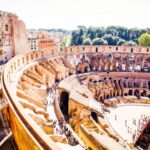
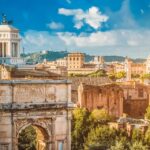
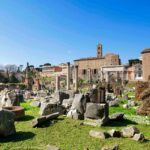
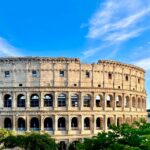
- Roman Forum and Colosseum: seeing the icons without the grind
- Circus Maximus: the long view that changes how you picture Rome
- Pantheon and the shift in Rome’s vibe
- Aventino and the Pincio Balcony: when the ride turns into a viewpoint
- Trevi Fountain and Piazza Navona: Baroque drama in one sweep
- Corso, Condotti, and the Spanish Steps: elegance meets the everyday
- A cappuccino (or ice cream) break in Villa Borghese Gardens
- Guides make the difference: how the best tours feel personal
- Comfort, cart quality, and how it feels in motion
- Value check: is $124.61 per person actually a good deal?
- Who should book, and who might want something else
- Should you book this Rome golf cart tour?
- FAQ
- How long is the Rome Imperial City tour?
- Is the tour private, or are there larger groups?
- What are the main stops on the route?
- Does the tour include coffee or dessert?
- Are pickup and drop-off included?
- Where does the tour meet?
- What languages are offered for the live guide?
- Is there free cancellation?
- Do I need to find the office if I choose hotel pickup?
Key things I’d circle before you go
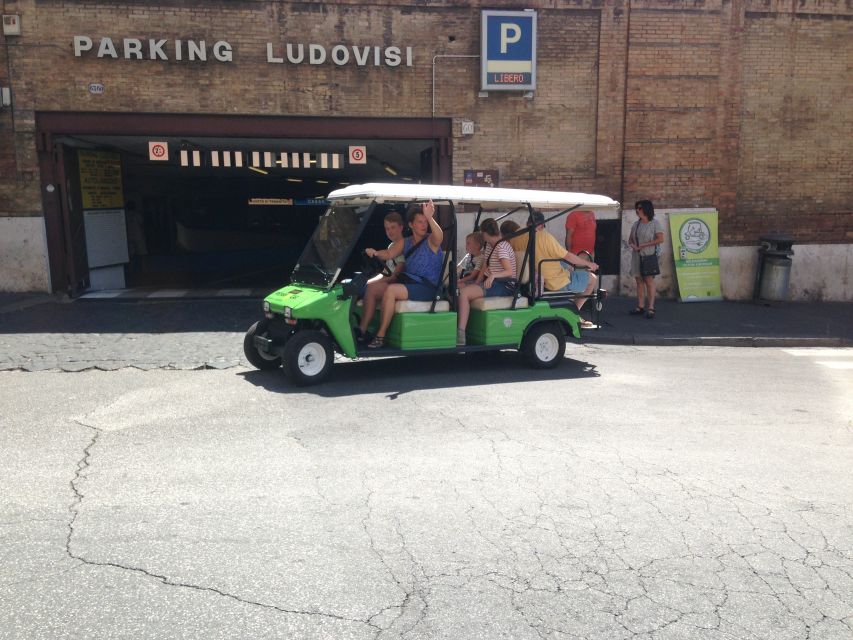
- The golf cart is the strategy: you’ll cover a lot of Rome without the endless foot traffic grind
- Guides who steer the day: you can ask questions and shift the focus to what you want most
- Picture-friendly vantage spots: multiple guides call out where to stand for better shots
- A Baroque punch list: Trevi Fountain and Piazza Navona land in the same day as the classics
- A real break built in: cappuccino (or ice cream) stops help reset your legs and your brain
Rome on wheels: why this golf cart style works
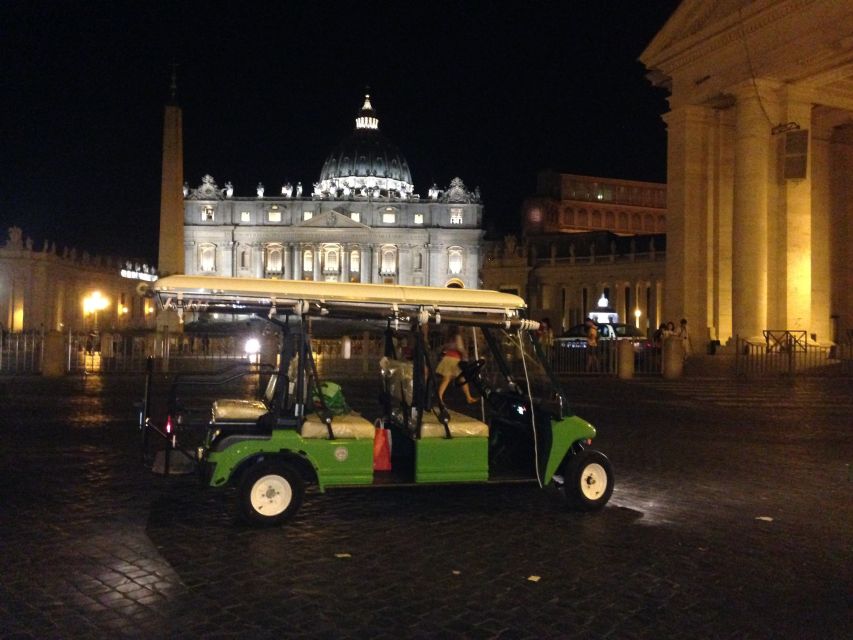
Rome can be amazing and exhausting in the same hour. Streets tighten, sidewalks disappear, and you’re forced to shuffle with tour crowds that move at their own speed. A golf cart tour changes the whole rhythm. You still get the big landmarks, but you’re not constantly fighting for position or burning your energy just to reach the next corner.
What I like most is that the cart gives you “Rome time.” You can look up, spot details, and actually enjoy the street life around the monuments instead of treating every block like a sprint. Guides also use the ride itself as part of the experience, pointing out what matters and where the best viewpoints tend to be.
If you’re on a tight schedule, this is one of those plans that helps you get your bearings fast and then enjoy the rest of your trip more freely.
You can also read our reviews of more city tours in Rome

Meeting point and pickup: getting started without stress
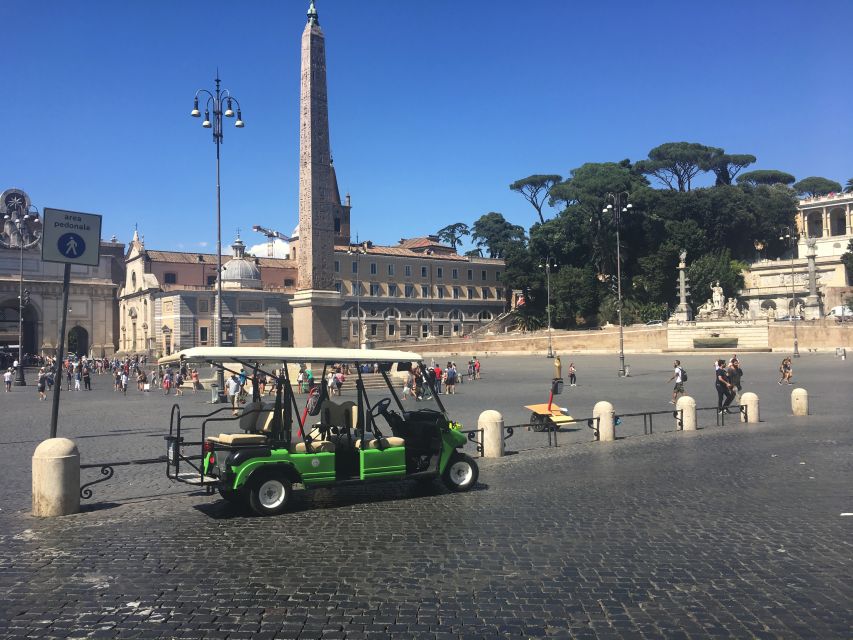
Your tour meets at Freeway-car office on Via Ludovisi 60 (a short walk from Via Veneto and near Square Barberini). If you choose hotel pickup, you’ll wait in your hotel lobby or just outside the entrance until the pickup comes.
Either way, do yourself a favor and build a tiny buffer into your morning or afternoon. The meeting spot is simple enough, but it’s still Rome—one wrong turn in the wrong pedestrian area can cost time. Once you’re aboard, though, things move smoothly.
The pacing of a 3-hour Rome loop
This is a 3-hour guided tour that focuses on the main attractions and the links between them. Think of it as a high-impact overview where the guide does the “connecting tissue,” so you understand what you’re looking at while you move through the city.
Because it’s private or small-group, the day doesn’t feel like a factory line. Many guides ask what you want to see early on and then shape the route around your priorities. That flexibility is a big part of why so many people rate it so highly.
Also, the golf cart keeps the tour efficient in places where walking becomes slow. Even when you’re still seeing iconic sites, you’re cutting down the dead time of moving from one packed area to the next.
Roman Forum and Colosseum: seeing the icons without the grind
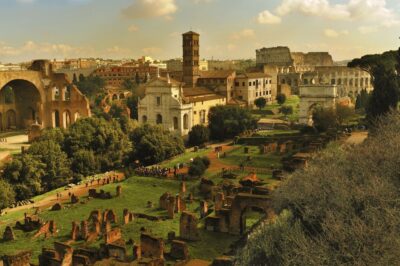
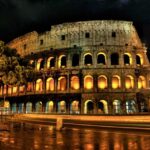
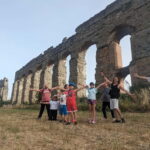
The Roman Forum and Colosseum are the obvious headline stops, but what makes them work on a cart tour is how you approach them. You’re not wasting energy just crossing between viewpoints. You arrive with your energy intact, which makes it easier to actually take in scale and layout.
Guides typically set the scene—what the areas were used for, what the structures represent, and how they fit into the broader story of Rome. Even if you’ve studied Roman history before, hearing it spoken while you’re looking at the real spaces helps everything click.
Practical note: you’ll likely spend most of your time outside and at key viewing points. This is ideal for first-timers who want a fast, clear overview. If you’re hoping for lots of deep interior time, you’ll want a separate plan for that.
Circus Maximus: the long view that changes how you picture Rome
Circus Maximus isn’t just another monument on a list. It’s a huge space that helps you understand how Rome worked at street level—entertainment, crowds, spectacle. The cart gives you an easier way to reach the viewpoints around it without dragging your day out.
If you like photos, this is a great area for framing. You can usually step into positions that show the expanse, rather than being trapped in a single narrow sidewalk line.
You can also read our reviews of more tours and experiences in Rome

Pantheon and the shift in Rome’s vibe
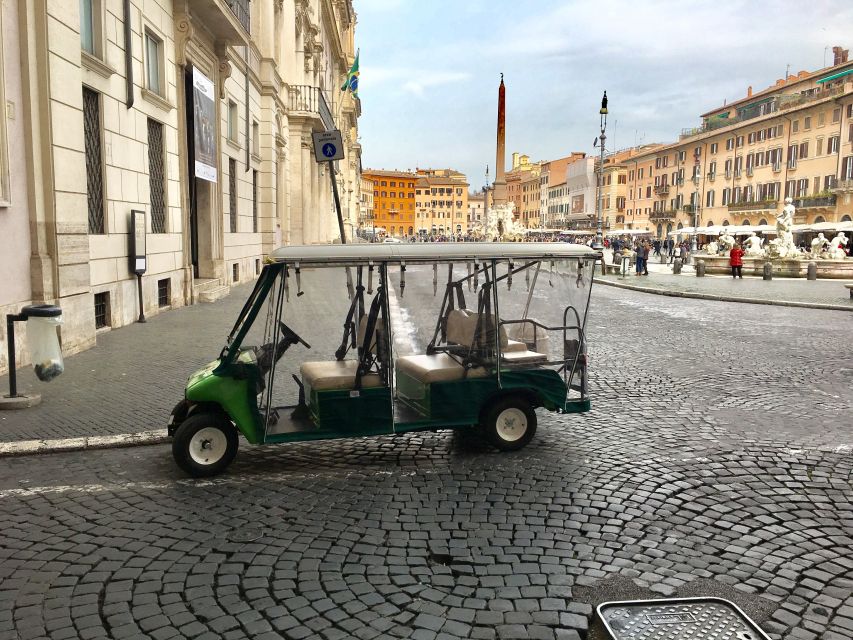
The Pantheon stop is where the mood subtly shifts. You’re moving from broad imperial-era storytelling into a building that still feels intensely present in how it’s used and perceived.
A guide’s commentary matters here. With a bit of context, you start noticing the details people usually rush past—how the structure reads from different angles and why the Pantheon remains such a magnet for visitors. The cart helps too: you spend less time navigating and more time noticing.
Aventino and the Pincio Balcony: when the ride turns into a viewpoint
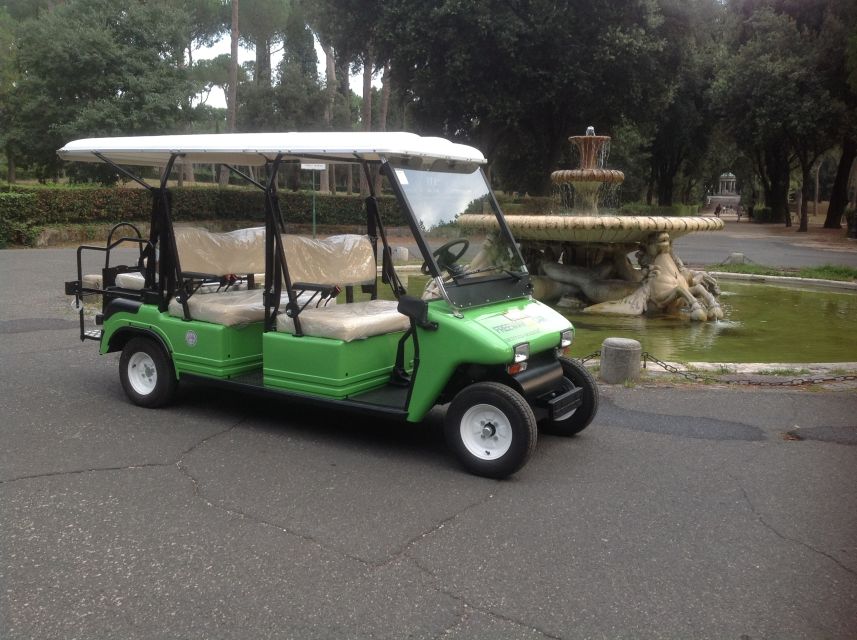
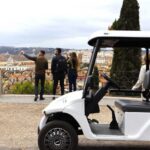
Rome rewards you when you get to look outward. That’s why the Aventino area and the Villa Borghese Pincio Balcony are such smart inclusions. These stops add breathing space between heavyweight monuments and give you sweeping views you can’t replicate from behind a steering wheel of the city’s usual traffic.
I also appreciate that these viewpoint breaks break up the day mentally. After ancient stones and dense street corridors, you get a calmer kind of wow—Rome spread out, light changing across rooftops, and a clearer sense of distance.
Trevi Fountain and Piazza Navona: Baroque drama in one sweep
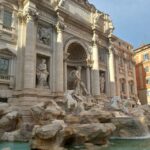
You’ll see Trevi Fountain and Piazza Navona, and the key here is how the guide ties them to the Baroque style. These aren’t just places to stand and take a photo; they’re about motion, sculpture, and theatrical design that makes the space feel alive.
What helps on this tour is timing and movement. Because you’re not stuck walking between zones, you’re more likely to catch these squares in moments where you can still enjoy the view rather than just endure the crowd. Guides also tend to steer you toward better photo angles.
If you care about style and detail, you’ll probably find yourself slowing down on these stops, even if the schedule stays brisk.
Corso, Condotti, and the Spanish Steps: elegance meets the everyday
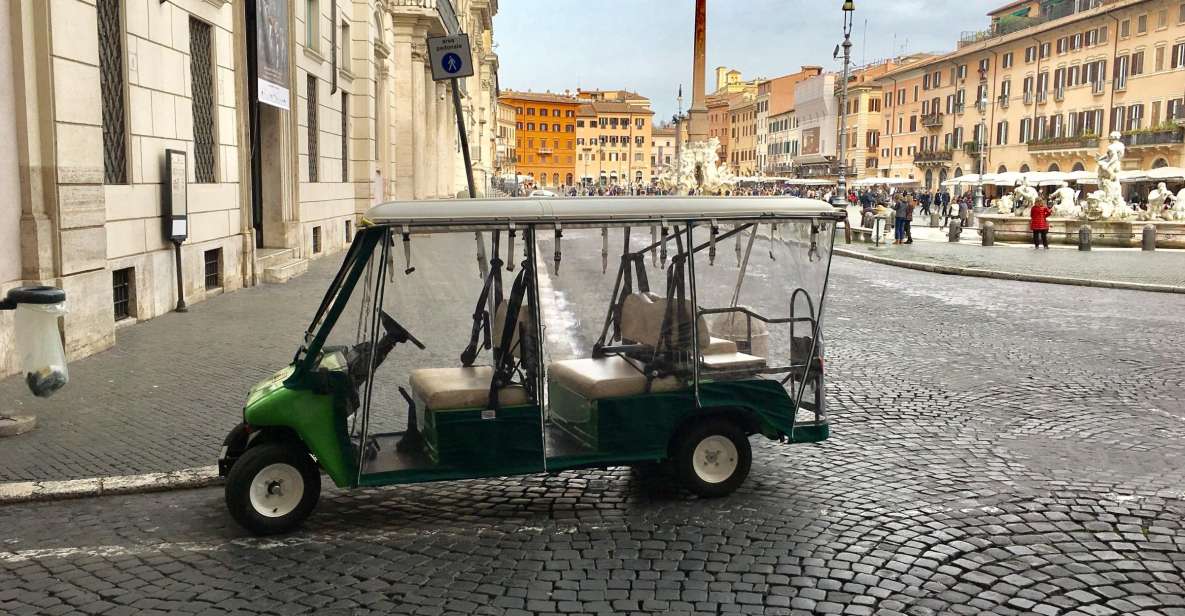
The tour also passes through the elegance of areas like Corso and Condotti, plus the Spanish Steps. These are among the most recognizable “Rome feels like Rome” scenes, but they’re also full of everyday energy—people watching, storefronts, street activity.
This part of the day works especially well if you want the tour to do more than just monuments. It helps you remember that Rome isn’t frozen in ancient time. It’s a lived-in city, and these streets are part of that story.
A cappuccino (or ice cream) break in Villa Borghese Gardens
One of the best built-in perks is the included stop for cappuccino or ice cream at a café in the Villa Borghese Gardens area. It’s not a random add-on; it’s a smart reset after hours of moving.
This break also helps you enjoy the guide’s storytelling without the pressure of rushing to the next photo. You can sit, take a breath, and let what you just learned settle. For many people, it turns the tour from a checklist into a memory.
Guides make the difference: how the best tours feel personal
This is the part that shows up again and again in strong reviews: the guides treat the tour like a conversation, not a lecture. Names that come up include David, Vittorio, Sa, Alessandro, and Alexander, and the pattern is consistent—friendly, interactive, and quick to answer questions.
One of the smartest touches is how guides help with photo spots. Instead of just pointing at landmarks, they guide you to where the view actually looks good, so you’re not standing in a spot that only works for your least-favorite angle.
Another strong theme is personalization. Some guides start by asking what you want to see because you might only have one day, or your priorities could be different from the classic “I only want the top 10.” That’s why the tour can work for couples, families, and older travelers too.
Comfort, cart quality, and how it feels in motion
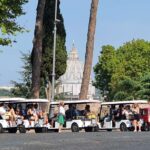
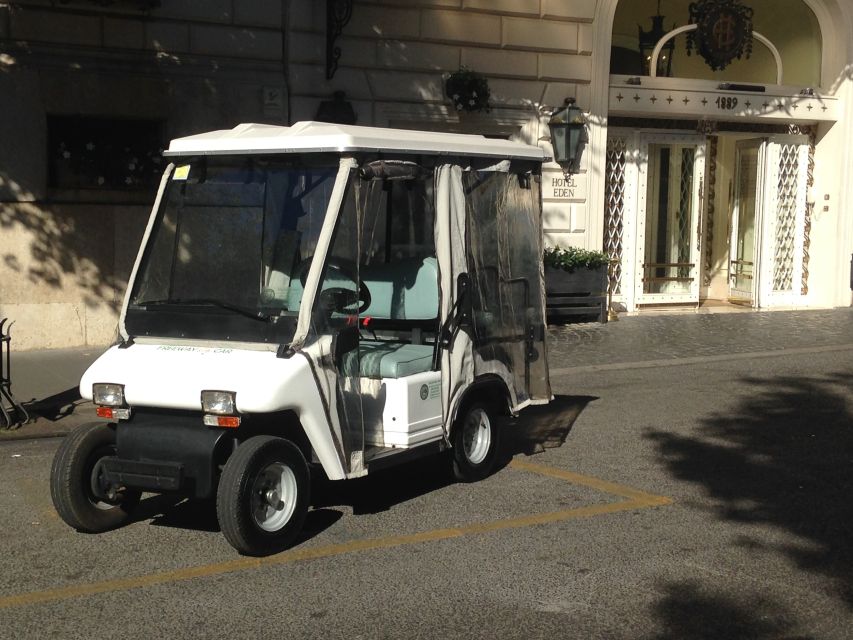
Golf carts in Rome can range from “fine” to “comfortable enough that you’d happily keep riding.” In the feedback, people describe newer battery carts and smooth handling. One reviewer even noted a cart capable of around 35 mph, which matters because it helps the cart stay confident while navigating real city traffic and short distances.
Even if you’re not thinking about speed, you’ll feel the difference in how you move between areas. When the ride is comfortable and responsive, it reduces stress. Less stress means you look around more.
Value check: is $124.61 per person actually a good deal?
At $124.61 per person, this tour isn’t the cheapest way to see Rome—but it also isn’t overpriced in the way budget sightseeing sometimes is. Here’s why the value can make sense:
- You’re buying transport between zones in a city where walking is slow and crowds are heavy
- You get a live guide who can help you understand what you’re seeing on the spot
- You get an included cappuccino or ice cream stop
- Optional hotel pickup can save you time and effort (especially when you’re moving from pedestrian zones)
If you’re traveling as a couple and want maximum efficiency in limited time, this often beats the “DIY scramble.” You can spend your day negotiating with maps, crowds, and transit, or you can pay for a structured route where someone else handles the connections.
The cost is more noticeable if you have a full week and you like slow, independent wandering. But if your calendar is tight, the cart tour is a practical way to buy time back.
Who should book, and who might want something else
I’d call this a great fit if you:
- have limited time and want a smart overview
- want to see major sites without spending half your day walking
- are traveling with kids, older relatives, or anyone who would rather avoid long stretches of pavement
- like the idea of getting photo angles and context from a guide
You might choose differently if you:
- want long interior visits, long museum stops, or lots of separate ticketed entry time
- prefer a quiet, solo pace where you decide every turn without a set route
For most people, though, this tour works beautifully as either a first-day orientation or a high-impact day mid-trip.
Should you book this Rome golf cart tour?
If you’re trying to do Rome efficiently while still enjoying it, I’d say yes. The biggest wins are the cart comfort, the way you cover major attractions quickly, and the personal energy guides bring—people like David, Sa, and Alessandro show up in the stories because they make the ride feel tailored, not scripted.
Book it if your priority is to see the big monuments and iconic viewpoints in a single afternoon or morning, with breaks and commentary built in. Just remember the trade-off: it’s a fast-moving highlights route, so keep your expectations set on overview and photo moments, not long deep-dive visits.
FAQ
How long is the Rome Imperial City tour?
The tour duration is 3 hours.
Is the tour private, or are there larger groups?
The tour is offered as private or small groups.
What are the main stops on the route?
The tour includes stops at major attractions such as the Roman Forum, Colosseum, Circus Maximus, and Pantheon, plus areas like Aventino, Villa Borghese Pincio Balcony, Corso and Condotti, Spanish Steps, Trevi Fountain, and Piazza Navona.
Does the tour include coffee or dessert?
Yes. It includes cappuccino or ice cream.
Are pickup and drop-off included?
Hotel pickup is optional. The tour ends back at the meeting point.
Where does the tour meet?
The meeting point is at the Freeway-car office via Ludovisi 60 (about a 3-minute walk from Via Veneto, near Square Barberini). If you choose hotel pickup, your starting point depends on that option.
What languages are offered for the live guide?
The live guide is available in Spanish, English, Italian, French, and German.
Is there free cancellation?
Yes, free cancellation is available up to 24 hours in advance for a full refund.
Do I need to find the office if I choose hotel pickup?
If you select hotel pickup, the customer must wait in a hotel lobby or outside the entrance.