A good walk can be a shortcut to the real Rome. This one trades the big-name monuments for street-level surprises, with an Irish storyteller/licensed guide leading modern Rome into ancient corners and back out again. I love the way the tour mixes macabre legends with Pope gossip and real street history, and I also love the practical, on-the-ground guidance that helps you move confidently through Rome’s odd traffic flow. One drawback to plan for: it’s a steady walking tour and it’s marked not suitable for mobility impairments or back problems.
It runs about 2.5 hours and keeps a tight pace, from Campo de’ Fiori to the finish at Basilica di Santa Cecilia in Trastevere. Along the way, you’ll pop into the kind of stops most visitors miss, from the Theatre of Pompey to the Jewish Ghetto area and the river’s Tiber Island. If you want your Rome quiet, wide, and postcard-clean, this isn’t that kind of day.
In This Review
- Key highlights that make this walk worth it
- Where you meet: Campo de’ Fiori sets the tone
- Campo de’ Fiori stories: witches, heretics, and the cost of power
- Piazza del Biscione and Pompey: learning the city’s layout fast
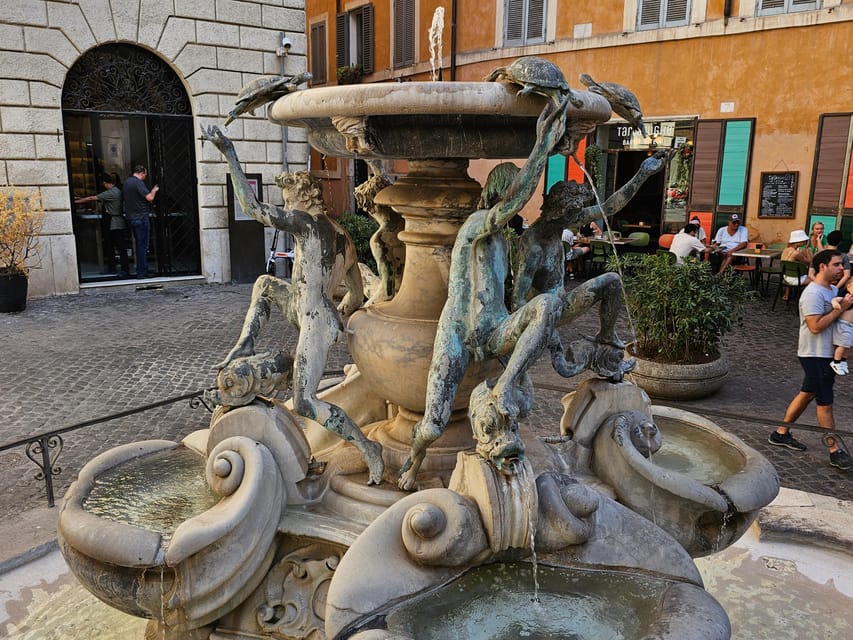
- Piazza Benedetto Cairoli and Piazza Mattei: small squares, big atmospheres
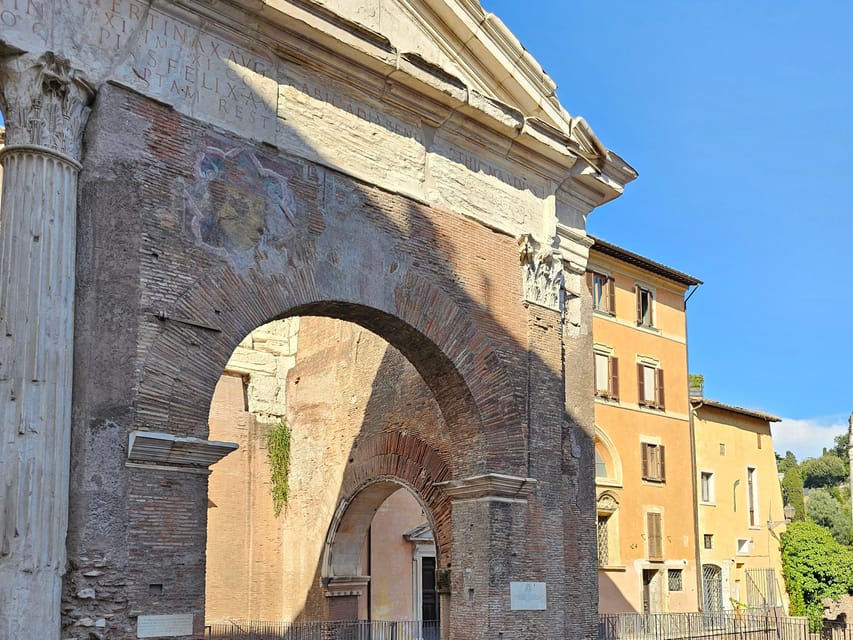
- The Jewish Ghetto and Portico d’Ottavia: history you can walk through
- Theatre of Marcellus and Tiber Island: ruins with rhythm
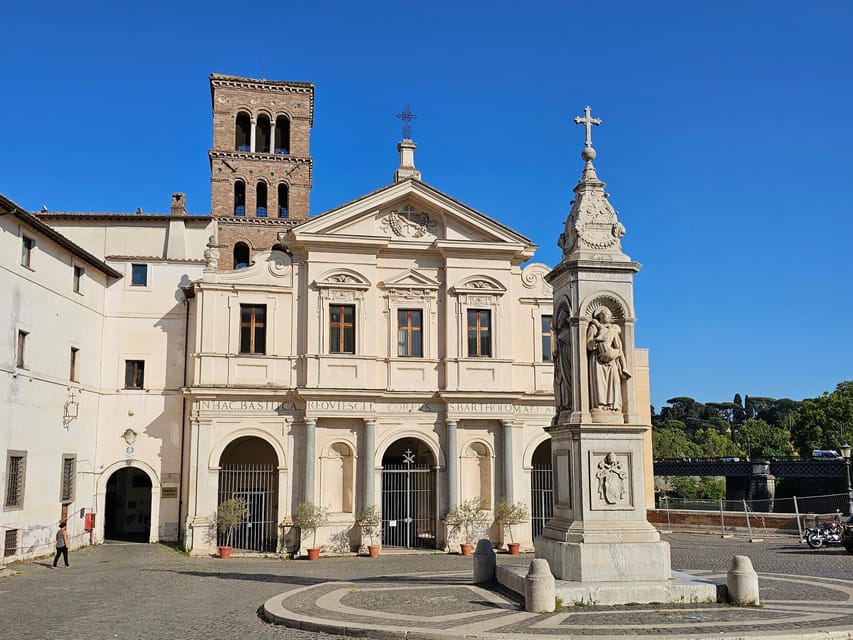
- Santa Cecilia in Trastevere: the ending that feels like a payoff
- How the guide style changes the whole experience
- Price and value: what $34 buys you in real time
- Who should book, and who should skip it
- Should you book Hidden Gems of Rome Walking Tour?
- FAQ
- Where does the tour start?
- Where does the tour end?
- How long is the walking tour?
- What language is the guide?
- What is included in the price?
- How much does it cost?
- What should I bring?
- Is the tour accessible for wheelchair users?
- Is it okay if I have back problems?
Key highlights that make this walk worth it
- Campo de’ Fiori to Trastevere, end-to-end story arc: the walk builds momentum and lands at a classic Trastevere setting.
- Witch and heretic execution tales: the guide brings chilling folklore into the street geography.
- Papal love affairs, told as hidden human stories: scandals get paired with the setting that made them possible.
- Ancient theaters and Roman “stage” spaces: quick stops give you context you can actually picture.
- Jewish Ghetto and Portico d’Ottavia connection: you see how law, community, and architecture overlap.
- Underground dwellings and an assassination-attempt site: the tour doesn’t just point at ruins; it tells you why places mattered.
Where you meet: Campo de’ Fiori sets the tone
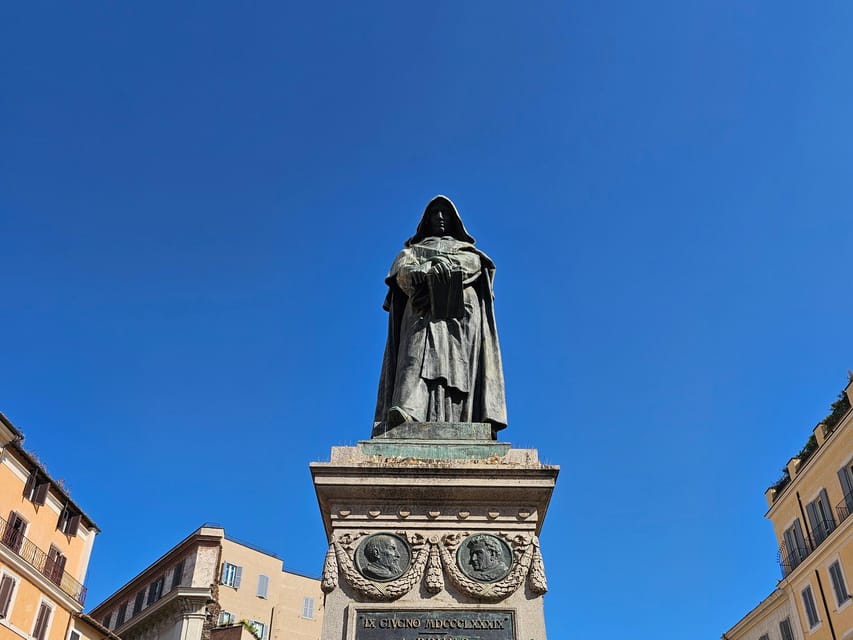
The tour starts in Campo de’ Fiori, right in the middle of the piazza, under the statue. That matters more than you might think. This is Rome at street level: people flowing, scooters hovering, and the kind of busy energy that can swallow a first-time visitor.
Within a short stretch, your guide starts connecting the dots between what you see now and what used to be here. You get the first taste of the tour’s rhythm: a small group, short stops, and stories that stick because they’re tied to a specific corner, doorway, or viewpoint.
Campo de’ Fiori itself is a smart launching pad. It’s central, easy to find, and it gives you immediate contrast. One minute you’re in everyday life; the next, the guide is walking you into older layers of the city. It’s also why the tour feels like more than a list of sights.
Practical note: you’ll be wearing walking shoes most of the time. Expect uneven old paving and tight sidewalks, especially once the route leaves the main piazza spaces.
You can also read our reviews of more walking tours in Rome

Campo de’ Fiori stories: witches, heretics, and the cost of power

Your first guided block is focused on Campo de’ Fiori itself, then you’re off on foot to the next set of corners. This is where the tour earns its name: you hear about an execution site for witches and heretics—a grim thread that’s part of Rome’s long, complicated past.
The key isn’t that the story is dark. It’s that the guide frames it in human terms: fear, authority, reputation, and how cities like Rome used public spectacle to control behavior. You don’t need a background in theology or law to follow along. The tour’s strength is turning big ideas into local, walkable context.
And yes, the tone often lands as funny as well as eerie. A good storyteller knows when to let you laugh so you can stay with the story instead of tuning out. The result feels like you’re watching Rome’s history on a street stage, not reading it from a brochure.
This stop sequence also works well for a wide range of ages. I love that the guide’s style keeps things moving and story-driven—exactly the kind of format that can hold attention even with a 14-year-old in tow.
Piazza del Biscione and Pompey: learning the city’s layout fast
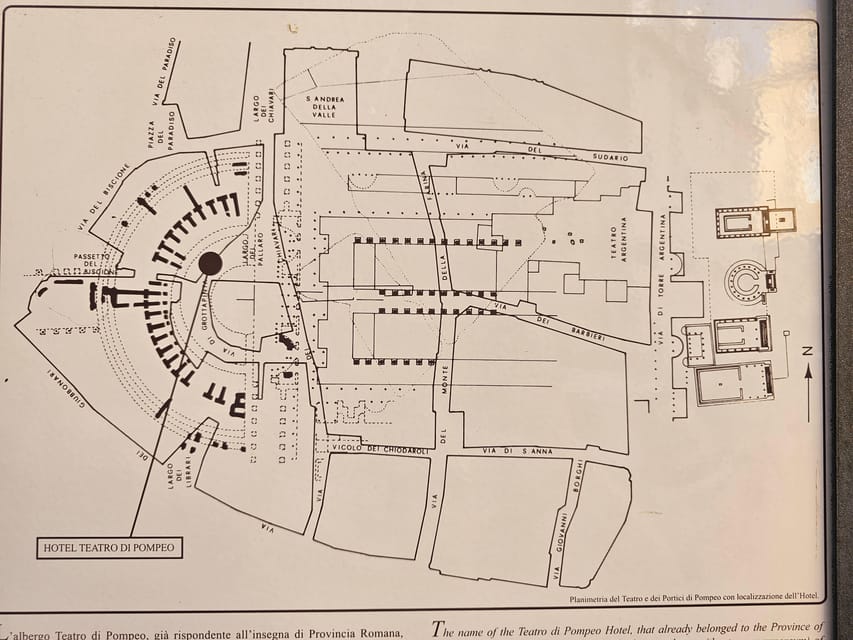
After Campo de’ Fiori, the walk takes you to Piazza del Biscione for a short guided stop. It’s quick—think five minutes—but the purpose is clear. The guide uses these “in-between” squares to teach you how Rome is built: layers of time, stitched together by narrow routes and sudden views.
Then comes the Theatre of Pompey. You’ll have another short guided visit here. The theatre angle is clever for two reasons:
- Theatres tell you how people lived. Even if you don’t see a full building the way you might in a modern museum, you learn what kinds of gatherings shaped civic life.
- You start seeing scale. Ancient Rome wasn’t only imperial monuments. It was also everyday spectacle.
Even with short stops, the guide doesn’t just name-drop. The storytelling style helps you picture what the space was for. You’ll leave with a better sense of why Rome’s architecture feels so theatrical—stone designed for crowds, attention, and drama.
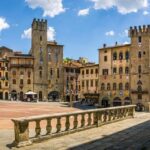
Piazza Benedetto Cairoli and Piazza Mattei: small squares, big atmospheres
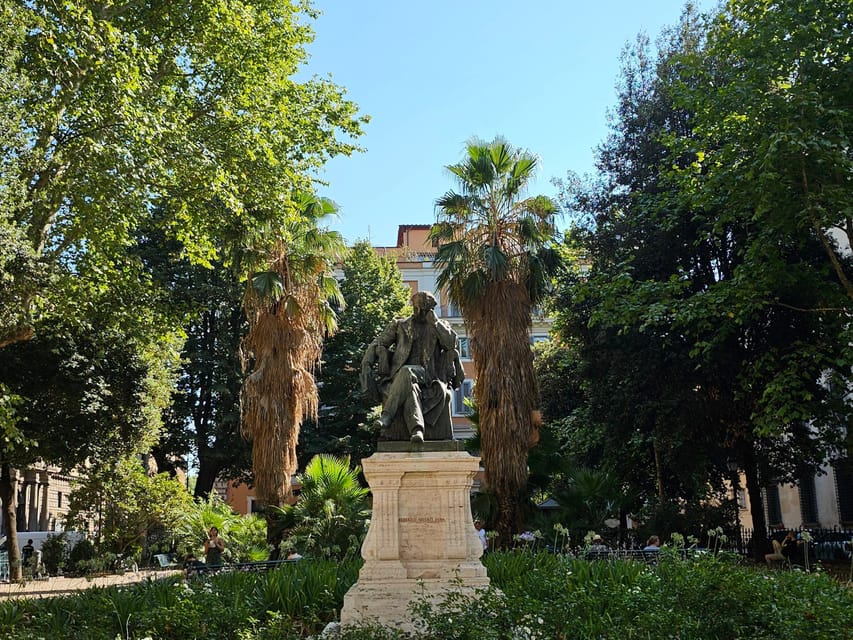
Next up is Piazza Benedetto Cairoli, with a longer guided stop (about 15 minutes). This is one of the places where the walk shifts from “look at this” to “think about why.” The guide is doing more than sightseeing; the stories help you understand how modern streets grew around older civic spaces.
Then you move on to Piazza Mattei for another guided visit (around 10 minutes). This is where the tour tends to feel especially satisfying because it gives you a pause. Between quick stops, these slightly longer windows let you reset your brain and absorb what you’re hearing.
Piazza moments are also a good chance to catch details you might otherwise miss—small visual cues that help you connect one stop to the next. Rome rewards people who notice. Your guide’s job is to make noticing feel easy.
If you’re the kind of visitor who gets impatient with “just standing and listening,” this is a good part of the route to test that. The stories are structured, and you’re not left floating. You get a clear scene, then you move.
The Jewish Ghetto and Portico d’Ottavia: history you can walk through
A major shift happens when you reach the area of the Jewish Ghetto. You’ll have a short guided stop here (about 5 minutes). Even though it’s brief, the guide uses it to frame what the ghetto meant in lived terms—community restrictions, legal realities, and how architecture and urban design can enforce social boundaries.
This is one of the tour sections where your guide’s storytelling style matters. Without context, a visitor might see only street layout and old stones. With context, you see policy and daily life. That’s where the walking format really pays off: you can’t separate the story from the streets.
From there, you’ll head to the Portico d’Ottavia for another guided stop. This is another quick one, but it’s a powerful connector to the Roman mindset of order and public space. You’ll likely hear how the guide ties the human stories to what people could physically access—or not access—over time.
What I like about this section is that it feels balanced. It doesn’t try to shock you for sport. It gives you a framework to understand how a city shapes people, and how people shape a city back.


Theatre of Marcellus and Tiber Island: ruins with rhythm
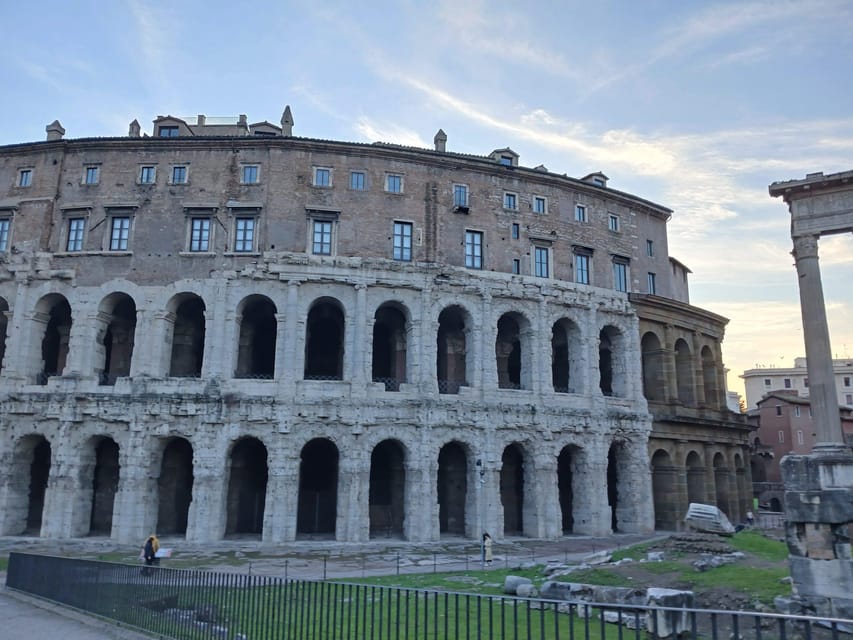
The Theatre of Marcellus is next, with another short guided stop. You don’t linger long, but that’s part of the design. The guide uses quick visits like punctuation: point, story, takeaway, move on.
Then the route reaches the river, with Tiber Island on the way. You’ll have about 10 minutes here. River views are valuable on a walking tour because they let you breathe. More than that, they help you understand why Rome grew the way it did. The Tiber isn’t just scenery; it’s a corridor that influenced trade, movement, and survival.
This part of the tour is also where the more dramatic highlights start to feel real. The walk includes stories about an assassination attempt site and ancient underground dwellings. Even without turning it into a horror movie, the guide uses the setting to explain why these locations mattered. When you’re standing close to the river and looking into the urban maze, it’s easier to understand how political violence could be planned and hidden in plain sight.
You’ll also get more of that modern-to-ancient back-and-forth effect. One minute you’re looking at how people live now; the next, the guide is showing you how earlier Rome organized space for power, privacy, and public display.
Santa Cecilia in Trastevere: the ending that feels like a payoff
The tour finishes at Basilica di Santa Cecilia in Trastevere. You’ll also spend about 20 minutes here with guided time included. Trastevere at the end is a smart choice. It’s a classic neighborhood for evening life, and ending here makes the day feel like it has a natural next step.
Santa Cecilia is where the tour’s tone often softens. Even with all the macabre and scandal, the final message tends to be about Rome’s layering—how faith, legend, and architecture overlap across centuries.
And because the tour includes entrance fees to the visited attractions, you don’t end the walk feeling like you have to buy your way into every stop. It’s part of what makes the $34 price feel fair for the time you get.
How the guide style changes the whole experience
The tour is led by a professional Irish storyteller and licensed tour guide, and that storytelling approach is the backbone. You’ll get facts, yes, but you’ll also get delivery: pacing, humor, and the kind of narrative that turns a street into a scene.
In the best moments, the guide does two things at once:
- Connects a legend to a location so you remember it later.
- Helps you understand what to watch for so you don’t just “see” the city—you read it.
One very practical detail that I’d point out: the guide gives street-smart tips for navigating Rome’s traffic flow. Rome’s crossing patterns can feel culturally strange if you’re used to stricter rules elsewhere. Having a guide explain what to do—so you don’t treat each intersection like a video game—is honestly part of the value.
If you’re coming with kids, this style is often the difference between a “tour that drags” and a tour that keeps everyone upright and listening.
Price and value: what $34 buys you in real time
At $34 per person for about 2.5 hours, this tour sits in the sweet spot for a walking experience in central Rome. You’re paying for three things:
- A licensed guide plus live English storytelling
- Entrance fees to the visited attractions
- A route that prioritizes less-visited corners instead of only the biggest-ticket crowd magnets
The value isn’t only in the number of stops. It’s in how those stops are used. Instead of longer museum-style lectures, you get short guided hits packed into a route that naturally keeps you moving.
Also, the duration is long enough to feel substantial but short enough that you can still plan dinner, sunset viewpoints, or an evening wander in Trastevere afterward. If you book something longer the same day, this is the kind of walk that can get you tired. If you book it earlier, it often works like a primer for the rest of your Rome days.
Who should book, and who should skip it
This tour is a strong match if you:
- Want story-first sightseeing that doesn’t require heavy prep
- Like walking routes that take you through squares, theatres, and historic districts
- Enjoy the darker side of Rome’s past, even when it comes with humor
- Appreciate practical guidance, especially for street navigation
You might want to skip it if you have mobility or comfort limits. It’s explicitly not suitable for wheelchair users, and it’s also marked not suitable for people with back problems or mobility impairments. The route includes walking on historic streets and visits that may involve uneven surfaces and tight spaces.
Also, if you want a slow, relaxed pace with lots of sitting time, the tour’s format is more “on your feet, keep moving.” That’s not bad. Just make sure it matches your travel style.
Should you book Hidden Gems of Rome Walking Tour?
I’d book it if you’re craving a Rome day that feels like a story you can walk through. The guide’s storytelling, the focus on places most visitors don’t stop long at, and the smart ending in Trastevere make this a good use of limited time.
But I’d think twice if you need an accessible route or you know long walking will flare up your back or joints. For the right fit, the price feels reasonable for the time, the guided storytelling, and the included entrance fees.
If you’re on your first Rome trip and want something beyond the standard highlights, this is exactly the kind of route that helps the city feel personal.
FAQ
Where does the tour start?
The tour starts in Campo de’ Fiori, meeting the guide in the middle of the piazza right under the statue.
Where does the tour end?
The tour ends at Basilica di Santa Cecilia in Trastevere.
How long is the walking tour?
The tour lasts about 2.5 hours.
What language is the guide?
The tour is offered with a live English guide.
What is included in the price?
The price includes the walking tour, a professional guide, and entrance fees to the visited attractions.
How much does it cost?
It costs $34 per person.
What should I bring?
Bring comfortable shoes and water.
Is the tour accessible for wheelchair users?
No. It is not suitable for wheelchair users, and it is also listed as not suitable for people with mobility impairments.
Is it okay if I have back problems?
No. The tour is marked as not suitable for people with back problems.