REVIEW · ROME
Ostia Antica: Archaeological Guided Private Tour
Book on GetYourGuide →Operated by Blue Cat Tours · Bookable on GetYourGuide
Roman streets, explained clearly.
This private Ostia Antica tour uses an expert archaeological guide plus professional graphic reconstructions to turn ruins into real daily life, from the city’s street plan to the way people shopped, ate, and worshipped. I especially like how the guide work feels personal, including how Francesca was reported to be accommodating for mixed groups and to tailor the tour to different interests.
I also like that you cover major set pieces fast: the Decumanus Maximus, the Baths of Neptune mosaics, the Forum Square with the Capitolium, and the Teatro di Ostia, plus the quieter residential and commercial corners like insulae, domus, and even latrines. One consideration: during winter, mosaic floors are covered for preservation, so you may not see those classic floor details in full.
If you want an efficient, high-impact “see it and understand it” outing outside central Rome, this is a smart pick. Just plan for a walking tour over uneven ground, and expect a focused pace over two hours rather than a slow wander.
In This Review
- Key things that make this tour worth your time
- Why Ostia Antica fits a 2-hour guided visit
- Meeting your guide and getting straight into the site
- Decumanus Maximus and the Baths of Neptune mosaics
- Capitolium and Forum Square: where power showed up
- Piazzale delle Corporazioni: business and the city’s working rhythm
- Teatro di Ostia: public entertainment as social glue
- From insulae and domus to shops, snacks, and public toilets
- Winter reality check: what happens to the mosaics
- Price and value: what you’re really paying for ($155.20 per person)
- Best fit: who will enjoy this tour most
- Should you book the Ostia Antica Archaeological Guided Private Tour?
- FAQ
- How long is the Ostia Antica private guided tour?
- What’s included in the price?
- Are meals included?
- Is it a private group or shared tour?
- What languages are available?
- Is the tour wheelchair accessible?
- Will I be able to see the mosaics in winter?
Key things that make this tour worth your time
- Expert archaeological guidance that connects ruins to daily life, not just facts
- Decumanus Maximus route with the city’s main street as your backbone
- Capitolium + Forum Square for a clear picture of religion and civic power
- Teatro di Ostia to show how public events shaped Roman neighborhoods
- Everyday-life stops like insulae, domus, thermopolium, and latrines
- Winter mosaic note so you’re not surprised if floors are covered
Why Ostia Antica fits a 2-hour guided visit
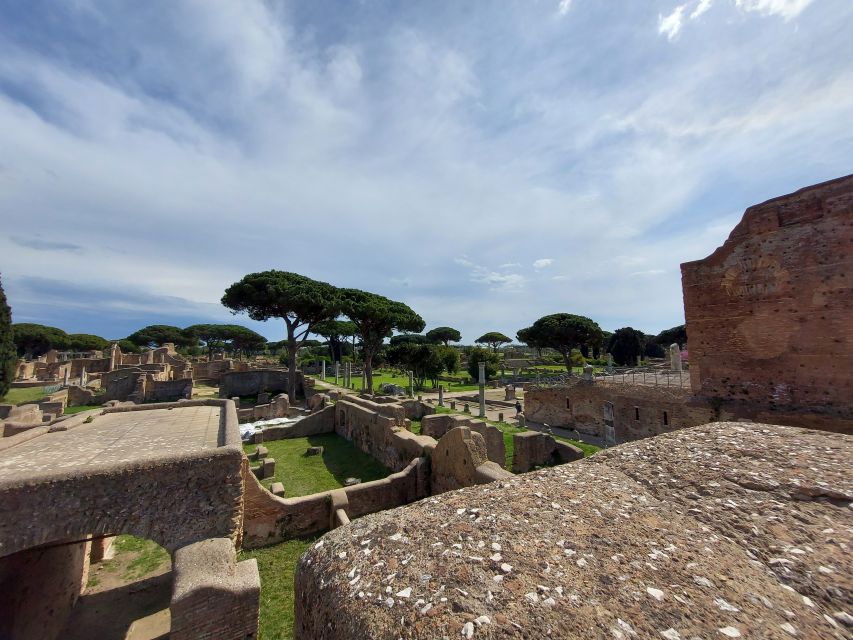
Ostia Antica is the kind of Roman site that rewards context. It’s the first Roman colony, founded in the seventh century BC at the mouth of the River Tiber, and it remained active until abandonment in the 9th century. Today it’s one of the largest archaeological sites you’ll ever visit, which can feel overwhelming on your own.
With a guide, the layout becomes your map. You follow the city along the main street, then hit the civic and religious center, then work your way into daily life spaces. That structure is what makes a 2-hour tour feel satisfying instead of rushed.
You’ll also get help visualizing what’s missing. The tour uses professional graphic reconstructions, which matter here because so much of what you see is foundation and fragments. The result is a better “this is how it worked” understanding, not just “that’s a wall.”
You can also read our reviews of more guided tours in Rome

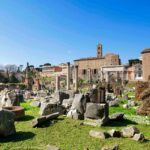
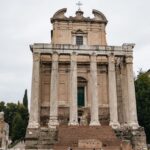
Meeting your guide and getting straight into the site
This is set up as a private group, so you meet your guide at the start point with a sign showing your name. The tour then ends back at the meeting point, which keeps your logistics simple and avoids the awkward end-of-tour scramble.
Entry tickets are included, and you can skip the ticket line, which is especially helpful at busy times. In practice, that means more of your paid time goes to walking the site and listening, instead of standing around.
The tour runs in English or Italian, and it’s wheelchair accessible. It’s still described as a walking tour, so you’ll want to consider how much uneven ground and path-to-path movement you can handle comfortably.
Decumanus Maximus and the Baths of Neptune mosaics
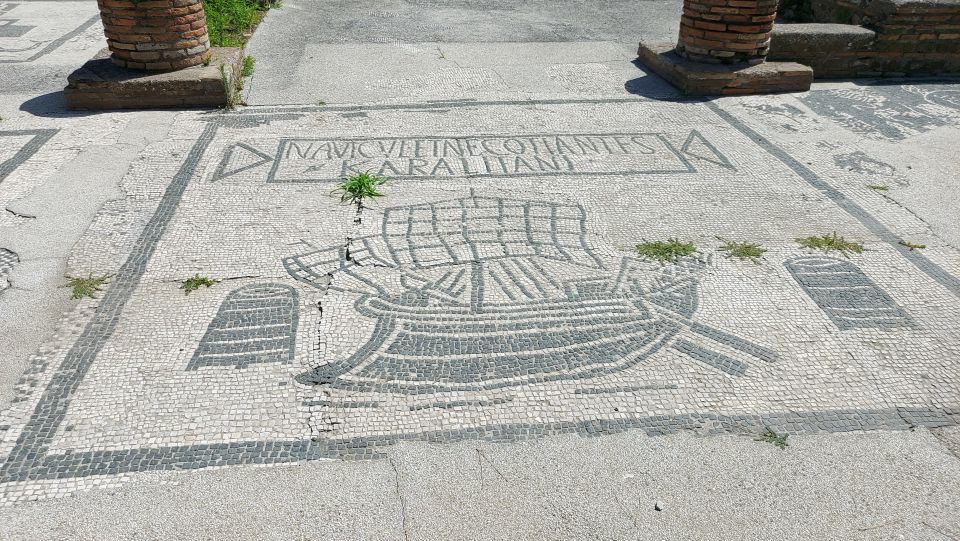
Your route starts along Decumanus Maximus, Ostia’s main street. This is a smart first step because the city plan starts making sense right away. When you know what street is the spine, the later stops feel connected instead of random.
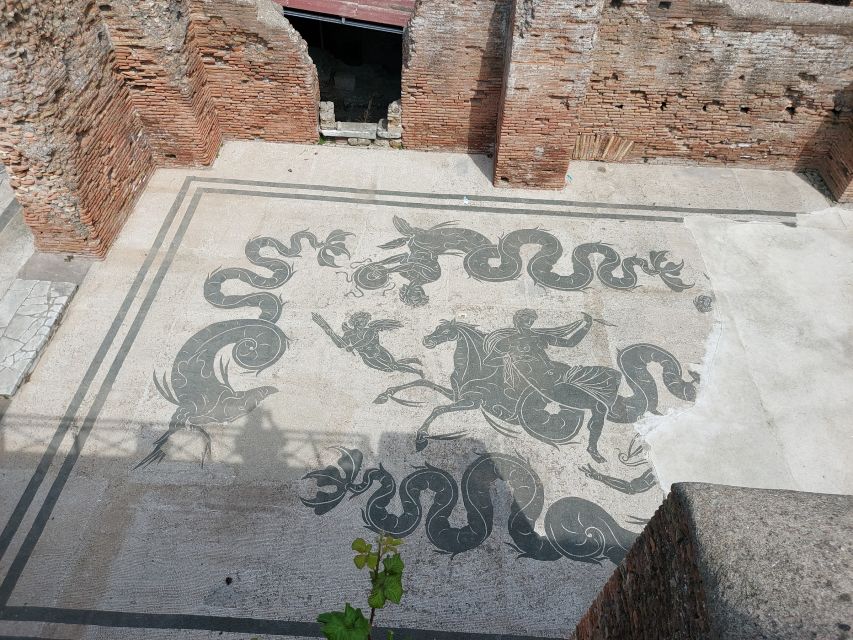
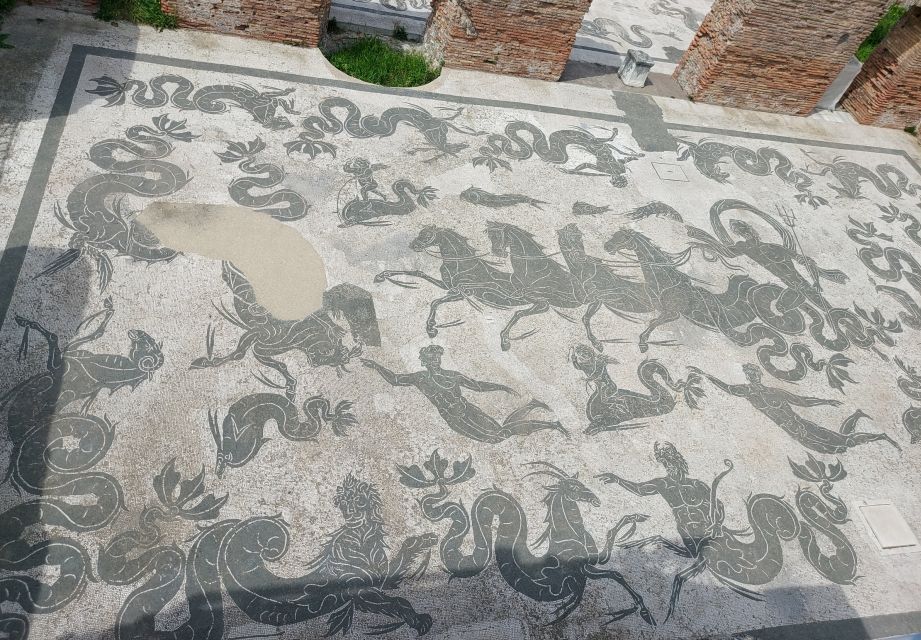
From there you head toward the Baths of Neptune. The big draw is the mosaics, which are famous for their detail and for how they show Roman taste for decoration even in public leisure spaces. Even if you’re not a mosaic fanatic, the way these floors reflect design priorities is one of the fastest ways to understand Roman urban life.
Two practical notes matter. First, your guide will point out what you’re looking at and why it mattered. Second, in winter the mosaic floors are covered for preservation, so you should expect fewer visible mosaic details during those months.
Capitolium and Forum Square: where power showed up
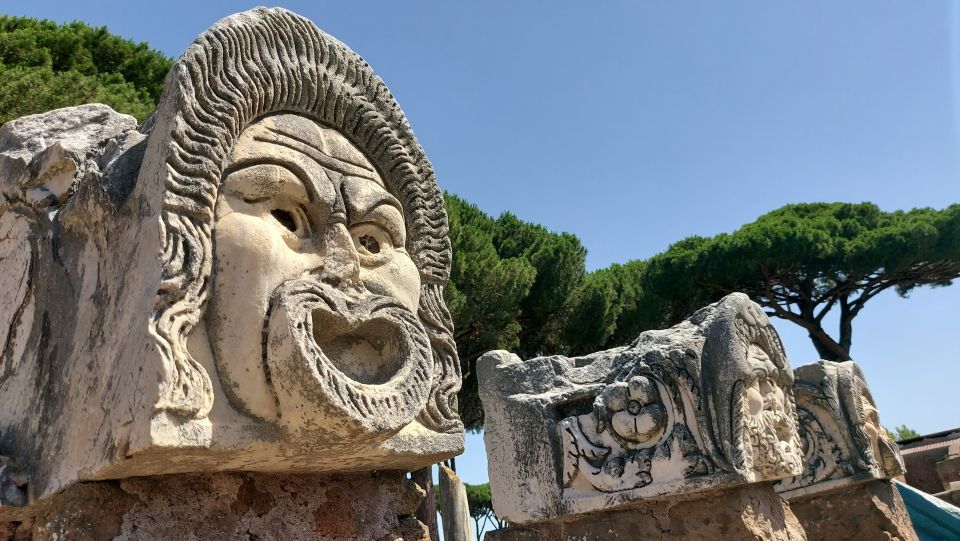
The Forum Square stop is where the tour starts to feel like government at street level. You’ll see how the space is dominated by the Capitolium, a major temple dedicated to Jupiter, Juno, and Minerva. That triangle of deities isn’t a random detail; it’s a clue to how Romans linked civic identity to religion.
What I like about this portion is that it doesn’t just name buildings. It frames the space as a meeting place for public life—where people gathered, where the city asserted authority, and where religious meaning was built into daily routines.
Also keep an eye on the guide’s pacing here. The Capitolium and forum area can be visually impressive, but it’s even better when your guide ties architectural ideas to behavior: who would have used the space and what the “message” of the temple would have been in everyday terms.
Piazzale delle Corporazioni: business and the city’s working rhythm
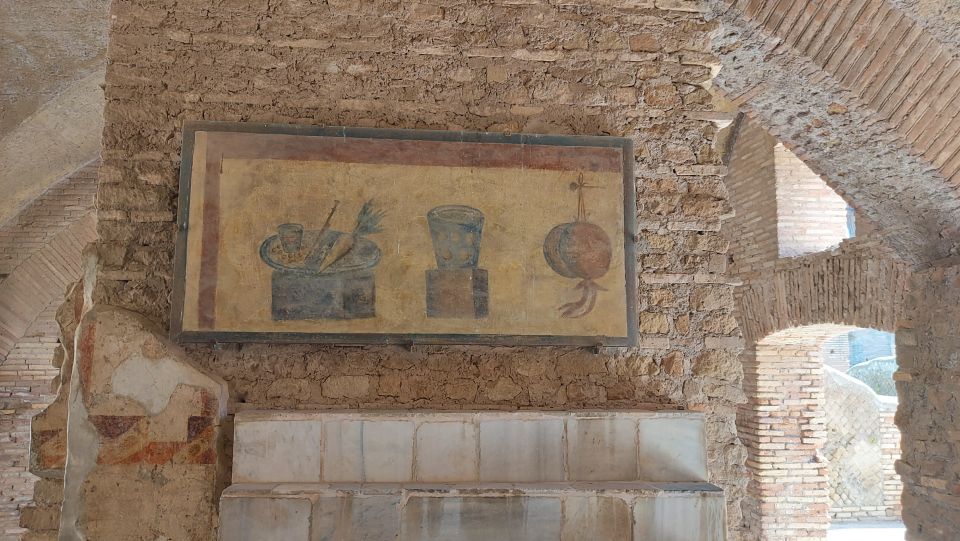
Next comes Piazzale delle Corporazioni, an area closely linked with the commercial and organizational side of Ostia. The word itself hints at groups and structured activity, and this kind of stop is valuable because it shifts you from big monuments to the machinery of everyday work.
This is where a guided approach pays off. On your own, it’s easy to overlook how the pieces fit together. With an archaeological guide, you get a clearer sense of how public spaces supported trade, organization, and regular city life.
You’ll come away understanding that Ostia wasn’t just impressive; it was functional. People lived, worked, ate, worshipped, and dealt with messiness every day, and that’s exactly what makes the site feel human rather than just ceremonial.
You can also read our reviews of more private tours in Rome




Teatro di Ostia: public entertainment as social glue
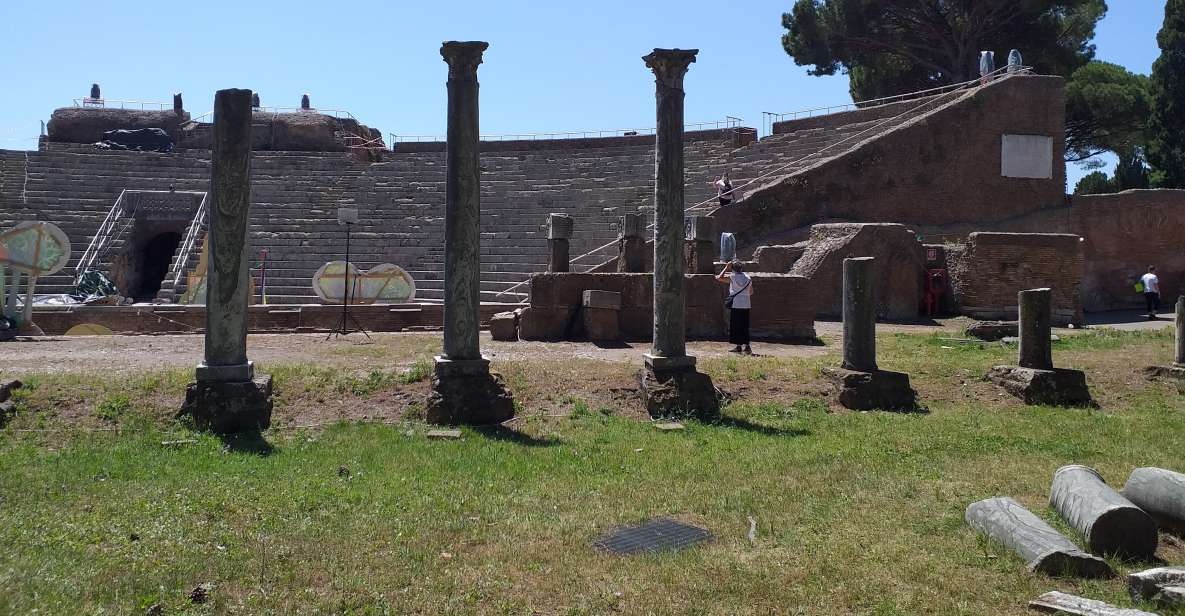
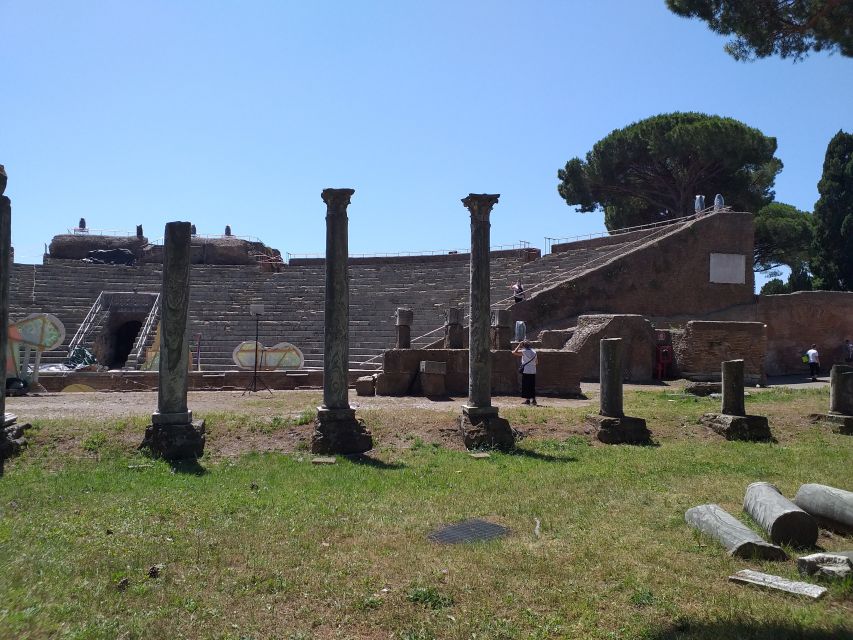
The Teatro di Ostia is the kind of ruin that helps you picture the social world. A theater wasn’t only about performances. It was also about gathering, shared culture, and the rhythm of public time.
Your guide’s reconstructions and explanations are key here because much of what you might want to “see” depends on imagining what stood above the remaining structure. When you get that mental picture, the theater becomes an easy bridge between architecture and Roman behavior.
If you’re traveling with kids or a mixed-age group, this is often a favorite stop. It’s also helpful if you’re the type of person who learns better from stories than from stone-by-stone descriptions, because theater naturally invites the “what would this have felt like?” question.
From insulae and domus to shops, snacks, and public toilets
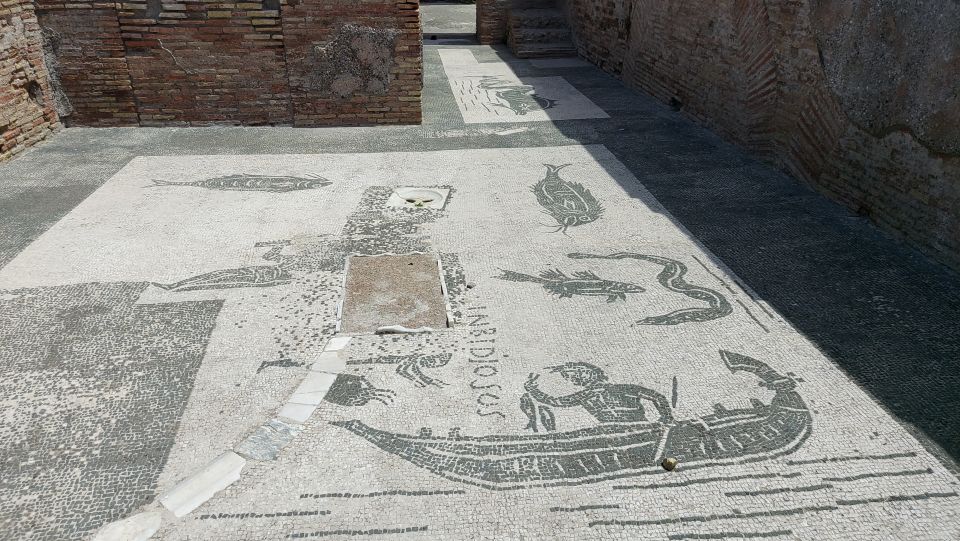
The tour doesn’t stop at the fancy parts. One of the best aspects of this experience is the focus on everyday life through multiple housing and street-level elements.
You’ll explore insulae, the ancestors of apartment buildings, which matters because it reminds you that Roman urban life was not only for wealthy villas. Then you’ll see domus, richer homes connected to patricians. That contrast helps you understand social differences in a physical way.
You’ll also pass by spaces that represent how people ate and grabbed quick meals—such as a thermopolium, described in the tour context as similar to fast-food service. It’s a fun, grounded comparison that makes the idea click without turning the site into a theme park.
And yes, you’ll even get to latrines, the public toilets. It’s not glamorous, but it’s extremely revealing. Roman cities had systems for hygiene and shared facilities, and those kinds of details are exactly what make a site feel real instead of staged.
If you like the practical side of history—how people actually spent their days—this “daily life sweep” is where the tour earns its money.
Winter reality check: what happens to the mosaics
If you’re visiting during the winter season, plan around a real preservation rule. The mosaic floors of the archaeological site are covered to protect them, so they are not visible during winter visits.
This doesn’t make the tour less worthwhile—it changes what you’ll see at the Baths of Neptune. You’ll still get the guide’s explanations and reconstructions, and the rest of the route (Capitolium, forum area, theater, and daily-life spaces) remains the same.
If seeing those mosaic floors in person is your top priority, you’ll want to consider visiting in a season when they’re visible. Otherwise, treat the mosaics as a concept explained well, not a guaranteed visual feast.
Price and value: what you’re really paying for ($155.20 per person)
At $155.20 per person for a private 2-hour tour, the price isn’t “cheap,” but it can be good value because you get more than a walk in the ruins.
Here’s what’s included:
- a private guided tour
- entry tickets
- skip-the-line access
- an English/Italian live guide
- a structured route across major highlights and daily-life areas
For value, the big question is how much you’ll get from a guide versus reading signs on your own. Ostia Antica is large, and many details won’t click without help. This tour aims to make that click quickly by pairing major stops with context and reconstructions.
The private format also helps with attention. If you’re traveling with children, a guide can adjust pace and focus in real time. If your group has mixed interests—architecture, daily life, or just “I want the highlights”—a private guide is more flexible than group tours.
Best fit: who will enjoy this tour most
This is a strong match if you want:
- a clear, fast route through major Ostia Antica landmarks
- an explanation of Roman life beyond monuments
- a private setting with real-time pacing
It’s also a good pick if you’re short on time in the Rome area but still want an authentic archaeology experience. Two hours is long enough to cover the “big picture” and key daily-life stops, without turning your day into a half-day marathon.
If you prefer a silent, unguided wander, you might find the structured route feels too planned. And if you’re obsessed with mosaic viewing during winter, you’ll want to double-check timing since those floors may be covered.
Should you book the Ostia Antica Archaeological Guided Private Tour?
I’d book it if you want your Ostia Antica visit to feel guided, understandable, and efficient—especially at a time when you can’t easily spend all day getting oriented. The combination of a private guide, included tickets, and a route that connects the street plan to daily life is a real advantage here.
Book it with confidence if your group values practical insight: how Romans lived in apartments and villas, how commercial spaces worked, how public toilets fit into city systems, and what the Forum Square and Capitolium meant. I’d also book it if you want a guide who can adapt to different interests; Francesca’s reported tailoring for mixed groups is exactly the kind of detail that matters on-site.
Skip or reassess if mosaics are your one non-negotiable priority during winter, since preservation coverings can limit what you’ll see at the Baths of Neptune.
FAQ
How long is the Ostia Antica private guided tour?
The tour lasts 2 hours.
What’s included in the price?
It includes a private guided tour and entry tickets.
Are meals included?
No, food and drinks are not included.
Is it a private group or shared tour?
It’s a private group.
What languages are available?
The live guide is available in English and Italian.
Is the tour wheelchair accessible?
Yes, it is wheelchair accessible, though it is still a walking tour.
Will I be able to see the mosaics in winter?
In winter, mosaic floors are covered for preservation, so they are not visible during winter visits.