REVIEW · ROME
Rome: Appian Way Guided Tour on E-Bike with italian Aperitif
Book on GetYourGuide →Operated by la regina srls · Bookable on GetYourGuide
Ancient Rome, pedaled. I love how this e-bike tour turns the Appian Way into a living walk-through: you cover real ground, then slow down at the most memorable ruins. Two things I especially like are the smart route through the parks and the way the guide keeps the story practical, not just lecturing. One thing to plan for: it’s still a cycling day, so you’ll want comfortable shoes and a mindset for steady time in the saddle.
You’ll get a break from busy Rome fast. The Caffarella Park and the Park of the Aqueducts make you feel like you’ve left the city, even while you’re in the middle of it. If you’re hoping for a fully relaxed “sit and glide” experience, e-bike helps, but the route does involve real paths and frequent stops—bring patience and let the rhythm work for you.
In This Review
- Key highlights you’ll actually feel
- Why the Appian Way works so well by e-bike
- Meeting point at Bikesquare Roma and what to watch for
- First stretch: Baths of Caracalla to Porta San Sebastiano
- Villa di Massenzio and the Tomb of Cecilia Metella: a dramatic middle ground
- Appia Antica Archaeological Park: walking on the old paving stones
- Villa dei Quintili and the ride through open air
- Parco degli Acquedotti: aqueducts that feel real, not postcard-flat
- Caffarella Park: where the Appian Way turns pastoral
- Domine Quo Vadis, Aurelian Walls, and the return toward the city icons
- The farmhouse aperitif: why the food piece matters
- Price and what $81 really buys you
- Who this tour suits best
- A few smart tips before you go
- Should you book the Appian Way e-bike + aperitif tour?
- FAQ
- FAQ
- How long is the Appian Way e-bike tour?
- Where do I meet and where does the tour end?
- What’s included in the price?
- Is the tour good for families?
- What languages are available?
- Do I need to bring anything specific?
- Is luggage allowed?
- How many people are in the group?
- Cancellation and refunds work how?
Key highlights you’ll actually feel
- E-bike wheels on the Regina Viarum: easier than walking the ancient paving stones for hours
- Caffarella Park ruins: quick visits, good photo angles, and time to get your bearings
- Aqueduct views from Parco degli Acquedotti: walking segments that make the monuments feel close
- Multiple Roman icons in one loop: baths, gates, tombs, villas, walls, plus the pyramid
- Small group size (max 10): a more controlled ride and better guide attention
- Aperitif at a local farmhouse: a calm finish with local products and wine
Why the Appian Way works so well by e-bike
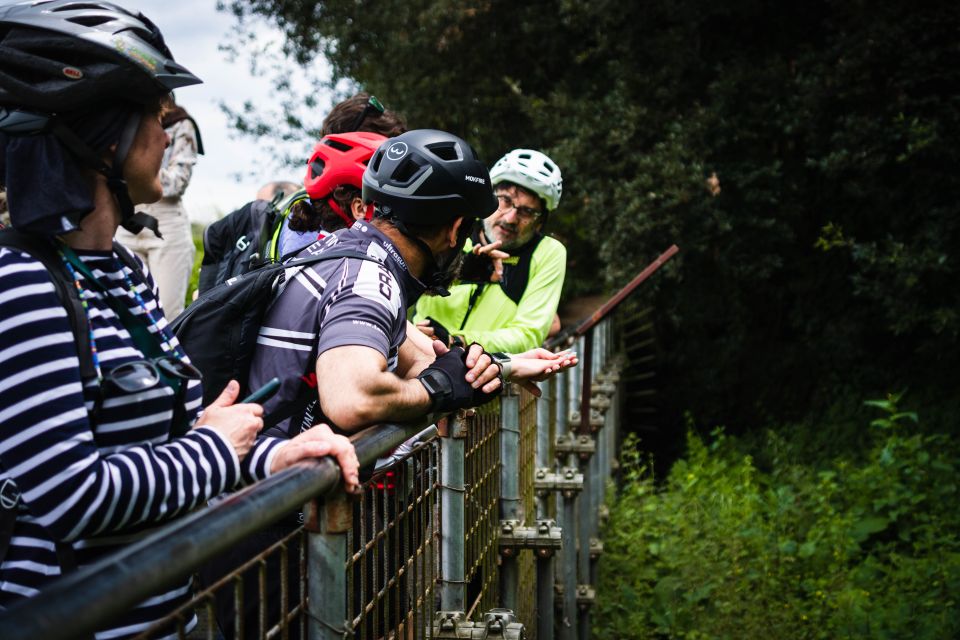
The Appian Way is famous for a reason, but it can also be tiring if you try to do it the hard way. This tour solves that. You bike the longer stretches with an e-bike, then you step off to walk where it makes sense—so you get the best of both worlds: movement plus moments on foot.
I like that the day feels like a gentle progression. You start with major landmarks that anchor you in Rome’s map, then the route gradually leans more rural as you reach the parks. You end up with that rare combo: you learn things, but you also get air in your face.
Also, the e-bike is not a gimmick here. The route includes varied terrain and ancient stone, and the bikes are described as mountain e-bikes. Translation: they’re built for control, not just sightseeing on flat pavement.
You can also read our reviews of more cycling tours in Rome


Meeting point at Bikesquare Roma and what to watch for
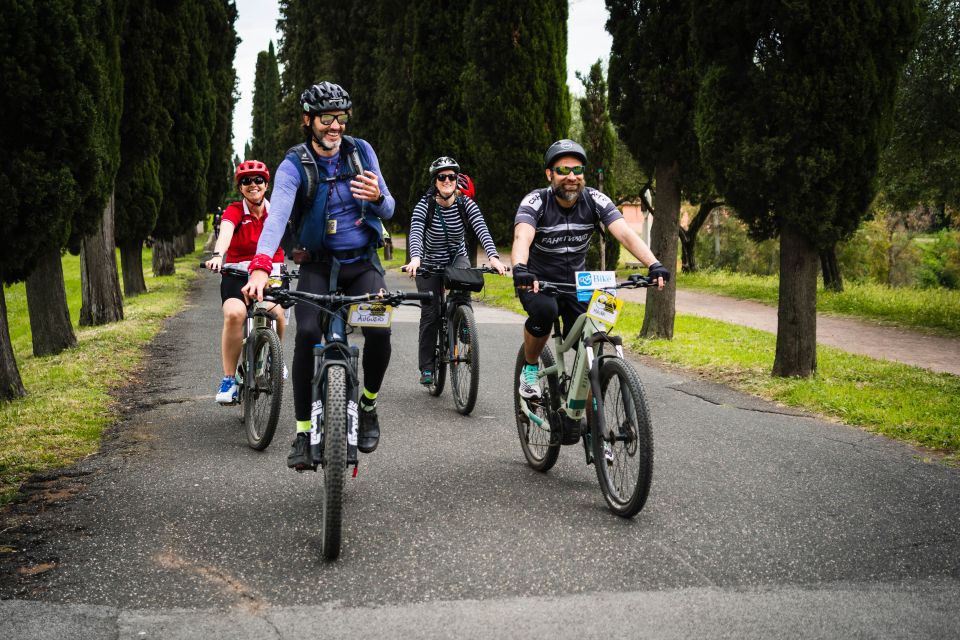
You meet at Bikesquare Roma bike Rental in the area of Viale della Piramide Cestia (Viale della Piramide Cestia, 33). The tour is designed to be smooth, but a small practical warning comes from real-world experience: if you arrive too early, you may have to wait for the shop to be fully ready.
Plan to show up on time, not five minutes before the world begins. Once you’re checked in, you’ll get set up with your bike and a quick orientation from the guide. Since the tour runs with live guidance in English and Italian, you can expect clear directions and reminders along the way.
One more detail that matters: no luggage or large bags. If you’re carrying a big daypack, bring only what you can keep with you comfortably. Think small and light, because you’ll be maneuvering through stops and walking segments.
First stretch: Baths of Caracalla to Porta San Sebastiano
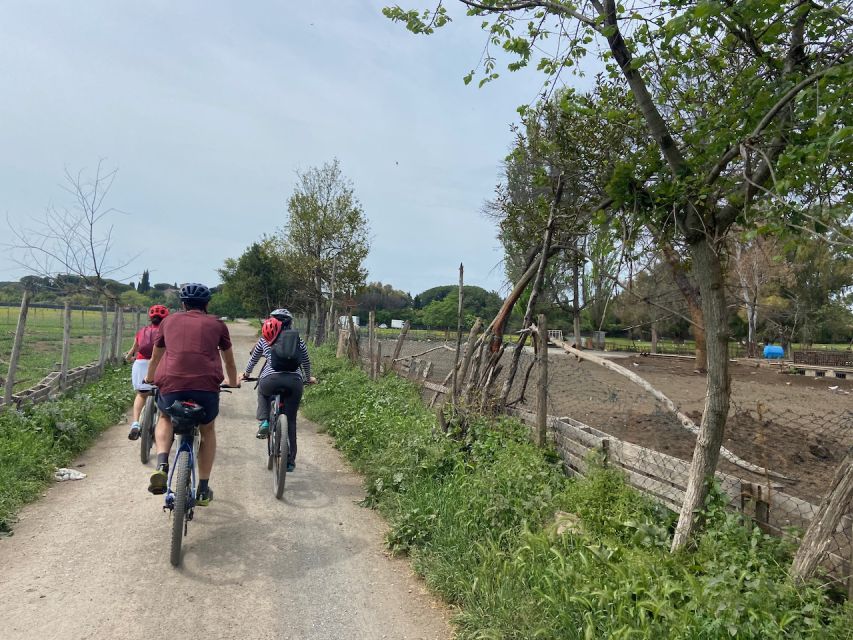
The ride starts by pulling you into the Roman scale immediately. You’ll begin with a quick stop at the Baths of Caracalla. Even in a short visit, this sets the tone: Rome wasn’t just built, it was engineered at a huge level.
Then you head to Porta San Sebastiano, another classic piece of the city’s fortifications. This matters because it frames what you’re about to see. The Appian Way isn’t just an old road. It’s part of how Romans moved people, goods, and armies.
A good tour should keep you from feeling rushed. Here, the early timing is brief at each location, which actually helps. You get to look, you get context, and you don’t burn your energy before the parks.
Villa di Massenzio and the Tomb of Cecilia Metella: a dramatic middle ground
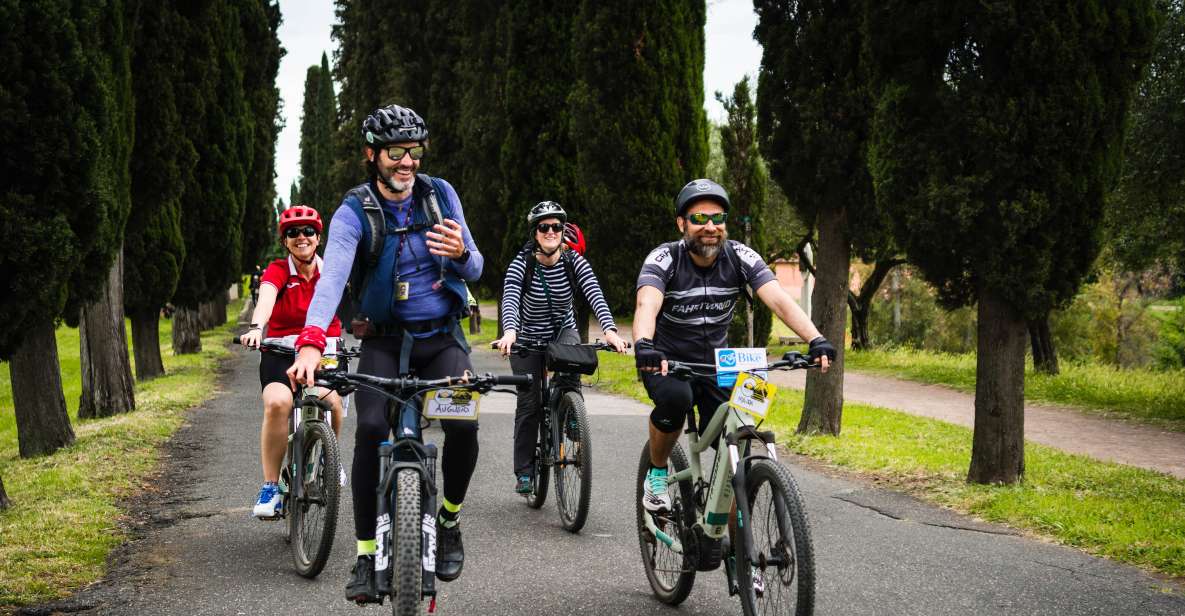
Next comes Villa di Massenzio, which adds a shift from purely public monuments to the feel of elite spaces tied to power and myth. Even with a short stop, you’ll understand why the Appian Way became a magnet for grand statements—tombs and villas lined up along the route for a reason.
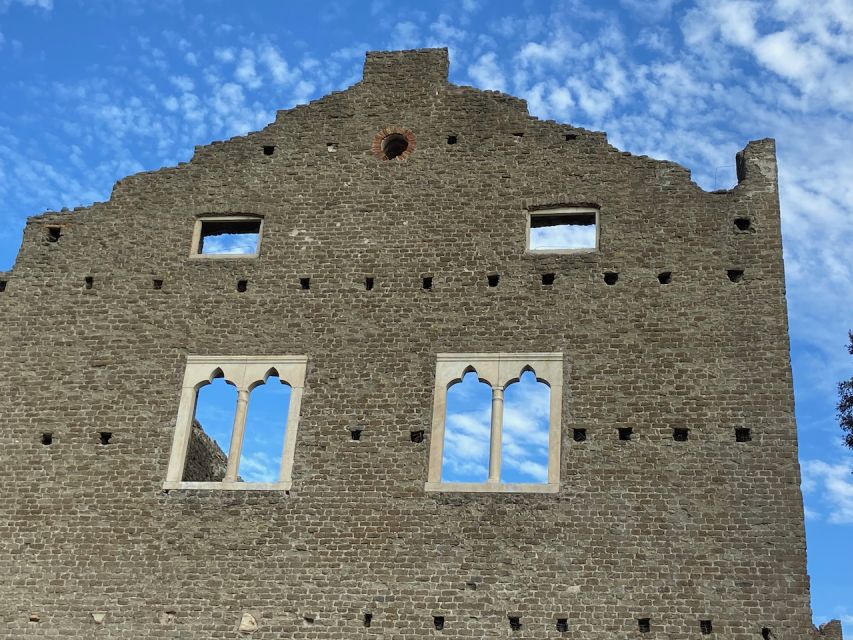
Then you arrive at the Tomb of Cecilia Metella. This stop tends to be a favorite because the structure reads instantly. You don’t need deep background to feel the scale and the drama. The guide helps you connect what you see with how the road functioned in Roman times.
You’ll also start to get that “footsteps of Ancient Romans” feeling more than you would in the city center. The terrain and the spacing between monuments do something important: they slow your brain down just enough to notice details.
Appia Antica Archaeological Park: walking on the old paving stones
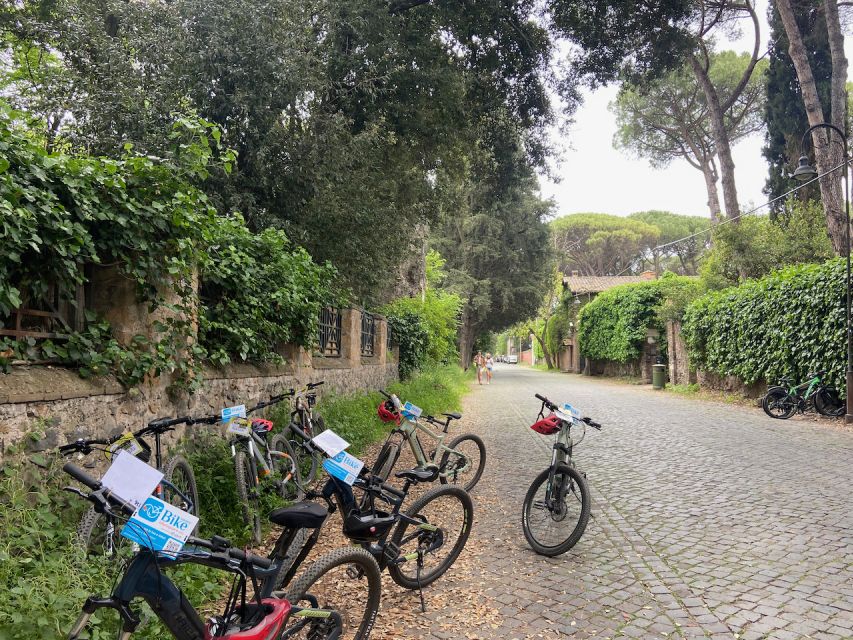
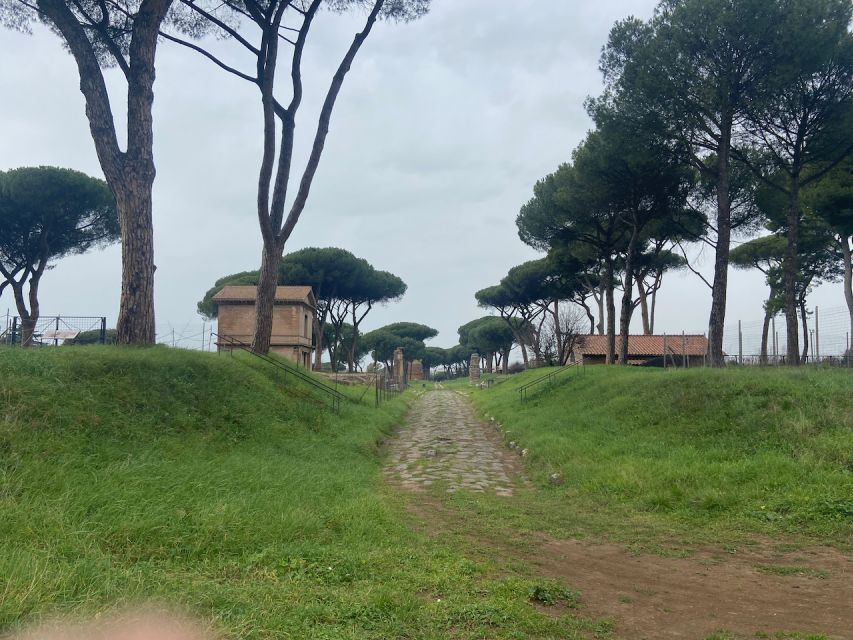
At the heart of the tour is time in the Appia Antica Archaeological Park. This is where the experience stops being generic sightseeing and starts feeling like you’re moving along the original idea behind the fame.
Walking segments on ancient paving stones have a specific effect. Your pace naturally changes. You notice the road’s texture, you see how paths connect, and you appreciate why people built and maintained this route with such seriousness. With an e-bike, you’re not stuck walking the entire day, but you still get the tactile connection that makes the Appian Way worth the trip.
The guide helps by pointing out the cultural attractions you’ll encounter, including mentions of catacombs, tombs, and villas along the way. Even when you’re not stepping into every site, you understand what’s around you and why it matters.
You can also read our reviews of more guided tours in Rome


Villa dei Quintili and the ride through open air
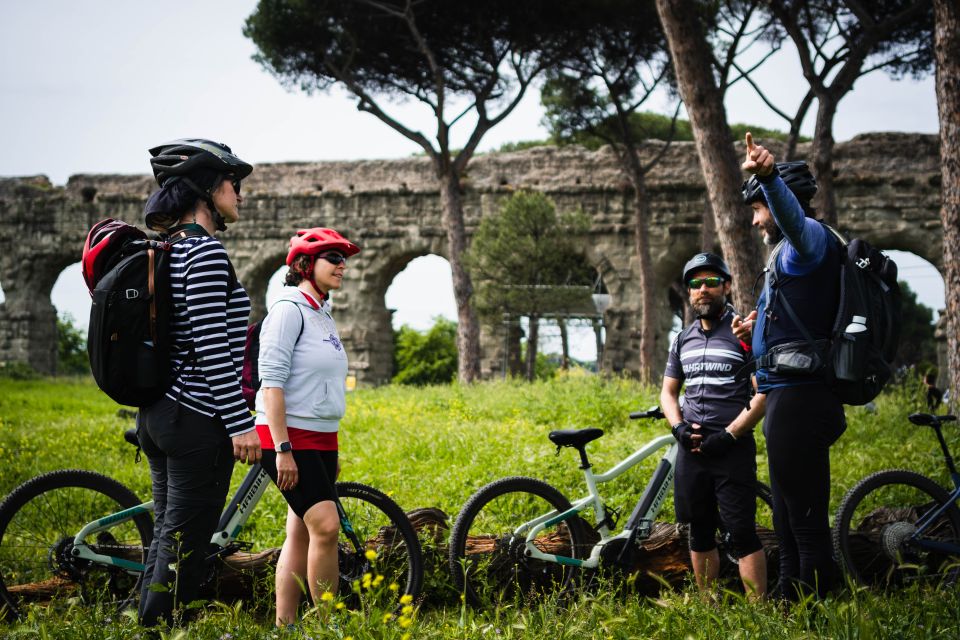
You’ll pass Villa dei Quintili for a short stop. This one’s less about a single “wow” moment and more about perspective. Villas like this show you that the Appian Way wasn’t only for burials and monuments. It was also connected to private life, leisure, and status.
Right after, the route starts to feel more like an outing than a sightseeing checklist. You’ll feel the change as the city noise fades and the parks take over. That matters if you want Rome to feel human-sized instead of overwhelming.
The group size stays small, limited to 10 participants, so you’re not stuck in a long line of people spilling onto narrow areas. The guide can manage pace and keep the ride safe without turning it into a stop-and-go circus.
Parco degli Acquedotti: aqueducts that feel real, not postcard-flat
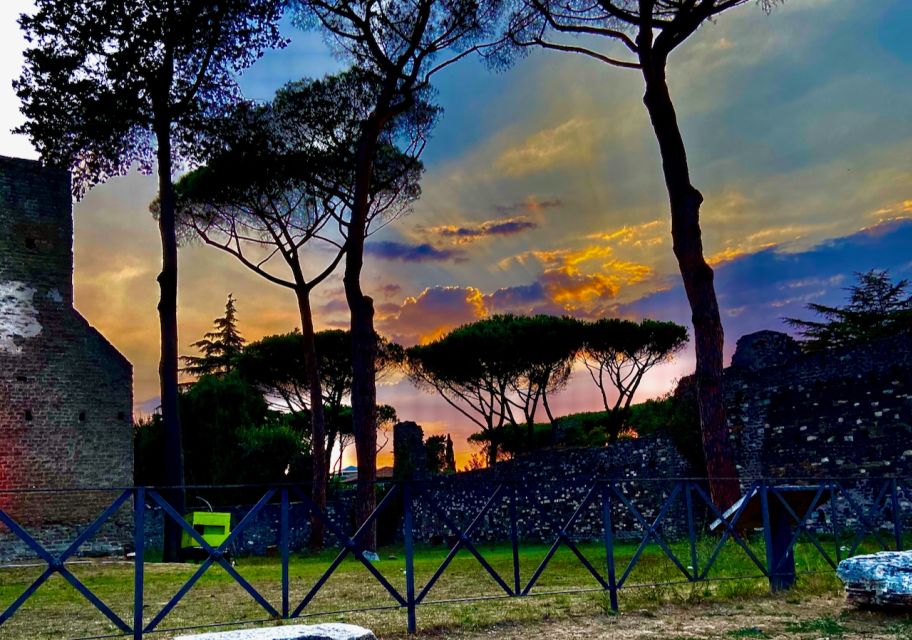
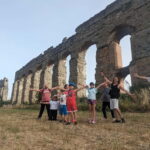
The Parco degli Acquedotti segment is one of the strongest reasons to book. Aqueducts sound like “big stones,” but when you walk around them, you understand their purpose. You also start to appreciate the scale of Roman infrastructure.
This part of the route builds in a walking time window of about 30 minutes in the park. That’s long enough to breathe, take photos, and feel the setting, but not so long that you dread the next pedal.
If you like scenic Rome but hate the idea of standing around too long, this works well. The aqueducts create their own “lines” for the eye. You move through space, not just through viewpoints.
You’ll also make a stop at Torre Fiscale Park, which helps widen the feel of the area. It’s a reminder that this landscape is more than monuments; it’s a whole system of paths and vantage points.
Caffarella Park: where the Appian Way turns pastoral
Then you hit Caffarella Park, one of the most calming parts of the day. This is where you trade city crowds for park air and more open sight lines. The route includes walking along the ancient route and appreciating nearby ruins in the park setting.
Caffarella is valuable for a simple reason: it lets you connect the road to its setting. The Appian Way isn’t stuck in a museum. It’s surrounded by rural pathways and historical sites close together, like the city’s edge used to be.
I like how this stop balances photos with understanding. You’re not just told to look. You’re guided on what to notice—ruins, paving, and the logic of how the different sites relate.
If you’re sensitive to heat or sun, think about timing here. You’ll be outside for a good chunk of the day, so sunglasses and comfortable clothes aren’t optional unless you enjoy squinting and rushing photos.
Domine Quo Vadis, Aurelian Walls, and the return toward the city icons
After the parks, the tour loops back toward familiar Roman markers. You’ll visit the Church of Domine Quo Vadis, which gives you a spiritual pause while still keeping the day anchored in the route’s meaning. Then you see Aurelian Walls, which help you frame the city’s defensive boundary.
These stops matter because the Appian Way connects outside Rome to inside Rome. Without them, the day can feel like it’s only about monuments in the open. With them, you feel the road as a corridor that ties city life to the world beyond.
Finally, you visit the Pyramid of Cestius and return to the meeting area near Viale della Piramide Cestia. That ending is satisfying because it snaps you back to a recognizable Rome landmark, with the parks still fresh in your mind.
The farmhouse aperitif: why the food piece matters
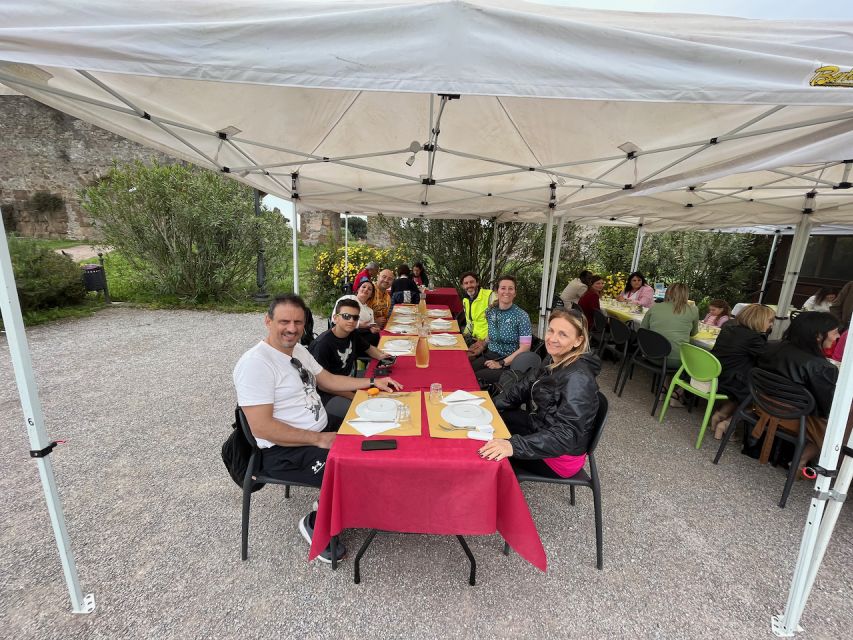
The tour ends with an aperitif at a local restaurant/farmhouse (about 30 minutes). You’ll taste local products and wine, which is a better close than just receiving a snack and heading out.
This matters for two reasons. First, it gives you time to slow down after cycling and walking. Second, it turns the outing into something more “Rome-like,” where food and social time are part of the culture, not an afterthought.
It’s also good to know what’s not included. Lunch or dinner is not included, so if you’re doing this tour in the morning, plan for a real meal afterward. If it’s later in the day, you may still want dinner plans lined up, because you’ll likely finish satisfied but not full.
Price and what $81 really buys you
At $81 per person for a 4-hour experience, you’re paying for three things: the e-bike, the guide, and the organized route with stop times and a farmhouse tasting. The price feels fair because you’re not just renting a bike—you’re buying direction and context.
If you’ve ever tried to DIY the Appian Way with a rental bike, you know the problem. You can see ruins, sure, but you might miss why they line up the way they do or what to prioritize at each stop. Here, the guide’s role helps you get more from less time.
Small group limits (to 10) also add value. You’re less likely to be stuck waiting on a big crowd at tight stops, and you can actually hear what the guide is saying in key moments.
The main “cost” isn’t money—it’s effort. You’ll be on your feet some and pedaling too. So if you want a totally restful tour, this might be too active. If you’re okay with moderate activity, it’s a strong use of time.
Who this tour suits best
I’d steer you toward this experience if you:
- Want a guided way to see Appia Antica without committing to a full-day walk
- Enjoy learning outdoors, with stops that actually break up the route
- Want a Rome day that feels like the outskirts too, not just the center
- Like cycling with safety support and a guide handling the pace
It’s especially good for first-timers to the area who want structure. And if you’re nervous about handling an e-bike, you’re in the right place. One of the strong signals from past experiences is that the guides pay close attention to safety and help you get comfortable riding.
A few smart tips before you go
- Bring comfortable shoes you can walk in for repeated short segments
- Wear clothes that handle sun and breeze; you’ll be outside for much of the day
- Plan light—no luggage or large bags
- Arrive at the meeting point early enough to check in, but don’t expect the shop to be ready before it’s open
If you want the best photos, stop thinking like a runner and start thinking like a filmer: slow down at major vantage points, then move. The parks reward that rhythm.
Should you book the Appian Way e-bike + aperitif tour?
If you’re weighing this against a bus tour or a purely walking option, I’d lean toward booking if you can handle moderate cycling. The blend of e-bike travel, guided stops at major monuments, and real time in Caffarella Park and Parco degli Acquedotti is hard to beat in a single half-day.
This is also a solid value at $81 because you’re getting equipment, instruction, and a meaningful food finish with local products and wine. Just be honest about your energy level. If you want Rome but not movement, pick a different style tour.
FAQ
FAQ
How long is the Appian Way e-bike tour?
It lasts 4 hours.
Where do I meet and where does the tour end?
You meet at Bikesquare Roma bike Rental near Viale della Piramide Cestia, 33, and you return to the same meeting point.
What’s included in the price?
The tour includes a mountain e-bike, a guide, and a local aperitif (with local products and wine). Lunch or dinner is not included.
Is the tour good for families?
A child’s seat is available upon request, and the tour is in a small group.
What languages are available?
The guide speaks English and Italian.
Do I need to bring anything specific?
Wear comfortable clothes and bring comfortable shoes and sunglasses.
Is luggage allowed?
No luggage or large bags are allowed.
How many people are in the group?
It’s limited to 10 participants.
Cancellation and refunds work how?
Free cancellation is available up to 24 hours in advance for a full refund.