REVIEW · ROME
Rome by Night: 3-Hour Guided Walking Tour
Book on GetYourGuide →Operated by Enjoy Rome · Bookable on GetYourGuide
Rome looks different at night. You get a crowd-light walk with an expert guide’s narration, plus an overview built around the Roman Forum area. I also like the practical touch of headsets, so you can actually follow the story without craning your neck. The one possible drawback: it’s mostly an evening walk, so it can feel more like dusk-to-night than midnight Rome, and the monuments themselves aren’t part of a ticketed experience.
The route is packed with recognizable stops—Piazza Navona, the Pantheon area, Trevi Fountain, Capitoline Hill, and the Colosseum—then it shifts into deeper context around the Imperial Forums. If you’re early in your trip, this tour helps you get your bearings fast. Just note it’s not wheelchair accessible, it’s English only, and you need to meet promptly.
In This Review
- Key highlights to zero in on
- Why Rome by night hits harder (and feels calmer)
- Where the tour starts: the Colosseo meeting point (and why timing matters)
- Piazza Navona after dark: the square you think you know
- Pantheon time: architecture you can spot even when you’re not inside
- Trevi Fountain at night: classic views, less stress
- Capitoline Hill: the stop that makes Rome feel logical
- The Colosseum: seeing the icon lit up (and why that matters)
- Roman Forum and Imperial Forums: the main course
- How much walking is involved (and how to pace yourself)
- Price and value: is $66 worth it for 3 hours?
- The guide makes the difference (and you can work with that)
- Who this tour fits best
- Should you book Rome by Night?
- FAQ
- Is the tour only available in English?
- How long is the Rome by Night walking tour?
- What landmarks will you see during the tour?
- Where do I meet the guide?
- Are entrance fees included?
- Is the tour wheelchair accessible?
Key highlights to zero in on
- After-dark energy without daytime crowds, so the sights feel easier to take in
- Headsets included, which helps the guide’s explanations land clearly
- Roman Forum focus, including the Imperial Forums area
- A smooth “sights plus stories” format that links architecture to history
- Big-name landmarks (Navona, Pantheon, Trevi, Capitoline Hill, Colosseum) on one walk
- Good first-trip value, especially when you want orientation and context quickly
Why Rome by night hits harder (and feels calmer)
Rome at night can feel like a different city. Daytime visits are loud, crowded, and often spent waiting your turn. This tour swaps that pace for a gentler one, timed to start at sundown, when the light turns warmer and the streets are less packed.
The best part is how the guide’s talk turns what you’re seeing into something you can picture. Instead of just looking at monuments, you learn what they represented in their original setting—how the Forum functioned, why the hills mattered, and how the big “poster sights” connect into one urban story.
The headsets matter more than you might think. Without them, evening noise and distance usually make narration patchy. Here, the setup is designed so you can keep walking and still catch the details.
You can also read our reviews of more walking tours in Rome

Where the tour starts: the Colosseo meeting point (and why timing matters)
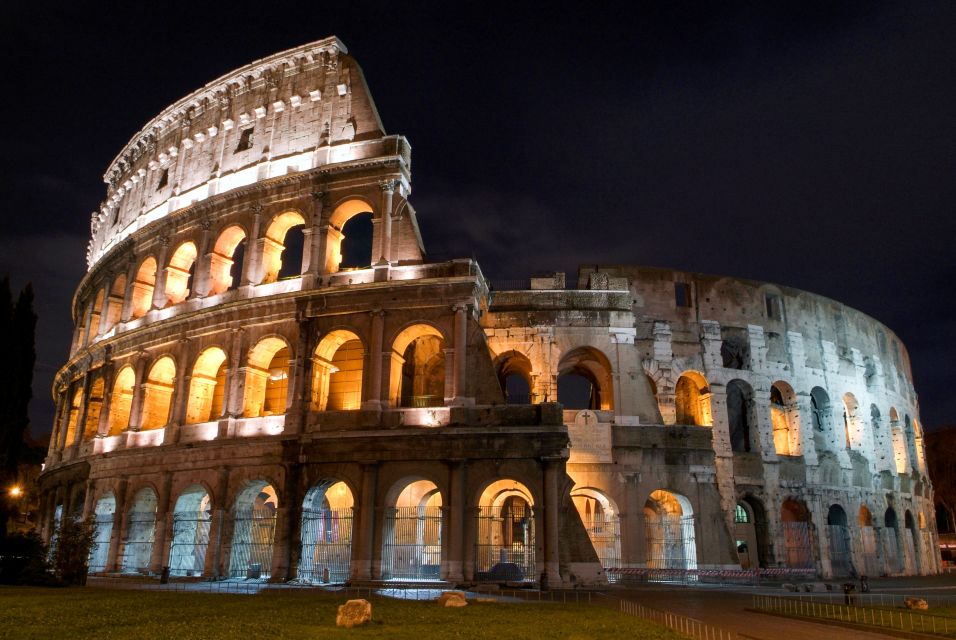
You’ll meet outside the metro station Colosseo, Line B, between the green news stand (Kiosk) and the yellow bus stop. Show up about 25 minutes early.
That buffer is worth it. Night tours can feel rushed because meeting points get confusing in the dark, and you’ll want a moment to orient yourself before the group moves. Arriving early also helps you settle in if you need to locate the right place to join.
Also keep in mind: the tour is not wheelchair accessible and pets aren’t allowed. If those points matter for your group, you’ll want to plan alternative routes.
Piazza Navona after dark: the square you think you know
Piazza Navona is one of those locations people photograph constantly—so it can be easy to treat it as just a stop. At night, though, it plays differently. The lighting flattens some of the daytime glare and gives you a more “stage set” feel. The geometry reads clearly, and the square becomes easier to study rather than just pass through.
On this tour, you’re not only there to look. You’re there to connect the space to Rome’s broader layers—how old civic life shaped the city’s later identity. The guide’s narration helps you understand why the square is more than a pretty outdoor room.
The downside of Navona in any season is that it can still be active. Even without the biggest daytime crowd, you should expect some people around the fountain area. The upside: the tour format keeps you moving, so you’re not stuck in a long standstill.
Pantheon time: architecture you can spot even when you’re not inside
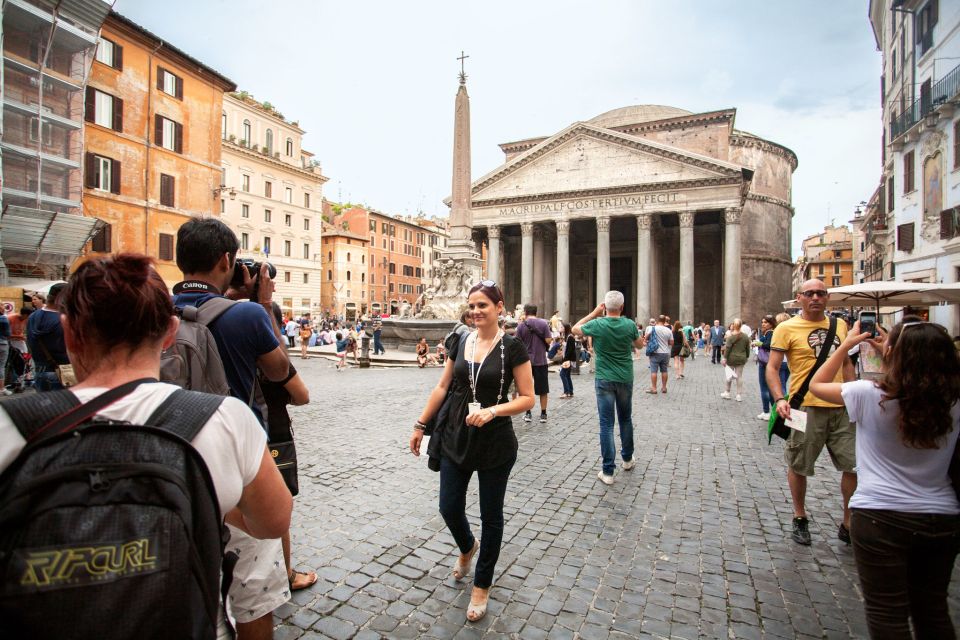
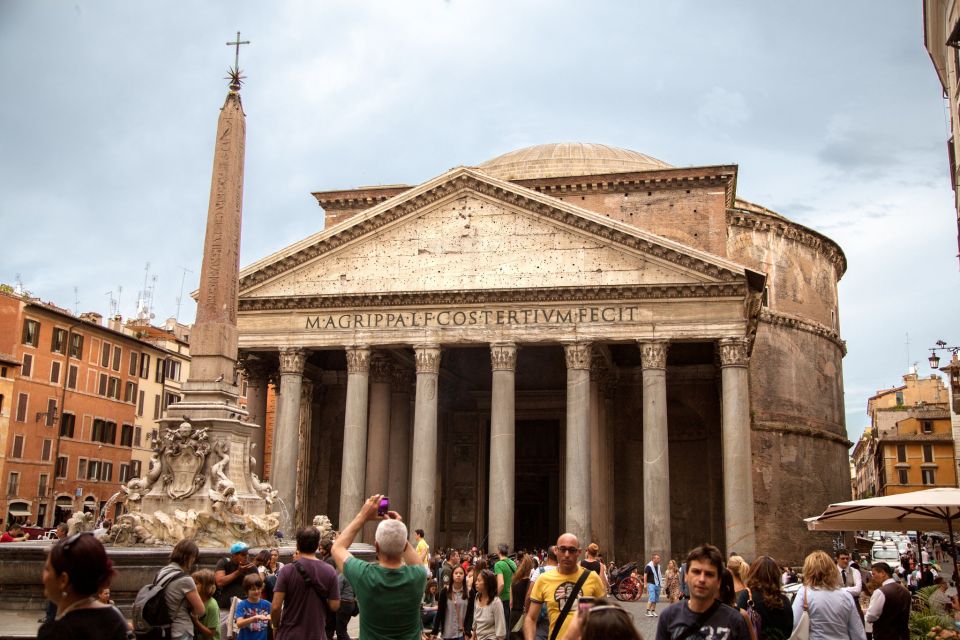
The Pantheon is another name on everyone’s list, but the real win here is context. When you’re walking at night, you have time to notice how the building’s proportions and massing read from different angles. The guide can explain what makes it stand out—then you’ll be better at spotting those features yourself on repeat visits.
One review notes an opportunity to visit inside the Pantheon as part of the evening experience, but entry timing can vary by evening rules. Practically, that means you should be ready for either scenario: a stop focused on what you can see from outside and nearby, or a chance to step in if access is available.
Either way, this is a strong anchor stop. If you only do one “major monument” evening, pairing Pantheon with the Forum later is a smart use of your limited time.
Trevi Fountain at night: classic views, less stress
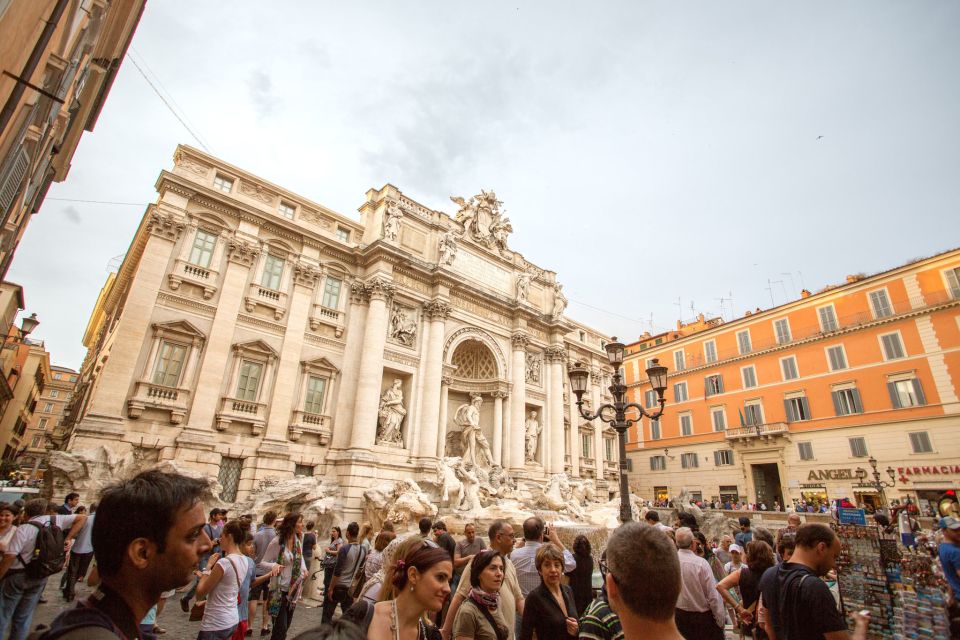
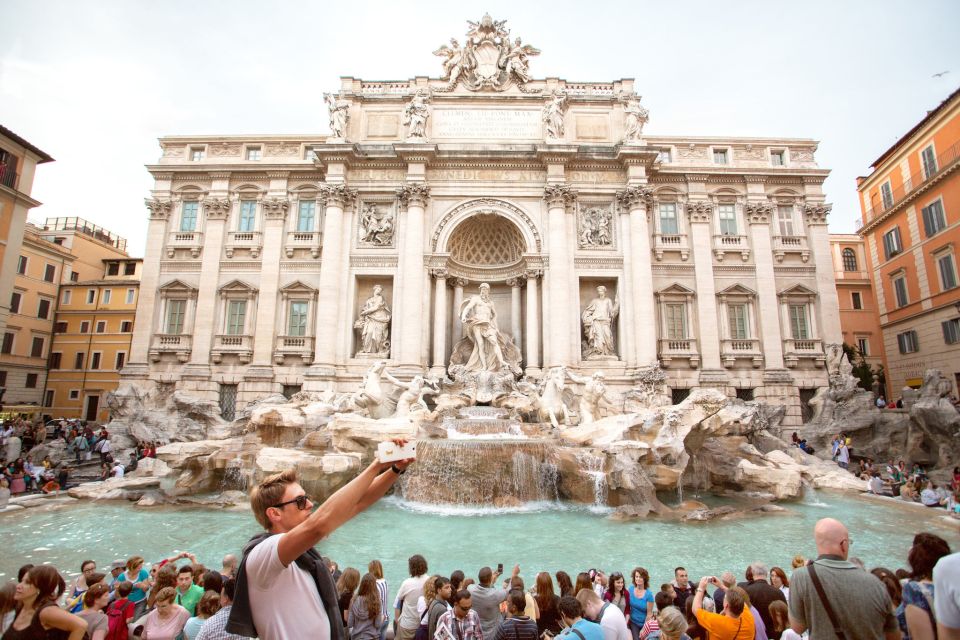
Trevi Fountain works in two moods: daytime spectacle and nighttime icon. On this tour, you get the nighttime version, when the streets feel calmer and the fountain becomes easier to approach on foot. You’ll still want to watch for crowds at the edges, but it’s usually less punishing than peak daytime hours.
The practical value isn’t just photos. Trevi is a perfect moment to re-train your eye. You can look at the setting—streets, facades, and how people flow around it—then connect that to how Rome’s urban design has always mixed monumental spaces with everyday movement.
If you’re the kind of traveler who hates spending time elbow-to-elbow, you’ll like this timing.
You can also read our reviews of more guided tours in Rome
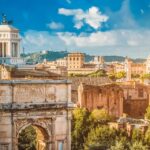

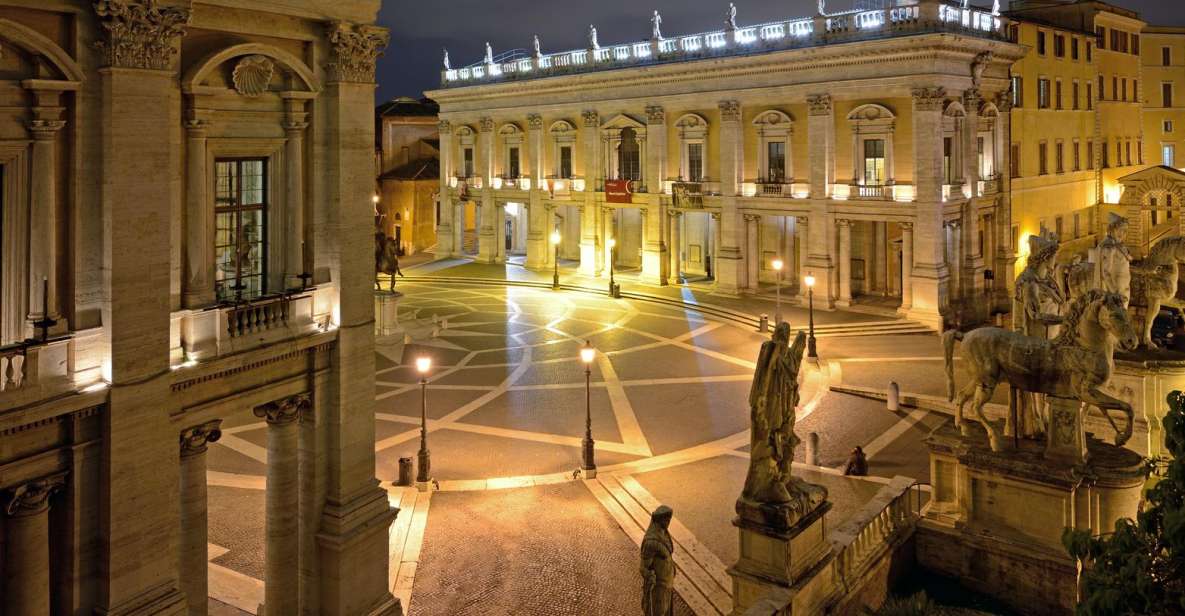
Capitoline Hill: the stop that makes Rome feel logical
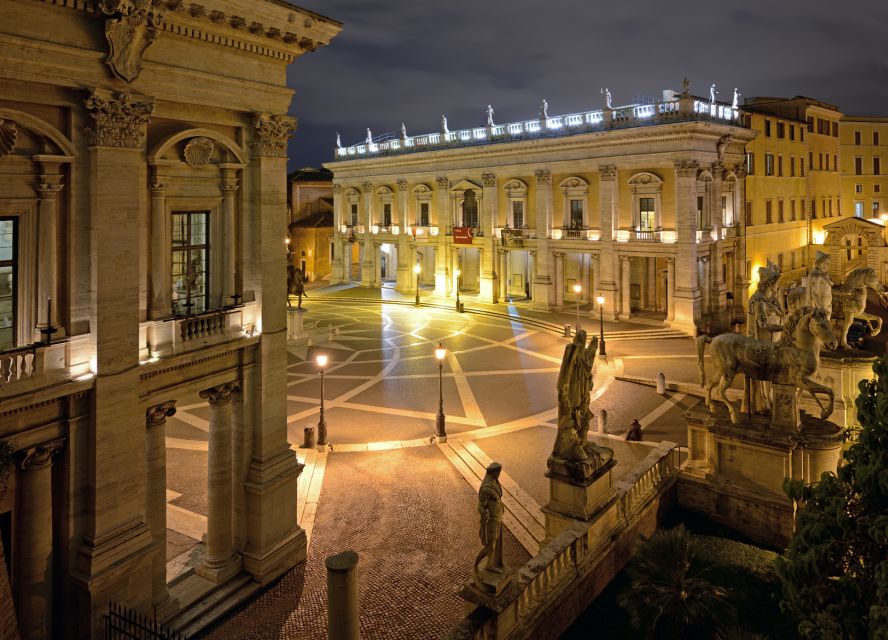
Capitoline Hill often gets treated as a quick view from a viewpoint. On a guided walking tour, it becomes something else: a key to the city’s structure and mindset.
This is where the tour’s “architecture and history” promise starts making deeper sense. The guide can help you understand why elevated spaces, power centers, and civic areas were placed where they were. Once you get that mental map, the rest of Rome clicks faster in your own self-guided wandering.
It’s also a good pacing moment. After big “everyone stop here” sights, you get a more explanatory segment. That helps the evening feel less like a checklist and more like a story you can follow.
The Colosseum: seeing the icon lit up (and why that matters)
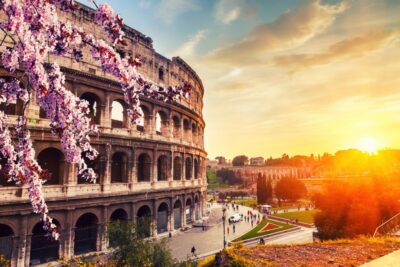
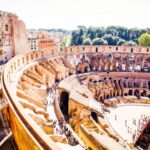
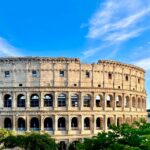
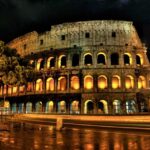
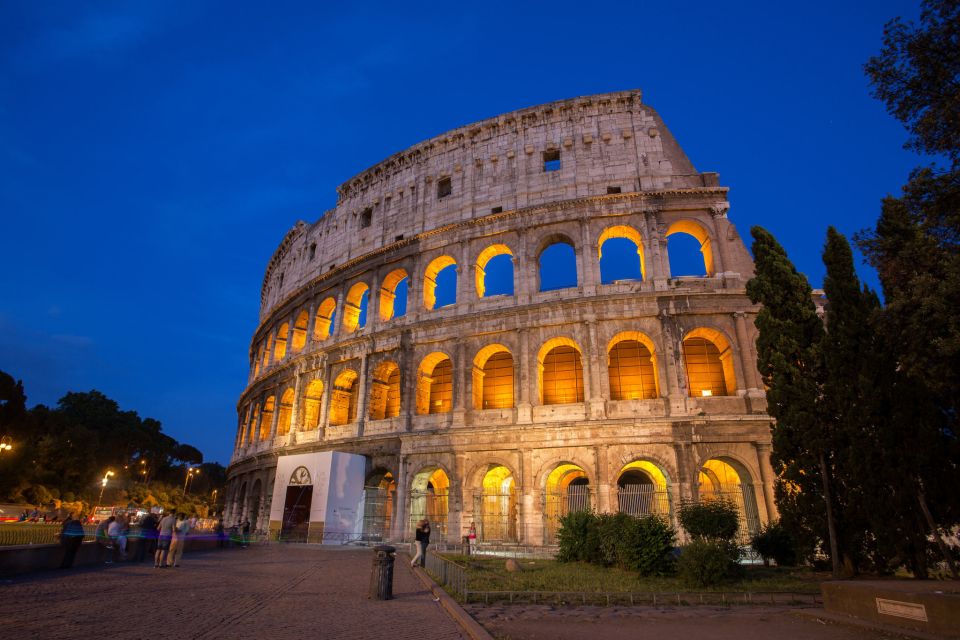
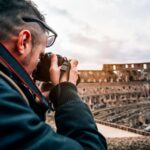
The Colosseum is the kind of place where at least some part of your experience depends on lighting. Night illumination helps, because it makes the structure feel grand without the oppressive midday heat and without so much glare.
On this tour, the Colosseum isn’t just a photo moment. It’s part of the larger narrative about Roman public life—what the city was built to do and display. When the guide connects the Colosseum to the Forum area, you’ll walk away understanding how different types of Roman spaces reinforced each other.
Also note a reality check: entrance fees are not included, and monuments and sites will be closed in the evening. So this tour is aimed at seeing, learning, and connecting the sights visually and historically, not at ticketed nighttime entry.
Roman Forum and Imperial Forums: the main course
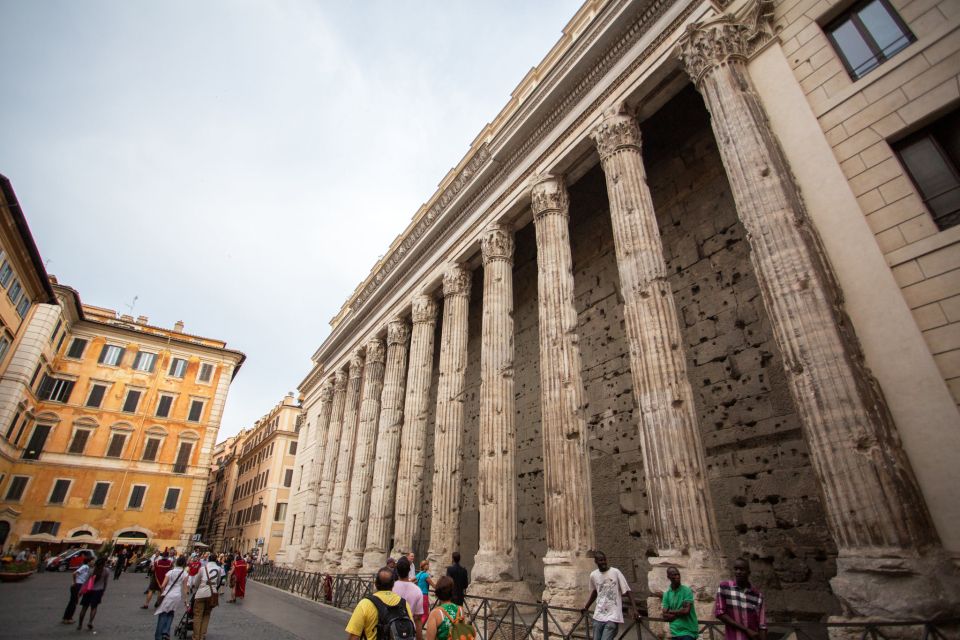
The strongest selling point is the tour’s full overview of the Forum area, including the Imperial Forums. This is where the tour justifies the guide.
Rome’s Forum can feel like open-air ruins unless someone helps you place the pieces. A good guide turns the stones into a layout: where different power centers sat, how the space functioned, and how the Roman world organized itself around civic and imperial authority.
This matters for your trip because the Forum is the heart of Rome’s “before the big tourists” history. When you leave with a sense of the structure and purpose, you’ll appreciate later visits more—and you’ll waste less time guessing what you’re looking at.
You also get the benefit of headsets here. The Forum area includes stretches where sound can carry strangely. With the audio support, narration stays clear enough that you can keep moving instead of stopping to strain.
How much walking is involved (and how to pace yourself)
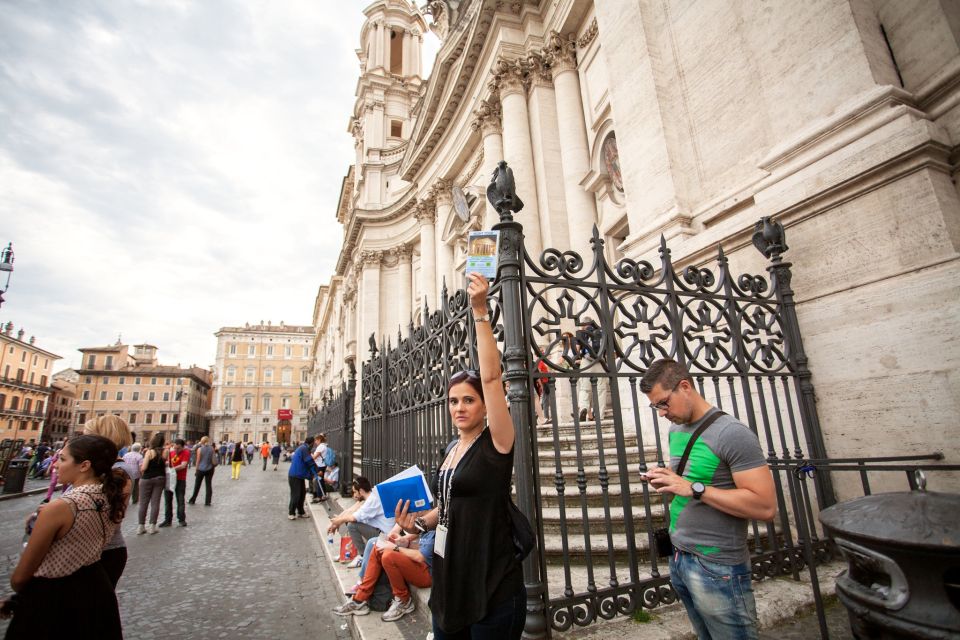
This is a 3-hour guided walking tour. That’s long enough to get real movement and real context, but short enough that you can still do a second evening plan afterward.
Still, Rome’s pavements can be uneven. If you’re even mildly sensitive to long walks, plan for comfortable shoes. The tour is on foot with a set route, so you won’t be able to fully slow down without losing the group’s rhythm.
A small bonus from the way the tour runs: it’s designed for relaxed sightseeing. Some accounts mention time to explore spots on your own, which helps you take photos, check out a detail, or just stand and stare for a moment.
Price and value: is $66 worth it for 3 hours?
At $66 per person for a 3-hour guided walking tour, the value depends on what you want out of Rome.
Here’s what you’re paying for that’s hard to replicate on your own:
- A guided story that connects major landmarks into one nighttime flow
- Headsets that keep narration clear
- A dedicated Forum overview, including the Imperial Forums area, which is the most “explanations-needed” zone
What you’re not paying for:
- Entrance fees, since sites are closed in the evening
- Any dinner or transfers
If your goal is tickets and museum time, this may not replace a ticketed activity. But if your goal is orientation, history framing, and a smoother first-night understanding of where everything sits, $66 is pretty reasonable for what you get.
The guide makes the difference (and you can work with that)
This tour lives or dies by the guide’s ability to explain and keep things clear while you walk. In the information you provided, there are plenty of positive examples of guides bringing passion and storytelling. Names like Renate, Irina, Clare, Chiara/Ciara, Irene, and Elisabeta show up in accounts, and the common theme is explanation quality and keeping groups engaged.
There are also hints at variability. One account notes that the guide was hard to understand, though the group still enjoyed the overall plan because another person in the group understood the narration better. That’s a reminder: if you’re picky about accents or speech clarity, you should arrive early and make sure you’re comfortable with the headset volume before you start.
Who this tour fits best
This is a good match if you:
- Want a first-night orientation without the daytime crush
- Like your sightseeing with narration, not just wandering
- Prefer a guided overview that makes the Forum less confusing
- Are okay with seeing monuments from outside rather than entering
It may not be ideal if you:
- Need wheelchair access (the tour isn’t wheelchair accessible)
- Want a ticket-based nighttime monument visit
- Travel with a pet (pets aren’t allowed)
Should you book Rome by Night?
I’d book it if you want to understand Rome, not just photograph it. The pairing of “big-name sights” with a real Forum overview is a smart way to make your time count, especially on your first evening.
Skip it—or at least think hard—if you’re chasing nighttime entrances, paid monument access, or a low-walking night. Since entrance fees aren’t included and evening access is limited, the tour is built for seeing and learning, not for full interior visits.
If your schedule allows, this is one of those tours that helps everything after it feel easier. You’ll leave with a clearer mental map, and Rome at night will feel less like random ruins and more like a city with a plan.
FAQ
Is the tour only available in English?
Yes. This tour is offered in English with a live guide.
How long is the Rome by Night walking tour?
It lasts 3 hours.
What landmarks will you see during the tour?
You’ll see Piazza Navona, the Pantheon, Trevi Fountain, Capitoline Hill, and the Colosseum, plus a full overview of the Roman Forum area including the Imperial Forums.
Where do I meet the guide?
Meet outside metro station Colosseo (B Line), between the green news stand (Kiosk) and the yellow bus stop. Plan to arrive 25 minutes before departure.
Are entrance fees included?
No. Entrance fees are not included, and monuments and sites will be closed in the evening.
Is the tour wheelchair accessible?
No. The tour is not wheelchair accessible. Pets are also not allowed.