REVIEW · ROME
Rome: Catacombs of Priscilla Entry Ticket & Guided Tour
Book on GetYourGuide →Operated by OPERA ROMANA PELLEGRINAGGI · Bookable on GetYourGuide
Underground Rome tells stories above ground can’t. This guided trip into the Catacombs of Priscilla takes you below Via Salaria to see how early Christians used underground spaces for burials and memorials. I love the chance to view well-preserved Christian art in real underground settings, and I also like the small-group format that keeps things moving through narrow corridors. The big drawback: the catacombs are not suitable for visitors with mobility impairments because of the underground layout.
What makes this tour especially worthwhile is the way the guide connects names, dates, and artwork to everyday life and death in the 3rd–4th centuries. You may hear from guides such as Sister Lydia/Lidia, who are repeatedly praised for clear explanations and a bit of humor; it helps when the space feels tight. Also plan for one hard rule: no photography inside, so you’ll want to be ready to look, listen, and remember.
In This Review
- Key things to know before you go
- Entering the Catacombs of Priscilla on Via Salaria
- What the Catacombs were first used for (and why it matters)
- Two floors, niches, and galleries: what your time actually covers
- The people behind the stones: martyrs and popes
- Acili inscriptions, a cistern turned tomb-world, and what you can learn fast
- Christian art in the catacombs: why it hits
- Tour logistics that actually affect your experience
- Group size and pacing
- Underground comfort
- What to bring (and what not to)
- Price and value: why $16 can feel like a bargain
- Who should book Catacombs of Priscilla (and who might not)
- The call: should you book this tour?
- FAQ
- How long is the Catacombs of Priscilla guided tour?
- Where do I meet for the tour?
- What’s included in the ticket?
- Is photography allowed inside the catacombs?
- Are baby strollers allowed?
- Is the tour suitable for people with mobility impairments?
- How many people are in the group?
Key things to know before you go
- Two floors of underground space: you’ll move through different levels and galleries, not just one corridor.
- A catacomb with an unusual origin: it began as an arenarium before Christians reused and expanded it.
- Cryptoporticus and a Greek Chapel area: you’ll pass through an adjoining underground complex tied to older elite burial traditions.
- Inscriptions from the Acili hypogeum: a cistern later turned into part of the story, with inscriptions connected to the Acili family.
- A lot of names tied to early Christianity: martyrs, multiple popes, and family burial connections show up in the tour.
Entering the Catacombs of Priscilla on Via Salaria
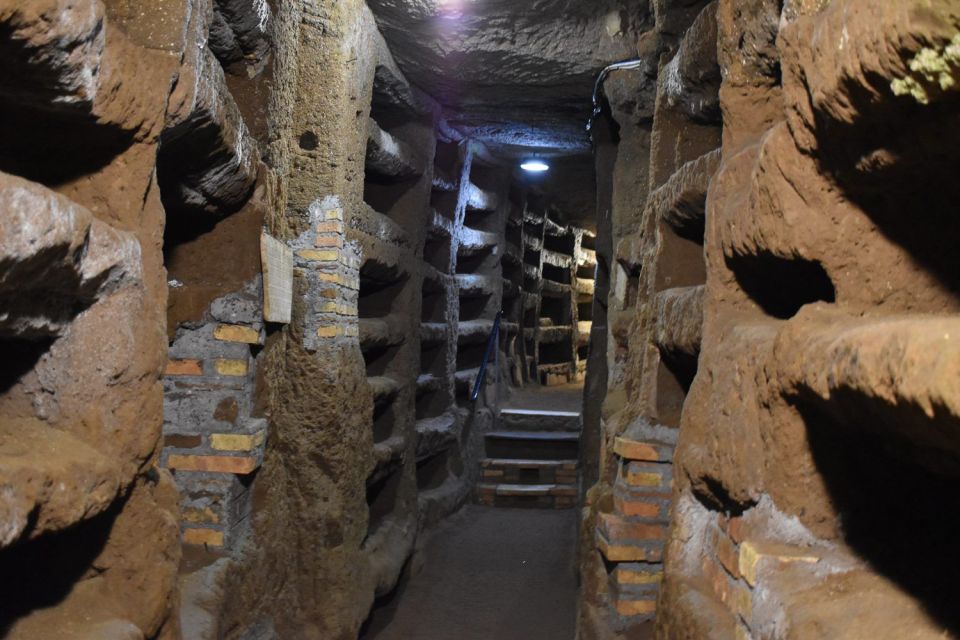
If you’ve already checked off the headline sights in Rome, this is the kind of experience that resets your brain. Above ground, Rome feels loud and crowded. Underground, it’s cooler, quieter, and oddly intimate—like the city is holding its breath.
The Catacombs of Priscilla sit on Via Salaria, outside the historic-core bubble. That matters because it shapes the feel of the visit: you’re not fighting the same heavy tourist flow you’ll find near the biggest monuments. The tour itself runs about 45 minutes, which is a sweet spot. Long enough to feel meaningful, short enough that you don’t leave cranky or exhausted.
You’ll be guided through the catacombs on a live tour with language options including Italian, English, and Spanish. Expect the guide to frame what you’re seeing in terms of early Christian practice—how burials worked, why memorial spaces mattered, and how art functioned as a form of belief.
One practical note: you should head straight to the catacomb ticket office and show your reservation at least 10 minutes before the scheduled start. Inside caves-like spaces, being late can easily snowball into missed explanations when everyone is trying to fit into narrow passages.
You can also read our reviews of more tours and experiences in Rome



What the Catacombs were first used for (and why it matters)
Most catacombs in Rome have long, complicated histories. Priscilla’s story has a particularly interesting twist: the site didn’t start as a Christian burial complex.
At first, the area was used as an arenarium (a kind of quarrying/sand-extraction space). Over time, it was abandoned. Then, starting around the beginning of the 3rd century, Christians began using the large, irregular galleries on the first floor. They built around twenty niche tombs and carved hundreds of niches into the walls.
That origin detail changes how you interpret the rooms. It isn’t just a neatly planned “catacomb church.” It’s a repurposed underground setting—worked into shape by people who needed a place for burial and remembrance. When the tour connects that reuse to early Christianity, it makes the space feel less like a museum display and more like an answer to a very human need.
There’s also an adjacent underground complex tied into the story: the cryptoporticus and the Greek Chapel area. This part matters because it reflects a shift from noble family burial traditions to an area that later connects with the catacombs.
So even if you’re not chasing religious history specifically, you’ll likely enjoy the archaeological logic: how old spaces get reused, adapted, and expanded when a community changes.
Two floors, niches, and galleries: what your time actually covers
The catacombs are spread over two floors, and that layout helps explain why the tour is only 45 minutes. You’re not touring a huge labyrinth with endless stops. You’re seeing the key sections that tell a coherent story, moving through the most meaningful underground spaces.
On the first floor, you’ll spend time in the galleries that Christians used from the early 3rd century onward—areas shaped by niche tombs and wall-carved burial niches. This is where the underground “architecture” becomes the main character. Even without fancy lighting, the structure of the niches and passages makes it easy to understand the burial system.
Then, as you move toward the rest of the complex, you’ll encounter spaces tied to the cryptoporticus zone. This is where the tone can shift from burial galleries to a broader underground environment linked to older elite use. The Greek Chapel area is part of that connection.
Because the tour is guided, you won’t just walk through empty tunnels wondering what you’re looking at. The guide’s job is to map the underground geography to the story: where names and inscriptions matter, why certain areas were repurposed, and how the site evolved.
One more reality check: the spaces are narrow. Even in a small group, you’ll likely have moments where everyone is moving in tight lines. That’s normal here. It’s one reason the tour’s small group limit (up to 10 participants) is such a big deal.
The people behind the stones: martyrs and popes
This is one of the main reasons people love Priscilla catacombs. You’re not just looking at architecture and art. You’re learning names—lots of them—and seeing how those names attach to early Christian memory.
A highlight is the group of martyrs connected to the area: Felice and Filippo, remembered with their mother St. Felicita. The tour framework also includes other brothers associated with the martyr tradition: Alessandro, Marziale, Vitale, Silano, and Gennaro.
Another layer of depth comes from the fact that multiple popes were buried here. The names connected to Priscilla include:
- Marcellino (296–304)
- Marcello (308–309)
- Silvestro (314–335)
- Liberius (352–366)
- Siricius (384–399)
- Celestino (422–432)
- Vigilius (537–555)
Even if papal history isn’t your main interest, the takeaway is simple: Priscilla wasn’t some minor backroom—its burial use reached far across early centuries.
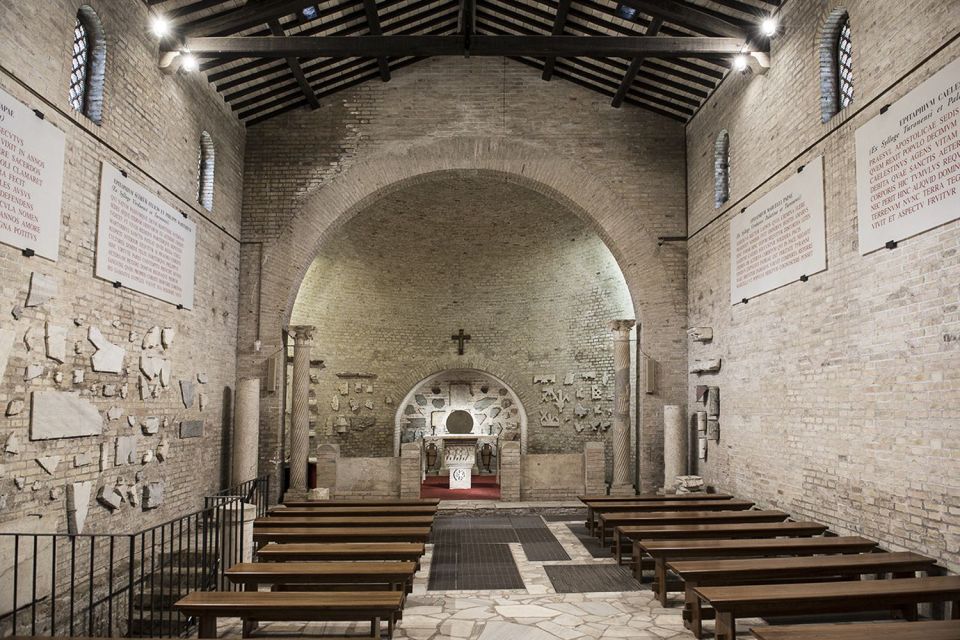
The tour also connects the story to a basilica built by Pope St. Silvestro near the tomb of Felice and Filippo, inside Villa Ada. That connection is helpful because it links the underground site to visible Rome above it, so you don’t feel like you’re standing in a sealed-off world.
Acili inscriptions, a cistern turned tomb-world, and what you can learn fast
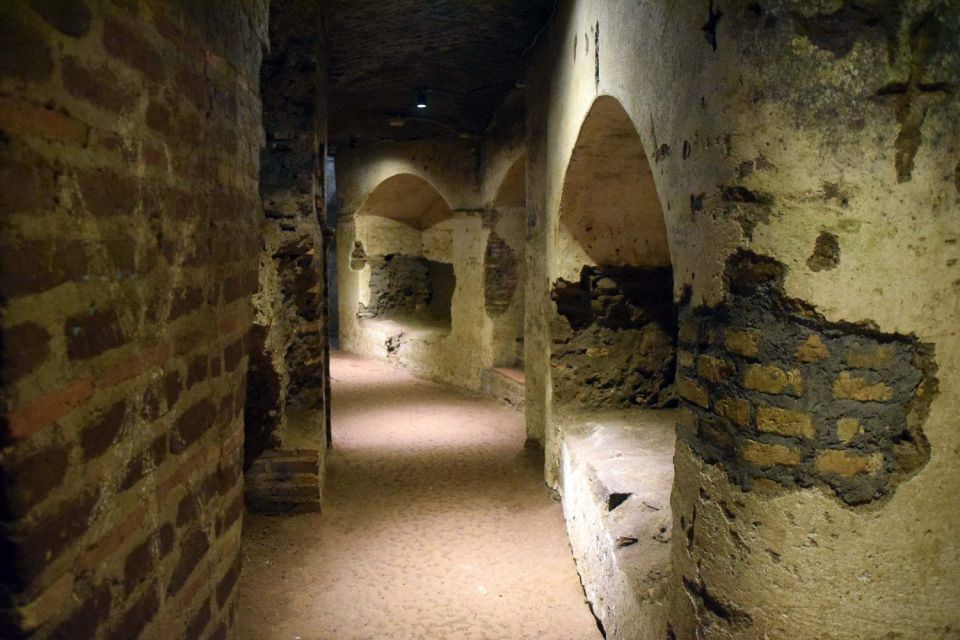
If you like details that snap into place, this section is for you. There’s an area in the hypogeum of the Acili that traces back to an earlier function: it was originally a cistern of water. Later, it became part of the burial world.
When you hear that, it changes how you see the space. You’re watching the layers of Roman life stacked on top of each other: water storage, then burial memory.
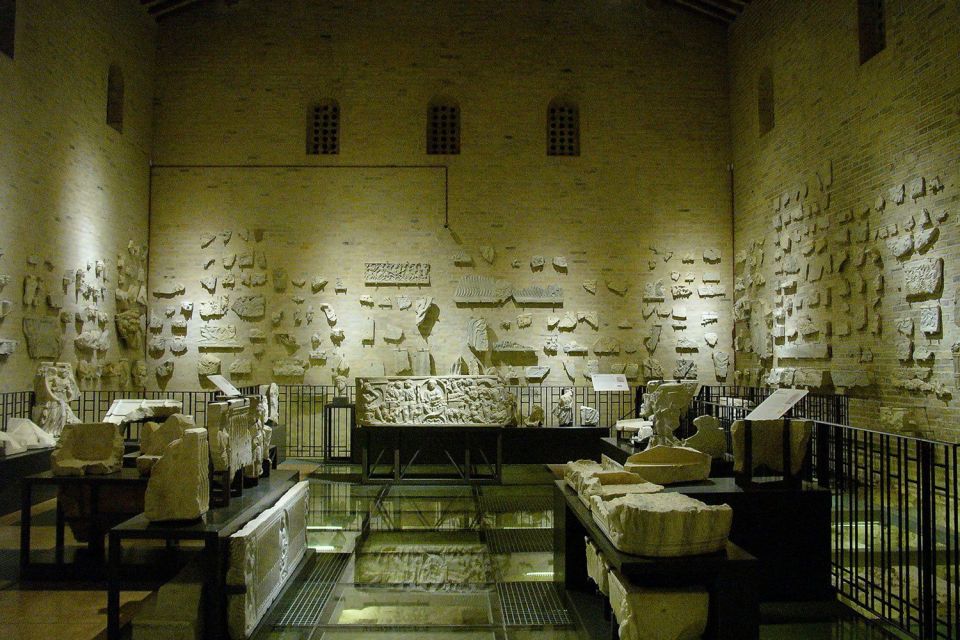
The inscriptions of the Acili—found in that area—are tied into what you can see and learn during the tour. In the complex, you’ll also see connections to exhibits where fragments are displayed. One part of the interpretation includes a museum space set up to collect hundreds of sarcophagus fragments discovered during excavations in the vicinity.
That museum element can feel like the tour’s “closing chapter.” After walking the underground paths, you get a chance to see how artifacts and fragments are preserved and interpreted, instead of treating the site as something that vanishes once you walk out.
You can also read our reviews of more guided tours in Rome



Christian art in the catacombs: why it hits
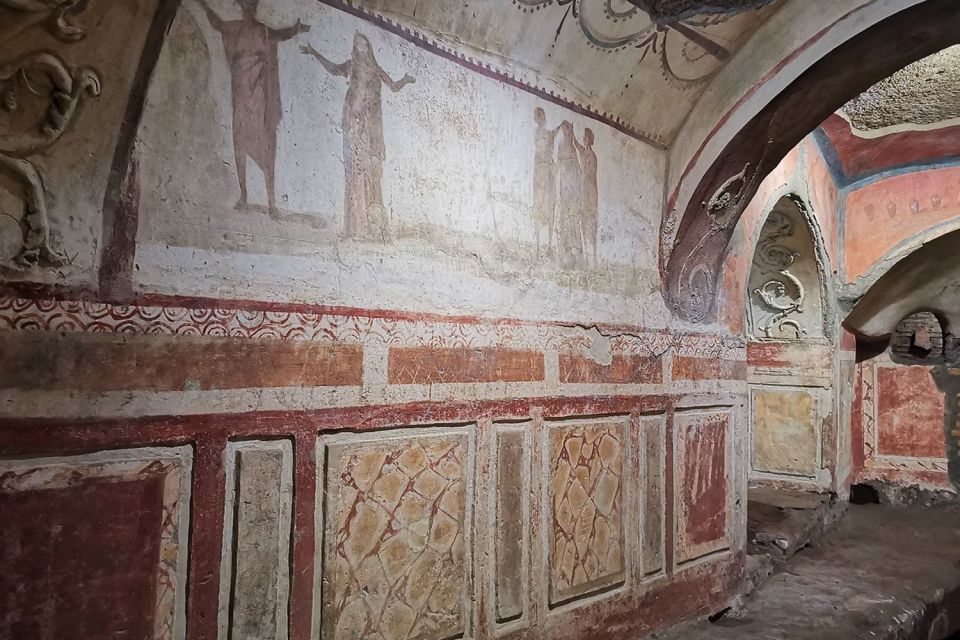
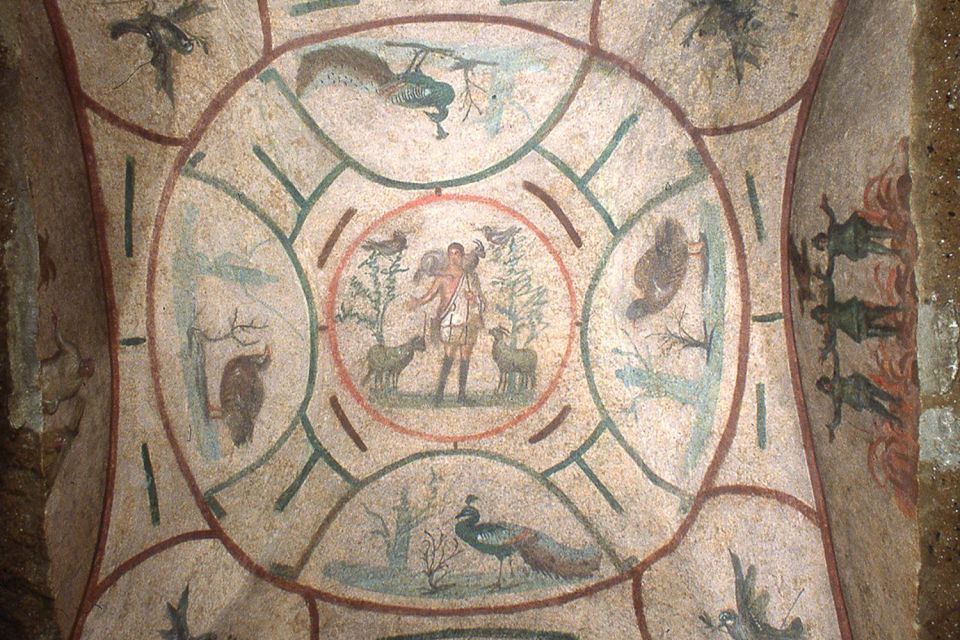
Underground is a perfect setting for art you can’t easily fake. The Priscilla catacombs are especially praised for the presence of ancient Christian frescoes and paintings that survive from early periods. Several tour accounts point to artwork from about 240–280 AD, including a highlight connected to the image of the Virgin Mary and Child.
You’ll likely feel the effect quickly. This isn’t art behind glass in a bright gallery. It’s art integrated into burial spaces—created to be seen by real people who believed those places mattered. Even if you’re not religious, you can still read the emotional logic.
A big benefit of a guided visit is that you’re not stuck guessing what you’re seeing. The guide’s job is to connect the images to the broader story of early Christianity—what the community believed, how they expressed faith in a space used for death, and why certain symbols and scenes would matter.
And yes, you must accept one limitation: photography is not allowed inside. That rule is there for the art and the space, and it also changes how you experience the tour. You’ll look longer, remember more, and leave with your brain full instead of your camera roll.
Tour logistics that actually affect your experience
This isn’t a “jump on, jump off” kind of tour. It’s a guided walk through a fragile underground site, which means small details matter.
Group size and pacing
The group is limited to 10 participants. In practice, that makes the tour easier to follow when the passages get tight. It also means the guide can keep attention on you rather than shouting at the entire crowd.
Some tours run a bit over the listed time depending on questions and explanation, and the pacing can feel surprisingly comfortable if you’re okay with “see it, hear it, move on” underground.
Underground comfort
It’s cooler underground than it is on Rome streets—people often go there in part as a break from heat. Still, conditions can feel damp or chilly depending on the season. I’d bring a light layer. In these spaces, comfort helps you focus on the art and the story instead of thinking about your hands going numb.
What to bring (and what not to)
- No baby strollers (not allowed).
- Don’t plan on taking photos.
- Wear shoes with good grip. You’re moving through underground surfaces and stairs/edges can be uneven.
Price and value: why $16 can feel like a bargain
At about $16 per person for an entry ticket plus a guided tour, this is strong value for Rome. The obvious reason is that you’re paying for an expert explanation in a place that doesn’t explain itself.
But there’s a second reason: the time is right. A 45-minute tour isn’t dragging. It respects the reality that catacombs are physically demanding and visually concentrated. You get a focused route through meaningful spaces—then you’re out.
Also, the setting is a big part of the value. You’re not just seeing old things. You’re seeing ancient burial practice and early Christian art in situ, including sections tied to major figures like popes and martyr traditions.
If you like the big Roman sites, you’ll get plenty of those elsewhere. Priscilla offers a different kind of Rome: personal, underground, and quieter.
Who should book Catacombs of Priscilla (and who might not)
You’ll probably love this tour if you:
- enjoy early Christian art and symbols in context
- like archaeological stories that show how places changed over time
- want something quieter than the busiest central monuments
- appreciate guided explanation because you’d rather understand what you’re seeing than just walk past it
You might want to skip or choose another option if you:
- need an experience that works well with mobility impairments (the tour isn’t suitable)
- rely on strollers (they’re not allowed)
- strongly want photos as a main part of your visit (photography isn’t permitted)
The call: should you book this tour?
If your Rome trip includes at least one guided stop that feels different from the Colosseum-and-Trevi track, I’d book Priscilla. For the money, you get a guided visit that connects underground architecture to specific people, artworks, and a real timeline of reuse from early centuries onward.
Book it especially if you care about what early Christians did and how they expressed faith in burial spaces. The rules are clear, the tour is short, and the underground setting is exactly what makes the experience memorable.
FAQ
How long is the Catacombs of Priscilla guided tour?
The guided tour runs about 45 minutes.
Where do I meet for the tour?
Go directly to the ticket office of the Catacomb and show your reservation at least 10 minutes before the scheduled tour.
What’s included in the ticket?
You get the entrance ticket to the Catacombs of Priscilla and a guided tour of the catacombs.
Is photography allowed inside the catacombs?
No, photography inside is not allowed.
Are baby strollers allowed?
No, baby strollers are not allowed.
Is the tour suitable for people with mobility impairments?
No, it is not suitable for people with mobility impairments.
How many people are in the group?
The tour is a small group limited to 10 participants.