REVIEW · ROME
Ostia Antica Tour with Transfer: Private or Group of Max. 8
Book on GetYourGuide →Operated by Touriks · Bookable on GetYourGuide
Roman ruins, minus the big-city grind. Ostia Antica is one of the best ways to see ancient Rome without the usual herd, and I like how this trip keeps things organized from start to finish. You’ll get a small-group cap (max 8) and the comfort of a city-center transfer, so you spend more time looking at history and less time figuring out transport. The trade-off is simple: there’s a moderate amount of walking, and this tour isn’t set up for wheelchair users.
The real payoff is the guide-led walk through a Roman port city that still feels lived-in. You’ll move through intact spaces like Roman baths, theatres, and main streets, all while hearing stories clearly through included headsets. And if you want to keep going after the tour, you can stay in the park or head toward the train station for a return to Rome or even the nearby beach.
One practical note to plan around: larger bags and luggage aren’t allowed during the visit, though there’s a luggage deposit option if you choose the return transfer during booking.
In This Review
- Key things I’d plan around
- Why Ostia Antica Feels Like Rome Without the Rush
- Meeting Touriks in Central Rome and the 30-Minute Ride Out
- Inside Ostia Antica: Neptune Baths, the Theatre, and the Main Streets
- The Residential City: Insulae, Domus, and How People Lived
- Forum, Temples, and the Surprise of the Underground Mithraeum
- The Van Back and What Happens After the Tour Ends
- Small-Group vs Private: Choosing the Right Pace
- Price and Value: Is $123.48 Worth It?
- What to Bring (and What to Leave at Home)
- Who This Tour Is Best For
- Should You Book This Ostia Antica Tour With Transfer?
- FAQ
- How long is the Ostia Antica tour with transfer?
- Where is the meeting point?
- Is it a small group or a private tour?
- Does the tour include entrance fees and a guide?
- Are headsets provided?
- What languages are available?
- How do you get back to Rome after the guided part?
- Can I stay longer at Ostia Antica after the tour?
- Is there an option to go to the beach?
- Is this tour suitable for wheelchair users or reduced mobility?
Key things I’d plan around
- Small-group or private options (max 8 for group tours) so you can actually ask questions
- Transfer from a central Rome office that saves time and mental energy
- Headsets + skip-the-ticket-line entry so you spend less time waiting and more time listening
- A guided walk through major sights like the Baths of Neptune, theatre, and Decumanus Maximus
- Stories that include the underground Mithraeum and Roman cults that add a surprising twist
- Easy after-tour flexibility to stay longer or continue to the station (and a beach option with a public transport ticket)
Why Ostia Antica Feels Like Rome Without the Rush
Ostia Antica is often compared to Pompeii, but it tends to feel calmer and more spacious. This is a Roman port city where the layout still makes sense as you walk: streets connect to public spaces, homes, and big civic buildings, so you’re not just looking at isolated ruins.
What makes it worth your time is how “complete” it can feel. You’re not only seeing stone walls; you’re tracing daily life. The guide’s stories are what bring the place into focus—especially when you hear about the harbour’s role, the city’s routines, and the religious oddities that show up in places you might not expect.
Two big reasons this tour works: you avoid a chunk of the Rome chaos by heading out with transport already handled, and you’re guided through the site with clear commentary. That combination turns what could be a self-guided walk into an actual “now I get it” experience.
Possible drawback? If you’re chasing a low-effort day, this isn’t it. Expect moderate walking over uneven historic ground, and it’s not recommended for people with reduced mobility or wheelchair users.
You can also read our reviews of more private tours in Rome



Meeting Touriks in Central Rome and the 30-Minute Ride Out
The tour starts at the TouriksPoint: Via di San Giovanni in Laterano 132, 00184 Rome. Arrive about 15 minutes early so you’re not rushing when the van leaves.
From there, you take a private transfer by van for about 30 minutes to reach Ostia Antica. This is a big value point for practical travellers. Rome is great, but getting to the outskirts can be a time-sink when you add walking, buses, and the stress of schedules. Here, the transport is already part of the plan.
If you’re coming with day-to-day stuff, pay attention to the luggage rules. Large bags and luggage aren’t allowed during the visit, but you can use a luggage deposit at the city-centre office when you select the return transfer option during booking. If you’re debating whether to bring a bulky day bag, think about what you’ll actually need on-site versus what you can leave behind.
Inside Ostia Antica: Neptune Baths, the Theatre, and the Main Streets
Your guided time inside the archaeological park is about 2 hours, and you’ll explore the most “readable” parts of the city. The tour includes entrance fees and uses headsets, which matters more than it sounds. Even with a small group, ruins have wind, echoes, and background noise. Headsets help you catch every story without needing to stand perfectly still.
The route is built around major anchors that help you understand the city:
- You’ll get a sense of the old harbour’s importance and the scale of port life.
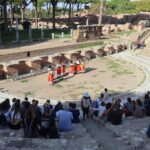
- You’ll walk through civic and entertainment areas like the Roman Theatre.
- You’ll follow the logic of the main street system, including Decumanus Maximus, which helps you see how movement and daily routines connected.
A highlight mentioned in the tour description is the Baths of Neptune, including the mosaics. Even if mosaics aren’t your usual thing, it’s hard not to notice how carefully preserved elements like this can be. They give you a feeling for the kind of public culture and craftsmanship that existed in a city that wasn’t just a trade stop.
The Residential City: Insulae, Domus, and How People Lived
After the bigger public buildings, you’ll move into the parts of Ostia Antica that show the everyday mix of housing and neighbourhood structure.
You’ll explore:
- Insulae (apartment-style buildings), which show how many people could live in compact urban blocks.
- Lavish domus (larger homes), which point to wealth and status.
This is where a guide earns their fee. Without context, it can feel like you’re walking through floor plans. With context, you start making sense of what’s public versus private, where people gathered versus where they lived, and how the city’s design supported daily life.
If you like history that connects to real habits—work, meals, movement, community—this section is where Ostia Antica starts to feel less like a museum and more like a place with rhythms.
Forum, Temples, and the Surprise of the Underground Mithraeum
One of the more intriguing parts of this tour is the spiritual side. You’ll hear about the Forum and Temples, which helps explain how religion and civic life blended in Roman cities.
Then you get to the more mysterious material: the underground Mithraeum linked to the cult of Mithras. This is the kind of detail that changes how you think about Roman religion. It’s not only about big open temples; some worship happened in hidden or less visible spaces.
If you’re the type who finds yourself bored by purely political history, this angle often lands well. The stories give you a reason to keep looking at the layout—because the city’s spaces weren’t random. They were used for belief, community, and ritual.
And yes, this is exactly the kind of moment where a guide’s storytelling quality makes a difference. Guides like Mario have been specifically praised for making the ruins feel alive with strong narrative skill. Another guide, Francesca, has been highlighted for making Ostia Antica a trip standout and even a good fit for families with kids.
You can also read our reviews of more tours and experiences in Rome






The Van Back and What Happens After the Tour Ends
Once your guided walk finishes, the tour route includes a return by van for about 30 minutes back toward the meeting point at Touriks.
That said, the experience is set up with flexibility after the guided portion. You can choose to stay longer inside the park on your own, or you can have your guide accompany you toward the train station. From there, you can return to Rome or go to the nearby beach, with a public transport ticket included.
This “don’t force it” design is smart. Ostia Antica isn’t just a photo stop—it can turn into a slow wander if you enjoy soaking in the atmosphere. Having an option to extend the visit means you’re not stuck doing everything at a strict pace.
The only caution: remember you can’t bring large luggage onto the visit. If you plan to return to the city or the beach, pack light or use the deposit option if you selected the return transfer during booking.
Small-Group vs Private: Choosing the Right Pace
This tour offers two styles:
- A small group with a maximum of 8 people (guaranteed)
- A private tour option
For many people, the small-group cap is the sweet spot. You still get the social side of being around others, but you’re not trapped in a moving pack with no personal questions allowed. If you like hearing history explained with room for back-and-forth, max 8 is a meaningful difference.
Private is the better choice if you want custom pace, clearer focus on what interests you (baths, theatre, religion, mosaics), or if you’re travelling with family members who move differently.
Either way, the included headsets help keep the experience smooth. You won’t constantly battle for hearing range while standing next to someone who’s determined to ask a question from 10 meters away.
Price and Value: Is $123.48 Worth It?
At $123.48 per person (duration about 2.5 hours), this isn’t the cheapest way to see Ostia Antica—but it’s also not “tour markup with nothing added.”
Here’s what you’re paying for, and why it matters:
- Expert licensed guide (the biggest value lever at Ostia Antica)
- Entrance fees included
- Headsets included, which improves the guided portion
- Round-trip private transport tied to the city-centre office (with options for return transfer)
- A return train ticket if you don’t select return transfer during purchase
If you were to do it on your own, the entrance ticket isn’t the real cost; it’s the time and friction. Getting to Ostia Antica, timing it, and making sure you’re in the right place for a meaningful visit can eat half a day.
This tour is priced like a “time saver with a guide,” not like a budget transfer-only deal. For first-timers to Rome who want a focused historical win without logistical stress, it can be solid value.
The only time I’d pause is if you already love archaeological sites and you’re comfortable planning the transport yourself. If you’re confident navigating out and don’t need a narrative route, you can potentially DIY it cheaper. But if you want the site explained in a way that clicks, this pricing starts to make sense.
What to Bring (and What to Leave at Home)
This is a straightforward packing list, but it helps to know the rules:
Bring:
- Passport or ID card
Wear:
- Comfortable shoes. There’s moderate walking.
Leave behind:
- Weapons or sharp objects
- Drones
- Alcohol and drugs
- Luggage or large bags (with the deposit option only when selected)
If you’re planning any extra time after the tour, remember you’ll be moving through the park and possibly heading toward the station. A small day bag and water (if allowed and practical for you) is usually the safest strategy.
Who This Tour Is Best For
This experience is a great match if you:
- Want a less crowded feel compared to central Rome and big-ticket sights
- Enjoy archaeology that’s explained in plain language
- Like history connected to real life: housing, baths, streets, and religion
- Are travelling with kids or a mix of ages and want a guide-led structure that keeps attention
It’s not a great match if you:
- Need wheelchair-friendly routes or are dealing with significant mobility limitations
- Prefer an ultra-light walking day
- Plan to bring large luggage (the rules are strict)
Should You Book This Ostia Antica Tour With Transfer?
Book it if you want a smooth, guided day that saves time and turns Ostia Antica into something you actually understand. The combination of city-centre transfer, headsets, and a focused route through the harbour story, major baths and theatre, the main streets, and the underground Mithraeum gives you more than “walk around ruins.”
Skip or rethink it if you’re hoping for minimal walking or you’ll struggle with uneven historic ground. Also reconsider if you’d rather plan your own transport and are comfortable reading the site without a guide.
If your goal is to see Roman daily life in a setting that feels calmer than the usual Rome rush, this is a strong way to do it—especially in a small group up to 8 or as a private guide-led visit.
FAQ
How long is the Ostia Antica tour with transfer?
The total duration is about 2.5 hours.
Where is the meeting point?
You meet at the TouriksPoint at Via di San Giovanni in Laterano 132, 00184 Rome. Arrive 15 minutes before your scheduled start time.
Is it a small group or a private tour?
You can choose either a small group with a maximum of 8 people, or a private option.
Does the tour include entrance fees and a guide?
Yes. The experience includes an expert licensed guide and the entrance fees to Ostia Antica.
Are headsets provided?
Yes, headsets are included so you can hear the guide clearly.
What languages are available?
The live tour guide is available in English, German, French, Portuguese, Spanish, and Italian.
How do you get back to Rome after the guided part?
Return options depend on what you select during booking. If you don’t choose return transfer, you receive a train ticket for the return to Rome. If you select return transfer, you get the van back from Ostia Antica to the city-centre office.
Can I stay longer at Ostia Antica after the tour?
Yes. After the tour finishes, you can stay longer in the archaeological park on your own.
Is there an option to go to the beach?
Yes. The guide can accompany you to the train station, and you can go to the nearby beach using a public transport ticket that’s provided.
Is this tour suitable for wheelchair users or reduced mobility?
No. The tour is not recommended for people with reduced mobility or wheelchair users.