REVIEW · ROME
Rome: Campo de Fiori & Ghetto Street Food Sightseeing Tour
Book on GetYourGuide →Operated by Bea Tours · Bookable on GetYourGuide
Rome changes when you eat with a plan. This 2.5-hour walk links Campo de’ Fiori street-food stops with the Roman Jewish Ghetto and major landmarks, so the city feels practical, not just pretty. You move on foot, taste your way through classic Roman bites, and get the kind of stories that make names on buildings click.
I really like two things here: the food lineup is classic and varied (supplì, pizza al taglio, fried artichokes, cured meats, and ice cream), and the guide turns big history into street-level context around spots like Julius Caesar and Giordano Bruno. One drawback to flag up front: it is not suitable for vegans and it’s not for people with lactose intolerance.
In This Review
- Key highlights to know before you go
- A Campo de’ Fiori to Ghetto walk built around real food and real stories
- Meeting at the Giordano Bruno statue: the easy start that gets you oriented
- Campo de’ Fiori market time and the first round of tastings
- What to watch for here
- Wine sample, cured meats, and a local restaurant stop that keeps momentum
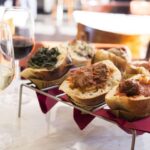
- Supplì, pizza al taglio, and carciofi alla giudia: the Roman trio you’ll remember
- A secret stop plus Via dei Chiavari: when the guide turns corners into context
- Theatre of Pompey: a sight stop that connects to the big name history
- Jewish Ghetto Rome: Portico d’Ottavia, the Great Synagogue area, and respectful context
- Why this section is valuable
- Largo di Torre Argentina dessert and the Area Sacra di Largo Argentina finish
- Price and value: what $41 covers (and what it doesn’t)
- Dietary fit: who this tour suits and who should skip
- Should you book this Street Food & Ghetto tour?
- FAQ
- Where is the meeting point for the tour?
- How long is the Rome Campo de’ Fiori & Ghetto street food tour?
- What language are the guides?
- What’s included in the street food and drinks?
- Are there vegetarian options?
- Is this tour suitable for vegans?
- Is it suitable for people with lactose intolerance?
Key highlights to know before you go
- A tight 2.5-hour route that strings together food tastings and major sights without turning into a day-long marathon
- Roman classics in smart order, including supplì, pizza by the slice, carciofi alla giudia, and gelato/ice cream
- Wine and beer samples built into the stops, not added at your own pace
- Landmarks with context, from Theatre of Pompey to Portico d’Ottavia and Largo Argentina
- Guides that explain clearly and keep it fun, with strong English from hosts like Andrea and Marco
- A live food-and-history pacing that keeps portions satisfying rather than stingy
A Campo de’ Fiori to Ghetto walk built around real food and real stories
This tour works because it has two engines running at once: you eat and you understand. Starting near Campo de’ Fiori gives you immediate “Rome energy,” and then the route threads into quieter, more reflective streets as you approach the Jewish Ghetto area. It’s not just a sightseeing list; it’s a guided, stop-by-stop way to connect streets to events.
And the food isn’t random. The menu is anchored in what Romans actually go for: fried rice balls (supplì), thin pizza by the slice (pizza al taglio), and fried artichokes (carciofi alla giudia). If you’re new to the city, it’s a great first pass. If you’ve been before, it can still feel fresh because the order and pacing help you taste a lot without feeling like you’re sprinting between venues.
The tour also includes wine and a beer sample, which adds a “slow down” element. You’ll still be walking, but you’re not just chasing photos—you’re taking short breaks to taste.
You can also read our reviews of more food & drink experiences in Rome

Meeting at the Giordano Bruno statue: the easy start that gets you oriented
Your meeting point is at the Giordano Bruno statue in Piazza Campo dè Fiori. That matters more than it sounds. Piazza Campo dè Fiori is a strong visual anchor, and meeting at a landmark means you can find the group fast, even if you’re arriving a bit late.
From there, the tour moves into the square and nearby streets. I like the way this setup helps you get your bearings quickly. You’re not wandering on your own first, trying to decide what to see. The guide sets direction immediately and gives you a reason for each street you cross.
Also, the tour is in English. One of the standout themes from guides like Andrea and Marco is how they make explanations easy to follow—clear, not lecture-y. That’s a big deal on a mixed route with both food and history.
Campo de’ Fiori market time and the first round of tastings
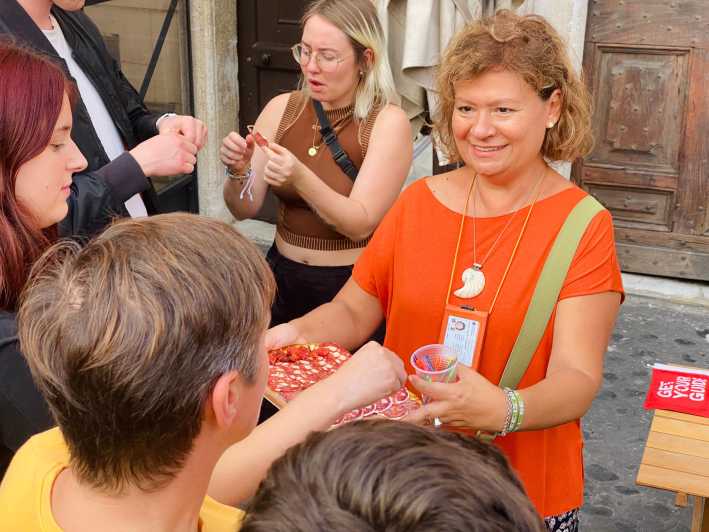
The first stop is in Campo de’ Fiori, tied to street food and a market visit. You’ll spend about 15 minutes there, and the vibe depends on the time of day, with the square functioning as a market during the day and a social hub later.
This is where the tour sets up your taste expectations. You get the idea that Roman food is often simple in concept—hot, portable, and meant for eating standing up—but serious in technique.
If you’re on a morning tour, you may also get a market-style tasting with truffles, olive oil, and balsamic vinegar. Even if you only know these as ingredients, it helps you understand why they show up in so many Italian flavors. It’s a small add-on, but it makes the later “street food classics” taste more intentional.
What to watch for here
Because this is a food-and-market start, it’s worth showing up hungry. You might think you can “save room,” but the tour is designed to keep you fed from stop to stop. If you’re sensitive to strong flavors or spice, mention it early to your guide so they can steer your tasting choices within the tour’s options.
Wine sample, cured meats, and a local restaurant stop that keeps momentum
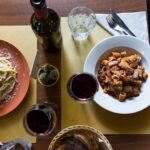
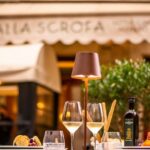
After the square, you’ll move to a local restaurant where you get wine along with street food tastings (about 20 minutes). This stop is important because it changes the rhythm. Up to now you’ve been in open space and market energy; now you’re introduced to flavors in a calmer, more structured setting.
You’ll also see classics that are heavy on cured meats and other Roman staples. The point isn’t just variety—it’s getting a sense of how Roman street food can be both crunchy/fried and savory/cured.
I like that the tastings aren’t treated like tiny pinches. The tour is built around enough food to keep you comfortable through the full route. In the experience style described by guides like Marco, portions are generally generous, so you don’t end up paying extra later just to feel satisfied.
You can also read our reviews of more tours and experiences in Rome

Supplì, pizza al taglio, and carciofi alla giudia: the Roman trio you’ll remember
This is the heart of the “street food” part of the tour. You’ll taste multiple signature items, including:
- Supplì (fried rice balls)
- Pizza al taglio (pizza by the slice, typically thin and crispy)
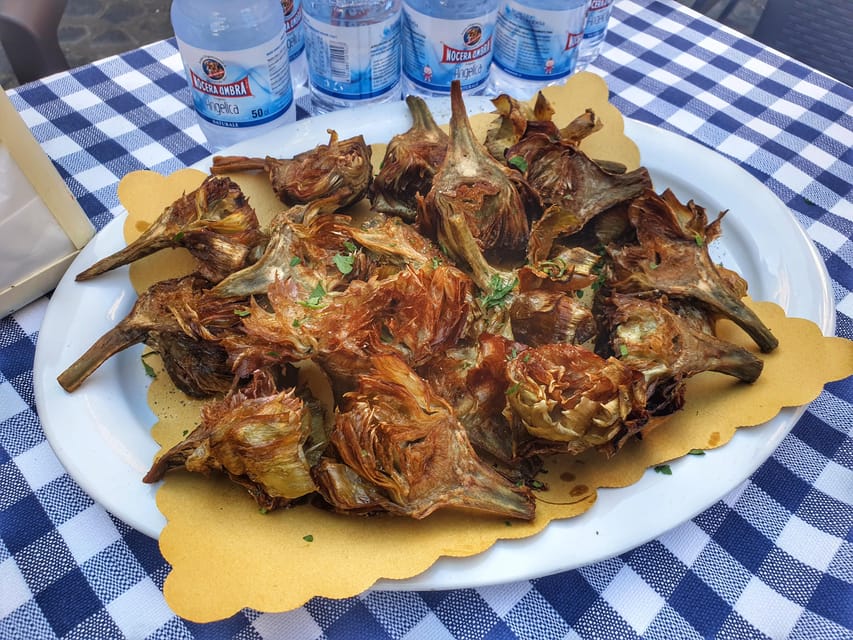
- Carciofi alla giudia (fried artichokes)
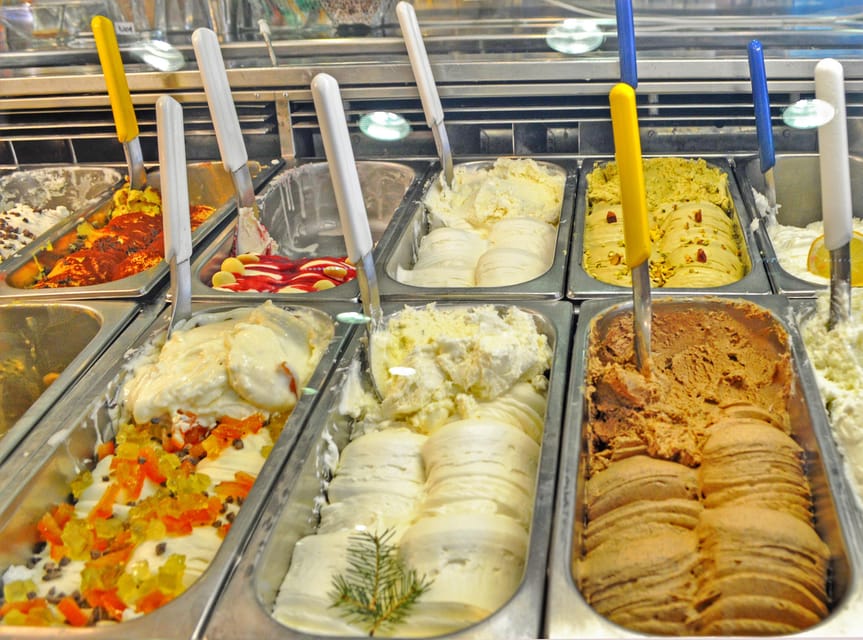
- Ice cream as a sweet finish to the savory streak
Each one tells you something different about Rome’s food culture.
Supplì is all about texture: crispy outside, hot interior, and that unmistakable comfort-food feeling. It’s the kind of snack that makes you understand why Roman street food sells out quickly—people eat it fast and happily.
Pizza al taglio is Rome’s version of a grab-and-go institution. You don’t need a fancy plate to get “real pizza.” The tour’s timing helps too. You’ll hit pizza after other bites, so you can compare textures—fried versus baked—without it becoming repetitive.
Carciofi alla giudia (fried artichokes) is a “taste this in Rome” moment. Artichokes elsewhere can be steamed or grilled, but here they’re fried and intensely crunchy. Even if you’re not an artichoke person, it’s worth trying because the flavor is distinct once it’s cooked this way.
And then there’s ice cream. It’s not a random dessert stop. It balances the fried and savory tastes so you finish feeling good, not weighed down.
A secret stop plus Via dei Chiavari: when the guide turns corners into context
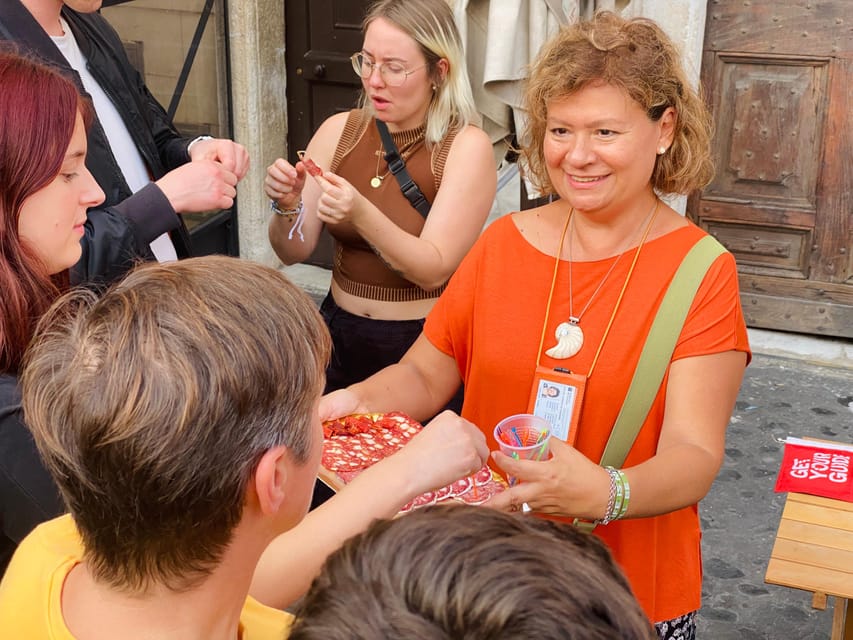
Between major monuments, you’ll get a short secret stop (about 5 minutes) where the guide adds context while you’re still close to the street-level action. The tour doesn’t spell out everything in advance, but this type of break is one of the practical reasons guided walks beat solo wandering. It’s time set aside for explanation without you having to ask at the wrong moment.
Then you’ll take a scenic walk along Via dei Chiavari (about 5 minutes). Streets like this matter because they show you the layers of Rome—where daily life, architecture, and old stories overlap.
The walking segments are also where you get the “what am I looking at” answers. If you like understanding your surroundings while you walk, this tour fits.
Theatre of Pompey: a sight stop that connects to the big name history
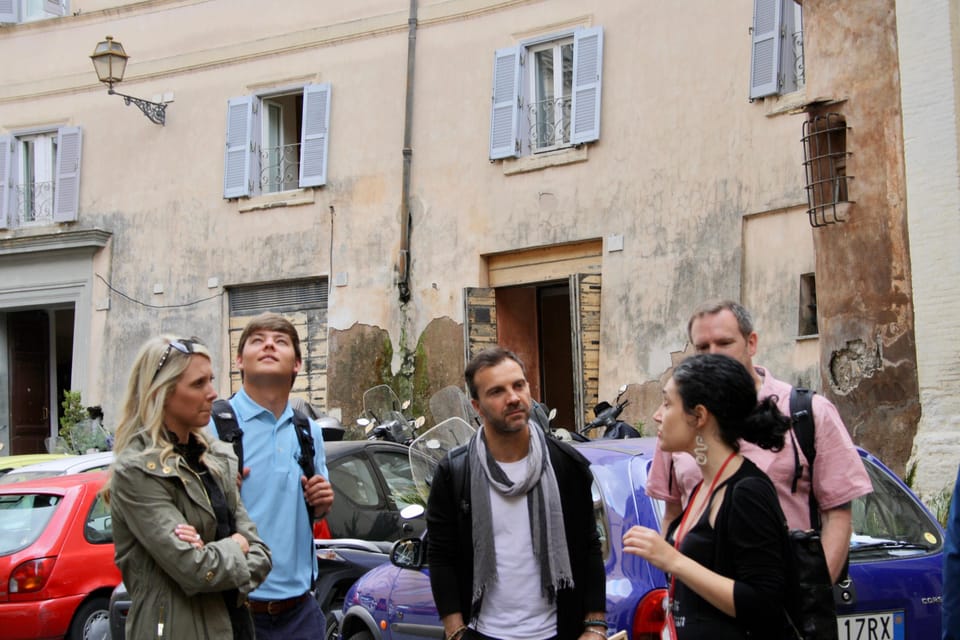
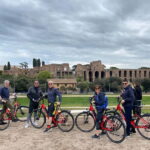
Next up is the Theatre of Pompey (about 5 minutes for sightseeing and scenic views). This is one of those landmarks where it’s easy to see the structure and miss the point.
The tour approach helps: you’re not only looking, you’re getting a connection to the narrative Rome is known for—especially the story of Julius Caesar, which the guide ties to the broader historical landscape around the area.
Even if you don’t remember every detail, the bigger win is that the site stops being just a photo background. It becomes part of a chain of meaning that you can carry with you toward the end of the walk.
Jewish Ghetto Rome: Portico d’Ottavia, the Great Synagogue area, and respectful context
The route then shifts into the Jewish Ghetto (about 15 minutes), with guided sightseeing and walking through key points in the neighborhood. This section is handled as a historical and cultural visit, not a checklist.
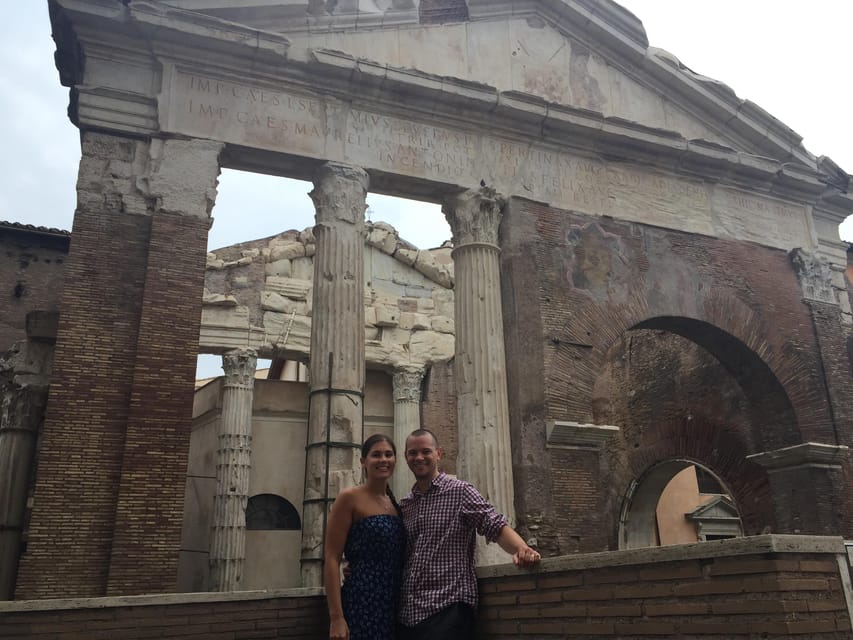
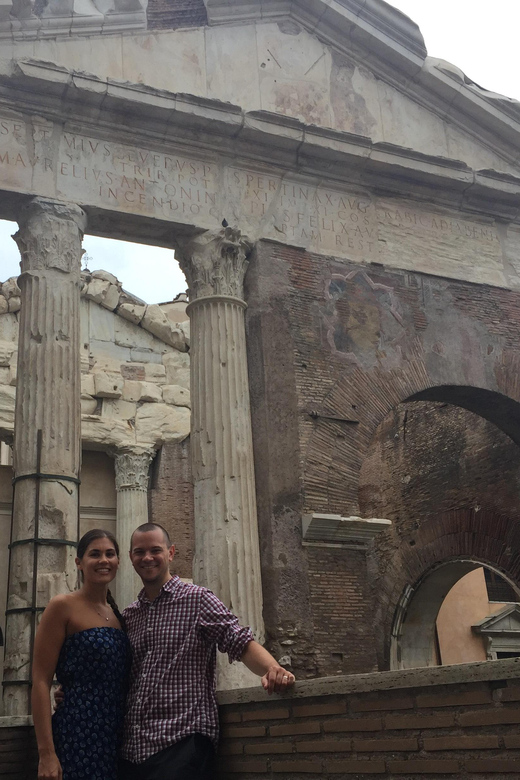
After that, you’ll see Portico d’Ottavia (about 5 minutes) and then pass by the Great Synagogue of Rome (about 5 minutes, with walking and passing-by viewing). This portion is where good guiding matters most. You want a framework for understanding what you’re seeing, and this tour gives you that through story-driven explanation.
Why this section is valuable
The Ghetto area is dense with history, and the streets can feel like they’re speaking at multiple volume levels at once—architecture, community life, and centuries of change. A guide helps you slow down long enough to notice what you’d otherwise rush past.
And again, the pacing matters: you’re not stuck in one long museum-style block. You’re walking, tasting, and learning in smaller units, which makes the emotional weight easier to process.
Largo di Torre Argentina dessert and the Area Sacra di Largo Argentina finish
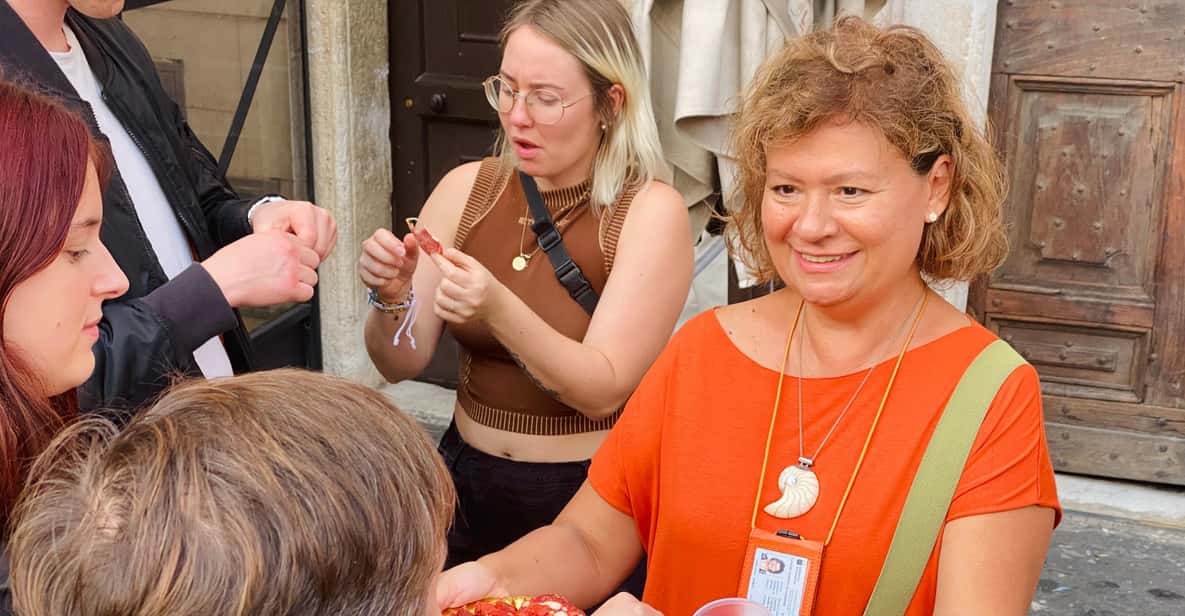
As you wrap up, you’ll reach Largo di Torre Argentina for dessert (about 10 minutes). This is a smart landing point. After savory and fried bites, you get something sweet before the final walk doesn’t just end—your guide gives you a clean historical closing.
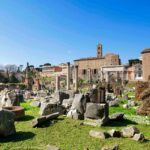
The tour finishes at the Area Sacra di Largo Argentina. This archaeological sacred area is tied to the tour’s historical themes, including the Julius Caesar story. It’s also a place where it helps to have a guide’s words first, because the site is about what happened and why it mattered, not just what looks old.
If you’re the type who likes ending with a “full-circle” moment, this finish works. You’re left with an image of Rome that’s more layered than postcards.
Price and value: what $41 covers (and what it doesn’t)
The price is $41 per person for about 2.5 hours. For that, you get:
- Street food throughout the route
- Wine sample and a beer sample
- A professional English-speaking guide
- A route that mixes food tastings with major sights
That’s the value story: you’re paying for structure. Instead of hunting down separate venues, you get a planned sequence of tastings plus a guide who explains what you’re looking at.
One key note: additional food and drinks are not included. So if you’re a heavy drinker or you have strong preferences, you might still want a little extra budget. But the intent is that you’ll be fed enough to last through the walk without needing a big rescue meal immediately after.
Dietary fit: who this tour suits and who should skip
This tour includes vegetarian options required in advance, which is helpful. If you’re vegetarian, plan ahead so the team can adjust your tastings.
However, it is not suitable for vegans, and it’s also not suitable for lactose intolerance. That’s a big deal on a food tour where cheese, butter, and dairy show up in common Italian ingredients. If you fall into either of those categories, I’d skip this specific tour and look for a version that is designed to handle your needs rather than improvising.
If you’re generally okay with dairy and you want a straightforward introduction to Roman flavors, this fits well.
Should you book this Street Food & Ghetto tour?
Book it if you want a two-in-one experience: classic Roman street food plus landmark history that actually ties together. It’s especially worth it if you’ve never really mapped out the area from Campo de’ Fiori into the Ghetto and toward Largo Argentina. The structure helps you see more with less effort, and the guided explanations—from hosts like Andrea and Marco—tend to be clear, engaging, and easy to follow.
Skip it if you’re vegan, lactose intolerant, or you hate food tours. Also skip if you prefer long, sit-down meals. This is a walk-with-tastings style outing: you’ll eat along the way, not linger for hours at one table.
If you’re looking for a smart first taste of Rome, this is a strong pick.
FAQ
Where is the meeting point for the tour?
You meet at the Giordano Bruno statue in Piazza Campo dè Fiori.
How long is the Rome Campo de’ Fiori & Ghetto street food tour?
It lasts about 2.5 hours.
What language are the guides?
The tour is guided in English.
What’s included in the street food and drinks?
Street food tastings are included, along with a wine sample and a beer sample.
Are there vegetarian options?
Yes, vegetarian options are available, but you need to request them in advance.
Is this tour suitable for vegans?
No, it is not suitable for vegans.
Is it suitable for people with lactose intolerance?
No, it is not suitable for people with lactose intolerance.