REVIEW · ROME
Rome: Eat Like a Roman Ghetto & Campo de’ Fiori Food Tour
Book on GetYourGuide →Operated by Hili srl · Bookable on GetYourGuide
Supper on foot through Rome’s food-and-history streets. I love how this tour pairs Campo de’ Fiori market life with the Jewish Ghetto’s culinary traditions, so every bite has context. I also like the tight format: five food stops packed into 2.5 hours, built around classic Roman snacks like supplì, porchetta panini, pizza, fried artichokes, and gelato.
One catch: if you’re vegan or you need gluten-free options, this tour won’t work for you.
In This Review
- Key things you’ll notice right away
- Why this tour clicks: Roman street food with real neighborhood context
- The route start: Piazza di San Simeone, then toward Campo de’ Fiori
- Stop 1 to Stop 5: the street-food hits (and why the order matters)
- Campo de’ Fiori morning: fruit market plus the taste-test lesson
- The Ghetto portion: Carciofo alla Giudia and Portico d’Ottavia
- Landmarks on the walk: Teatro Marcello, Largo di Torre Argentina, Pantheon area
- The gelato finish: Gunther Gelateria and the art of ending well
- Price and value: what $36 buys you in the real world
- Who this tour is best for (and who should skip it)
- Guides: names you might see, and what they tend to do well
- Should you book it?
- FAQ
- How long is the Rome Eat Like a Roman Ghetto & Campo de’ Fiori Food Tour?
- Where does the tour meet, and where does it end?
- What food tastings are included?
- Are vegetarian options available?
- Is the tour suitable for vegans or gluten intolerance?
- Is there a market stop?
- Is there a live guide, and what language is it in?
- Are drinks included?
- Is the tour wheelchair accessible?
Key things you’ll notice right away
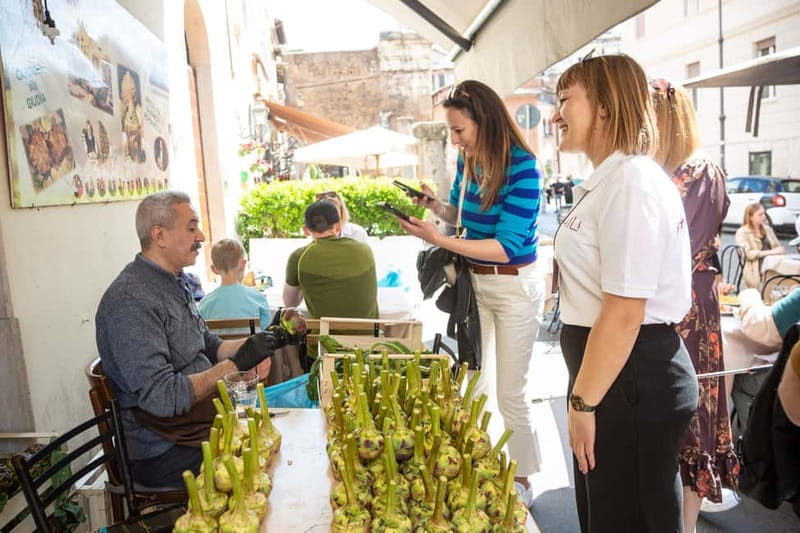
- Campo de’ Fiori morning market stop (for morning tours only) plus a chance to taste products you’d miss on your own
- Jewish Ghetto specialty with Carciofo alla Giudia, the famous fried artichoke tied to local culture
- A guide who connects food to place, with lots of stories along the walk
- Five tastings that cover the Roman street-food greatest hits, not just dessert
- Artisanal gelato to finish near major landmarks, so you end on a sweet note
Why this tour clicks: Roman street food with real neighborhood context
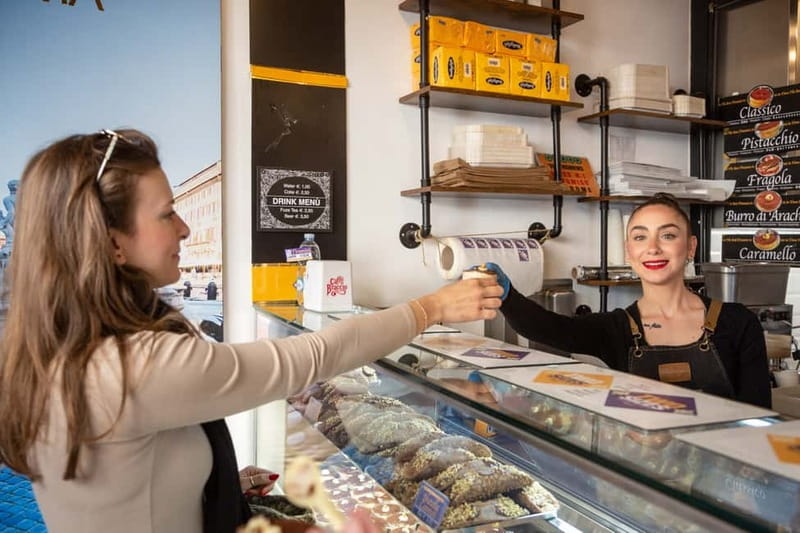
Rome is easy to snack your way through. The problem is that you can end up eating without learning why the food looks the way it does. This tour fixes that. You walk through Campo de’ Fiori and the Jewish Ghetto, then you eat what those streets are known for, with explanations that link dishes to daily life and past events.
I also like that it feels like a city stroll, not a food stamp crawl. You’re not just grabbing items. You’re learning where you are and what to look for next time you pass the same corners on your own.
You can also read our reviews of more food & drink experiences in Rome

The route start: Piazza di San Simeone, then toward Campo de’ Fiori
The tour begins at the fountain in the center of Piazza di San Simeone. From there, you get that Rome “start walking, start noticing” rhythm fast. The schedule includes a pass by Chiostro del Bramante, which is a nice visual warm-up before you start eating.
You’ll also move through the central area around Piazza Navona and head toward Campo de’ Fiori. If it’s your first couple of days in Rome, this timing helps. You’ll pick up names, locations, and food habits you can use later when you’re choosing where to eat on your own.
Stop 1 to Stop 5: the street-food hits (and why the order matters)
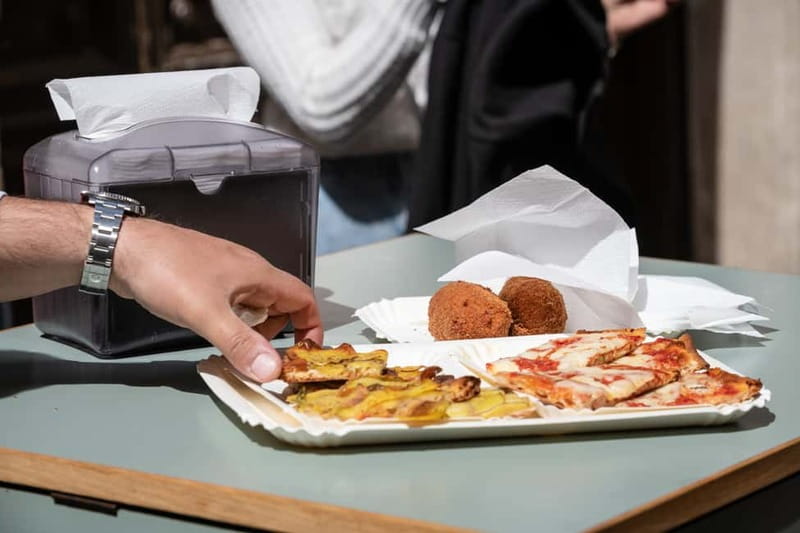
The early part of the walk is where you get your bearings and your appetite. The tour includes a local restaurant tasting (about 15 minutes), then another street-food tasting stop (another 15 minutes), followed by a local bakery stop (about 15 minutes). The specific snacks you’re meant to try include:
- Panini with porchetta
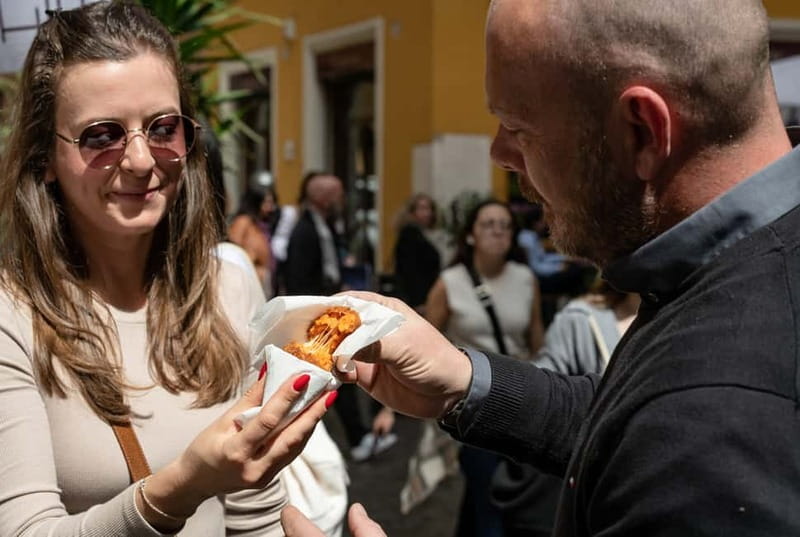
- Supplì (deep-fried rice balls)
- Roman-style pizza
- Fried artichokes (Carciofo alla Giudia) later in the Ghetto
This matters because Roman street food has a logic to it. Supplì is all about crunch and heat, usually at the perfect moment when you’re still hungry but not overwhelmed. Porchetta panini gives you the savory backbone. Then pizza rounds things out in a way that feels familiar, even if you’ve never ordered it Roman-style.
If you like food tours that teach you how to order and what to expect, the early tastings help you read the city’s menu culture.
Campo de’ Fiori morning: fruit market plus the taste-test lesson
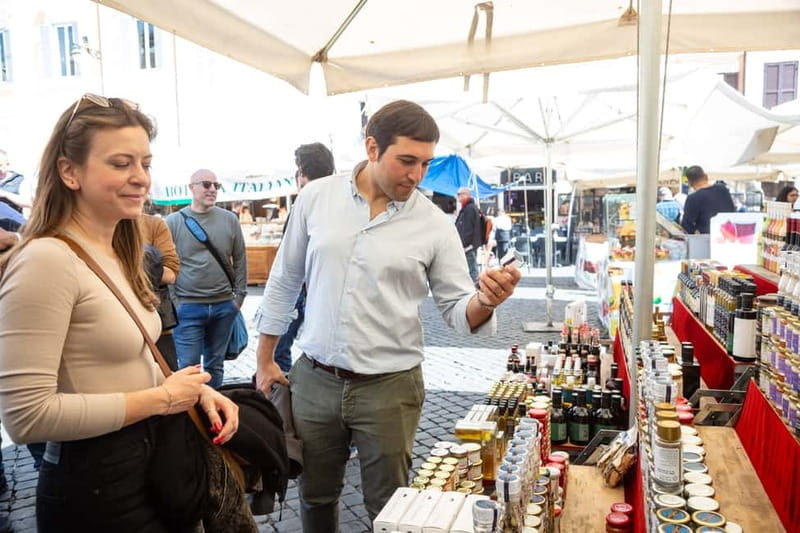
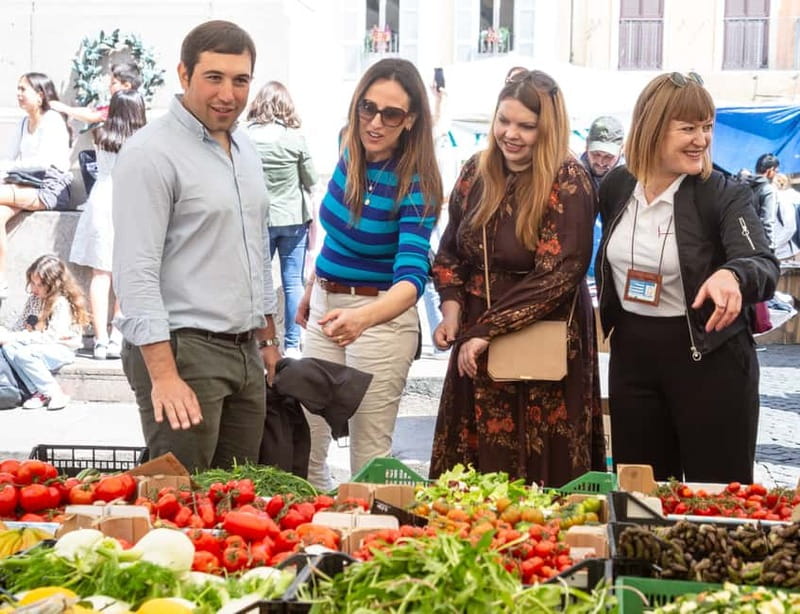
If you book a morning tour, you get a special add-on: a stop at the local fruit market and a tasting that focuses on ingredients rather than just dishes. Morning-only tastings include olive oil, truffle, and vinegar flavor work.
That may sound like extra work, but it’s actually useful. When you try olive oil and vinegar side by side, you start noticing how Romans balance richness, acidity, and seasoning in everyday food. And truffle products are one of those things that can taste subtle or heavy depending on how they’re used. This gives you a reference point, so when you see truffle sauces later, you’ll know what you’re tasting.
The Ghetto portion: Carciofo alla Giudia and Portico d’Ottavia
The heart of the tour is the Jewish Ghetto area. This is where the food stops turn from “fun snacks” into “this means something.” You’ll pass by and spend time around key spots like Portico d’Ottavia and the Turtle Fountain, plus other historic landmarks in the neighborhood.
The signature dish here is Carciofo alla Giudia, the classic Jewish-style fried artichoke. It’s famous for a reason. It’s crispy, bold, and very different from artichokes served boiled or steamed. The guide connects it to tradition and to how communities made food work with what they had. You’re not just eating a fried item. You’re getting a snapshot of how food habits become identity.
You can also read our reviews of more tours and experiences in Rome

Landmarks on the walk: Teatro Marcello, Largo di Torre Argentina, Pantheon area
After the Ghetto tastings, you keep moving through Rome’s famous sights, but in a way that doesn’t feel like museum time. Along the route you’ll pass or stop near:
- Teatro Marcello
- Largo di Torre Argentina, connected to the assassination of Julius Caesar
- Pantheon (as a pass-by moment)
The Caesar connection at Largo di Torre Argentina is one of those Rome facts that sticks when you hear it in context. Food tours sometimes skip the major events, or they mention them like trivia. Here, the stories help you understand why these places matter even if you’re not spending hours inside a building.
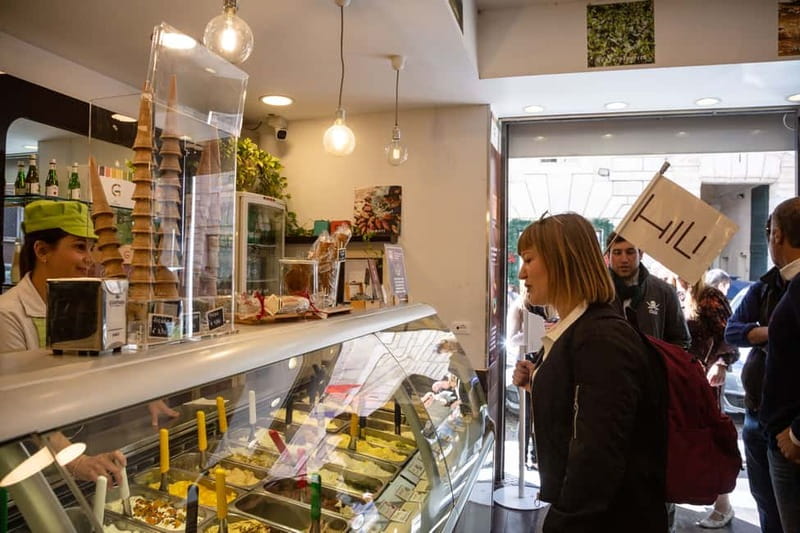
The gelato finish: Gunther Gelateria and the art of ending well
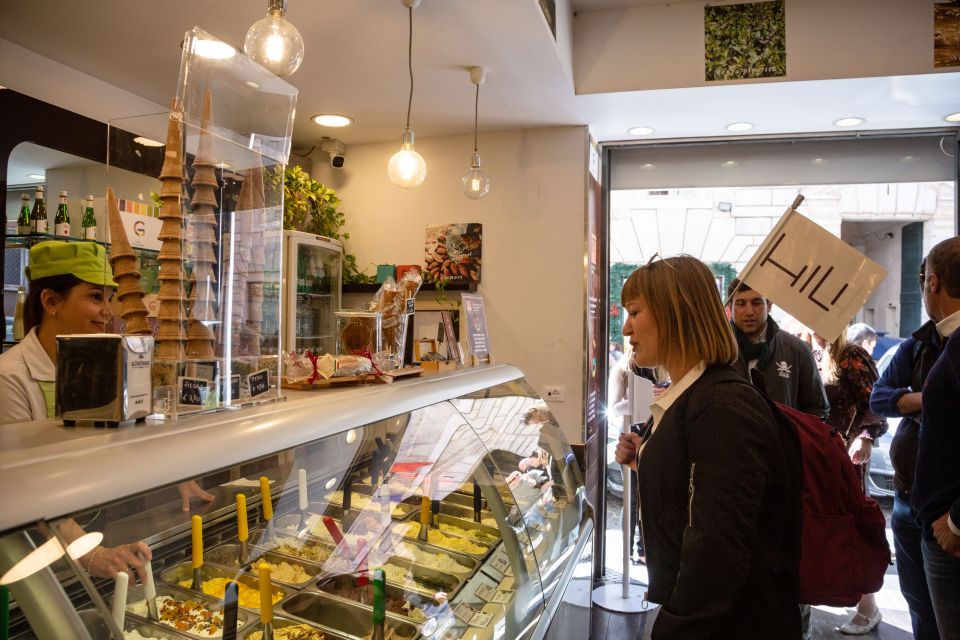
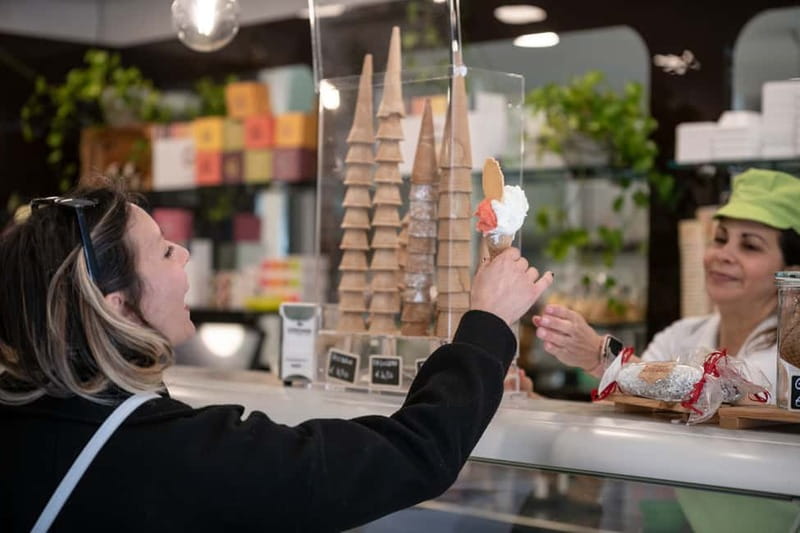
You end with dessert at Gunther Gelateria, with a tasting stop listed at about 10 minutes. This is a smart close. After all that savory food, you get a cool-down that still feels like part of the experience.
Gelato here also works like a navigation tool. You’ll leave with a clearer idea of where landmarks sit in relation to one another. And because the tour ends back around the Piazza di S. Eustachio area (even though the activity description also notes ending back at the meeting point), you’ll likely be able to continue your day without needing to relocate far.
Price and value: what $36 buys you in the real world
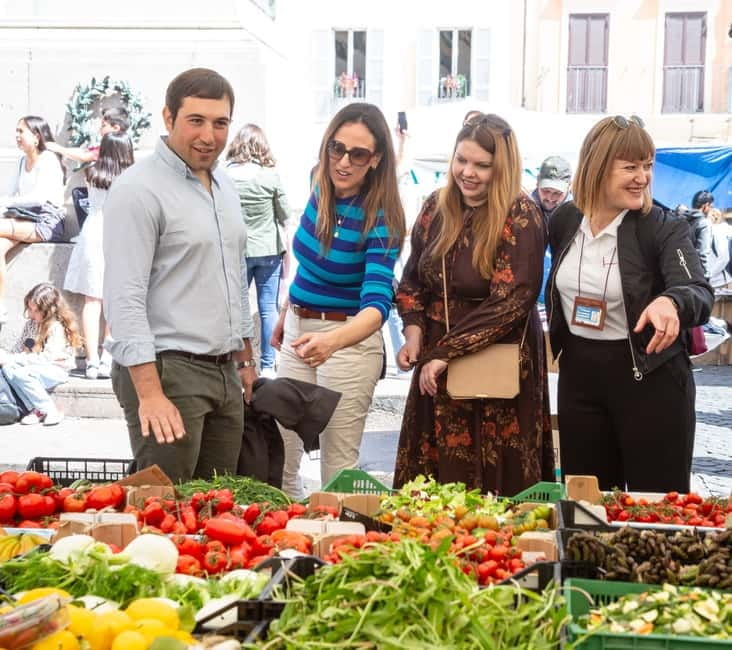
At $36 per person for about 2.5 hours, you’re paying for two things: a guided walking route and five tastings. Drinks aren’t included, so you’re not getting a full meal, but you are getting a real sample plan.
Here’s why I think the value works:
- You’re not guessing where to eat. The tastings are built into the route.
- You get variety across Roman staples (supplì, porchetta, pizza, fried artichokes, gelato).
- You get ingredient context on morning tours with olive oil, truffle, and vinegar.
- The guides are praised for mixing food details with place stories, which is the difference between eating and understanding what you’re eating.
If you’re the type who likes to eat well without spending time researching, this price is pretty sensible for central Rome.
Who this tour is best for (and who should skip it)
This tour is great for:
- First-timers who want to learn Rome through food and neighborhoods
- People who like street snacks but also want the “why” behind them
- Families and mixed-age groups; guides are often described as friendly and patient, and teens often end up enjoying it once they’re eating and walking
It may not be your best match if:
- You need vegan meals (not suitable for vegans)
- You have gluten intolerance (not suitable for people with gluten intolerance)
- You strongly prefer drinking-focused tours (drinks aren’t included)
One practical tip: if you have allergies or dietary restrictions, tell the company ahead of time. The tour notes ask you to share allergies and restrictions, and that’s the only way to keep tastings safe and enjoyable.
Guides: names you might see, and what they tend to do well
I can’t promise you’ll get a specific guide, but the guide quality is clearly a big part of why this tour earns such high marks. Names that come up often include Angelica, Giulia, Claudio, Daniele, Mateo di Marco, Fiammetta, Alessandria, and Sylvia.
Common praise themes are consistent: guides give clear explanations about Roman food (including how Roman versions differ from other Italian styles), share stories in a way that’s easy to follow, and are helpful with suggestions after the tour. One recurring idea is that this tour is best done early in your trip, because you’ll leave knowing what to order again.
Should you book it?
If you want a fun, organized way to eat your way through Campo de’ Fiori and the Jewish Ghetto, this is an easy yes. The tastings cover real Roman classics, the route threads major landmarks into a walk you’ll actually remember, and the guide adds context so you don’t just snack—you learn.
Skip it only if your dietary needs don’t match the limits (especially vegan or gluten intolerance) or if you’d rather spend your time doing longer, ticketed sights instead of a focused food-and-walk experience.
FAQ
How long is the Rome Eat Like a Roman Ghetto & Campo de’ Fiori Food Tour?
It lasts 2.5 hours.
Where does the tour meet, and where does it end?
You meet your guide at the fountain in the center of Piazza di San Simeone. The listed finish point is Piazza di S. Eustachio, and the activity description also notes that it ends back at the meeting point.
What food tastings are included?
The tour includes five food tastings: panini with porchetta, supplì, Roman-style pizza, fried artichokes (Carciofo alla Giudia), and artisanal gelato. Morning tours also include olive oil, truffle, and vinegar tasting.
Are vegetarian options available?
Yes. The tour states that vegetarian options are available.
Is the tour suitable for vegans or gluten intolerance?
No. It is not suitable for vegans and not suitable for people with gluten intolerance.
Is there a market stop?
Yes, but only on morning tours, when you visit the Campo de’ Fiori area and a local fruit market.
Is there a live guide, and what language is it in?
Yes, you get a live tour guide in English.
Are drinks included?
No. Drinks are not included.
Is the tour wheelchair accessible?
Yes, the tour is listed as wheelchair accessible.
If you tell me what month you’re going and whether you’re considering a morning slot, I can help you pick the best timing for the market and the tasting items.