Rome gets better when you walk with a guide. This 3-hour German city-center route strings together the famous hits and a few lower-key stops, with headsets so you don’t miss the story. I especially like the Vicus Caprarius underground aqueduct remains, and I’m a big fan of the 3D ceiling frescos at the Church of Saint Ignazio. You’ll also pass major landmarks like Piazza Navona, the Trevi Fountain, and the Pantheon, so you leave with a clear picture of where everything fits in the city.
One thing to plan for: this tour runs rain or shine, and churches have a simple dress rule (no short skirts or sleeveless shirts). Bring cash, too, since it’s listed as something you’ll need on the day.
In This Review
- Key Highlights You’ll Care About
- A Rome Walking Tour That Mixes Big Names and Unusual Stops
- Start Smart: Piazza Navona Meeting Point and Clear Audio
- Piazza Navona: More Than a Postcard Stop
- Domitian’s Stadium: A Real Roman Venue, Not Just a Name
- The Pantheon: Temple to Church, and the Guide Helps You See the Shift
- Saint Ignazio’s 3D Frescos: The Stop You’ll Remember
- Trevi Fountain Walk: Baroque Power and Real-World Photo Timing
- Vicus Caprarius Museum: The Underground Aqueduct Remains That Change Your View
- Finishing at La Rinascente: A Convenient End Point
- Who This Tour Suits Best
- Tips to Make It Smooth on the Day
- Should You Book This German City-Center Walking Tour?
- FAQ
- What is the duration of the Rome city-center hidden highlights tour?
- Where is the meeting point?
- What languages is the tour offered in?
- Does the tour include headsets?
- Which major sights are included?
- Is the tour rain or shine?
- Are there dress code rules?
- Do I need cash?
- Does the tour skip ticket lines?
- What is the cancellation policy?
Key Highlights You’ll Care About
- Meeting at the Bernini Fountain (Piazza Navona) with the Deutsche Römerin sign
- Headsets included so your German guide stays easy to hear
- Stadium of Domitian with seating for an estimated 15,000–20,000 viewers
- Sant’Ignazio 3D ceiling frescos for a moment that sticks in your memory
- Vicus Caprarius underground excavations and the remains of an aqueduct
- Finish at La Rinascente, a practical landing spot for continuing on your own
A Rome Walking Tour That Mixes Big Names and Unusual Stops
If you only do the classics, Rome can feel like a highlight reel. This tour is built to give you more than a checklist. In three hours, you get the well-known landmarks—Piazza Navona, the Pantheon, and the Trevi Fountain—then you add two stops that change the way you see the city: the underground remains at the Vicus Caprarius museum and the Church of Saint Ignazio with its dramatic 3D illusion.
What helps most is the guide format. You meet at Piazza Navona (at the Bernini fountain), then you’re moving with a plan. And you’re not relying on straining your ears in a busy square because the tour includes headsets. That matters in Rome, where the sound level can jump around fast.
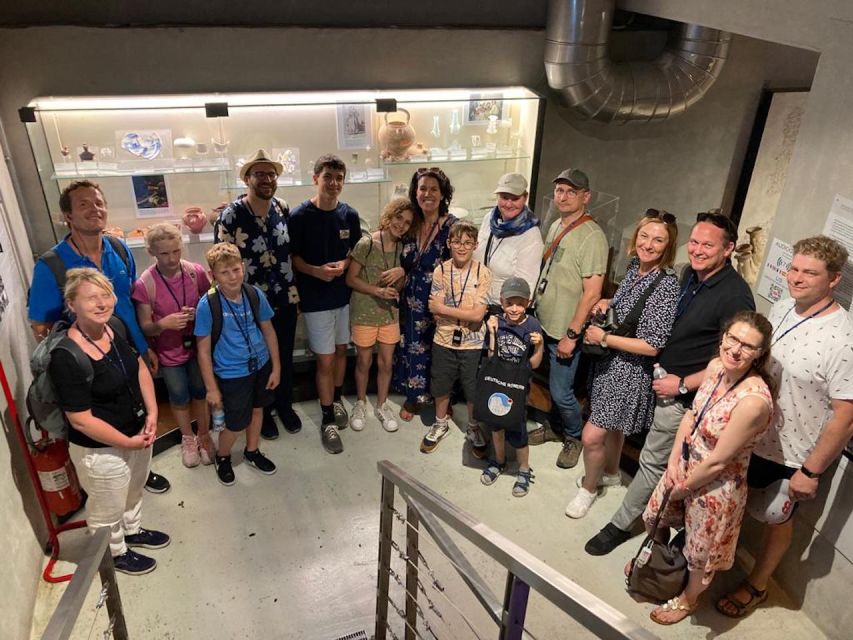
Also, the quality of the guiding seems consistently strong. In German-language tours like this, guides such as Gianluca and Janina are mentioned for humor and genuine care. That combination—accurate context plus an easygoing tone—makes the walk feel less like class and more like city-watching with a smart friend.
You can also read our reviews of more walking tours in Rome

Start Smart: Piazza Navona Meeting Point and Clear Audio
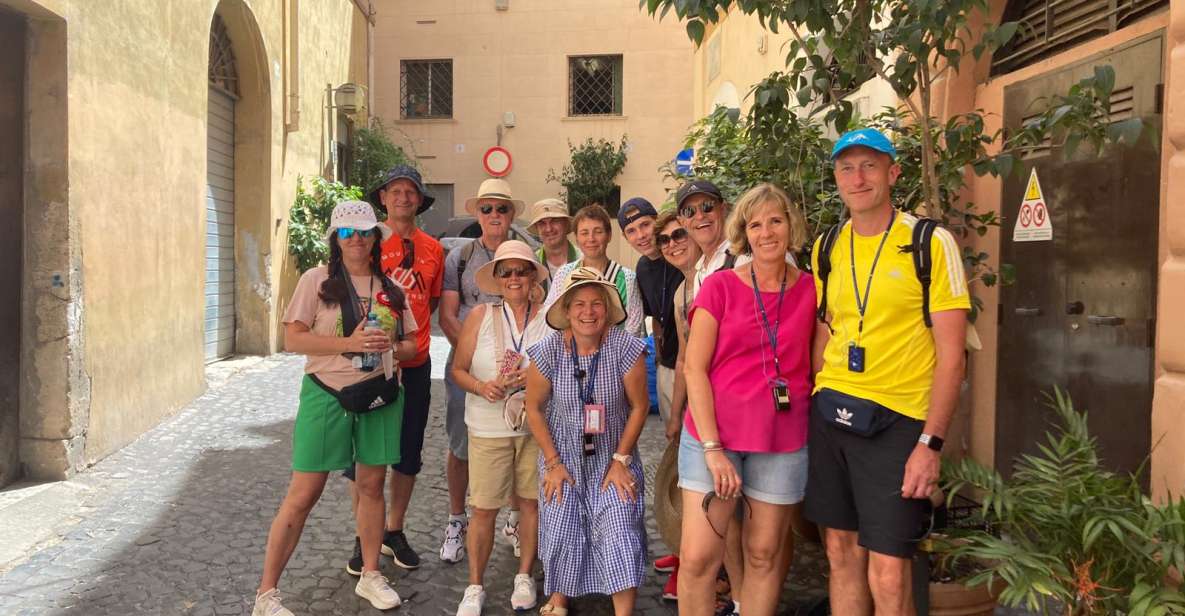
You’ll meet at the fountain of Bernini in Piazza Navona, looking for the Deutsche Römerin sign. From the start, that’s a real advantage: you’re anchoring yourself at a landmark everyone recognizes, instead of wandering around hoping you found the right group.
Right away, your guide gives an introduction and points out what to notice in the square. The headsets are the quiet MVP here. They make a difference if you’re near the back of the group or if there’s street noise. Instead of trying to lip-read, you can actually listen and track the stories while you walk.
Practical tip: Piazza Navona is one of those places where you can accidentally lose time just taking photos. Treat the first minutes like orientation. Get the main views in your head, then let the guide tell you what you’re looking for before you go camera mode.
Piazza Navona: More Than a Postcard Stop
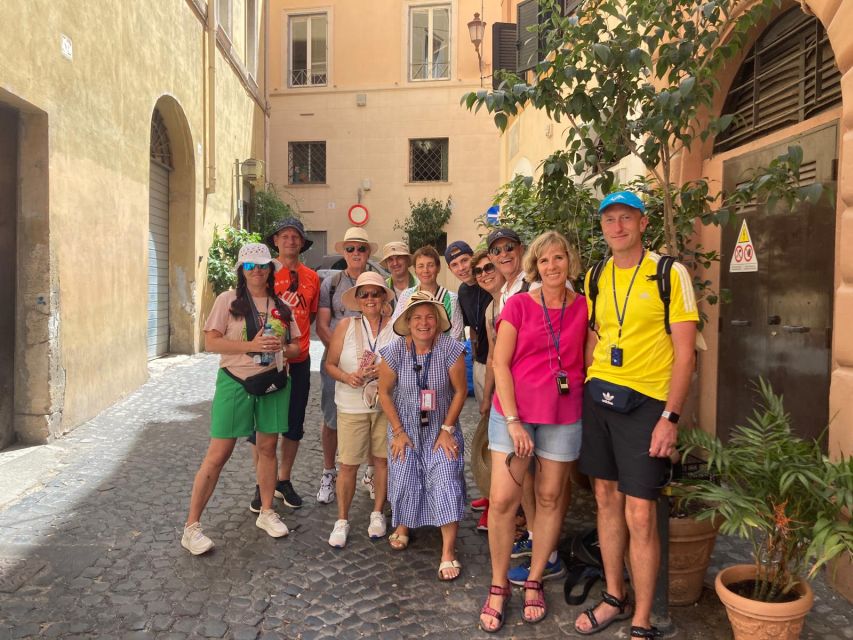
Piazza Navona isn’t just a nice open space; it’s a stage where Rome’s layers show up in how the square is shaped and used. On this tour, it works as your warm-up and your orientation point. The guide starts with highlights in the square, setting you up for the rest of the route.
This is also where you learn the rhythm for the day. You’ll hear enough context early that later stops—the Pantheon, the Roman stadium, the museum—don’t feel like random “famous things.” They start to feel connected.
If you like architecture and want more than the surface details, this part gives you a head start. If you’re simply chasing the best Rome photos, you still benefit because the guide helps you pick the most sensible viewing angles.
Domitian’s Stadium: A Real Roman Venue, Not Just a Name
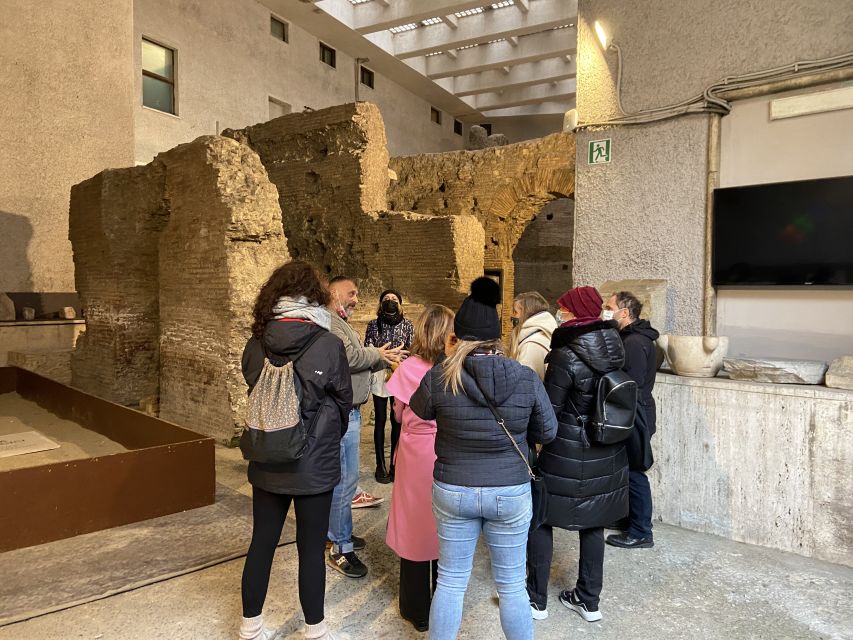
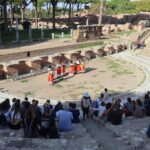
Next comes one of the tour’s most satisfying surprises: the Stadium of Domitian. You don’t just stop for a quick look—you walk in a way that makes the site understandable. This athletic venue once seated an estimated 15,000–20,000 viewers, which is a huge number for a place that, today, can look smaller than you expect.
Why this stop is valuable: most Rome sightseeing leans heavily toward temples and grand monuments. The stadium adds a different angle—Roman public life centered on sport and spectacle. You get a sense of how Rome staged entertainment in the city center, not only on massive imperial stages.
A potential consideration: the tour is walking-heavy and time-boxed (3 hours). If you want long, slow lingering at every point, you’ll need to balance that with the rest of the route.
The Pantheon: Temple to Church, and the Guide Helps You See the Shift
Then you move on to the well-preserved Pantheon. This is where the tour’s structure really helps: rather than arriving cold, you come with context from earlier stops.
The Pantheon was originally a Roman temple and later became a Catholic church. That transformation is more than a factoid. It changes the way you experience the space—from how it functioned in ancient life to how it’s used today. With a guide, you’ll likely catch details you would otherwise miss, because the guide knows which features matter and what to notice.
Also, the tour is designed to keep things efficient with a skip-the-ticket-line element. That’s not about cutting corners; it’s about protecting your time. In a short tour window, time lost to queues can turn a good plan into a stressful one.
If you’re in Rome for only a day or two, this kind of stop order is a smart use of limited time.
You can also read our reviews of more guided tours in Rome

Saint Ignazio’s 3D Frescos: The Stop You’ll Remember
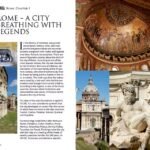
One of the standout moments on this route is the Church of Saint Ignazio and its 3D ceiling frescos. If you’ve seen photos online, you know the effect—painted perspective that feels like the room is turning inside out. But seeing it in person tends to feel more immediate than you expect.
On this tour, you’re guided to how to look. The point isn’t just to see the ceiling; it’s to understand the illusion and how the artwork uses perspective tricks. The tour’s description calls it memorizing, and it makes sense. This is the kind of stop where your brain goes quiet for a minute, and you just watch how the design plays with depth.
Dress note matters here. Since churches have that listed restriction (no sleeveless shirts and no short skirts), check your outfit before you leave your hotel. If you’re traveling in hot weather, plan a light layer you can bring into places like this.
Trevi Fountain Walk: Baroque Power and Real-World Photo Timing
From Saint Ignazio, the route brings you to the Baroque Trevi Fountain. You’ll stroll to it as part of the plan, not just pop into it for ten seconds.
Here’s the practical benefit: arriving with a guide often means you’re better positioned for the moment. You’re also more likely to understand what you’re looking at than if you just treat it like a must-see photo. And since the tour keeps moving, you aren’t stuck in one spot fighting the crowd for angles.
If you care about getting a good shot, don’t expect a peaceful scene. Instead, use the guide moment to learn where the best viewing vantage tends to be, then step aside to take your photos when the group shifts.
Vicus Caprarius Museum: The Underground Aqueduct Remains That Change Your View
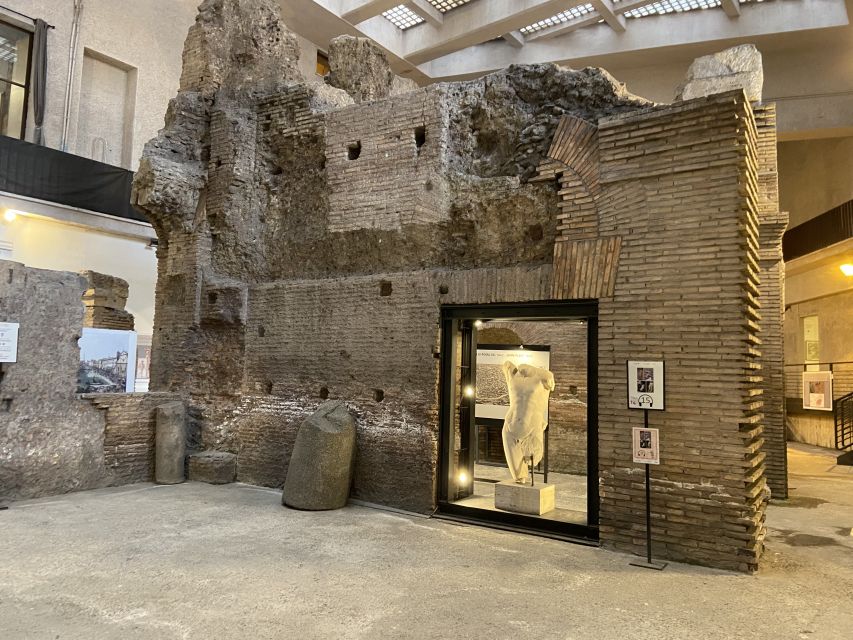
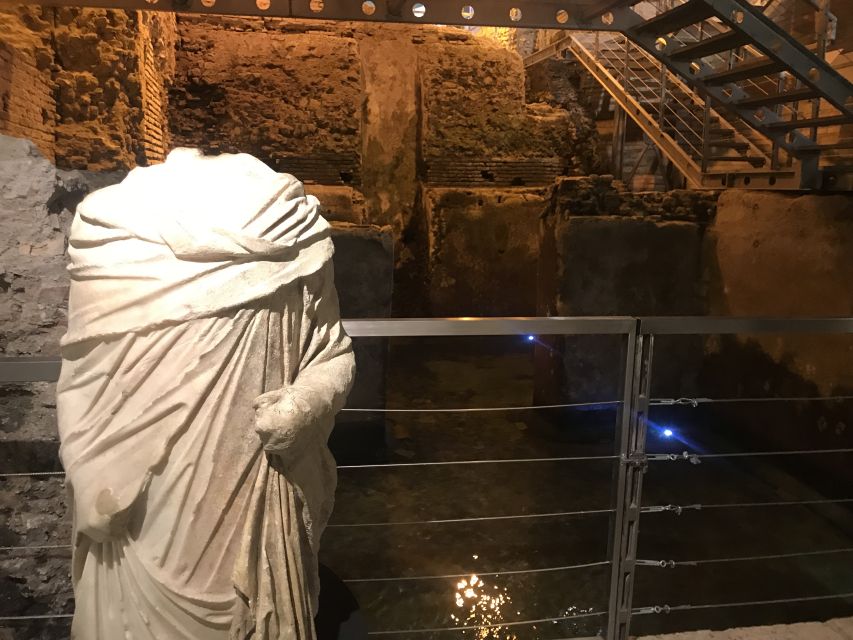
Now for the most unusual element: the underground excavations at the Vicus Caprarius museum. This is where you see the remains of an underground aqueduct, and it connects Rome’s ancient water system to the city you know today.
Why I think you’ll love this: the aqueduct stop adds a literal “under the city” perspective. Rome is famous for what’s visible above ground, but it’s also a city built on layers—water infrastructure included. When you see the aqueduct remains, it’s easier to understand how Rome could support its population and daily life.
This stop also reinforces the tour theme of going beyond postcard sites. Instead of repeating the usual route of only monuments, the tour includes a quieter, more technical look at how Rome worked.
The tour description frames it as the old aqueduct and water city of Rome. That’s exactly the right expectation: you’re not just looking at stones. You’re getting a sense of the systems behind the spectacle.
Finishing at La Rinascente: A Convenient End Point
The tour ends at La Rinascente. That’s a good practical finish because it’s easy to orient from there. You can keep walking, grab a snack, or connect to whatever part of Rome you want next without feeling stranded at the edge of nowhere.
I also like that the day doesn’t end with the “most famous” stop. Trevi is iconic, but ending at a major central landmark lets you transition smoothly—like Rome gives you one more clean exit after the history and the walking.
Who This Tour Suits Best
This is a strong fit if you want:
- A German-led guided walk that covers major sights without wasting your time
- A tour that includes at least two meaningful “not just the obvious stuff” stops
- Clear listening support via provided headsets
- The kind of guided storytelling that turns facts into something you can picture
It may be less ideal if you:
- Hate walking for stretches while a group moves on schedule
- Want only free-choice sightseeing with no structure
- Are not able to follow the church dress requirement (no sleeveless shirts or short skirts)
Tips to Make It Smooth on the Day
Bring cash. It’s explicitly listed, and it’s easy to solve in advance.
Plan for weather. The tour runs rain or shine. If you usually travel with a compact umbrella, this is a good time to use it.
Wear something that works for churches. A quick outfit check saves stress, especially if you’re traveling in summer heat.
And if you’re sensitive to crowds, remember: Piazza Navona and Trevi will be busy. The guide’s pacing helps, but the atmosphere is still Rome.
Should You Book This German City-Center Walking Tour?
I’d book it if your ideal Rome day looks like this: big sights (Piazza Navona, Trevi, Pantheon), plus one seriously memorable church moment (Saint Ignazio 3D ceiling), plus a different kind of Rome (the Domitian stadium and the Vicus Caprarius underground aqueduct remains). The 3-hour length makes it a smart option for first-time visitors, and the headsets plus skip-the-ticket-line element protect your time.
Skip it only if you want slow, do-it-yourself wandering with no schedule or if you can’t meet the simple dress rules for churches. Otherwise, this is a well-paced way to see the city center with less guesswork and more payoff.
FAQ
What is the duration of the Rome city-center hidden highlights tour?
The tour lasts 3 hours.
Where is the meeting point?
You meet at the fountain of Bernini in Piazza Navona, looking for the Deutsche Römerin sign.
What languages is the tour offered in?
The live tour guide speaks German.
Does the tour include headsets?
Yes. You’ll hear your guide clearly with provided headsets.
Which major sights are included?
The tour includes Piazza Navona, the Trevi Fountain, and the Pantheon, plus additional stops like the Stadium of Domitian and the Church of Saint Ignazio.
Is the tour rain or shine?
Yes, it runs rain or shine.
Are there dress code rules?
Yes. Short skirts and sleeveless shirts are not allowed.
Do I need cash?
Cash is listed as something you should bring.
Does the tour skip ticket lines?
It includes a skip-the-ticket-line component.
What is the cancellation policy?
Free cancellation is available up to 24 hours in advance for a full refund.