REVIEW · ROME
Rome: Appian Way, Catacombs & Roman Aqueducts Top EBike Tour
Book on GetYourGuide →Operated by TopTours · Bookable on GetYourGuide
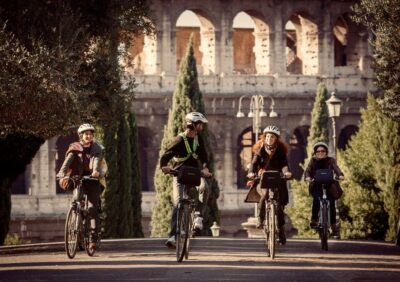
Rome’s ancient roads feel surprisingly peaceful. A guided e-bike ride on the Appian Way and into Parco degli Acquedotti turns a usual sightseeing day into something you can actually cover. I like the way the guides keep the group safe on those few busier connections in town, and I also like the comfort boost from the Cannondale e-mountain bikes. One consideration: this is an intermediate ride over 27 km, with some uphill effort and sun, even with electric assist, so you’ll want to pace yourself.
You’ll start near the Colosseum area at Via Labicana 49, pick up helmet and bike, and then roll out through the Aurelian Walls toward St. Sebastian’s Gate. Then it’s countryside mode: 60% of the route is off-road in parks, with long stretches where you’re not dealing with traffic. At about $100 per person for a guided experience, bike, and water, it’s solid value if you want history plus fresh air instead of another day of indoor crowds.
In This Review
- Key highlights you’ll care about
- Why the Appian Way by e-bike beats a bus day
- Getting started at Via Labicana 49 (and why it’s convenient)
- Aurelian Walls and St. Sebastian’s Gate: rolling out of the city
- The Appian Way stretch: mausoleums, villas, and that long-road feeling
- A quick pacing tip
- Circus of Maxentius, Cecilia Metella, and Villa dei Quintili: the best photo stops
- Parco degli Acquedotti: why the aqueduct arches are the star
- What to do while you’re there
- Catacombs on the 6-hour tour: underground but guided
- Practical note
- Caffarella Valley and the Baths of Caracalla: finishing with real Rome texture
- How hard is it? (27 km, intermediate level, and where effort shows up)
- Price and value at $100 per person
- Who should book (and who should rethink it)
- Should you book this Rome e-bike tour?
- FAQ
- How long is the Rome Appian Way e-bike tour?
- Where does the tour start?
- Is the catacombs visit included?
- How far do you ride?
- Is there traffic on the route?
- What bike do I get?
- What should I bring for food?
- What languages are the guides available in?
- Is the tour suitable for children?
Key highlights you’ll care about
- Small group (max 10) with guidance that focuses on safe handling and group control
- Cannondale e-mountain bikes with anti-puncture tires and a comfortable saddle
- Traffic-light route design: about 60% off-road in parks with no cars
- Appian Way + aqueducts in one coherent day rather than scattered, hard-to-reach stops
- 6-hour option includes catacombs with a 45-minute guided underground visit
- Caffarella Valley countryside feel right inside Rome
Why the Appian Way by e-bike beats a bus day
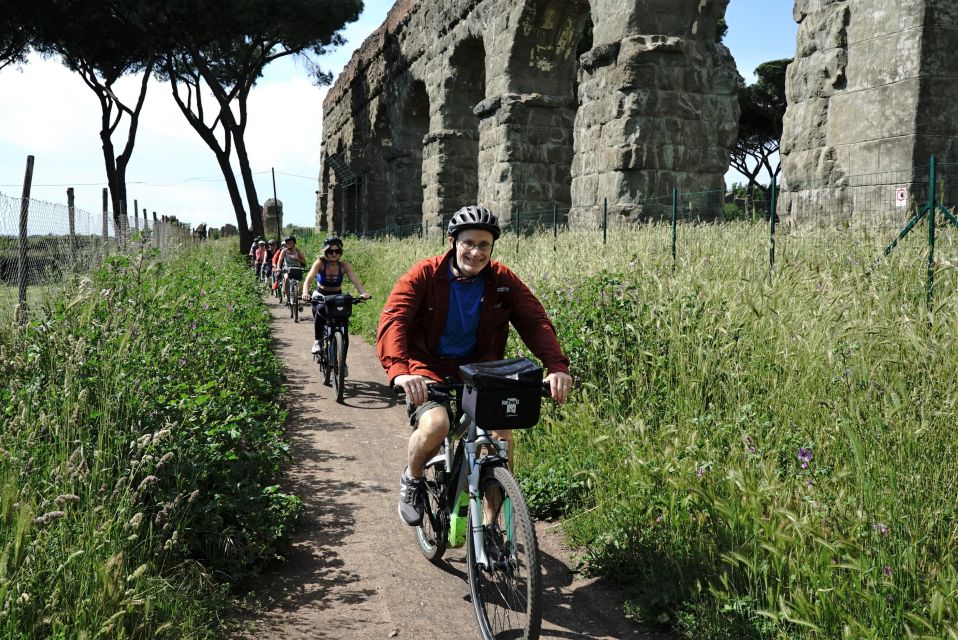
The Appian Way is one of those Rome areas that’s best when you can move at your own speed. On an e-bike tour, you get to cover a lot of ground without the “stop, wait, crowd, repeat” rhythm that can happen on city tours. The electric assist matters here: the ride is long enough to be meaningful, but the help smooths out hills so you can focus on the route and the story.
What really works is the pairing: the ancient road culture along the Appian Way on one side, and then the towering Roman aqueducts in Parco degli Acquedotti on the other. You end up with both the human scale of funerary monuments and the grand engineering scale of water delivery to the city. And because it’s guided, you’re not just looking at ruins—you’re understanding why they were placed where they were.
You can also read our reviews of more cycling tours in Rome


Getting started at Via Labicana 49 (and why it’s convenient)
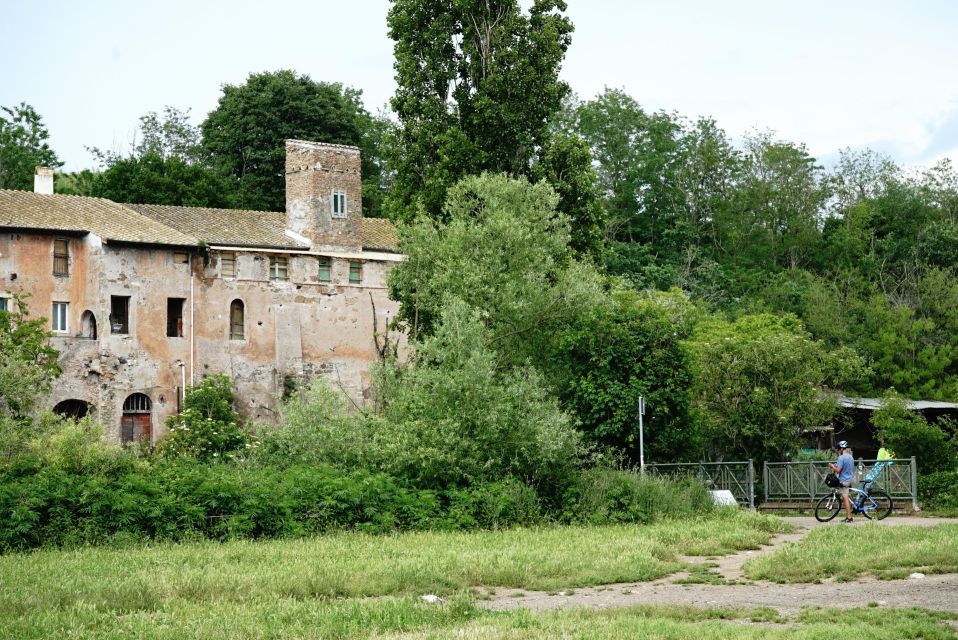
The meeting point is at the shop on Via Labicana 49, about a five-minute walk from the Colosseum. That location is handy because you’re not commuting across town for a full-day ride. You’ll pick up your Cannondale e-bike and helmet (helmet is mandatory), plus a bottle of water.
The first few minutes set the tone. You’ll want to get your seat height comfortable and get used to how the bike responds to assist levels. Most people adapt quickly. If you’re nervous on bikes, this is the right kind of tour to do first, because you’re not thrown into chaos—you’re guided step by step, including safe crossings when you have to pass through busier areas.
Aurelian Walls and St. Sebastian’s Gate: rolling out of the city
Early on, you’ll see the Aurelian Walls as part of the opening sightseeing. This isn’t just a “look at a wall” moment. It frames what you’re about to experience: Rome’s protective boundary, followed by the long roads that pushed beyond it. Then you leave the city through St. Sebastian’s Gate and head for the 2300-year-old Ancient Appian Way.
This city-to-country transition is a big part of the value. You get a gradual shift from urban streets to a quieter, greener corridor. About 40% of the route is inside Rome on chosen streets, and yes, some traffic connections are unavoidable—but the rest of your ride is planned in parks, where there’s no traffic to manage.
The Appian Way stretch: mausoleums, villas, and that long-road feeling
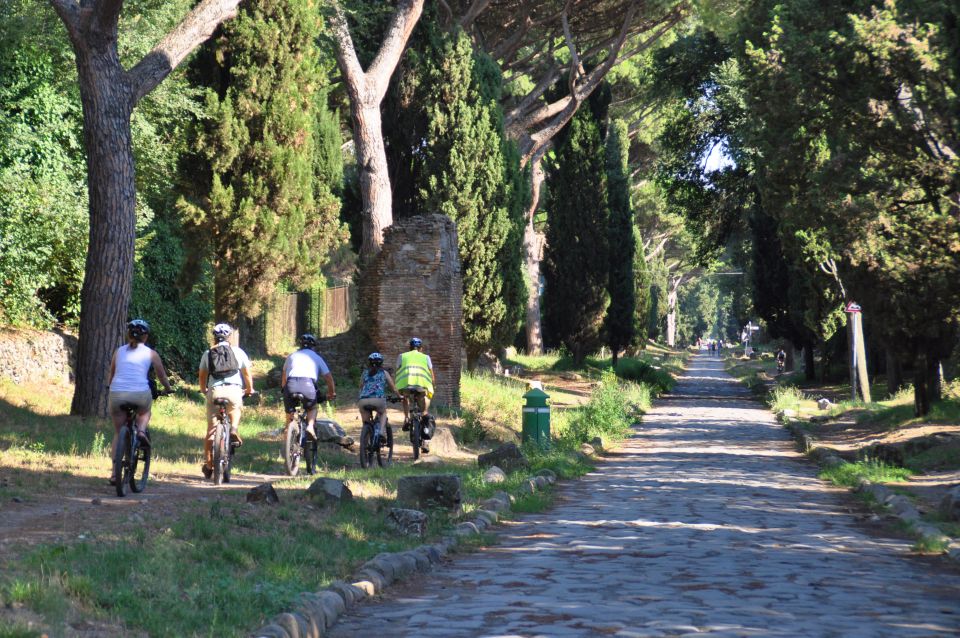
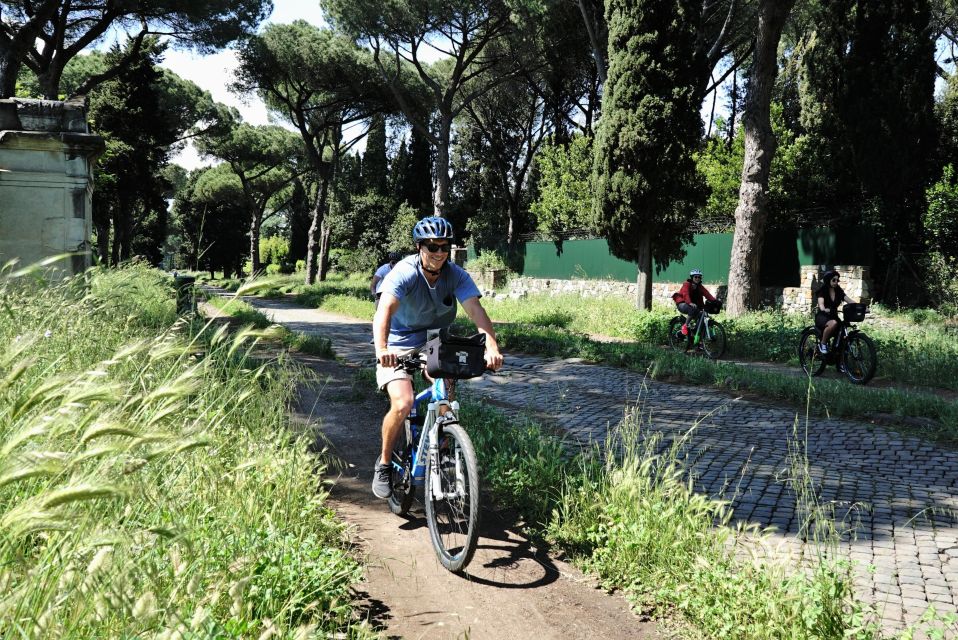
Once you’re on the Appian Way, the scenery changes in a satisfying way. The road corridor reads like a living outdoor museum: mausoleums, villas, and remnants tied to Roman funerary practices. It’s the kind of route where you can feel how Rome once projected power and identity outward through infrastructure.
This part of the tour is also where the e-bike really earns its keep. You’re riding a route that totals 27 km (about 17 miles), and you’ll want to spend your energy on enjoying the day rather than fighting the bike. With anti-puncture tires and a comfortable saddle, you’re less likely to think about your equipment and more likely to pay attention to what’s around you.
A quick pacing tip
Plan to ride at a steady effort, especially in warm weather. In July especially, the ride can get warm. The guide helps, but your body still sets the pace. If you’re the kind of person who “goes hard early,” try not to. Save some energy for the aqueduct park later.
You can also read our reviews of more tours and experiences in Rome


Circus of Maxentius, Cecilia Metella, and Villa dei Quintili: the best photo stops
The itinerary brings you past a cluster of high-impact ancient sites that are easier to appreciate when you’re actually moving between them. You’ll stop for sightseeing at the Circus of Maxentius, where the scale of the structure hints at the entertainment world of imperial Rome.
Then comes the Tomb of Cecilia Metella, a landmark that’s hard to miss and satisfying to see in context along the Appian corridor. After that, the Villa dei Quintili adds a different flavor: more of a sense of an estate world—space, power, and Roman luxury—rather than only public architecture.
These stops are valuable because they’re not random. They connect to the story of how Romans lived, celebrated, and buried their dead along this stretch. And because you’re not doing these as separate outings, the day feels coherent instead of chopped up.
Parco degli Acquedotti: why the aqueduct arches are the star
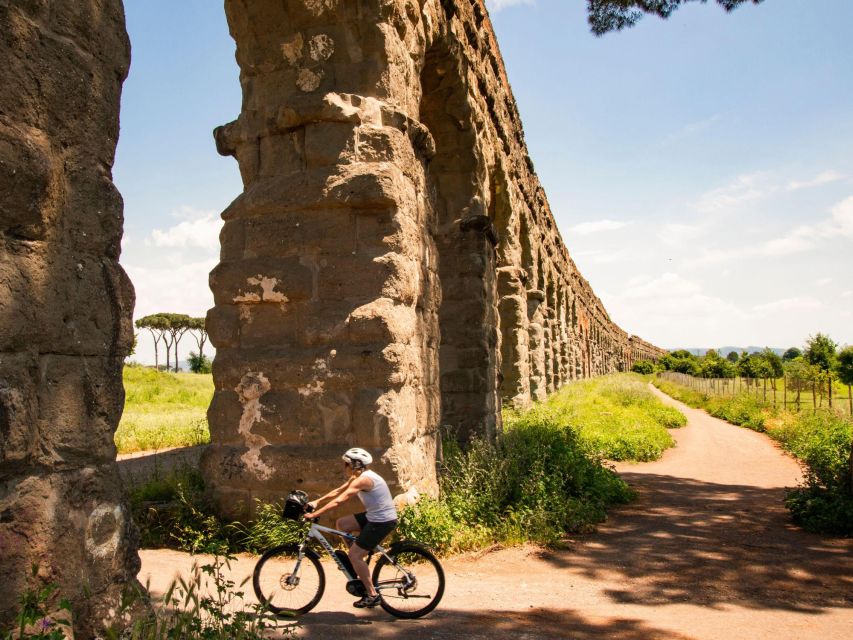
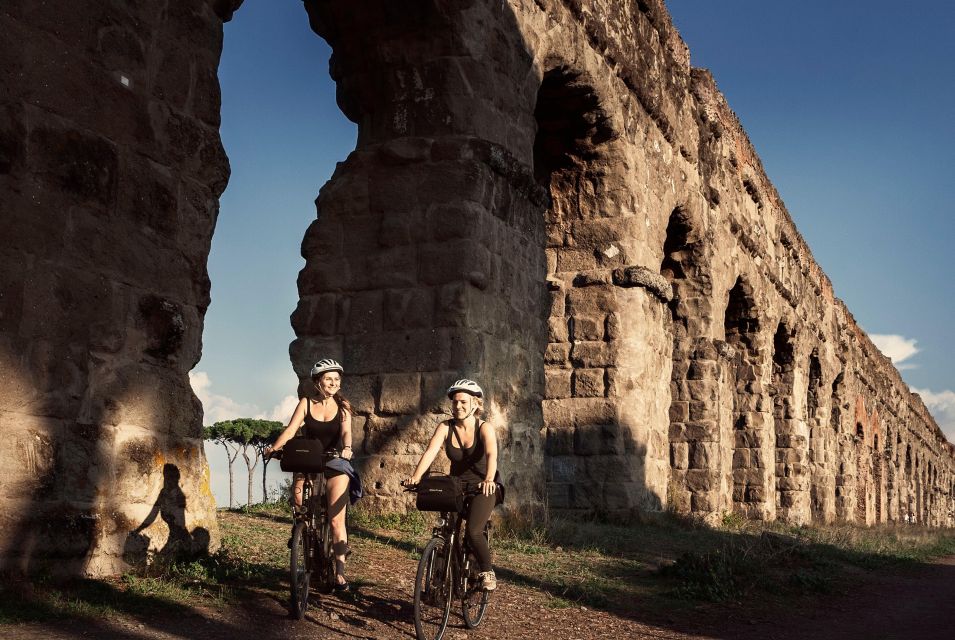
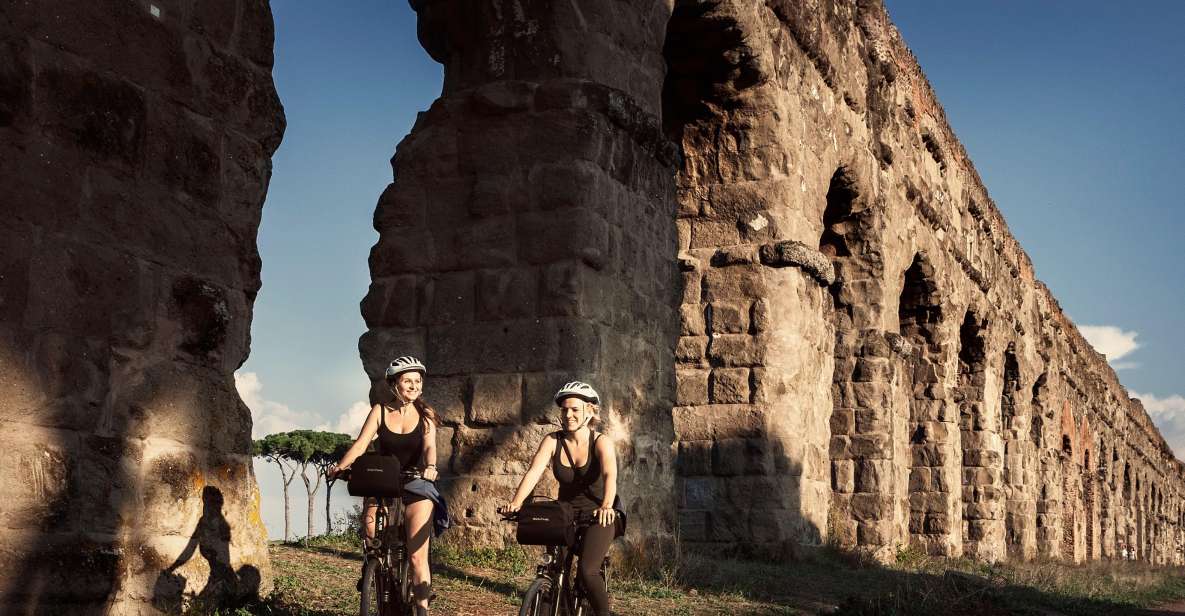
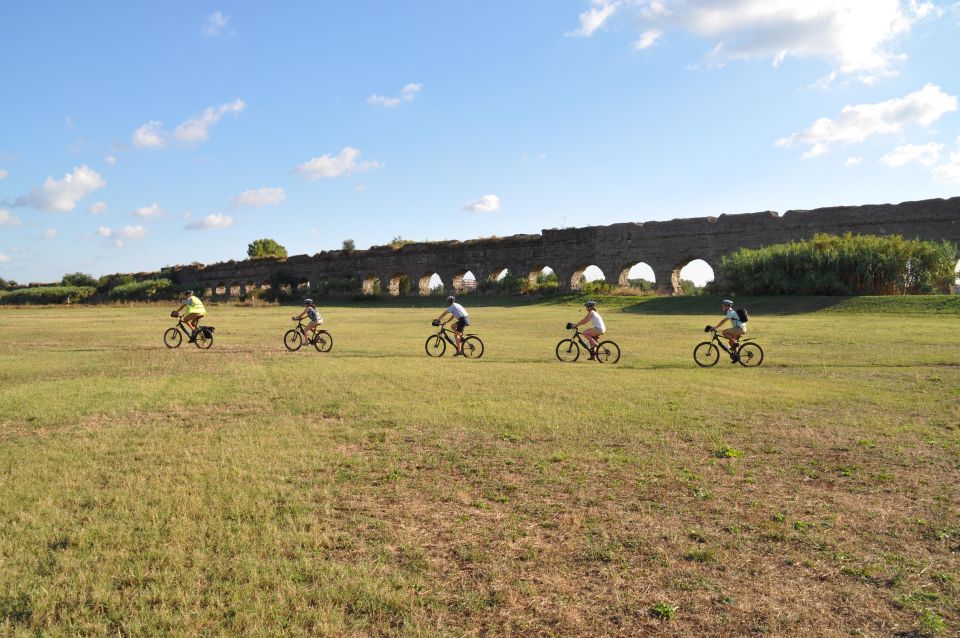
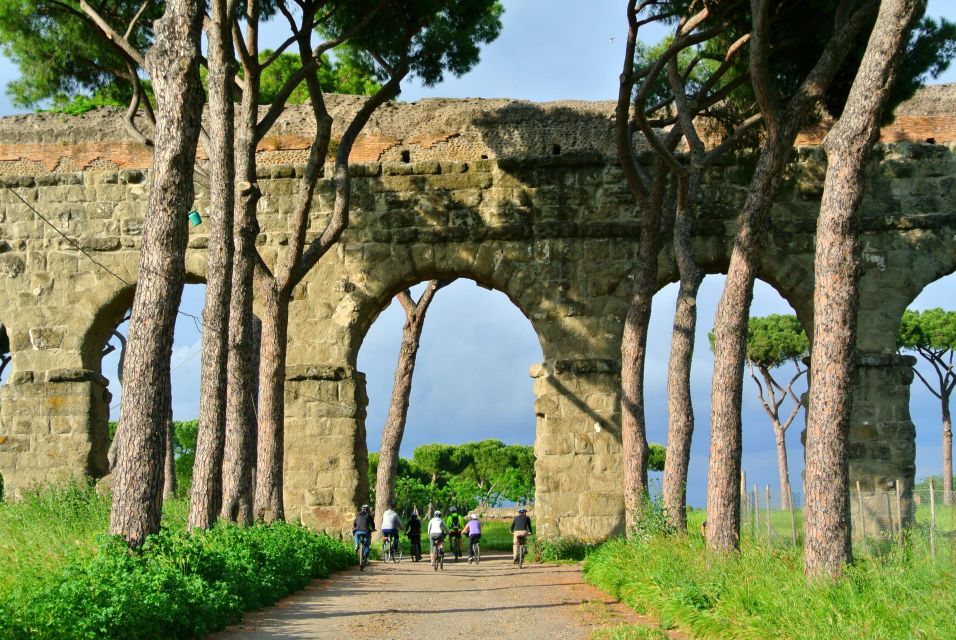
If you want one part to anchor your decision, it’s Parco degli Acquedotti. The aqueducts here are monumental, and once you’re on the ground under and around those towering arches, you get why this area matters. These structures once delivered enormous quantities of water into Rome. Seeing them while riding gives you a sense of height and distance that you don’t get from a quick photo stop.
This park section is also where the ride design pays off. You’re in park settings with no traffic, so you can relax into the view. The atmosphere is more countryside than city, even though you’re still inside Rome’s boundaries.
What to do while you’re there
Keep your eyes moving. Look at the arches at different angles, then look along the route. The aqueduct lines guide your understanding of how water moved through the landscape and how the system shaped what was built nearby.
Catacombs on the 6-hour tour: underground but guided
The catacombs are the one big add-on that only happens on the 6-hour version. The guided underground visit lasts about 45 minutes, and you’ll descend into the corridors with the guide leading the way.
This is worth considering based on your group. If you’re traveling with kids, the catacombs can feel slower and more repetitive than the cycling parts, and some people may find it less entertaining than the outdoor ruins. On the other hand, if you like atmosphere, symbolism, and early Christian burial practices, the guided descent is where the tour adds a layer most surface-level Rome itineraries don’t.
Practical note
Wear the right mindset. This isn’t a fast skip-through. You’re going underground, and the experience is guided for a reason: you need context and direction to make sense of what you’re seeing.
Caffarella Valley and the Baths of Caracalla: finishing with real Rome texture
After the aqueduct park, you’ll cycle back through Caffarella Park, described as a true patch of Italian countryside inside the city. This part is more than scenery; it’s a breather. You’re transitioning from monumental ancient engineering back to everyday outdoor space—still Roman, but less about one specific ruin and more about the feel of the area.
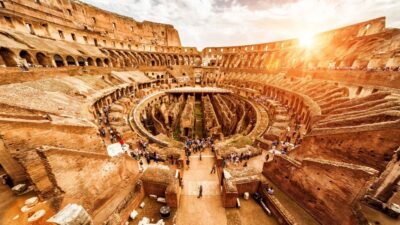
The day ends with stops that bring you back to the city’s larger historical footprint, including the Baths of Caracalla. These kinds of stops work well at the end because you’ve already built a mental map of the day: walls, road, estates, engineering, burial history. By the time you reach major Roman ruins again, your brain is ready to connect the dots.
How hard is it? (27 km, intermediate level, and where effort shows up)
Let’s talk effort honestly. This tour is intermediate and totals 27 km. Roughly 60% of the route is off-road, with about 40% in the city. Even though you’re on an e-bike, intermediate still means you’ll ride long enough that you can feel it in your legs and stamina.
It’s also “difficult with a child seat/child extension,” so if you’re bringing kids, plan around that and match the bike setup to your group’s comfort.
Here’s what helps:
- E-bike assist reduces hill fatigue
- The route spends a lot of time in parks, where you can maintain steady pacing
- Your guide controls the flow and helps you get across key intersections safely
If you haven’t ridden in a while, don’t assume it’ll be easy. But if you can handle a sustained ride and you’re willing to go at a steady pace, it’s a strong way to see more of Rome than you’d get from one-hour walking blocks.
Price and value at $100 per person
At $100 per person for a 4–6 hour guided experience, you’re paying for more than bike rental. You’re getting:
- A quality Cannondale e-mountain bike with anti-puncture tires
- Helmet (mandatory) and bottled water
- A live guide
- Optionally, the catacombs guided visit in the longer version
This is where the value comes from. If you were to piece together transport, bike access, and guided historical interpretation separately, it tends to add up fast. Plus, the tour’s route design is built around getting you away from the busiest areas and into parks where you’ll actually enjoy your time moving.
What you supply: food and drink aren’t included. You can find places along the route to buy something, but you should plan to grab your own snack or lunch idea if you’ll need it.
Who should book (and who should rethink it)
You’ll enjoy this most if you want:
- A guided Rome day that mixes big monuments and countryside breathing room
- An e-bike experience that still feels like you’re doing something (not just cruising for 30 minutes)
- A route that’s designed to be safer than typical self-guided cycling
It may not be ideal if:
- You dislike long rides or get uncomfortable in intermediate terrain
- You’re bringing very young children (infants under 1 aren’t suitable)
- Your group would find the catacombs slow or less engaging (especially if the 6-hour option is mainly for kids)
Should you book this Rome e-bike tour?
My practical take: book it if you want to see the Appian Way, aqueducts, and Roman ruins in one connected day with a guide who prioritizes safe movement. The combo is the point—engineering giants in Parco degli Acquedotti, classic Appian corridor monuments, and the option to go underground into the catacombs.
You should also book with confidence if you’re worried about traffic stress. The route is designed with long no-traffic park stretches, and the small group format (up to 10) makes it easier for the guide to keep everyone together and organized.
Just be smart about effort and weather. Bring a plan for water and snacks since none are included beyond a bottle. And if you choose the 6-hour tour, go in knowing the catacombs are the slower, more “listen and observe” part of the day.
FAQ
How long is the Rome Appian Way e-bike tour?
It runs for 4 to 6 hours depending on the option you choose.
Where does the tour start?
The meeting point is at the shop on Via Labicana 49, about a 5-minute walk from the Colosseum.
Is the catacombs visit included?
The guided catacombs visit is included only on the 6-hour version, and it lasts about 45 minutes.
How far do you ride?
The total distance is 27 km (17 miles), with about 60% off-road.
Is there traffic on the route?
About 40% of the tour is in the city on chosen streets, where some traffic is unavoidable. The remaining 60% is through parks with no traffic.
What bike do I get?
You ride a Cannondale E-Mountain Bike with anti-puncture tires and a comfortable saddle.
What should I bring for food?
Food and drinks are not included. The route offers chances to buy some, so plan on purchasing your own.
What languages are the guides available in?
Guides can run the tour in English, Italian, Dutch, French, German, and Spanish.
Is the tour suitable for children?
Infants aged 1–4 travel on a child seat (<22 kg) and ride free. Ages 5–8 join with a child extension. Ages 9 and above (over 140 cm) can ride an e-bike. Babies under 1 year are not suitable.